Exhibitions
The line is slower than ideas
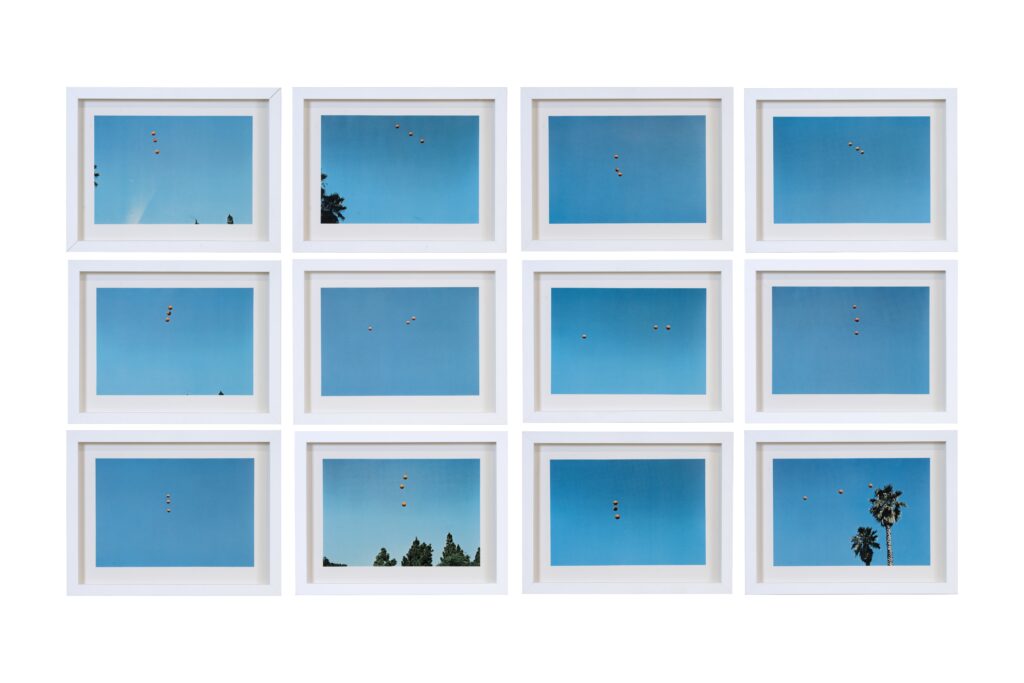
There is a straight line, and then there is the line one actually arrives at, which is usually crooked and, more often than not, falls off the page. In any case, Baldessari remained consistent in undoing that line again and again, as if he suspected that every overly straight path concealed, at its core, a bad fiction.
The expression "The End of the Line" was first used by the artist Sam Francis to describe National City, California, where Baldessari grew up, eleven miles from the U.S.-Mexico border—as far as one could get from the established centers of American art. However, while National City marks the end of a line, Baldessari continually altered its trajectory, extending it from its margins to Miami. "John Baldessari: The End of the Line ," at the Pérez Art Museum Miami, revisits the artist's lifelong exploration of language, photography, and the instability of meaning. The exhibition, which opened on August 20, 2026, and runs through May 9, 2027, is the first major retrospective of John Baldessari's work in South Florida.
The Cremation Project (1970) is the first "end of a line" we encounter in Baldessari's work. This piece marked his symbolic funeral as a painter and his rebirth as a conceptual artist. Burning 500 paintings has always struck me as a strange way to begin a career, though perhaps all important careers begin exactly like this: by destroying that which seemed to guarantee them. Baldessari had developed an interest in questioning the nature of art and artistic creation, and this work marked his definitive departure from the modernist ideals that had shaped postwar American art. It was followed by a quasi-testamental work, I Will Not Make Any More Boring Art (1971), in which the repetitive discipline of a school punishment is transformed into conceptual critique.
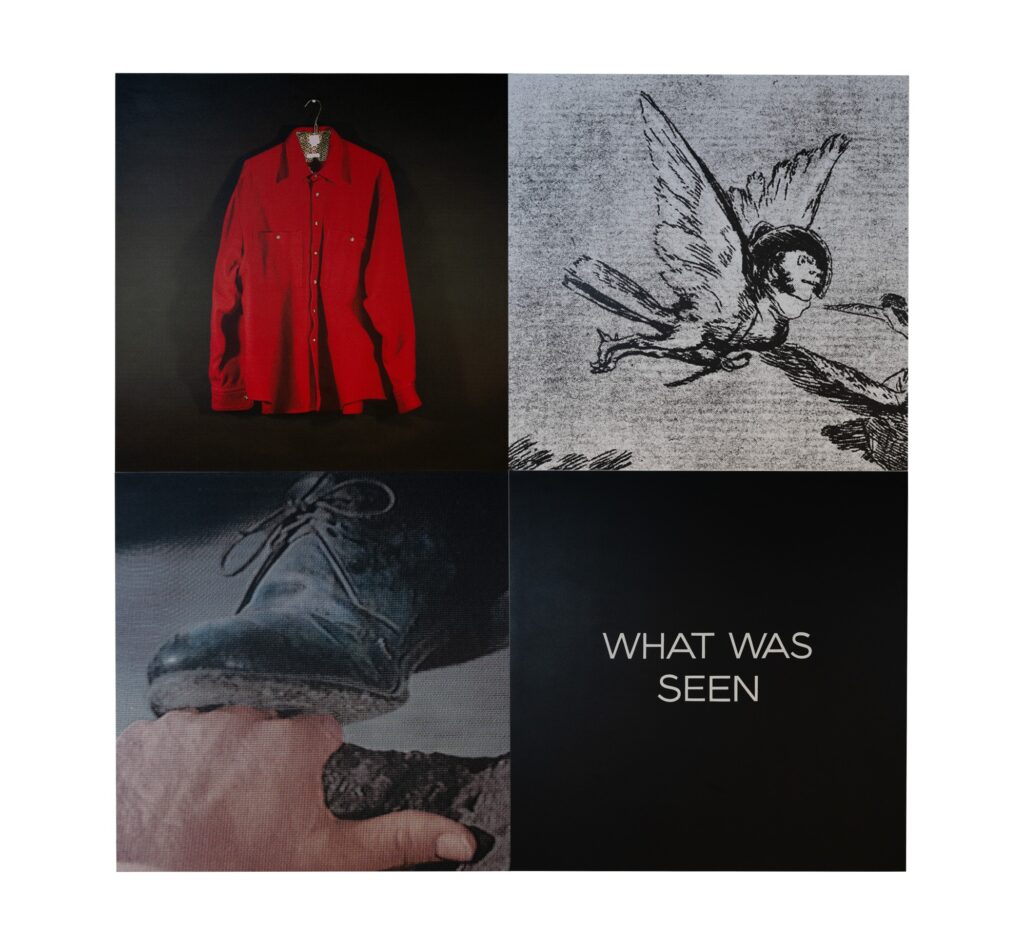
John Baldessari. Tetrad Series: What Was Seen, 1999. Inkjet print on canvas; acrylic paint and enamel on canvas, in four parts. 94 x 94 inches overall. Craig Robins Collection. © 1999–2026 John Baldessari Family Foundation. Courtesy of the John Baldessari Estate; Sprüth Magers.
In his work, Baldessari used images found on television, in newspapers, magazines, and film, since these images carry the weight of shared cultural assumptions, like a collective unconscious. They bring art democratically closer to most viewers, given their familiarity with them and the fact that their combinations constitute an informative language accessible to most. Long before algorithms organized visual culture, Baldessari demonstrated how images arrive already categorized. However, the originality of his work lies not in the assertion that images produce meaning, a fact already established by Barthes, but rather in the demonstration that this meaning is never definitively fixed. His work resists interpretive closure and constantly generates new relationships between image and language.
In Blasted Allegories (1978), this principle of collage is illustrated by pairing television stills with subtitles that neither explain nor illustrate the images. This forces the viewer into a situation where they first look at the image, then read the text, and return to the image with a new interpretation of what they are seeing, having been conditioned by the text. As Hal Foster pointed out in Artforum (1979), what Baldessari does is, ultimately, “destroy” allegory itself by proliferating systems of visual classification for the sole purpose of subverting them once again.

You may be
interested
...