
News
The MNAC calls for voices that rethink the museum
'Thinking the museum, imagining futures' brings together directors of major international institutions and leading architects to reflect on new museum models within the framework of the expansion of the Barcelona museum.
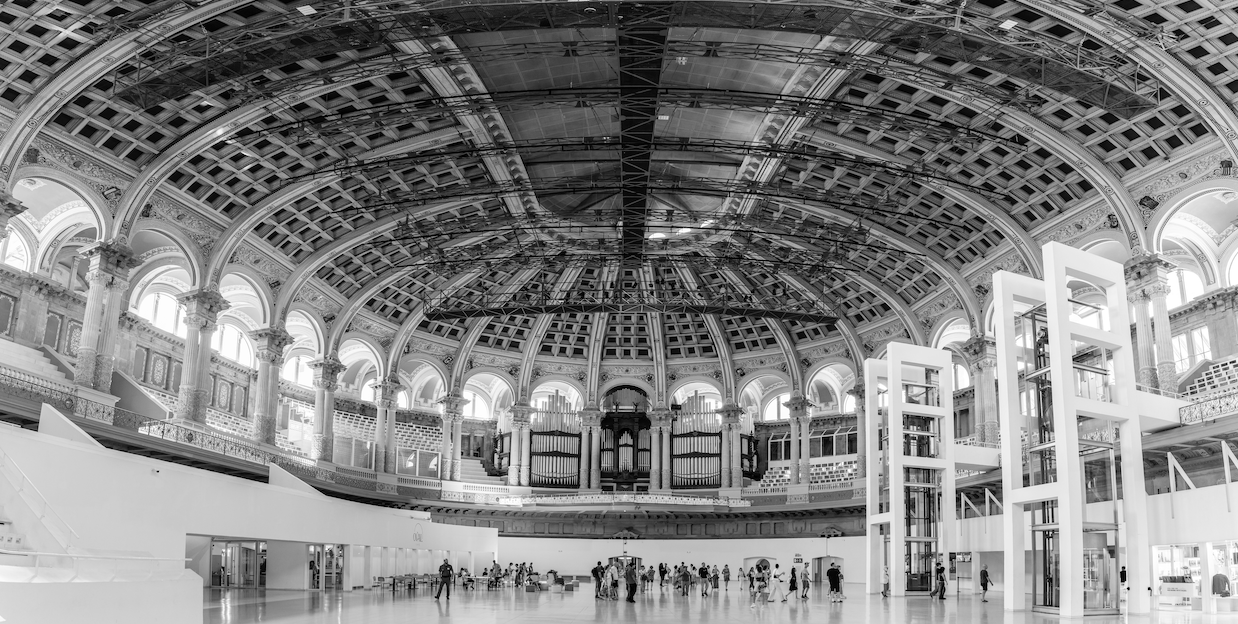
There are many questions that articulate the cycle of conversations Thinking about the museum, imagining futures , an initiative of the National Museum of Art of Catalonia (MNAC) that starts this Saturday, October 24, with a day that will bring together prominent voices from the international museum and architectural field on how transformation should be built, the renovation of collections, memory or the role that architecture should have in the way of exhibiting, sharing or interpreting.
The meeting is part of the public program that accompanies the MNAC expansion process and will extend throughout 2027. Beyond the physical evolution of the building, the project raises a reflection on the transformation of cultural institutions, their management models, the relationship with the public and the capacity to generate new stories. The expansion thus becomes an opportunity to debate not only what the museums of the future will be like, but also what social and cultural functions they will have to assume.
In the morning, the conversation will bring together Caroline Campbell, director of the National Gallery of Ireland; Francesca Cappelletti, head of the Galleria Borghese in Rome; Adriano Pedrosa, artistic director of the Museu de Arte de São Paulo (MASP); Marc-Olivier Wahler, director of the Musée d'art et d'histoire in Geneva, and Pepe Serra, director of the MNAC. Their experiences will allow us to contrast different ways of approaching institutional renewal, the interpretation of collections and the opening of museums to new perspectives.
Among the participants, Adriano Pedrosa stands out, who has promoted a renewal of the museum narrative at the MASP with special attention to Afro-Atlantic, feminist, indigenous and LGTBIQ+ narratives. In 2024, he became the first Latin American curator to direct the Venice Art Biennale, and in 2026 he was included by Time magazine among the hundred most influential people in the art world. Caroline Campbell, the first woman to direct the National Gallery of Ireland in the institution's more than 150-year history, brings a career linked to research and collection management. For her part, Francesca Cappelletti has worked on the renovation of the Galleria Borghese, while Marc-Olivier Wahler is promoting the MAH de demain project in Geneva, which addresses the architectural and functional transformation of the museum and its relationship with the city.
In the afternoon, the debate will shift to architecture and the possibilities of rethinking museum spaces. The conversation, moderated by cultural strategy advisor András Szántó, will feature Elizabeth Diller, Shohei Shigematsu, Stephan Schütz and Kulapat Yantrasast, four architects with experience in cultural projects of international scope.
Elizabeth Diller is co-founder of the New York studio Diller Scofidio + Renfro, responsible, among other projects, for the transformations of the MoMA and the High Line in New York. OMA partner Shohei Shigematsu has been involved in expansions such as those of the Musée national des beaux-arts du Québec and the Buffalo AKG Art Museum. Stephan Schütz, partner at gmp Architekten, has led projects such as the Kulturpalast in Dresden, while Kulapat Yantrasast, founder of WHY Architecture, works at institutions such as the Metropolitan Museum of Art and the National Museum of India, as well as being selected to design the new Byzantine and Eastern Christian art department at the Louvre.
The presence of these professionals places architecture at the center of a debate that goes beyond intervention on buildings. The way in which accesses, rooms, meeting spaces and routes are conceived conditions the visitor's experience and also the relationship between the works, the exhibition discourses and the citizenry. In this sense, expanding a museum implies reviewing its uses, forms of hospitality and its capacity to adapt to the needs of a diverse society.

You may be
interested
...