
Editorial
Utopia Catalonia: The non-place under construction
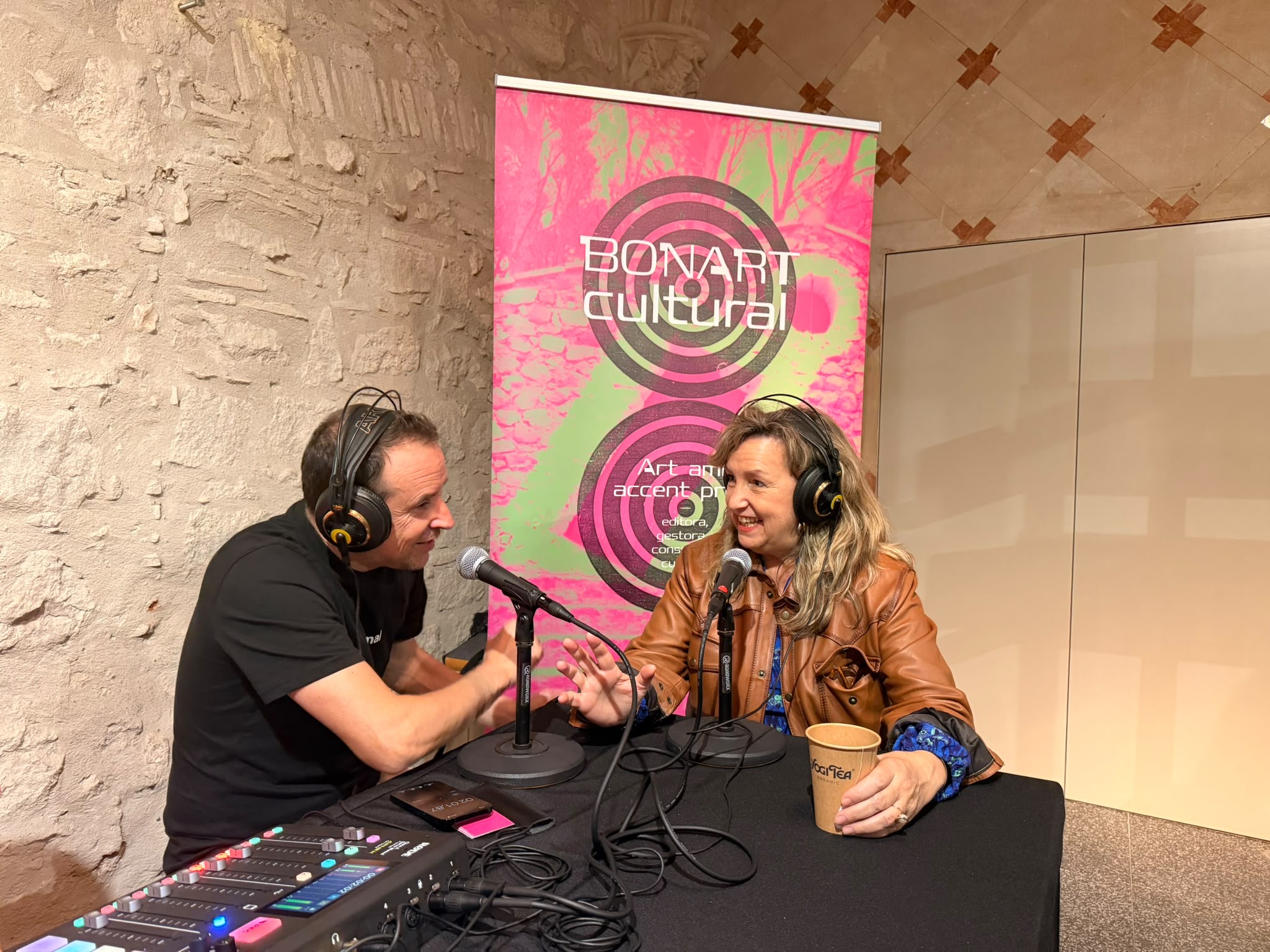
Sic et Non . Yes and no. Gabriel's book of poems gave us the opportunity, during the presentation at the Espai Isern Dalmau, to think beyond exclusive answers. We can celebrate a reality and question it at the same time. Yes can contain a reservation; no, a possibility. In times of trenches, accepting this complexity is a form of freedom. In "The mirror of distance", Gabriel writes: "I remained motionless, looking at all directions, / all partitions, all gaps". Culture often works here: in the gap that destabilizes a certainty and allows us to imagine another way of living.
I think of Thomas More's delightful and uncomfortable Utopia , published in 1516 and translated directly from Latin by Joan Manuel del Pozo, which I am reading now, edited by Ela Geminada. That imaginary nowhere gives us a mirror back to the place we inhabit. More links the organization of work with time to cultivate the spirit and ends up recognizing aspects of that society that he desires more than he expects to see realized. Even utopia retains a reserve. Sic et non .
What place does culture occupy in the country we desire? The question becomes concrete when an artist tries to make a living from his work, a gallery maintains a risky program or a museum wants to investigate beyond the calendar of openings. It is here that the imagined country encounters the material conditions that can make it possible.
Barcelona is experiencing an autumn that makes the city. Gallery Weekend, Talking Galleries, SWAB, ArtsLibris, By Invitation and LOOP connect audiences, languages and complicity. Barcelona is doing it, yes. But the effervescence coexists with fragile structures. The money that Gallery Weekend asks of the galleries that give it meaning deserves reflection. And the concentration of proposals at the end of the year forces us to ask to what extent the subsidy calendars condition the programming. Culture needs foresight, also administrative, despite the fact that budgets are always difficult to close on time.
The replacement at MACBA also demands a yes and a no. Valentín Roma is a well-known professional in the sector, but directing the flagship of contemporary art requires more than recognition within the same circuit. It is necessary to connect artists, collection, audiences, country, language and international dialogue. His appointment does not spare us an uncomfortable question: does MACBA today have the capacity to attract that corresponds to its ambition? Are we in the Champions League or have we become accustomed to celebrating the classification? The new director will have to demonstrate that he understands all the complexity of the house and that he knows how to give it projection beyond the usual complicities and cronyism in a competition that was not as transparent as we wanted.
However, in the hustle and bustle of the relays we run the risk of dismissing two valuable contributions too quickly: Emmanuel Guigon at the Picasso Museum and Marko Daniel at the Joan Miró Foundation. Their work, knowledge and international links that they have contributed must be valued. Miró-Picasso exemplifies the potential of two institutions when they work together. Renewing directions should allow us to build on this legacy. A culturally mature country also knows how to recognize those who have made their mark.
Elvira Dyangani should also be congratulated on her new appointment at the Zeitz MOCAA in Cape Town. The expansion of the MNAC opens up another horizon. Gaining space should allow the collections to be better explained and stories to be told. The Museum of Archaeology —under new director, Mònica Borrell— and the Museum of History of Catalonia also need to define why perhaps that old idea of strengthening themselves further or ending up unifying was not a bad thing. And the national reserves remind us that what is not exhibited is also heritage: conserving it requires equipment and knowledge. The Department of Culture has just presented a magnificent space to cover a historical deficit. Now, any transfer of the Center for the Restoration of Movable Property should guarantee this continuity without internal pain.
The Vila Casas Foundation celebrates forty years at Can Framis in Barcelona and a network with centers and relationships throughout Catalonia. Its journey, despite the roller coaster of recent times, shows what collecting can contribute when it assumes a public responsibility. La Pedrera, with the Gaudí International Congress, offers another opportunity: to study Gaudí again with critical ambition, beyond the icon that tourism reproduces, while contrasting it with the contemporary work of Anselm Kiefer.
Catalonia, of course, does not end at Diagonal. The Morera and the Sorigué Foundation, in Lleida; the New Art Center, in Reus; Apel·les Fenosa, in El Vendrell; the Mèdol, the Museu d'Art Modern de Tarragona and Lo Pati, in Amposta; the Panoràmic, in Granollers, or Temporada Alta, in Girona, draw a plural country. In Banyoles, the Gimferrer Collection and the Coromina Museum project expand the map. Barcelona must know how to connect to this energy and let itself be transformed by it.
A city that has been home to the work of gallerist Miguel Marcos for fifty years, who deserves either a Creu de Sant Jordi or a gold medal from the city. A bit like what happens with the hundred years of the Artur Ramon gallery. Two undeniable references in our environment.
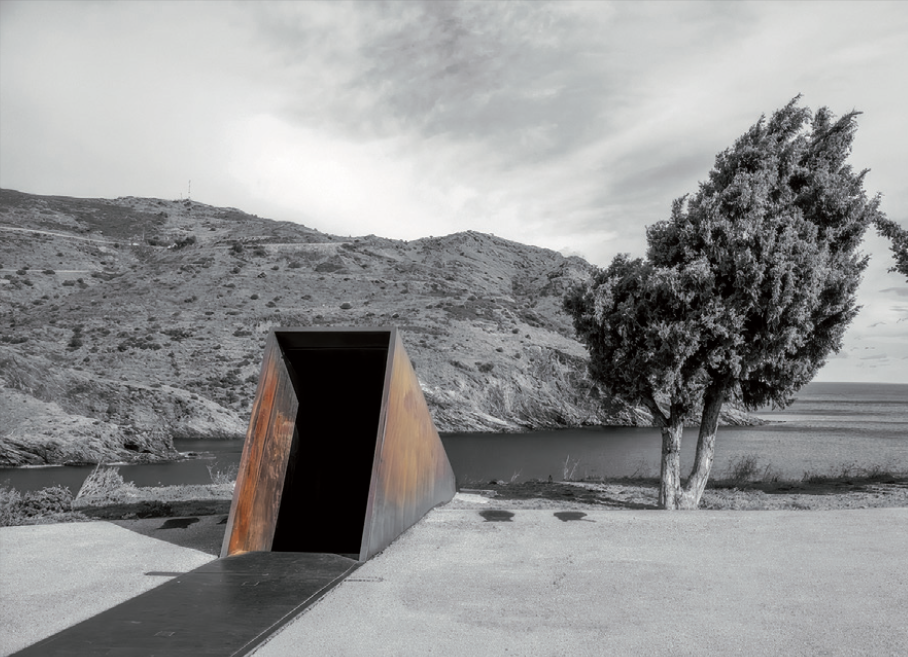
And, in this time of uncertainty, I would suggest reaching Portbou. In Passatges, Dani Karavan's memorial dedicated to Walter Benjamin, the iron staircase descends towards the sea until a glass interrupts the passage. The landscape is at hand, but the path is blocked. The memory of exile becomes a physical experience.
I also see it as a plea to life. We must turn around, retrace our steps, climb up again. The opening of the tunnel frames the sky and the light gains space. This reading does not erase Benjamin's tragedy: it commits us to those for whom we can still open a way.
I return to Gabriel: the directions, the partitions, the cracks. And to More: the imagined place from which we can judge our own. Yes to the energy we have; no to being satisfied. Perhaps utopia begins here: looking the abyss in the face, climbing the steps and recognizing the many lights we can still turn on.


You may be
interested
...