Exhibitions
Regina de Miguel opens the doors of a ruined universe to explore other futures
The IVAM is transformed into a galactic museum where art, science and speculative fiction intertwine to question extractivism, the fragility of ecosystems and the relationships between different forms of life.
The Valencian Institute of Modern Art (IVAM), Regina de Miguel (Málaga, 1977) proposes a temporal and spatial displacement that places the viewer in front of the remains of a disappeared civilization. With Un mundo turbiamente vivo , the artist transforms Gallery 6 into a science fiction setting, an imaginary museum located on a distant planet that, despite its fantastic appearance, functions as an uncomfortable mirror of our present. The exhibition, curated by Rosa Lleó and open to the public until April 11, 2027, constructs a visual and conceptual narrative in which ruin, memory and the possibility of other forms of existence become instruments for critically thinking about the contemporary world.
The project starts from a museum of the future, Alkane, located on Tornus, a planet subjected to a process of colonization and exploitation of natural resources until exhaustion. In this devastated territory, the museum institution guards the remains of a civilization and preserves replicas of works of art and documents from across the universe. Fiction thus becomes a strategy of distancing that allows us to observe the Earth from another perspective. What is apparently a story about a remote world ends up pointing out the contradictions of a society that projects its extractive ambition towards other planets while continuing to destroy the conditions that make life possible in its own environment.
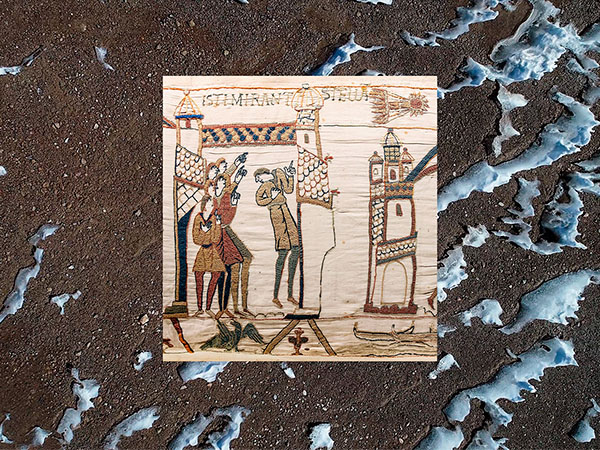
Regina de Miguel articulates this universe through an artistic practice that crosses disciplines and knowledge. Astrobiology, astronomy, geology, botany and literature coexist with cinematic and narrative references typical of science fiction. However, it is not a question of illustrating scientific concepts, but of incorporating them into a poetic construction in which knowledge and imagination complement each other. As Blanca de la Torre, director of IVAM, points out, the artist transfers scientific questions to the field of speculative fiction, a space from which to question current ways of life and imagine alternative scenarios.
The origin of the project dates back to the period of the pandemic, when the artist had just completed research in the Colombian jungle on extractivism and the different forms of violence exerted on bodies and territories. That experience left a deep mark on the development of a work that addresses environmental destruction not as an isolated issue, but as the result of an economic, political and social system that prioritizes accumulation over the continuity of life. The climate crisis, imperialist policies and indifference to the vulnerability of certain communities appear as symptoms of the same power structure. The artist emphasizes the human consequences of this process, from inequality to forced displacement and the emergence of climate refugees.
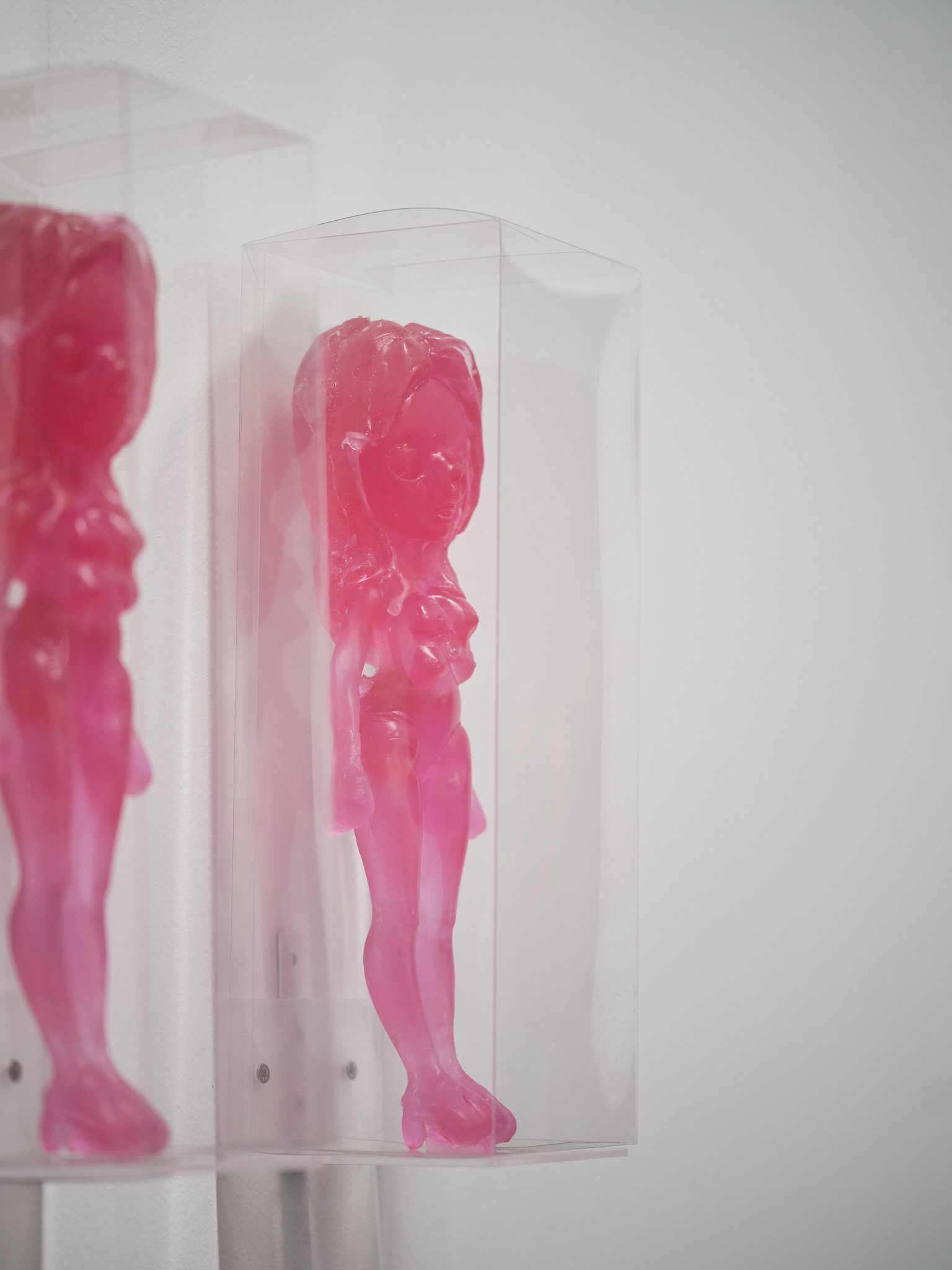
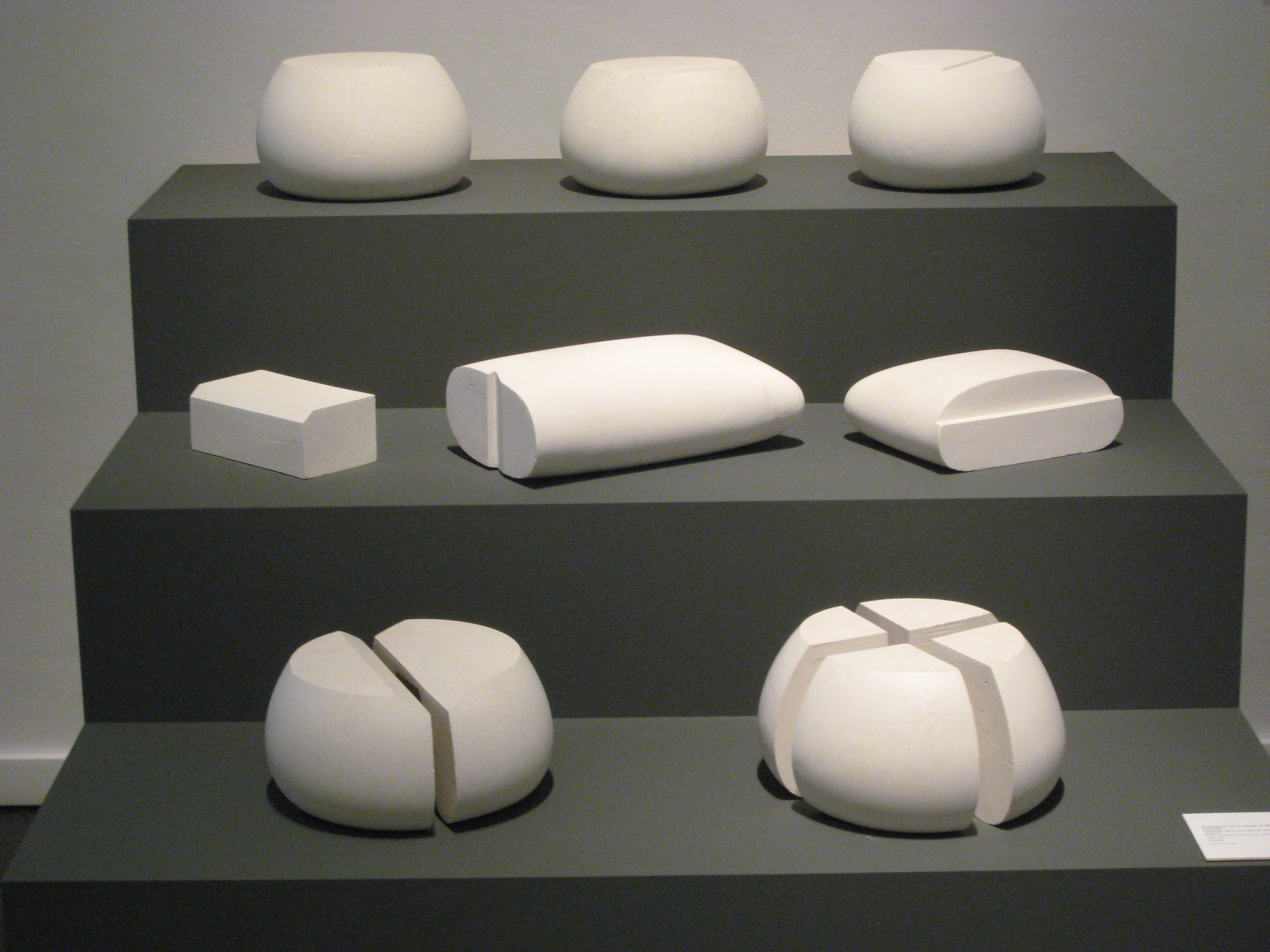
The exhibition space accompanies this narrative drift. A large silver curtain introduces the visitor to an atmosphere that evokes in vitro culture laboratories, an ambiguous environment between scientific research and the archaeology of a possible future. In this first area, the remains of the Alkane museum take shape through drawings, paintings, sculptures, maps made with watercolors and obsidian engraved with representations of extinct species. They are fragments of a memory that seems to have survived the disappearance of the world that generated it. Their presence raises an essential question: what will deserve to be preserved when the conditions of our existence have been irreversibly altered?
The architecture of the exhibition also participates in this story. The staircase that connects the two floors functions as a symbolic portal between universes, a transition that leaves the almost archaeological register of the first room to enter a cinematic and immersive dimension. On the upper floor is presented Aguas intoxicadas, cometas nunca más vistos y una reunión de suicidads , a film displayed on five screens that is part of the artist's most recent research. Previously presented at the Toronto Art Biennial and made in collaboration with Catapulta, the work expands the field of reflection of the exhibition and connects landscapes, ecological conflicts and imaginaries of disappearance.
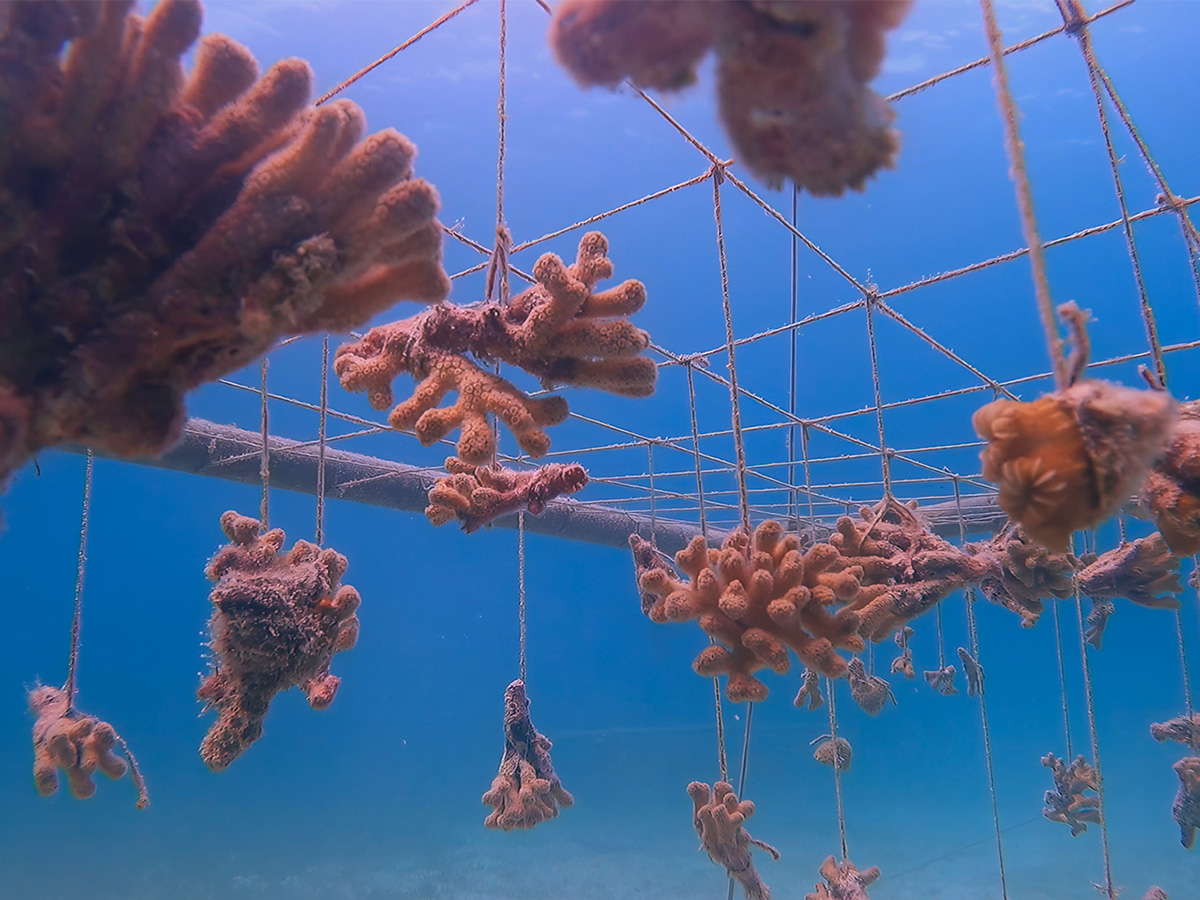
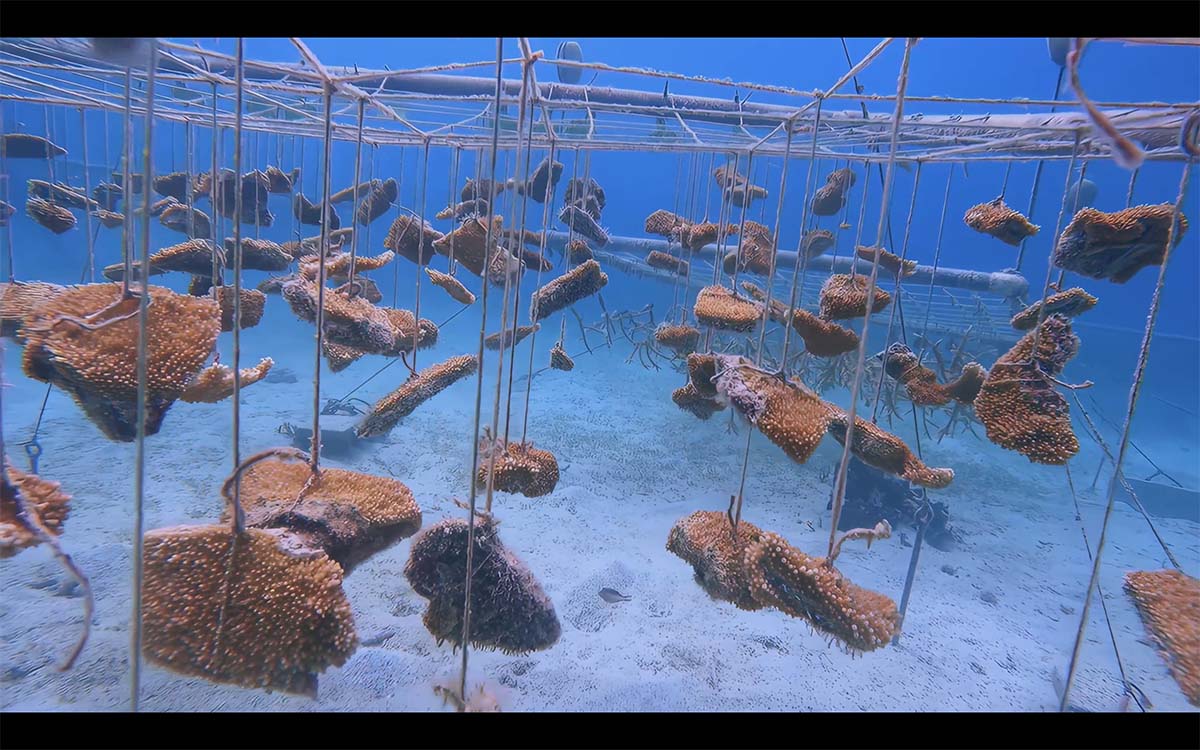
The film travels through different geographies, from the swampy areas surrounding Berlin to the coral farms of Puerto Rico, passing through the Arecibo Observatory and the Atacama Desert. These are not locations chosen solely for their visual uniqueness. Each one concentrates a history of environmental transformation, human intervention and political tensions. Puerto Rico, a territory particularly known to the artist, is presented as a space where environmental policies, military experimentation and colonial economies have contributed for decades to the deterioration of ecosystems. In this context, the image of coral reefs becomes a particularly eloquent metaphor: the bleaching of a reef is not just the disappearance of a species or an underwater landscape, but the signal that an entire ecological system is collapsing.
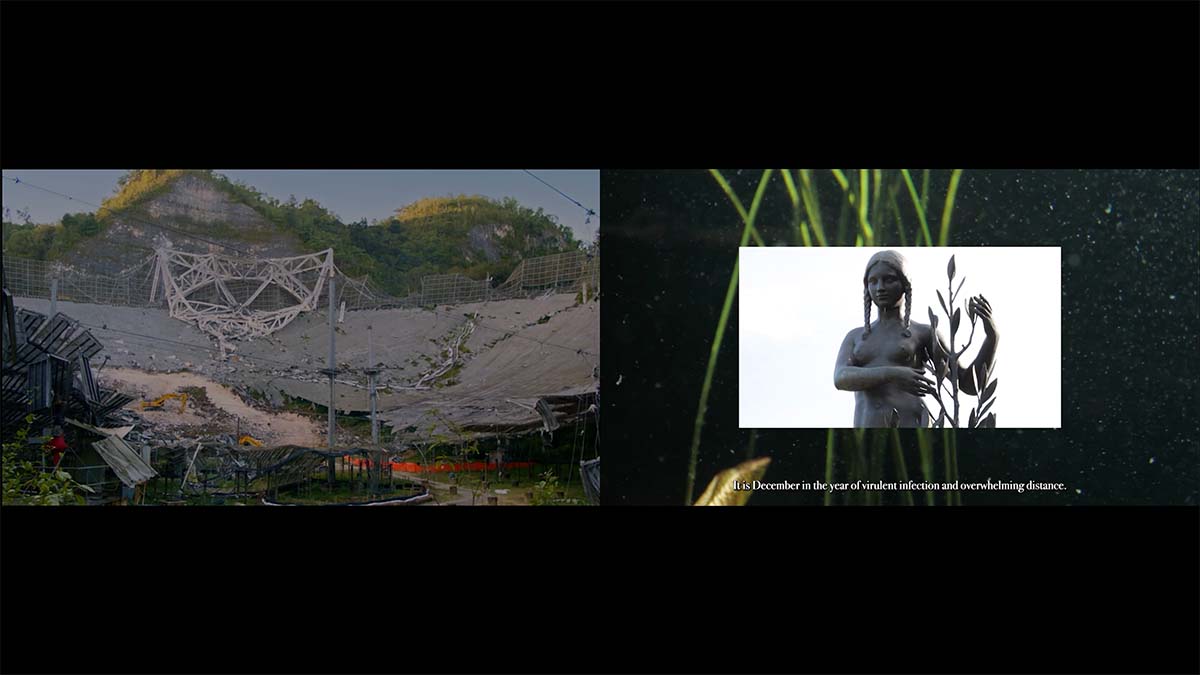
Ruin, collapse and suicide are concepts that run through the exhibition and that place the viewer in front of a disturbing horizon. However, Regina de Miguel avoids the easy representation of the catastrophe. She is not interested in turning the disaster into a visual spectacle, but rather in opening a space for reflection that allows us to recognize fragility without giving up the possibility of transformation. In this sense, the exhibition incorporates small spaces of hope, sparks that emerge between the images of devastation and that invite us to think about other ways of inhabiting the planet.
This is also one of the lines that connect the project with the idea of the Amphibious Museum that Blanca de la Torre articulates in her museographic approach for the IVAM. A museum that is not conceived as a closed structure, but as a permeable organism, capable of establishing relationships with other forms of knowledge and with the ecosystems that surround it. A murkily living world expands this perspective and questions the limits between the human and the non-human, between nature and culture, between conservation and disappearance.
You may be
interested
...