Exhibitions
Francesc Torres, an artist of the form
Beyond the political message and historical memory, the conceptual artist's work claims the power of the object, matter and form as fundamental elements of creation.
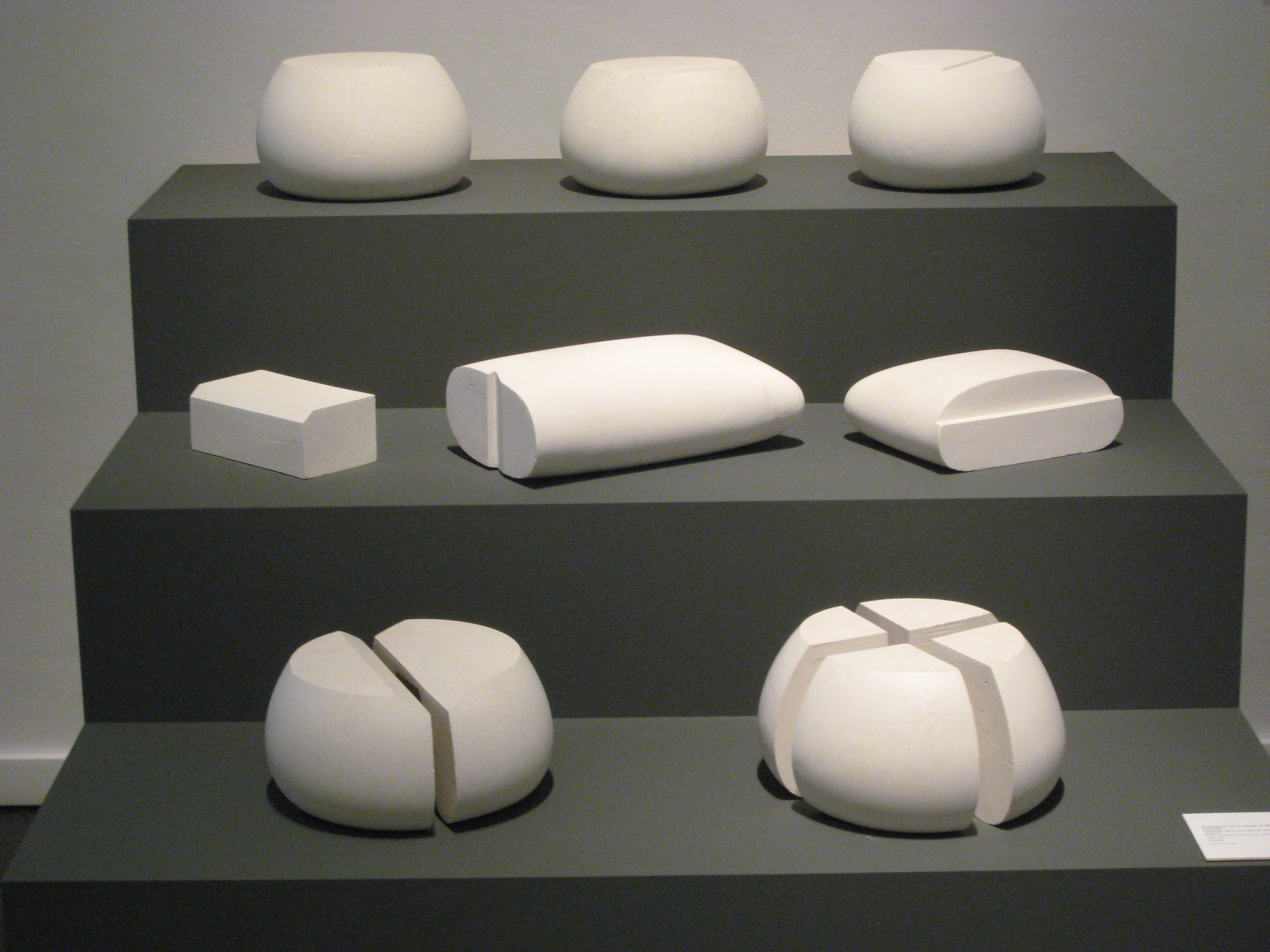
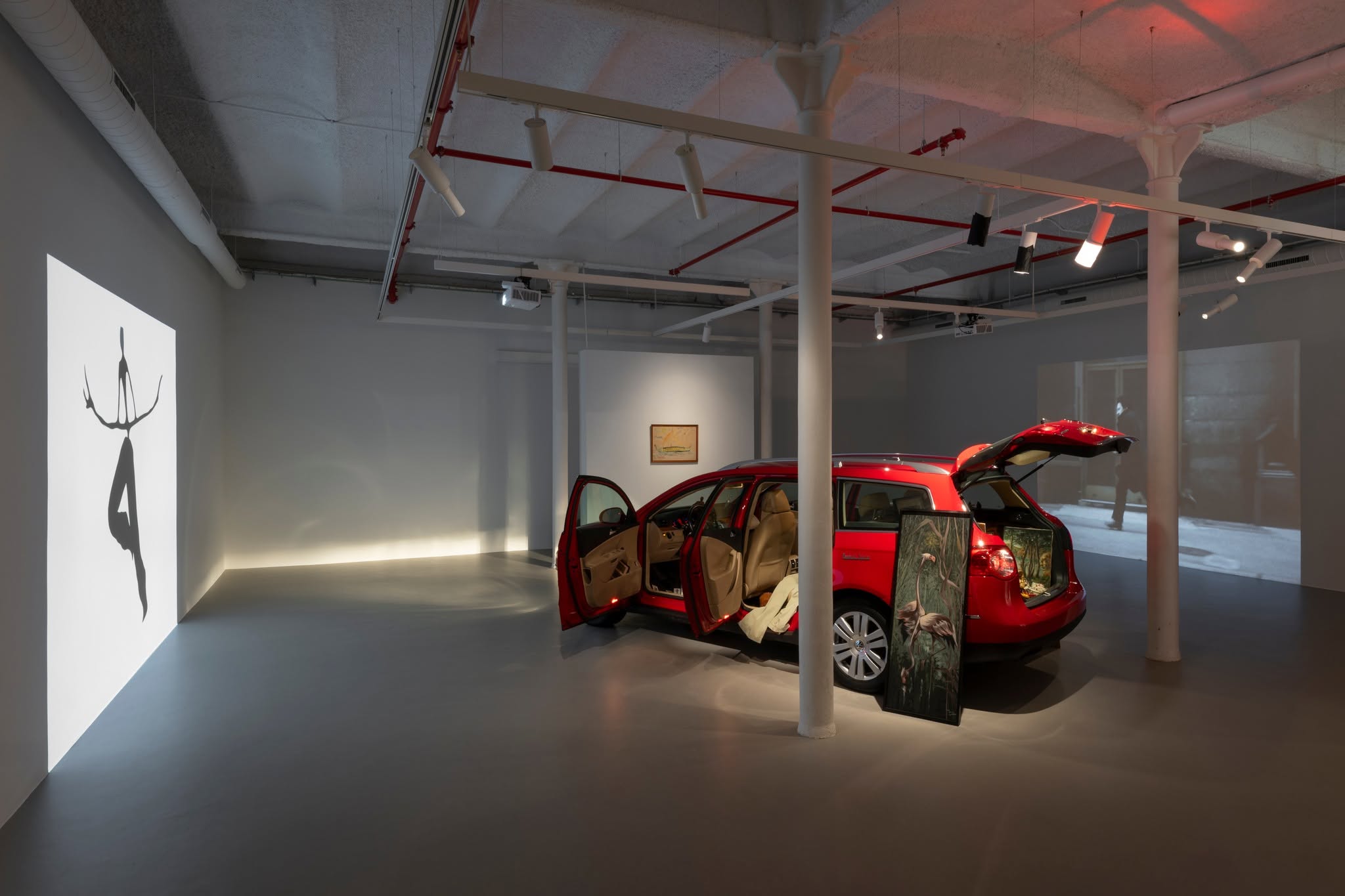
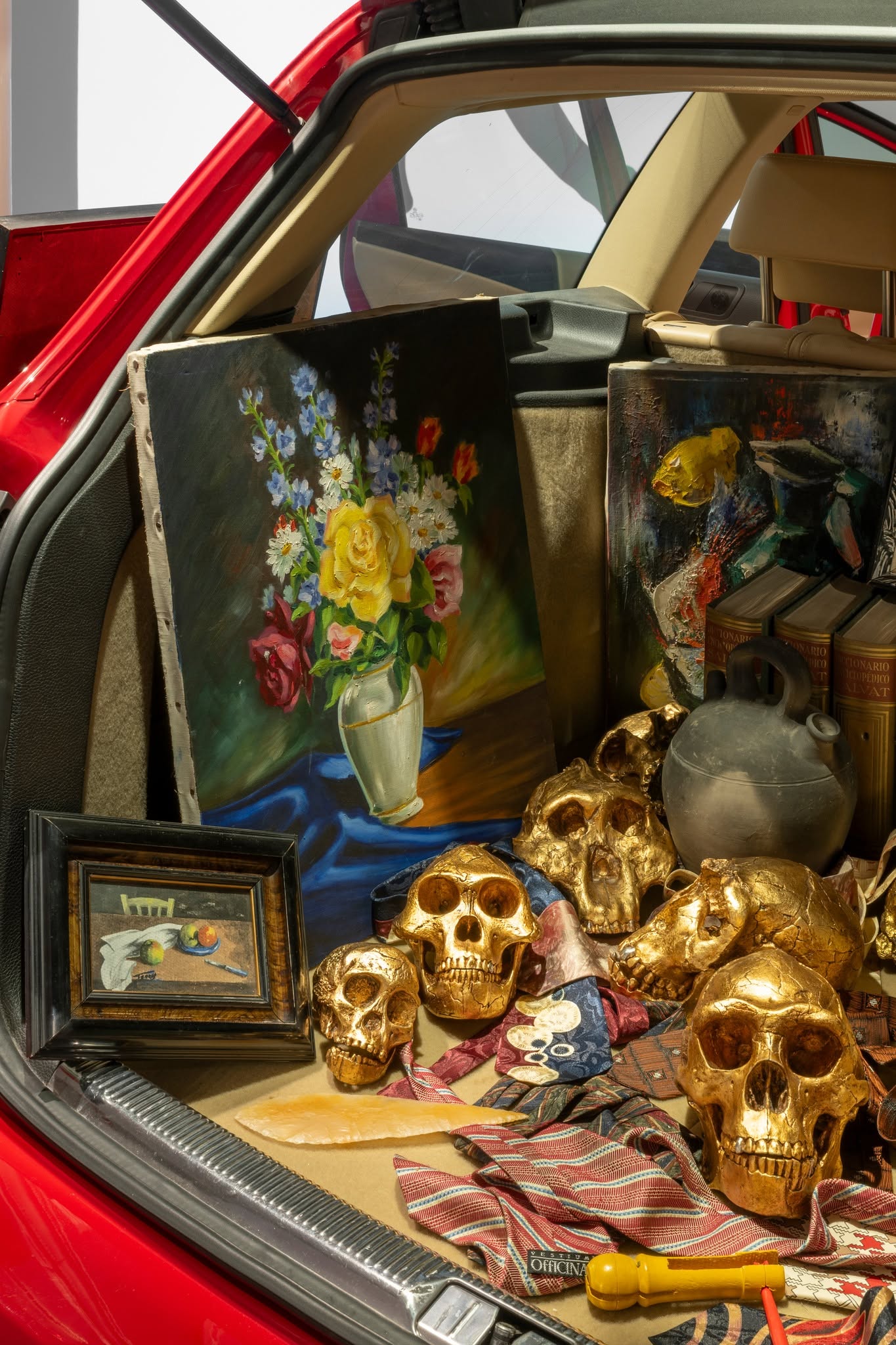
It had been 34 years since Francesc Torres had exhibited in a commercial gallery in Barcelona. The future is no longer what it was , curated by José Luis Pérez Pont, inaugurated the SELTZ by Ritter Ferrer exhibition season as part of the Barcelona Gallery Weekend. In this exhibition, as we saw in 2018 at the MACBA with La Campana hermética , in which he exhibited his personal archive, we find, in both cases, how his family memories derive into an artistic installation. The artist's sentimental emotion, the personal memory 'camouflaged' by social anthropology. The exhibition has already been reviewed in Bonart and I will not talk about it.
But I do want to highlight the importance of form in the work of this conceptual artist. In a previous article I claimed , among other things, that in the new stage Valentín Roma had to let the FORM of art in, that it had to coexist with 'textualism', political and social conflict, and now is the occasion to remember this, since the influence that this conceptual artist has in the MACBA environment is well known.
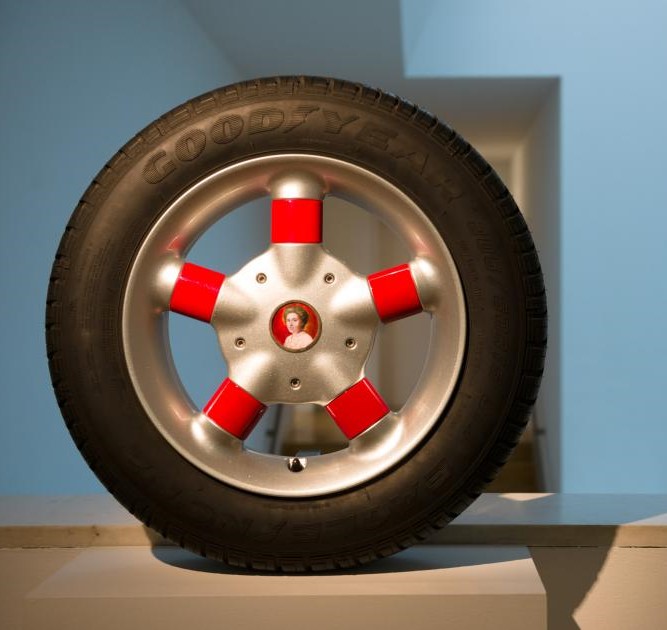
We all know and praise the great work of Francesc Torres on issues such as memory, history, politics and commitment in art. But few notice the relevance that FORM has in his works; it is considered a minor element and the message and concept are prioritized before the object.
Francesc Torres did a magnificent retrospective at MACBA in 2008: Da capo . It means starting over and contained a reflection on time that he now ratifies again with The Future is No Longer What It Was . In all his works, even when he raises a question as dematerialized as time, he does so through relevant objects. We know that conceptual art, since Simón Marchán Fiz wrote his famous essay From the Art of the Object to the Art of the Concept , made many artists of the seventies and subsequent years consider a paradigm shift. From matter to idea. However, in Francesc Torres the object continues to be a fundamental element of his work. It is not an object that disregards the aesthetic charge, but rather reinforces the idea. In the extensive textual contribution to his catalogue for the MACBA, he said that what gives Picasso's Guernica its recognized strength is that, beyond being a manifesto against horror, it is its condition as a well-painted painting. In an ironic tone, he said, in recognition of the material things well made and executed by the artists: "Let us hope that the recent idea of associating left-wing critical radicalism in art with the total absence of executional skill will never be applied to microsurgery or sex."
I believe he can say this with conviction because his first training, even if it was brief, was at the Massana School of Arts and Crafts in Barcelona. He must surely deny this formative stage, as many renowned artists who have gone there do. But I am convinced that it was there that he discovered the power of form, something that would make him go to Paris in 1967 to meet and study with Piotr Kowalski, who would exert a notable influence on Torres and Àngels Ribé. The Franco-Polish sculptor, architect and mathematician understood form in art beyond a mere aesthetic representation, but as the direct result of physical laws, scientific data and geometries in tension. He must surely have been the one who first spoke to him about MIT, the logic and complexity of form, of volume as a dynamic phenomenon in space. From that moment on, he would never abandon the formal, scientific and conceptual character of his works. This interaction of areas allows him to relate complex systems such as anthropology, sociology and historical memory, but without ever losing reference to the physical object, its material circumstance, its phenomenal relationship and, for this reason, his work, no matter how conceptual it is, has never abandoned the mystery of form, matter and object.
The presence of an object can be as subversive as an idea. This was the case with his famous 1989 installation, Oikonomos , which he exhibited at the Whitney Museum in New York. It represented the complex web of ideas about the role of the economy in the world; however, the controversy was organized not so much by the radical ideology with which the artist worked or by the projected images, but by the defiant use of objects: a sculpture of Zeus, a baseball bat and a monitor suspended from the genitals of the divine replica.
A material fascination that is already found in its beginnings with the visual poetry of “Brossian” influence, or in works from 1968, such as Prototype for a Series of Multiples or Poéme-Eméop . The artist's analogical capacity was demonstrated with the choice of the film Silk Stockings , by Rouben Mamoulian, as the starting point for his workshop-seminar at the MACBA (2008), which, with the title Silk Stockings or the 20th Century Has Not Happened , is an analysis of an era.
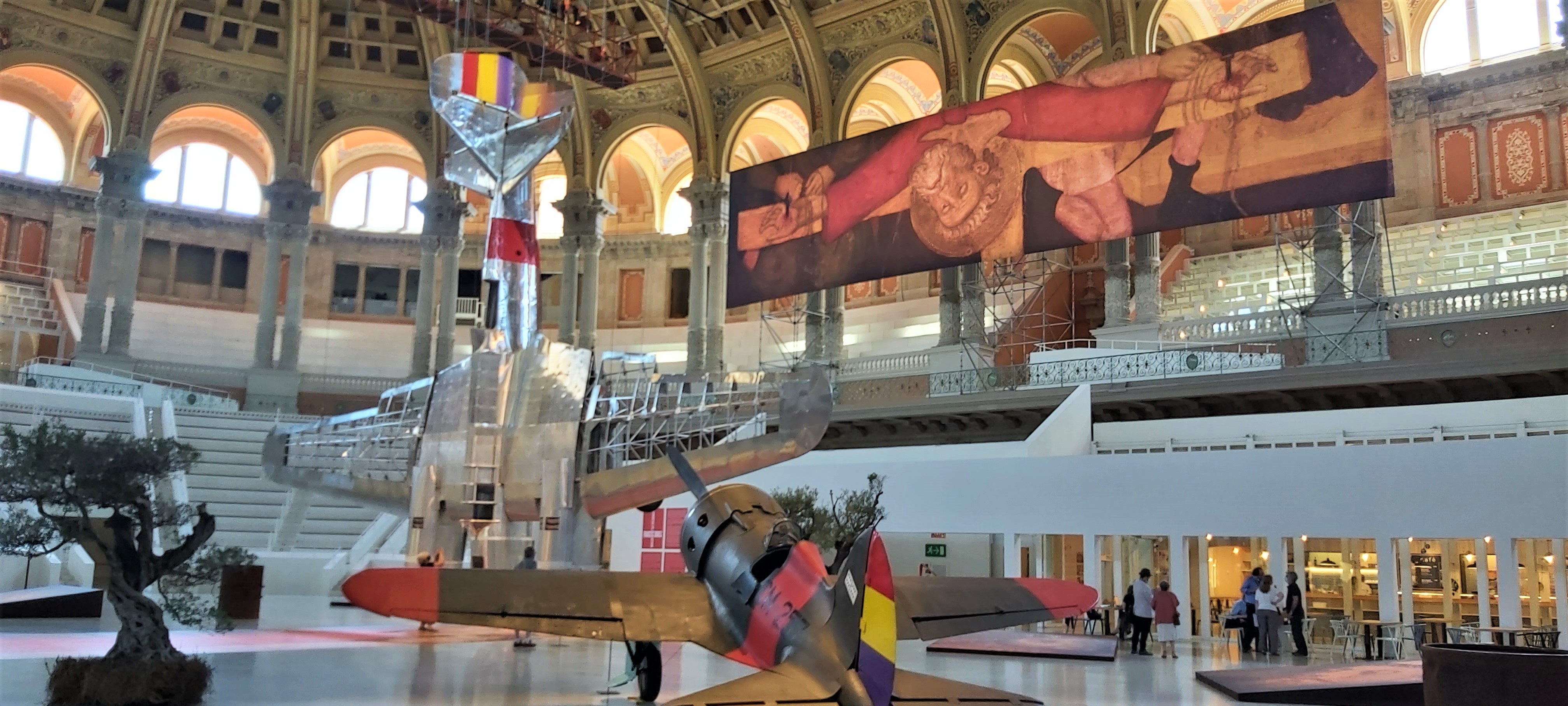
As a demonstrative culmination of what I am saying, I will mention the use of the powerful form of a real airplane. The last time it was at the MNAC: its magnificent presence and size produced stupor in the visitor. Hanging from the tail down, it looked like an inverted cross. The concept of the background was sacrifice and he wondered if today it would be possible to find someone who would sacrifice himself for his ideas, as a hundred Russian aviators did during the Civil War and another 500,000 between both sides. He also placed some smaller airplanes, such as those that landed and took off from the Els Plans airfield, in La Sénia (Tarragona). The notion of sacrifice was there from the very beginning: 9,000 olive trees were cut down for its construction; the result was a military airfield from the Spanish Civil War. To delve deeper into the concept of sacrifice, he exhibited a giant reproduction of a work by the master of Pere Serra that represents another sacrifice, this one due to faith: we see the martyrdom of Saint Peter with the inverted cross.
Whether in war, as a bomber or a spy plane, as always happens with his work, what is relevant ends up being the cross-shaped shape of an object, which is what ends up permeating our retinal memory. The symbolism of the cross and the return of SHAPE.
You may be
interested
...