Exhibitions
The dance of wounded bodies
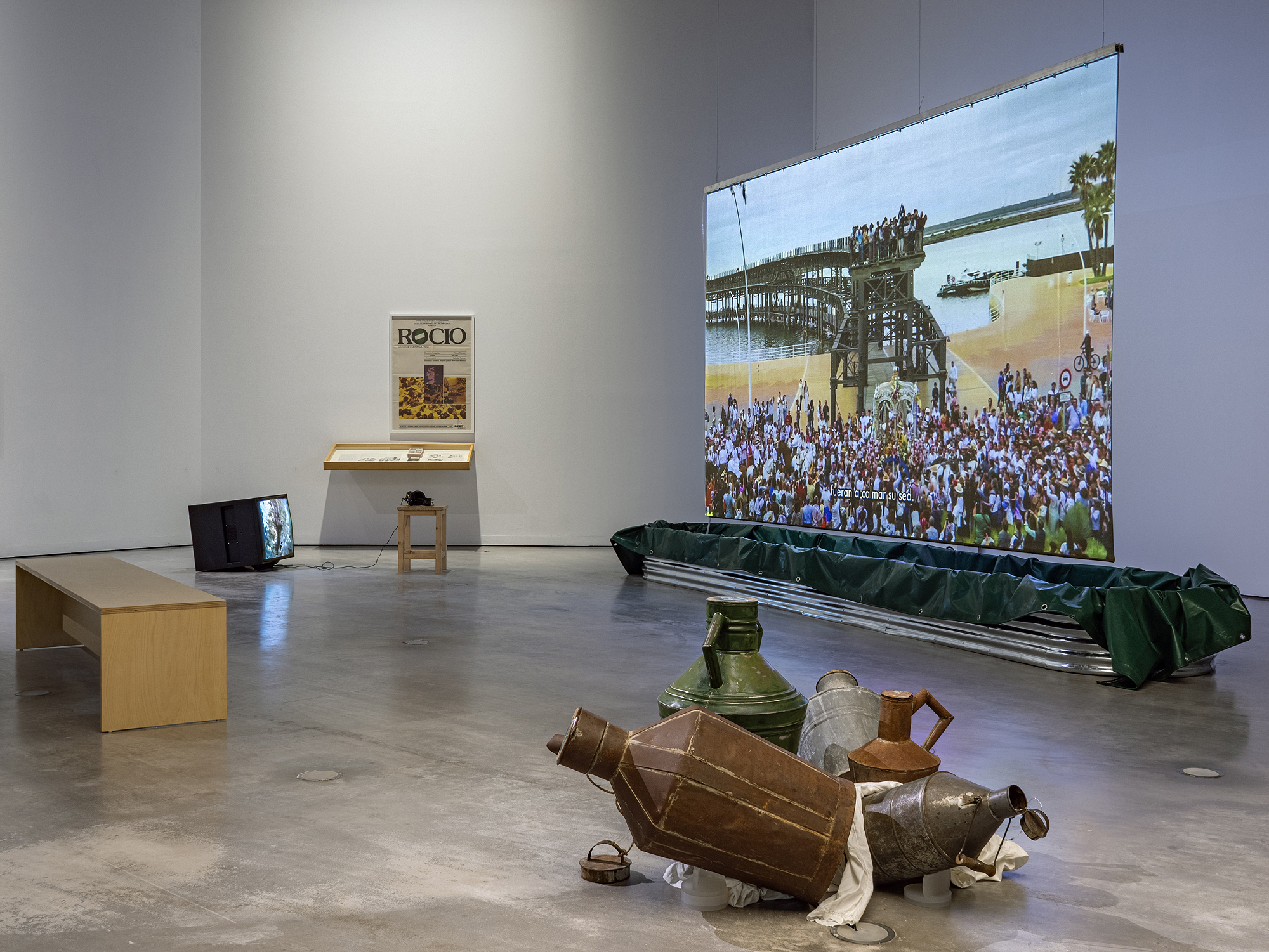
Suffering can also dance. In the convulsive movements, repetitive rhythms, and ritual gestures that have accompanied tarantism for centuries lies a way of expressing what society is not always willing to hear. From this perspective, *The Tarantula's Bite: South and Folklore* offers a contemporary reading of popular practices from the South, understood not as vestiges of a remote past, but as cultural expressions marked by social conflicts, inequalities, and forms of resistance.
The Andalusian Center for Contemporary Creation (C3A), in Córdoba, presents this exhibition in gallery T4, curated by Lluís Alexandre Casanovas Blanco. Open from October 16, 2026 to March 28, 2027, the exhibition brings together historical materials, photographs, paintings, documents and films from the research of the Italian anthropologist Ernesto de Martino (1908-1965), which are placed in dialogue with recent works and new productions by Andalusian artists.
The project revisits De Martino's thinking and his approach to the ritual practices of southern Italy during the 1950s. His work, influenced by the philosopher Antonio Gramsci and the writings of the poet and painter Carlo Levi, challenged interpretations that reduced peasant cultures to a set of superstitions or marginal folkloric manifestations. Exiled to Lucania in 1935, Levi discovered a society marked by poverty, isolation, and precariousness, in which beliefs and customs constituted fundamental elements of collective life. De Martino found in this experience a way to understand the rural world as a political and cultural subject, capable of producing its own languages and forms of knowledge.
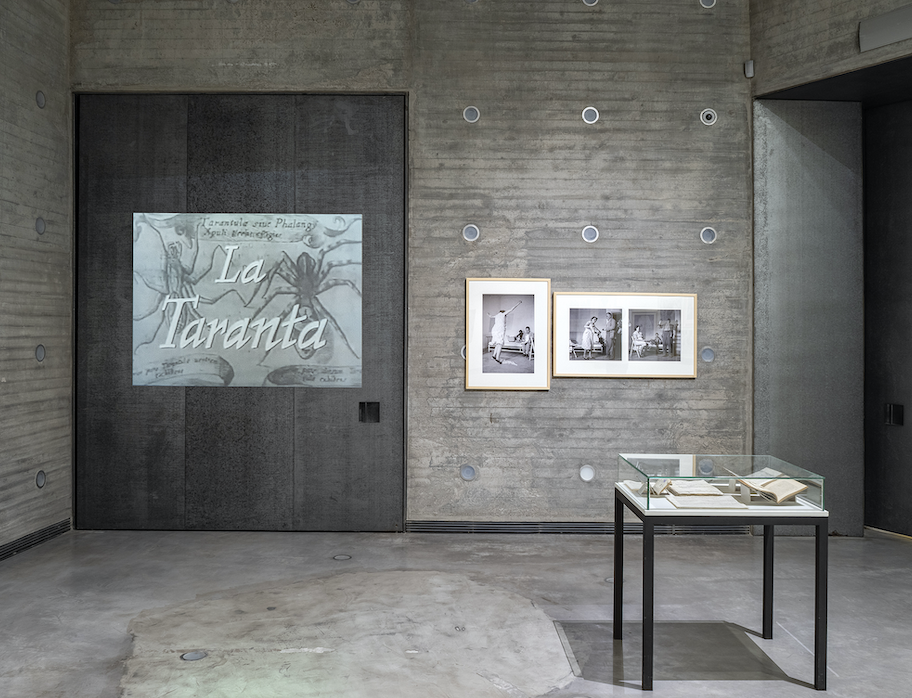
The exhibition focuses on one of the phenomena that most interested the anthropologist: tarantism, a condition popularly attributed to the bite of a tarantula, whose symptoms were associated with states of apathy, convulsions, and trance. According to tradition, recovery involved participation in music and dance rituals that allowed the externalization of the discomfort and the restoration of a certain equilibrium. Beyond its medical explanation or its interpretation as superstition, De Martino understood these practices as cultural mechanisms through which certain communities gave form to experiences difficult to express by other means.
Published in 1961, *La terra del rimorso* is a fundamental reference for this research. In the book, the anthropologist drew on historical sources documenting similar phenomena in various European territories, including the Iberian Peninsula. The exhibition includes medical records and treatises that recorded cases of tarantism in Andalusia and Castile during the 18th and 19th centuries, as well as testimonies and records extending into the mid-20th century. These materials allow us to reconstruct the persistence of practices that transcend the boundaries between medicine, religion, tradition, and bodily expression.
In this interpretation, ritual acquires a dimension that transcends the realm of popular beliefs. The body becomes the site where the tensions of a society marked by inequality, precarity, and exclusion manifest themselves. Dance makes visible not only suffering, but also desire and conflict; it offers a form of presence to those who occupy marginalized positions and whose grievances rarely find recognition in dominant discourses. The tarantula bite thus functions as a metaphor for the social wounds that run through history and reappear in different forms in the present.
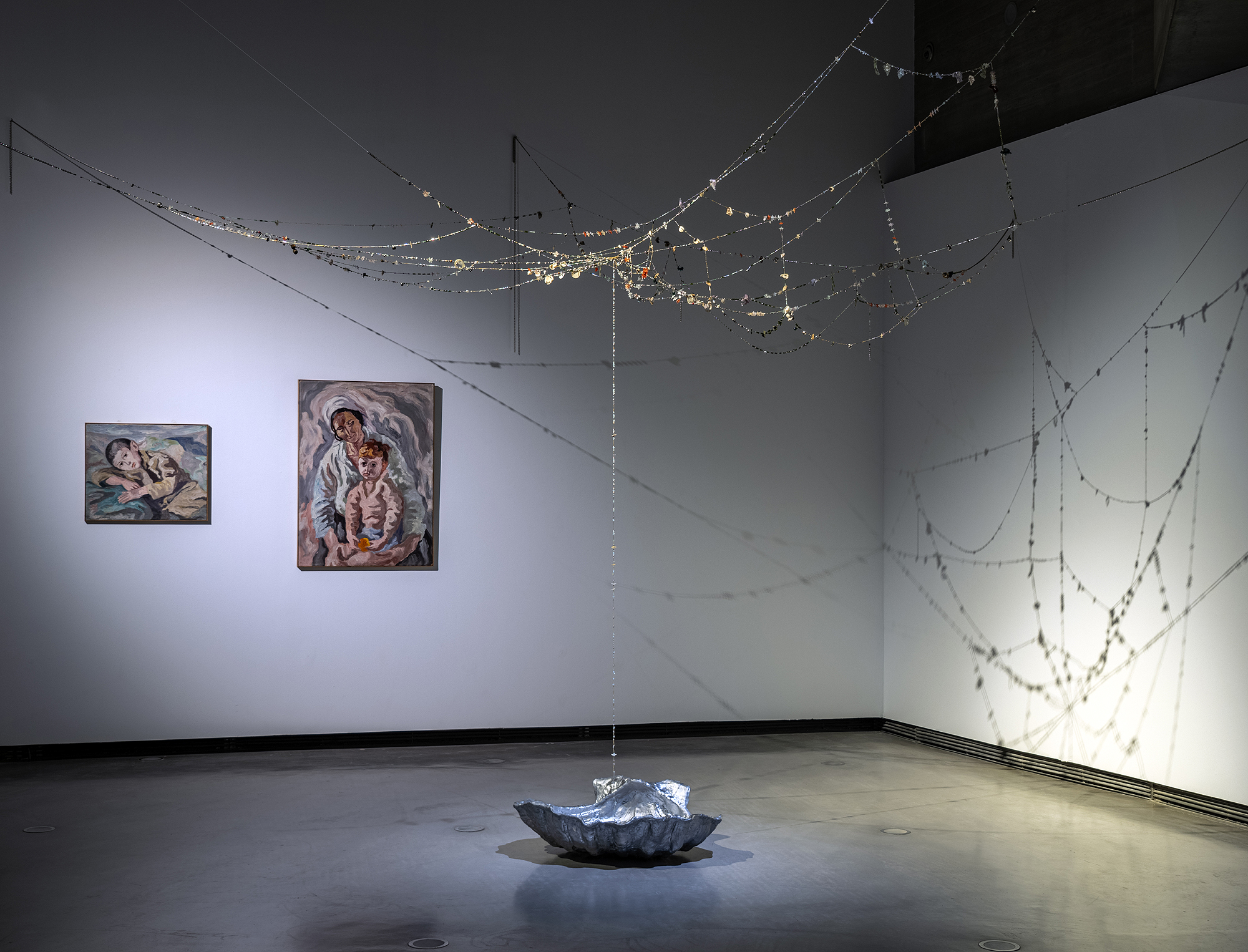
Building on this legacy, The Tarantula's Bite: South and Folklore establishes a dialogue between anthropological research and contemporary artistic practices. The works gathered here do not merely document traditions or recover images of an idealized Andalusia. On the contrary, they propose critical approaches to the ways in which folklore has been constructed, represented, and used to define collective identities. In contrast to the distrust with which previous generations of artists approached certain popular imaginaries, new practices engage with them as contested territories, traversed by issues of class, gender, memory, and belonging.
The appropriation, displacement, and transformation of these cultural repertoires allow us to re-examine their meanings and activate new possibilities for identification. Folklore ceases to be understood as a static inheritance and becomes a space open to reinterpretation, where traces of the past and the urgencies of the present coexist. In this process, popular practices reveal their capacity to generate alternative relationships with the land and the communities that inhabit it.
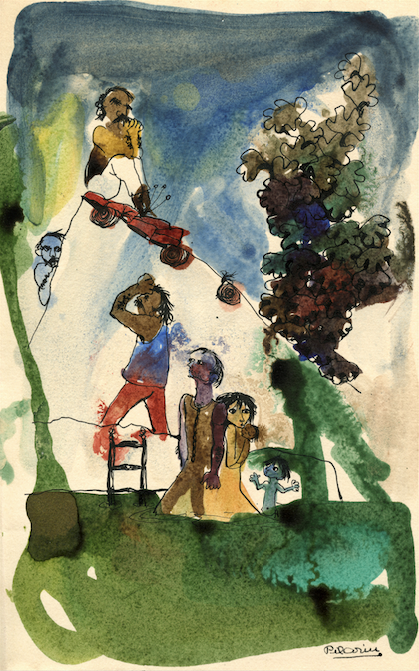
The exhibition brings together works and materials related to María Alcaide, María Rosa Aránega, Diego Carpitella, Mateo Chica, the Málaga Film Cooperative, Ernesto de Martino, Lino Del Fra, Giuseppe Ferrara, Manuela García de la Vega, Carlo Levi, André Martin, Gianfranco Mingozzi, Pier Paolo Pasolini, Franco Pinna, Fernando Ruiz Vergara with Ana Vila, the Universidad Popular del Mediodía (Southern Popular University), and Manuel Zapata. The diversity of artists and formats creates a journey in which historical documentation and artistic creation engage in a dialogue.
You may be
interested
...