
News
Girona is preparing a new story to tell 2,100 years of history
The History Museum is renovating the first floor to create an exhibition that will place people, society and ways of life at the centre of the story of the city. The reopening is scheduled for May 2027 and, while the works are ongoing, entry to the facility will be free.
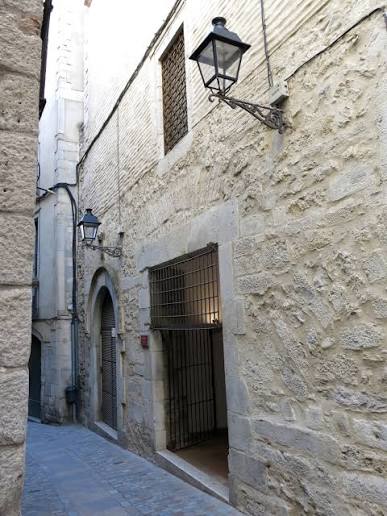
The Girona History Museum is beginning a new phase with the transformation of the first floor, a project linked to the commemoration of the 2,100th anniversary of the city's foundation. The intervention involves the temporary closure of the rooms previously dedicated to Roman and medieval Girona, which will be renovated to accommodate a new exhibition proposal designed to offer a transversal reading of Girona's past. The remodeled space is expected to open its doors at the beginning of May 2027.
Under the title City, society and life , the new exhibition will be part of the project Girona 2100 years: 21 objects for 21 centuries , an initiative that aims to review the history of the city from a contemporary perspective. The main change will be narrative: the tour will no longer follow a strictly chronological sequence to be structured around social issues, with people and their ways of life as the protagonists. In this way, the heritage objects will maintain their presence, but will be integrated into a renewed discourse that will relate different historical periods and the questions of the present.
The project will occupy the entire first floor and will incorporate, in addition to the Rome and medieval Girona rooms, the temporary exhibition space and the Ermessenda room, until now mainly intended for conferences and other activities. The curator will be Carme Sais Gruart, head of the Visual Arts, Museums and Heritage Service of Girona City Council, together with Sílvia Planas Marcé, director of the History Museum. Pep Canaleta will assume the design curatorship.
The renovation will not, however, imply the disappearance of the pieces that until now formed the permanent story. A large part of the objects and elements exhibited in the rooms dedicated to Rome and the Middle Ages will be recovered in the new proposal, although presented from a different perspective. The aim is to overcome traditional temporal divisions and explore how collective life, social structures and urban identity have been shaped over the centuries.
The deputy mayor and councilor for Culture, Quim Ayats Bartrina, considers that the bimillennium represents an opportunity to update the way of explaining the history of Girona and connect it with current concerns. In this sense, the intervention aims to reinforce the role of the museum as a space for knowledge and interpretation of heritage, beyond the chronological presentation of historical events. During the period of partial closure, the facility will remain open and offer free admission, as only part of the usual route can be visited.
New perspectives from art and culture
While the remodeling work progresses, the History Museum will maintain exhibition activity on the fourth floor with two proposals dedicated to prominent figures in Girona culture. The first, Remembering Varés , will vindicate the career of Antoni Varés, a multifaceted creator linked to the city. The inauguration will take place on Monday, October 26, at 7:30 p.m. The second exhibition will be dedicated to Narcís Comadira, artist and writer, and will present a selection of his work in a specific section that can be visited from the end of January 2027.
The bimillennium commemoration also extends to other spaces and institutions in Girona. The program, coordinated by the City Council, brings together museums, archives and entities in the city in an agenda that combines research, dissemination and heritage discovery. Among the planned activities are the conferences Girona, a city to discover and Ten discoveries of our heritage , as well as guided tours of the archive and museum holdings. Also included are the series The future is written, only the Roman past is unpredictable , the exhibition program Legacies in power and the initiative 21 centuries/21 architectural events , which proposes approaching urban history through its architectural transformations.
One of the central moments of the commemoration will be the Girona Bimillennium Congress, organized by the Institut d'Estudis Gironins and the City Council. The meeting will bring together specialists to delve deeper into the foundation of Roman cities and their urban, political and social evolution over time.
The celebration takes as its reference the origins of Gerunda, traditionally founded between 76 and 77 BC, and presents an opportunity to review the city's legacy from different disciplines. In this context, the transformation of the History Museum becomes one of the most significant actions of the program: it is not only a matter of renovating some rooms, but of rethinking how the past is narrated and how it can continue to dialogue with contemporary Girona.


You may be
interested
...