Exhibitions
Miró against the painting
Protest as the driving force behind the experimentation of an artist who made breaking up a form of freedom.
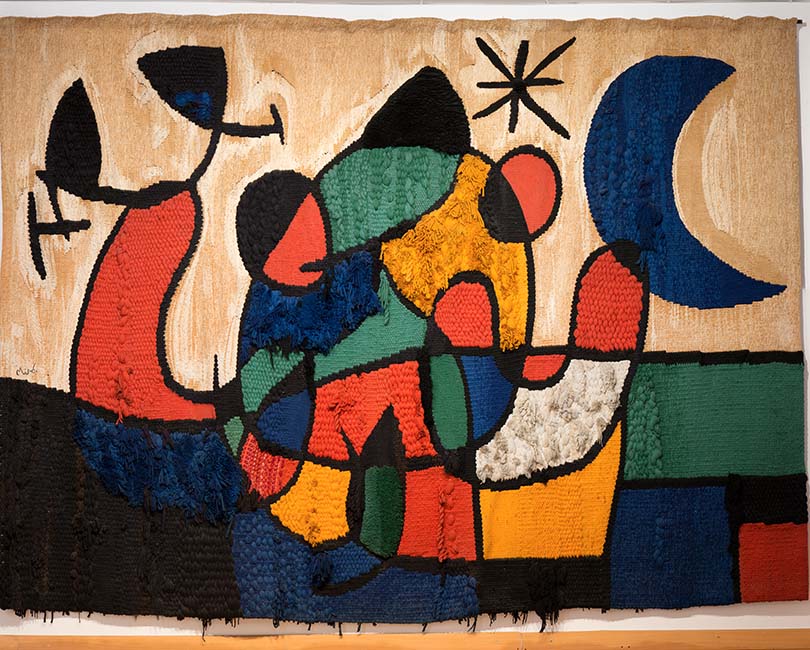
Abattoirs de Toulouse dedicate a monographic exhibition to Joan Miró (1893-1983) for the first time and do so from a particularly suggestive perspective: understanding protest not only as a political attitude, but as an active principle of his artistic practice. Protestation , which can be visited from October 3 to March 7, 2027, brings together nearly two hundred works and proposes to review Miró's career from his permanent desire to question painting and its limits.
The title of the exhibition refers to an episode in 1926, when Louis Aragon and André Breton publicly protested against Serge de Diaghilev's ballet Romeo and Juliet , for which Miró had designed the costumes. That gesture now serves as a starting point for reconstructing a trajectory in which the break with conventions is not anecdotal, but structural. Miró gradually understood that in order to renew painting it was also necessary to put it in crisis, to the point of formulating the desire to assassinate it .
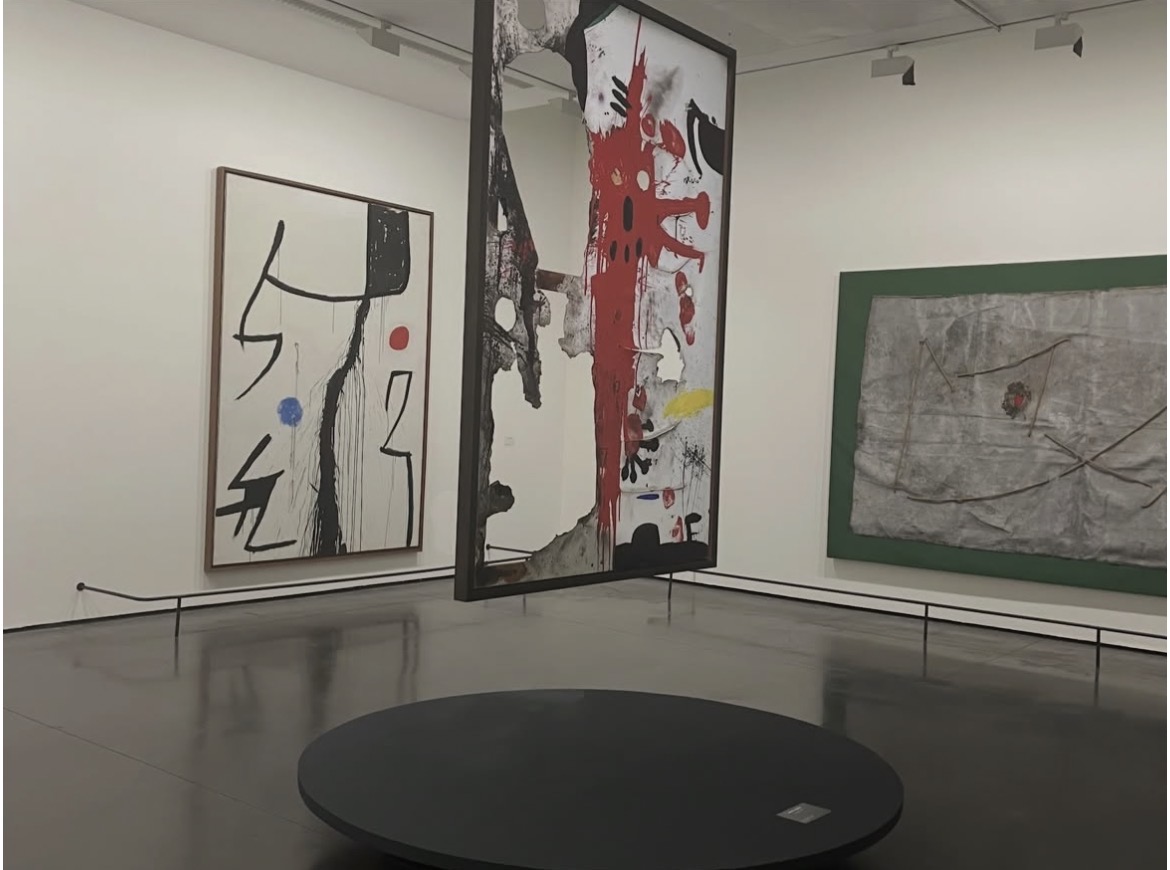
The chronological journey shows this insubordination through works and experiments that move away from the idea of a Miró who is simply lyrical, poetic or identifiable with a repertoire of signs. Between 1927 and 1937, the artist explores dance and scenography, works with unusual materials and paints on surfaces such as unprepared canvases or sandpaper. Later, the introduction of poor materials, the radical simplification of the compositions, the violence of the gesture and the deformation of the bodies evidence a desire to strip painting of any solemnity.
The Barcelona Series (1939-1944) constitutes one of the essential moments of this attitude. Made in a context marked by the Civil War and, later, by the Franco dictatorship, the series replaces conventional beauty with a disturbing, almost convulsive iconography. The scream, violence and deformation become forms of resistance. The works of the seventies also recover this tension, when Miró, far from accommodating himself to the prestige he had achieved, radicalizes his physical relationship with matter and gesture.
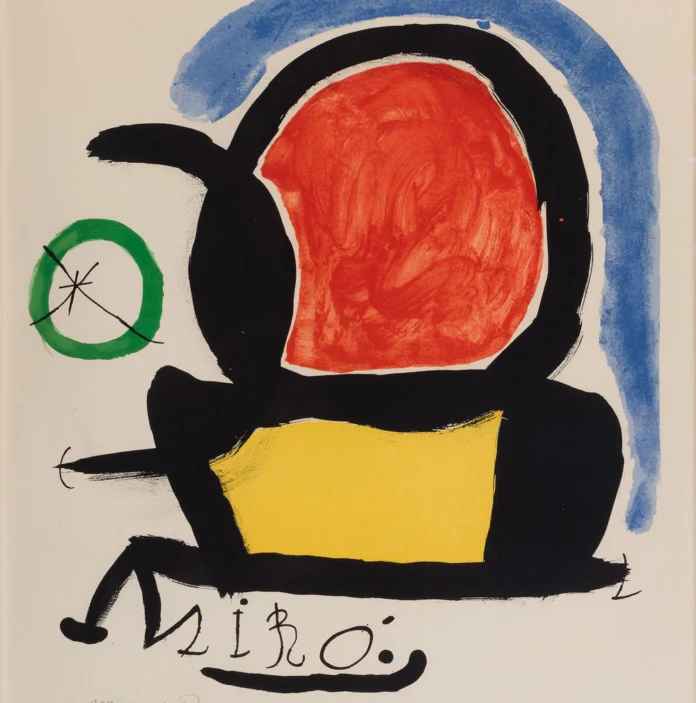
It is precisely in this final stage that the exhibition questions one of the most persistent clichés about great modern artists: that of the solitary creator. In the mid-1970s, Miró established a series of partnerships with artists of a younger generation, including the upholsterer Josep Royo, the filmmaker Pere Portabella and the theatre company La Claca. With them, his work ceased to be just an individual investigation and became a space for dialogue and confrontation.
Collaborations with Josep Royo allow us to recover an exceptional set of tapestries and overweavings produced at the Farinera in Tarragona. With Pere Portabella, cinema becomes a new way of documenting and expanding Mirón's experimentation. And with La Claca comes one of the most politically explicit episodes: Mori el Merma , created in 1976 and freely inspired by Ubu roi , by Alfred Jarry. The grotesque figure of Ubu, symbol of despotic power, here adopts the features of Francisco Franco.
This political dimension is particularly significant because it does not appear separate from formal research. In Miró, the protest against authoritarianism and the protest against academic painting are part of the same attitude of rebellion. The artist does not simply illustrate a political position: he transforms his own artistic practice into a territory of resistance.
The reading proposed by the Abattoirs also acquires a particular relevance due to the fact that it coincides with another exhibition dedicated to Miró that is being presented in Perpignan. This geographical proximity allows for an interesting dialogue between two perspectives on an artist who, eighty years after his international consecration, continues to offer readings that are far from the most friendly image of his universe.
You may be
interested
...