Exhibitions
Alberto Ardid imagines a place where threat and hope coexist.
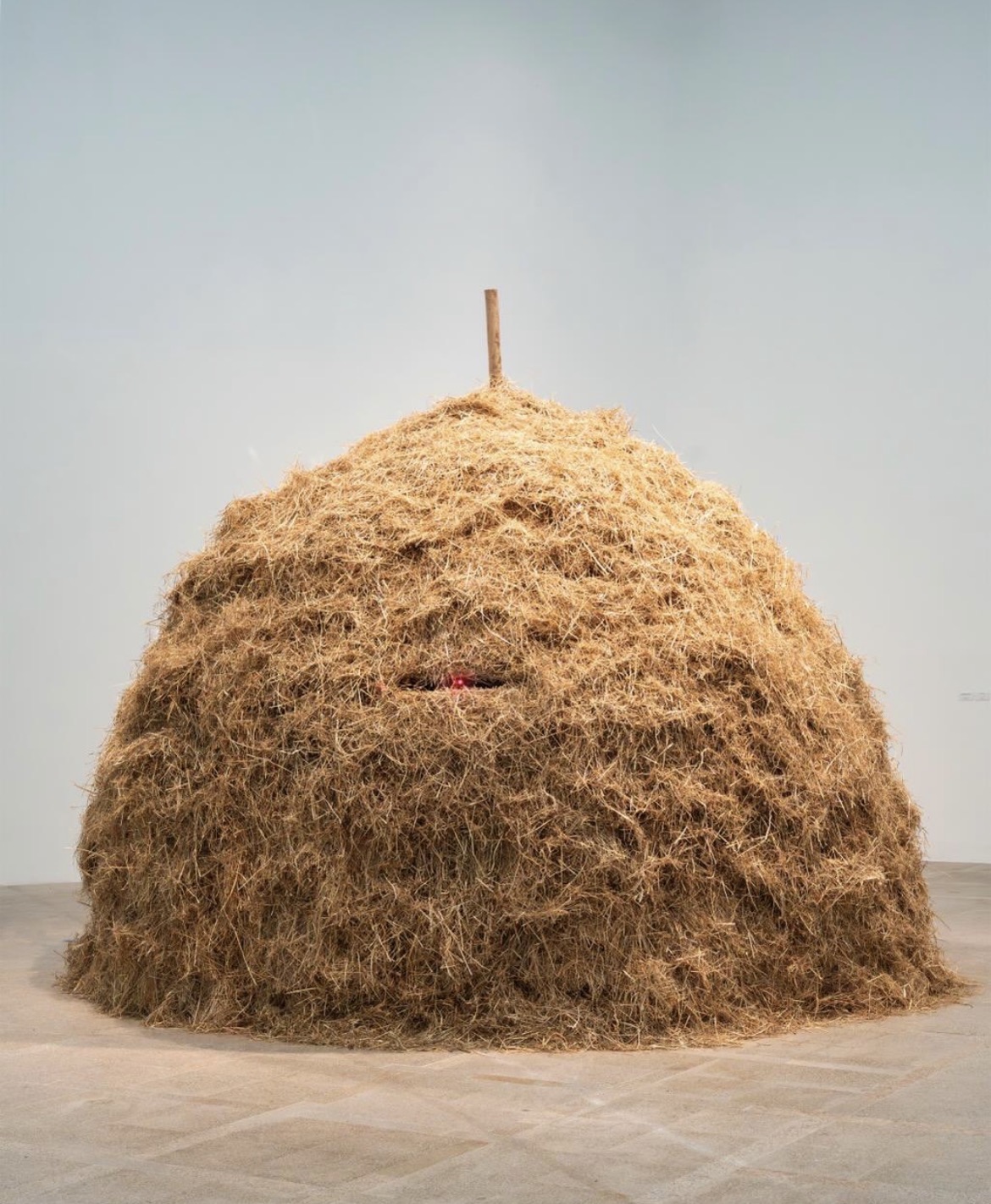
In Hai un lugar (There is a place) , Alberto Ardid transforms the spaces of the MARCO Museum in Vigo into an ambiguous stage, a parallel reality very close to our own where objects, landscapes, and everyday actions acquire new meanings. The exhibition presents a journey between sculpture and installation, centered around a fundamental tension: the feeling that evil seems to prevail over good, but where small gestures still remain, capable of opening a door to hope.
Curated by Miguel Fernández-Cid and Pilar Souto Soto, the exhibition brings together works conceived as chapters of a fragmented narrative. Each piece functions autonomously, yet simultaneously establishes connections with the others and with the spaces it occupies. Ardid does not construct a closed narrative, but rather a territory of interpretation where the visitor must proceed attentively, observing the signs, contrasts, and paradoxes.
The artist transforms the museum's courtyards into imaginary outdoor spaces. In one of them, Lugar (Place) addresses the idea of private property from a perspective linked to the Galician landscape. Colorful forms, paintings, and carpets delineate fictitious plots of land framed by stone borders, creating a kind of constructed landscape that gradually reveals its internal tensions. What seemed like an ordered image of the territory begins to speak of boundaries, appropriations, and conflicts between the private and the collective.
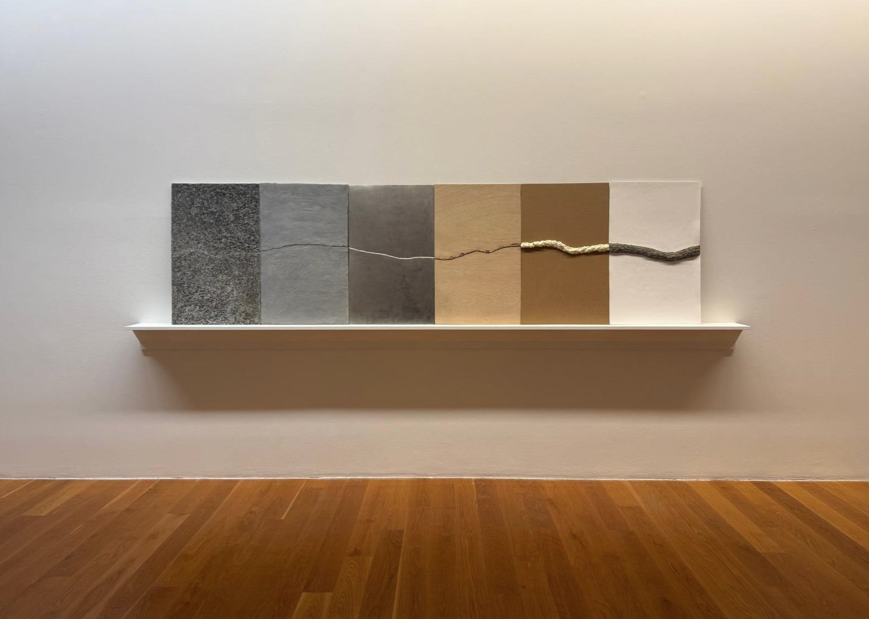
Alberto Ardid. Suture, 2018, Photo: courtesy of the artist.
The walls of the space also form part of this narrative: the glass has been replaced by fragments of Sargadelos ceramics; the yellow shapes that define the plots coexist with gray ones that seem to watch over them; an arch located on a nearby balcony acquires a disquieting presence. The scene thus transforms into a reflection on the way in which common spaces are occupied and conditioned.
The exhibition continues with a series of situations where the everyday is displaced. Elements related to education, food, energy, and leisure are incorporated into the display to show how even the most basic aspects of life can be permeated by systems of control and consumption. Blackboards transformed into targets, paints vacuum-packed as if they were fresh food, and a lit candle defying the fire alarm introduce a mixture of irony, strangeness, and critique.
In the galleries of MARCO, new games of association emerge: bronze nests that evoke Asian hornets, COVID dust transformed into a relic, or paintings presented as mass-produced industrial goods. Ardid works with the transformation of meaning, with that capacity of objects to cease being what they seem and become symbols of a more complex reality.
The second courtyard initially presents a recognizable image: a palleiro (a traditional Galician farmhouse), references to the rural landscape, and an evocation of the sun and the universe. But this tranquil appearance soon shifts. The landscape becomes a banner, the palleiro takes on a political dimension, and the idyllic scene gives way to a space for debate about our relationship with the environment.
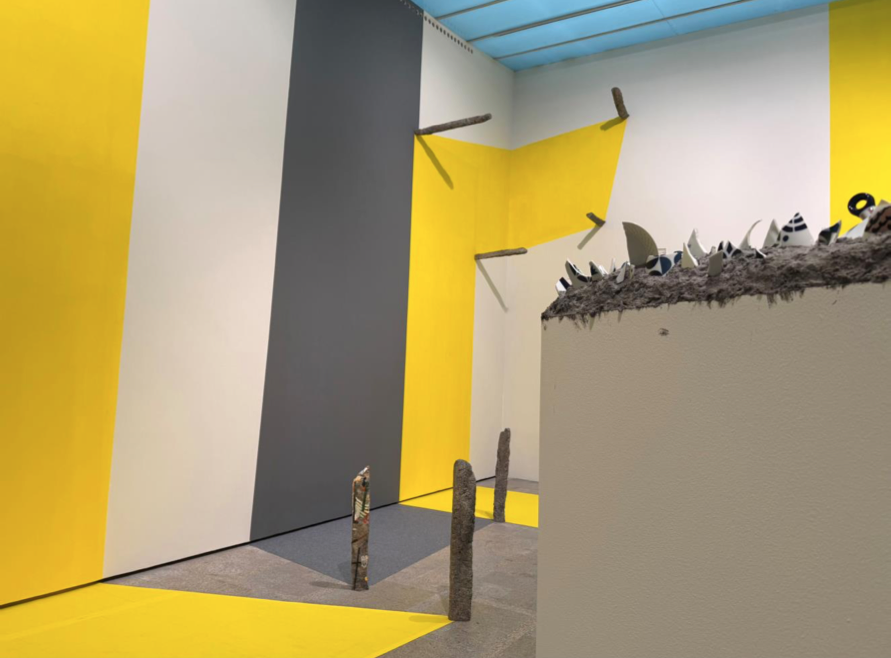
Alberto Ardid. Place, 2026. Installation. Photo: courtesy of the artist.
Alongside these collective readings appear more intimate and poetic actions: a temptation hidden in a cleaning closet or a machine that insistently asks the visitor to unplug it. Small stories within a larger narrative that blend humor, absurdity, and reflection.
The exhibition explores the possibility of repairing what appears broken. A felled tree can become an ecological gesture if it is a eucalyptus; fragmented materials find new ways of joining together; an industrial element is transformed through classical architectural references. Amidst waste and remnants, a persistent idea emerges: the possibility of reconstruction.
The tour culminates in the museum's panopticon, conceived as a crossroads where fiction meets reality once again. The remains of an accident and the symbolic presence of a bouquet of chrysanthemums introduce an emotional dimension that speaks of memory, fragility, and empathy.
You may be
interested
...