Opinion
CGAC: the controversy shaking Galician culture
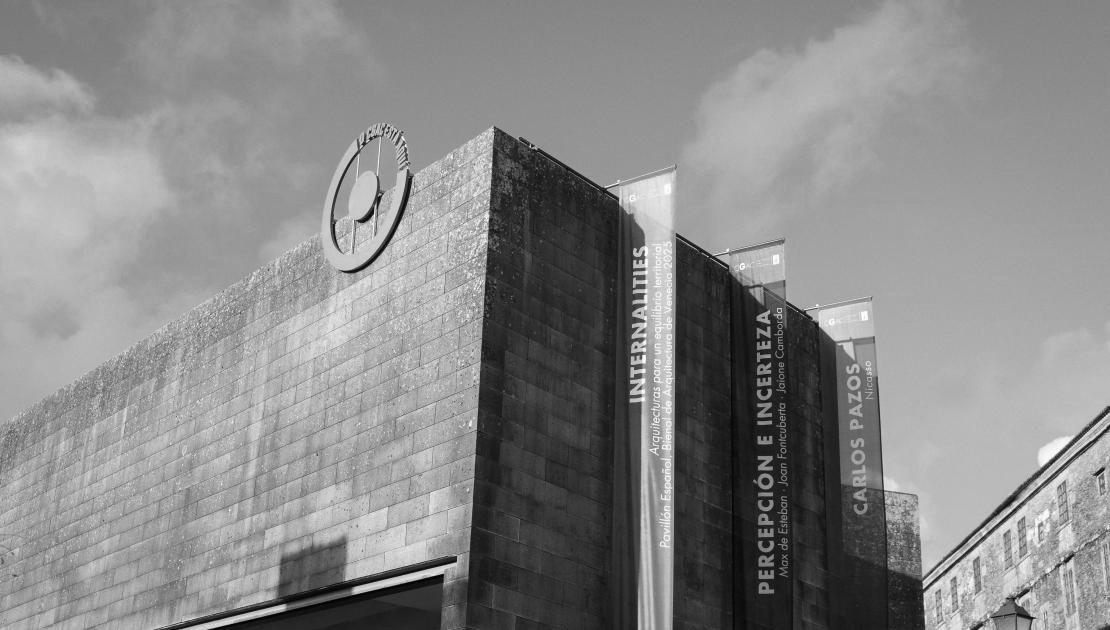
The recent appointment of Eva López Tarrío as the future director of the Galician Center for Contemporary Art (CGAC) has sparked one of the biggest cultural controversies in Galicia in recent years. Beyond the figure of the chosen candidate, the debate has brought to the forefront fundamental questions about the management model of public art institutions, transparency in selection processes, and the autonomy of spaces dedicated to contemporary creation.
The appointment of López Tarrío, still pending official confirmation, has been met with strong opposition from broad sectors of the Galician art world. Critics, curators, cultural managers, artists, and museum directors have questioned both the selection process and the professional profile of the future director, whom they consider a relatively unknown figure within national and international contemporary art circles.
The conflict is not an isolated incident. The controversy is framed within a context of growing concern about the evolution of the CGAC in recent years. For many professionals in the sector, the institution has gradually lost the prominence and influence that made it an essential reference point within the Spanish art scene. The replacement of Santiago Olmo, who directed the center for more than a decade, has acted as the trigger for a long-simmering discontent.
Criticism focuses particularly on the selection system used by the Galician Regional Government (Xunta de Galicia). The call for applications was made through a discretionary appointment process restricted exclusively to career civil servants, a method that various groups consider insufficient to guarantee the selection of the most suitable candidate to lead an institution as complex and important as the CGAC. From this perspective, the process would have considerably limited the participation of professionals with specific experience in museum management, international cultural management, or large-scale curating.
The cultural association La Vegliota , which has spearheaded much of the sector's mobilization, has gathered nearly 1,500 signatures in support of a more open and professional model for museum management. The signatories denounce what they perceive as increasing political interference in the institution's direction and warn of the risk of further erosion of its prestige, which they consider evident for years.
For its part, the Galician government (Xunta) defends the absolute legality and legitimacy of the procedure. Both the Galician president, Alfonso Rueda, and the Minister of Culture, José López Campos, have insisted that the selection fully complies with current regulations and is based on criteria of merit, ability, and project evaluation. The administration also points out that the CGAC does not operate as an independent foundation nor does it have its own board of trustees, but rather forms a direct part of the administrative structure of the Ministry of Culture.
However, the underlying issue transcends the legal debate. What is at stake is the model of cultural governance that should govern the main public institutions. The tension between administrative control and artistic independence is not unique to Galicia; it constitutes one of the major contemporary debates on the management of museums and art centers in Europe. While some defend the legitimacy of governments to appoint those responsible for publicly funded organizations, others demand more open, international mechanisms based on professional excellence.
The first consequences have already been felt within the CGAC itself. The resignation of several members of its advisory board reveals the depth of the existing disagreement and foreshadows a period of uncertainty for the institution. More than a personal dispute over a specific candidacy, the episode highlights a rift between official cultural policies and a significant part of the Galician artistic ecosystem.
The real challenge begins now. The future leadership must demonstrate whether it can rebuild bridges with a deeply critical sector and restore the CGAC's capacity to once again become a leading space for contemporary creation. Because the discussion open these days is not just about who runs a museum. It is, above all, about what role public culture should play in a democratic society and who has the responsibility to define its future.
You may be
interested
...