Exhibitions
The scene: Vicenç Altaió and Àngel Jové
Spaces of creation, memory and presence in contemporary art.
The reader will find in this text different journeys, places where there is an event relevant to contemporary art. Among them, there is apparently nothing that unites them, but this is not the case because in all cases there is the same thing: the strength of the place.
In all three examples, the "Genius Loci" that inhabits physical spaces is present. The power of place and the long shadow of Dadaism. Not as a historical instance, but as an intangible presence, as a private or domestic cult: the "genii locorum" that appear when we visit Freud's famous consultation in Vienna, El Greco's house in Toledo or Francis Bacon's studio and so many others. The visitor wants to know the territory, the family home or the workshop as a place where the acts of art, the demiurge of creation, have occurred.
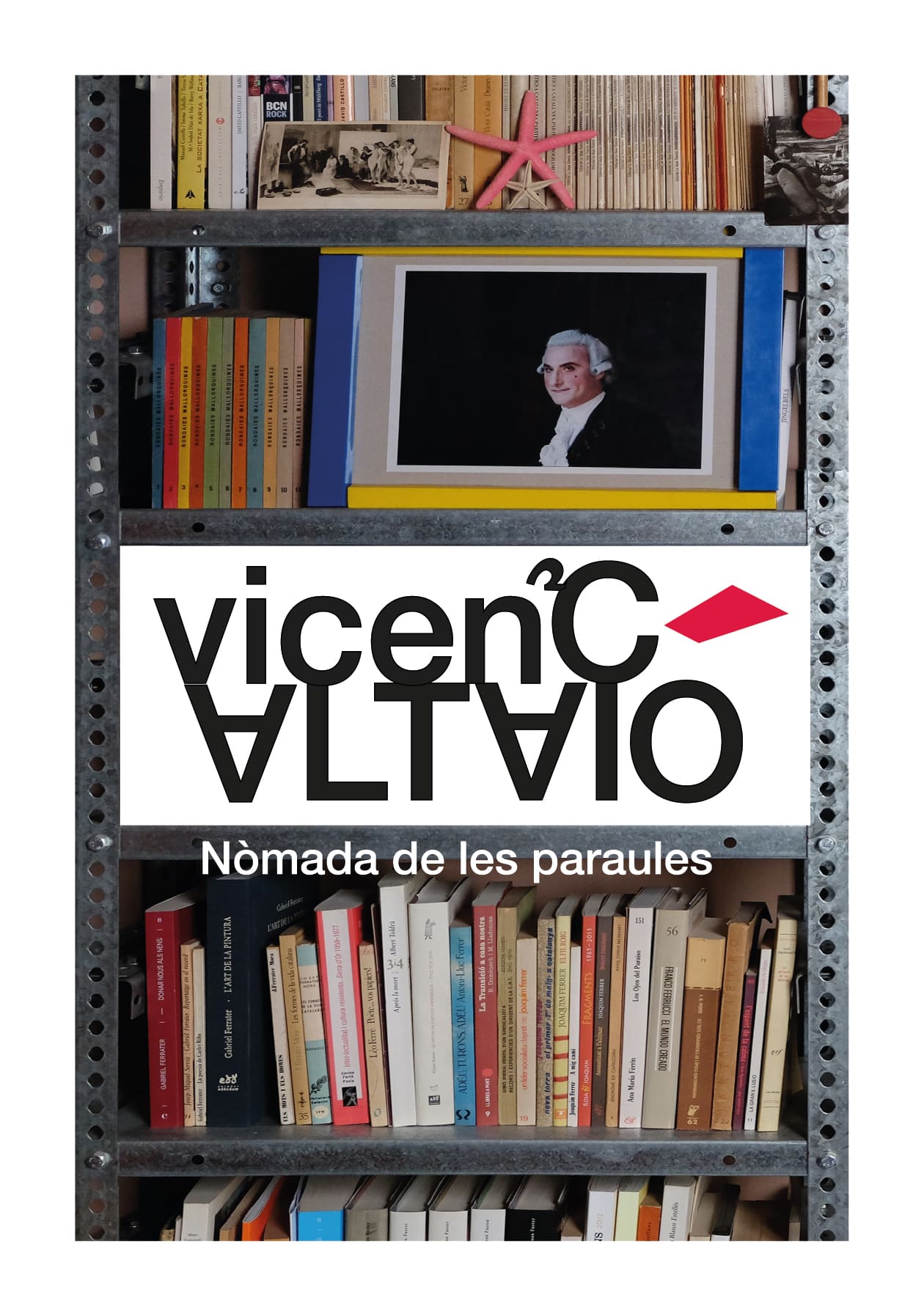
The first place is at the Sabadell Art Museum, where we find the exhibition: "Vicenç Altaió: nomad of words", from May 14 to June 28, 2026. A proposal for collective work from a UAB master's degree directed by Jaume Vidal Olivera and his students. Some sixty pieces representing Vicenç's cosmos are distributed in six areas (Poet and writer / Creator of magazines and curator of exhibitions / Artist's books / Animator and cultural promoter / Vicenç Altaió and death).
But, above all, the uniqueness of the proposal is that it proposes a tour of the artist's house, where a link is established between his living space, like a large chamber of wonders, and each of his facets. This exhibition, which is the first to be dedicated entirely to his figure, could be considered, in Altaió's own words, as a biography without a subject. This attitude is very typical of Vicenç Altaió, whom I consider an activist capable of finding the balance between Dadaist poetics and science. Furthermore, it challenges us with the question: if he is not the subject of the biography, who is the protagonist? Without a doubt, the living space where things happen, the events. The place of the events.
This power of the place, where all the creative events generated by Vicenç Altaió take place, was first explored by the film director Joan Vall Karsunke with the documentary «Biblioteca de pedra seca» (2025). The document features many people from art and literature, relevant names who are always close to him; the list is very extensive, up to 23, and all of them are necessary. But the real protagonist is the library and, above all, the space it occupies and where everything has happened.
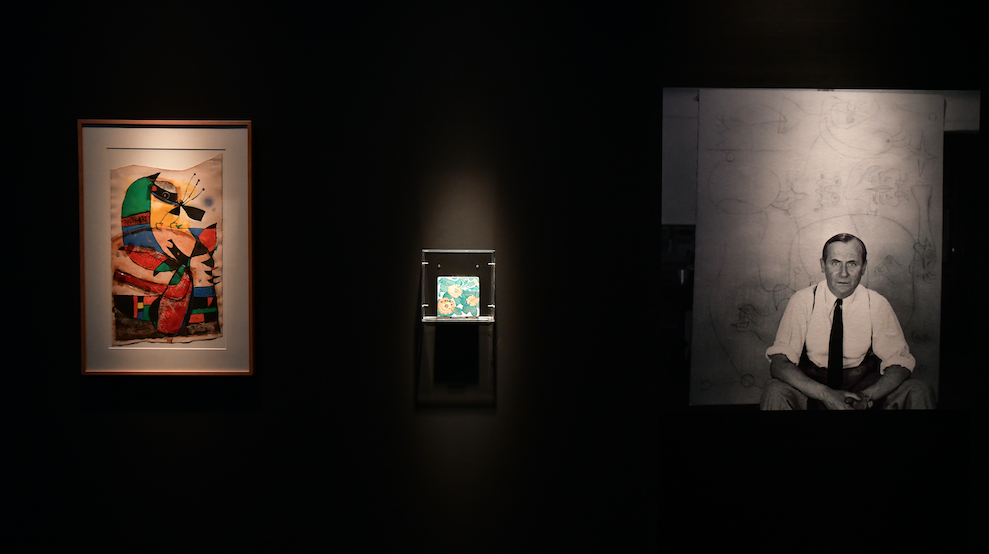
The second place of the events has to do with the exhibition Àngel Jové DE IN TACTU at the Museu Tàpies, from 9.03.2026 to 27.09.2026. The curator Maria Josep Balsach and the director of the Museum, Imma Prieto, have programmed some magnificent complementary activities to the exhibition. One of these activities was a conference by Maria Josep Balsach and a subsequent colloquium with the title "Cartografia d'un viatge: Jové, Rossell i Hac Mor", with Lluís Calvo, Mariona Moncunill and Joaquim Sala-Sanahuja.
I had been interested in this trip and wrote about it in a text for the book catalogue of the IN TACTU exhibition. The situation is as follows: three friends, Carles Hac Mor, Benet Rossell and Àngel Jové embark on a trip to "Lo país de Maialussa", an unusual and initiatory trip that they take in 1989. This becomes a ten-day pilgrimage, in a yellow Renault 4 car, through their land of Ponent, an opportunity to go to the bottom of their landscape, their language and themselves. This is the first reason.
On another level, the narrator Carles Hac Mor, "the repeater", tells us about the people and events that he is forced to repeat in order to remember, but he also tells us about creation and nothingness. He says: "the Mayans know that only from nothing is it possible to create, and that creation is that which somehow remains in nothingness". A thought of affirmation of negation as the word Dada meant and said.
But when I thought about the reason for the adventure, considering this praise of nothingness and the Dadaist drift of the three, I was convinced that there was something more, something that I didn't understand, perhaps the search for a trace and a specific place. After reading Carles Hac Mor's book and watching Benet Rossell's 12-hour video, in which we see them asking and re-questioning people, it seems that they are on the hunt for something that we don't know. Hac Mor's phrase in the book came to mind: "Our individual dreams converge in a common and anarchic dream."
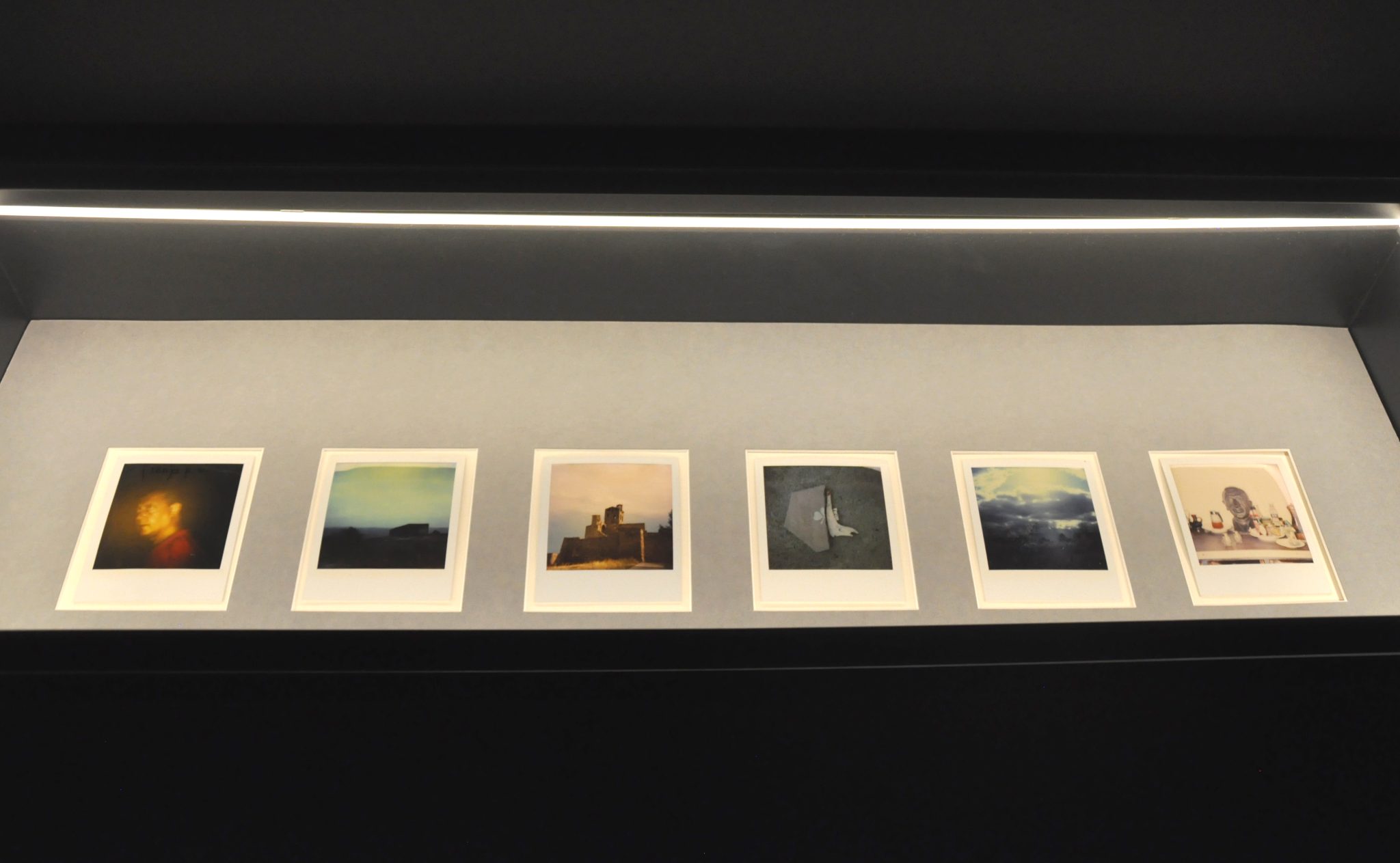
I knew the Polaroids of Àngel Jové's trip with a title that was disturbing because of its sound: Sidamon, Alamús, Almatret. They are the names of three towns and I looked at the map to locate these three towns in Ponent. There are about 12 km between Sidamon and Alamús and 50 km between them and Almatret. It seemed to me that there was a very curious triangulation between the three. I had this in mind, with the idea that perhaps there was another reason for this trip that was escaping me. And so it was.
Joaquim Sala-Sanahuja, whom I have known for many years, always surprises me with some special discovery and this time was no different. When it was his turn, he announced a first: Tristan Tzara, founder and preacher of Dadaism, went every year to Almatret, the place where the events took place. This is the truffle that these three searching artists were sniffing out.
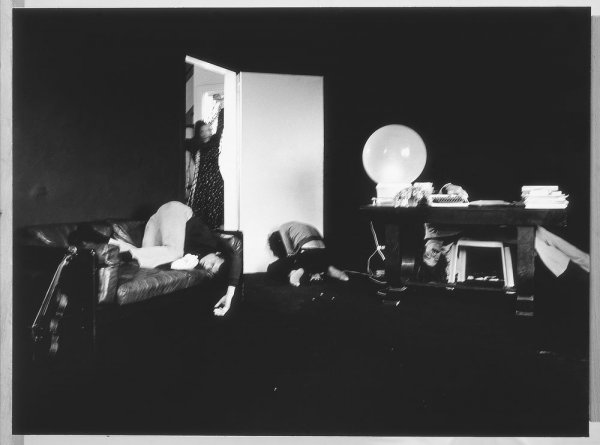
The third place also involves Àngel Jové and the Tàpies Museum. In collaboration with Espai Texas, they have proposed the film cycle "Àngel Jové. Bite the Image". Among others, there is a screening of "Primera muerte" (1969), made by the so-called "Grup del Maduixer", with Jordi Galí, Sílvia Gubern, Antoni Llena, occasionally Porta/Zush/Evru and, of course, Àngel Jové. A group that was active until 1970. This first work of video art in Spain was recorded in a house in the Maduixer neighborhood, in Collserola, owned by Jordi Galí and Sílvia Gubern, in which they all lived together with the couple's youngest son. A space of pure creativity and coexistence closely observed by Alexandre Cirici Pellicer. In 2017, Imma Prieto made «Eco de “Primera muerte”», where, over time, each and every one of them remembers what happened. The Maduixer house still exists and the space, with its presence, becomes a witness, an intangible notary of the scene of the events.
You may be
interested
...