reports
When artists make the space their own...
A residency model based on mentorship, research, and transdisciplinary collaboration that redefines the role of contemporary cultural institutions. This could be a first definition of what the Center for Artistic Residencies (CRA), located in Nave 16 at Matadero in Madrid, is and symbolizes. This space has established itself as a leading center for contemporary creation in Spain. In this shared work environment, artists, musicians, educators, and cultural agents develop research processes free from the pressure of immediate exhibition, within a framework that prioritizes long-term projects, experimentation, and interdisciplinary collaboration.
Since its establishment as a permanent program in 2017 within the Matadero Madrid cultural complex, the CRA has been committed to strengthening the city's creative fabric through a residency model that prioritizes exchange and collaboration. Its facilities—with personalized workspaces and shared spaces such as the auditorium, the black cube, the editing suite, the office, and the workshops—function not only as production infrastructures but also as platforms for interaction: places where ideas circulate among residents, mentors, and visiting artists, generating a constantly evolving working community.
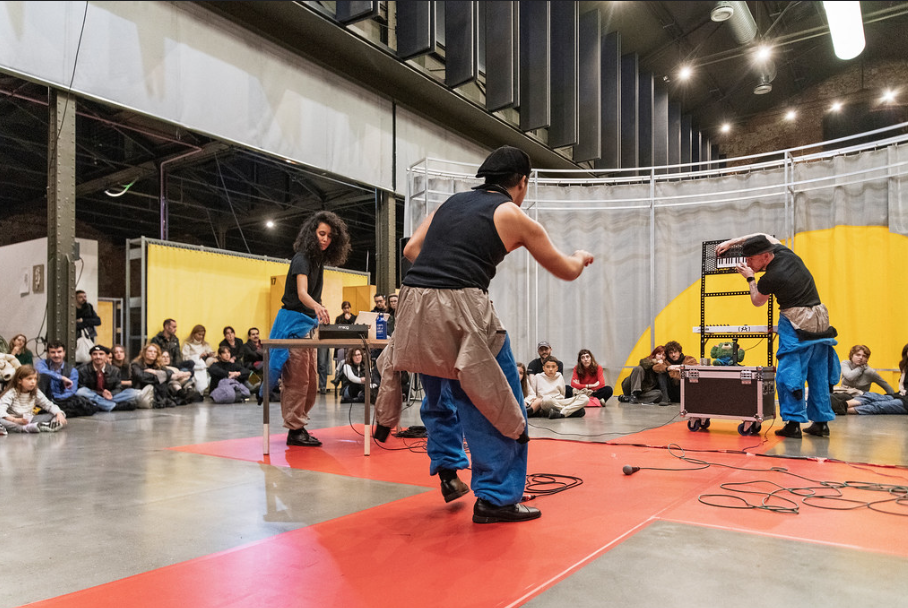
MP3, electronic music residents, 2024. Photographs: IDC Studio/Matadero Madrid.
In this ecosystem, the CRA defines itself less as a results-driven machine than as a space for process. "What attracted me most to the Center was the opportunity to work hand in hand with artists again," explains Luisa Espino, art historian, art critic, and cultural manager, who has been its director since March 2024, in an interview with Bonart . "Experiencing the day-to-day of the creative process, with its doubts, its certainties, and its challenges, is a true privilege." Her arrival has strengthened a line of work that emphasizes support, listening, and the construction of contexts rather than the production of finished products.
CLIMATE EMERGENCY . The CRA can host up to 19 simultaneous projects of diverse nature: residencies in visual arts, music, film (with an open call now in collaboration with Cineteca Madrid), art and education, and situated research (the latter organized by Medialab Matadero). This ecosystem is further enriched by initiatives from collectives such as Debajo del Sombrero , focused on creation with people with intellectual (dis)abilities, and AMECUM, the Association of Cultural Mediators of Madrid, which further expands the social and relational dimension of the space. "The coexistence of different profiles is one of the most enriching aspects of the center," Espino points out, emphasizing the value of a model where disciplinary "difference" becomes a driving force for thought.
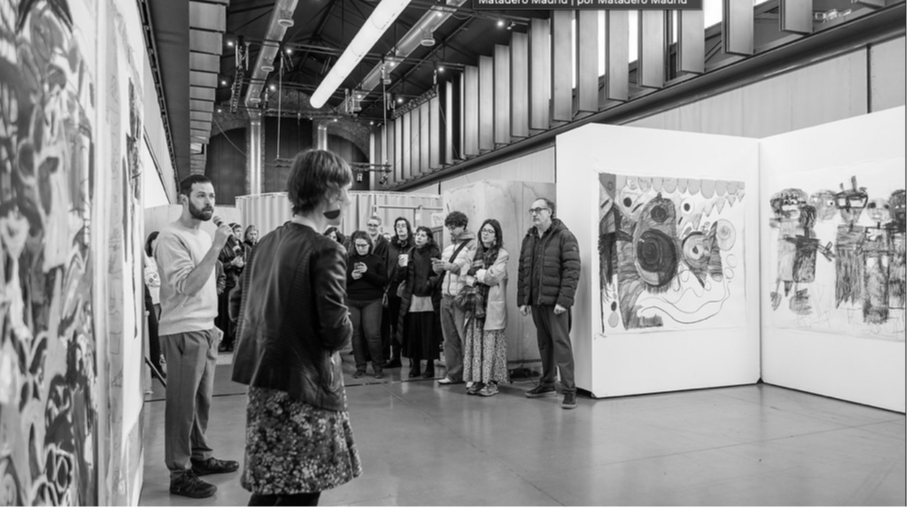
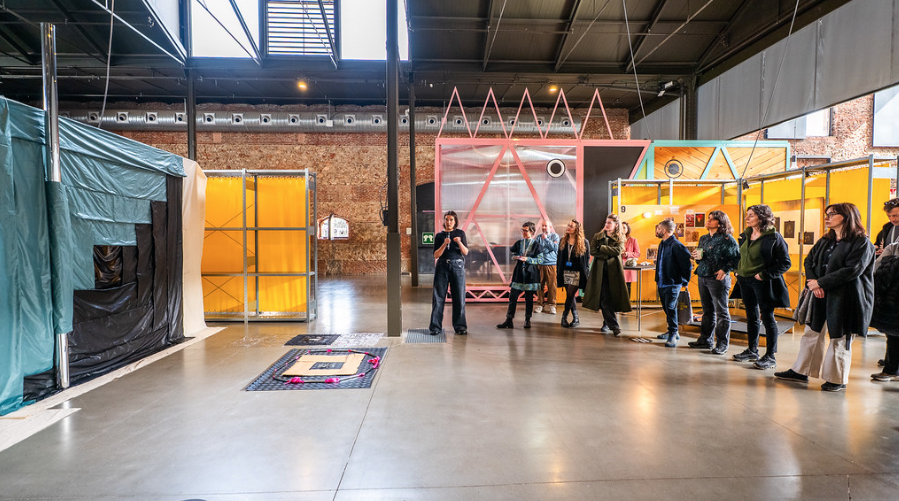
Under the hat, 2026. © Matadero Madrid / Arde Visual.
In its new phase, the CRA has also incorporated specific curatorial lines. One of the most noteworthy is the call for proposals focused on the climate emergency, which seeks to integrate a cross-cutting reflection on the environment into contemporary creative processes. "You can't understand 21st-century art without taking the climate crisis into account," says Espino. Along these lines, the projects address issues such as water, energy, intensive agriculture, extractivism, and botany, creating a field of work where art intersects with the urgent debates of the present.
OPEN PROCESSES AND OPEN DOORS. Another recent initiative is inviting mid-career artists to develop projects situated within the specific context of Matadero Madrid. In 2024, to mark the complex's centenary, projects were commissioned from creators such as Fernando Sánchez Castillo and the duo Marta de Gonzalo and Publio Pérez Prieto, who explored everything from the space's historical memory to the construction of collective narratives about the public sphere. Currently, the center is preparing new collaborations, such as that of María Jerez, who will address the relationship between motherhood and artistic practice. In this model, residencies are not conceived as closed "productive" stages, but as open processes. "We don't respond to the productivist logic we're used to," Espino points out. "A final result isn't required, although many projects end up generating one." The support —through mentoring with profiles such as curator Bea Espejo or artist Antonio Ballester Moreno— becomes a key part of the system, guaranteeing a constant dialogue that allows artists to situate and rethink their research.
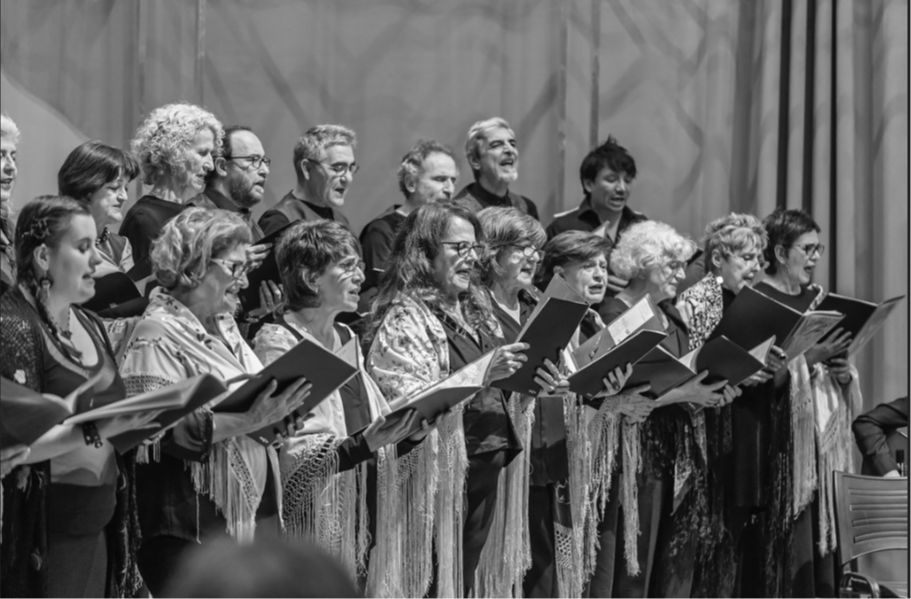
The Lucks | Performance by Marta de Gonzalo and Publio Pérez Prieto, curated by the CRA as part of the Matadero, 100 Years program. ©IDC Studio-Matadero.
Throughout the year, the CRA also organizes a public program that partially opens its processes to the outside world. The Open Days, the next one on June 12 and 13, and the program "The Curtain Rises ," along with events like " In the Artist's Voice ," serve as opportunities to showcase the process rather than the final product. In these events, artists share their research in conversation with curators and cultural agents, exploring narratives and forms of communication in a relaxed setting.
In this sense, the CRA is understood today as a testing ground, a space where error, drift, and experimentation are not only possible, but necessary. A place where art is not presented as a finished product, but as a living process in constant transformation, sustained by a community that reflects on itself as it works.
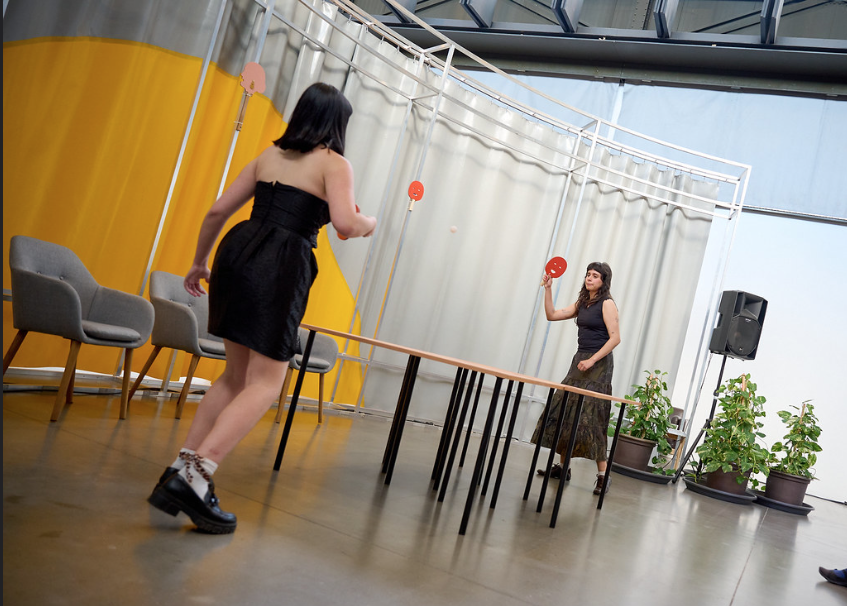
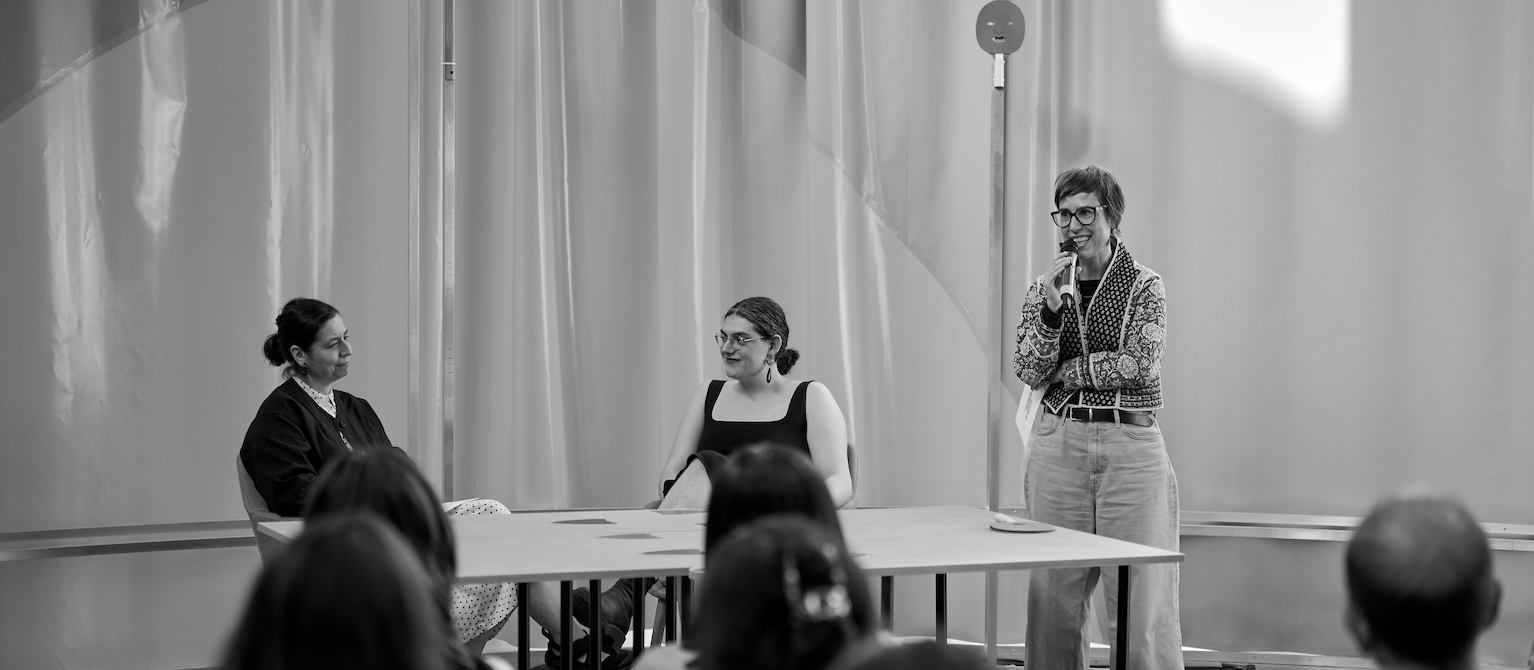
Performance Vos a nos a otras by Hodei Herreros, within the program Se abre el telón, 2026. Credits: © Matadero Madrid / Arde Visual / Fernando Tribiño.
ART FROM WITHIN: A SYSTEMIC VISION. In an increasingly interconnected art system, Luisa Espino's professional trajectory spans diverse fields—from the specialized press to public institutions, including galleries and international centers—an experience that, she explains, has shaped a cross-cutting perspective on the contemporary cultural ecosystem. "Everything adds up," she notes. Having worked in these different links has allowed her to understand how the art system is structured from within. Criticism, she points out, offers training based on observation and writing as analytical tools; galleries, on the other hand, provide direct access to the artistic production process and the market as a structure for professional sustainability; while institutions serve as the final stage for showcasing processes initiated in studios, residencies, or production spaces. "Everything is connected and feeds back into itself," she summarizes.
This systemic vision also permeates his interpretation of the role of contemporary curating. For Espino, the figure of the "star curator" has given way to more horizontal models, focused on collaboration. The value today, he argues, lies in the sustained dialogue between curator and artist, a less hierarchical relationship closer to listening and collaboration in the work process.
THE ROLE OF WOMEN AND YOUNG PEOPLE. When asked about the role of women in the art system, Espino acknowledges the progress made in recent years, but emphasizes that structural inequalities persist. She cites recent data on the underrepresentation of women in institutional collections and points to the need to continue working in this direction. In this regard, she mentions the role of associations such as the Association of Women in the Visual Arts (MAV), which is key in monitoring compliance with the Equality Law. She affirms that these criteria are actively considered in the selection processes at the Center for Artistic Residencies (CRA).
Regarding the current challenges facing cultural institutions, Espino points to one that is particularly urgent: maintaining their ability to connect with younger generations in a context dominated by the accelerated circulation of images and digital content. The issue, she suggests, is not only one of programming, but also of formats, languages, and rhythms. However, it is when discussing the future of the Matadero Madrid Center for Artistic Residencies that her discourse becomes most insistent. For Espino, the main objective is to consolidate a space where artists can fully embrace their working environment. "The important thing is that the residents make the space their own and can develop their projects," she affirms. A place where the time dedicated to research is not dictated by the urgency of the outcome, but rather by the possibility of delving deeper, exploring, and opening new avenues of work.
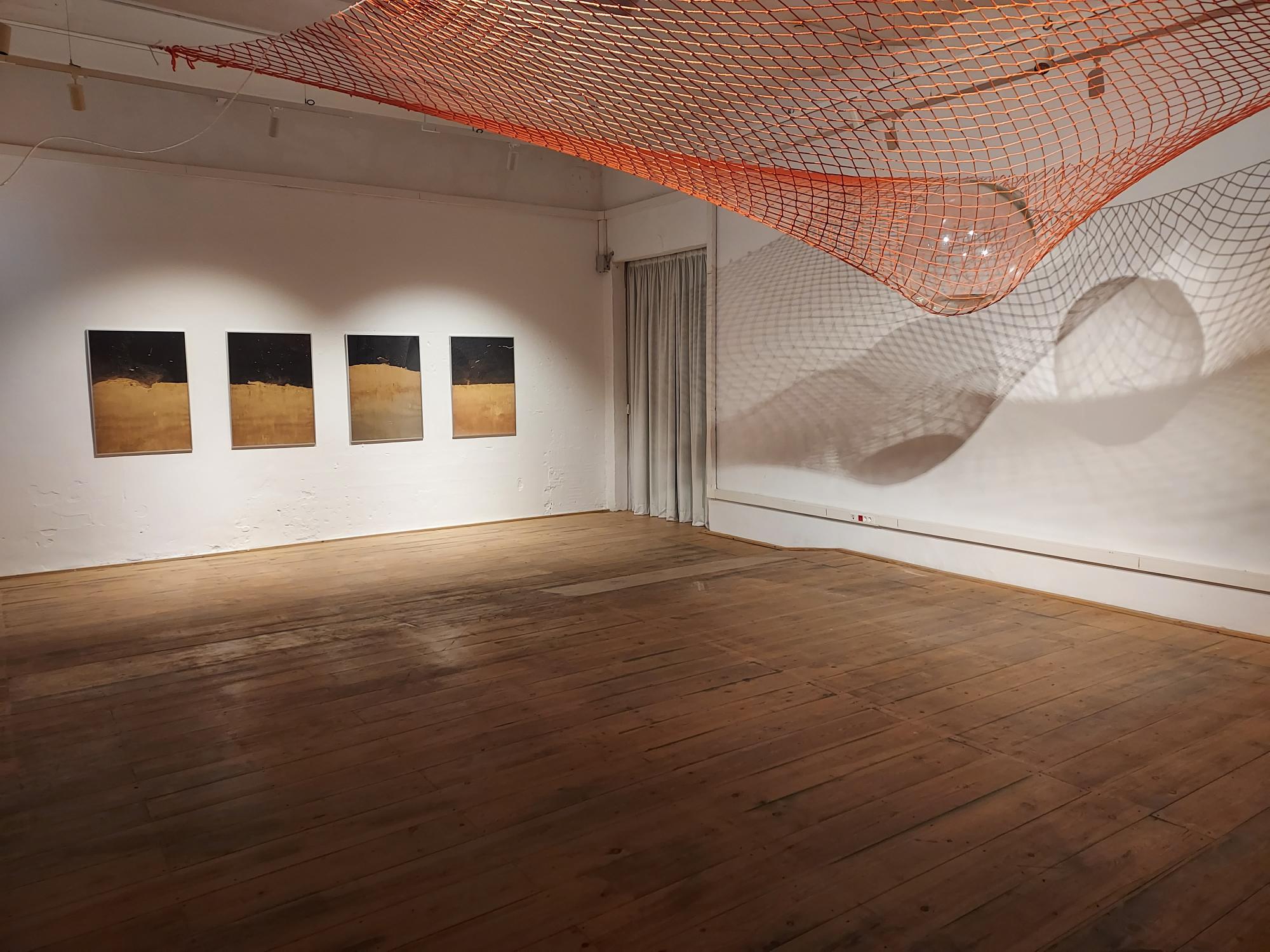
In the studio of Elisa Pardo Puch, Visual Arts Resident, 2026. © Matadero Madrid / Arde Visual.
This growth, he adds, also depends on the collective scale of the project. The CRA is one of the programs that make up the Matadero Madrid creation center, directed by Jose Luis Romo. It functions as a collaborative structure involving the internal team, Isabel Galán and Mercedes Álvarez, along with Daniel Pietrosemoli, head of the FabLab, and all the Matadero departments that make its operation possible. Also included are all the curators and artists who participate in the selection and monitoring processes, as well as art critics, gallery owners, collectors, and the general public who visit the center. This broad network of relationships sustains a residency model that, more than producing works, seeks to create the conditions for them to be imagined.


You may be
interested
...