Opinion
RAISE YOUR GAZE: In memoriam Robert Llimós
Robert Llimós exhibits posthumously at Can Framis of the Vila Casas Foundation. The painter and sculptor died on Tuesday, October 27, at eighty-three years old. Today, November 9, fourteen days after his passing, this exhibition opens. According to curator Blanca Arias, Llimós himself was involved in the final details and even got to see the catalog.
The exhibition is framed as a review of the conceptual stages (1969-1973), which has been extensively reviewed in the Bonart digital by Carles Toribio, who wrote: "The work of Robert Llimós, painter by birth and wizard of the invisible, is a threshold to the realm of the unprovable, a parenthesis of suspense of suspicion. With him, for a fragile moment, the gaze lends us the necessary trust to surrender ourselves to the most mysterious act: vision."
In this article I take up the baton and will focus on another aspect that occupied Robert Llimós since 2009: the gaze upwards.
Gaze
One success of curator Blanca Arias has been to emphasize the important role of the eyes and the gaze. It appears in the main title of the exhibition: 'Are there still not enough eyes on the face?', and one of the four spaces is called 'A desire to see', where this word is repeated three times in neon light: see, see, see. For personal reasons, I am very interested in everything related to the eyes, to vision, and I note that this interest is becoming more widespread. I think of the recent exhibition by Lúa Coderch at the same Can Framis Museum, where there was an installation proposing blindness and revelation as themes. Coderch transformed the closed eye into a metaphor for memory, perception, and the need to imagine new ways of looking at the world.
These epochal symptoms interest me greatly, they are signs of something and of a permanent restlessness. Between 1990 and 1991, worrying signs of interest in the subject of vision and its absence emerged. On one hand, Pilar Parcerisas introduced the blind photographer Evgen Bavcar to Antoni Tàpies at his studio. She explains this in detail in her book Tàpies y la ceguera. Jacques Derrida, at the Louvre Museum, between October 1990 and January 1991, held the exhibition Mémoires d'aveugle: l'autoportrait et autres ruines, and Glòria Bosch, in 1997, Ceguesses, for four months at the Girona Art Museum, at the Casa de Cultura and at the Trueta Hospital. With these citations, I want to say that the theme does not expire over time and that now, perhaps with the rise of another related concept such as that of 'visionary women', the theme is once again on everyone's lips and I am glad about it.
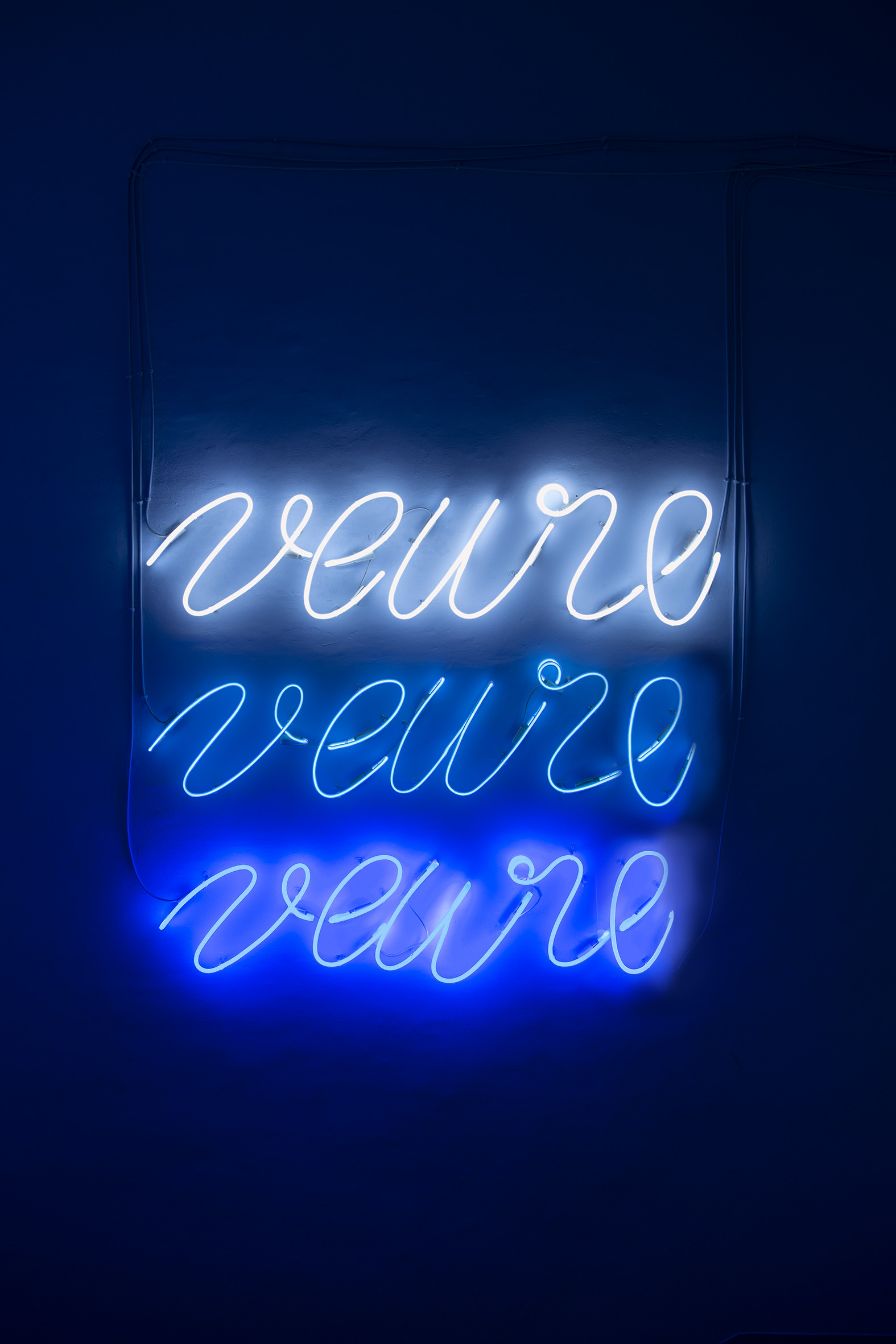
Robert Llimós, Seeing, photograph by Xavi Padrós.
Above
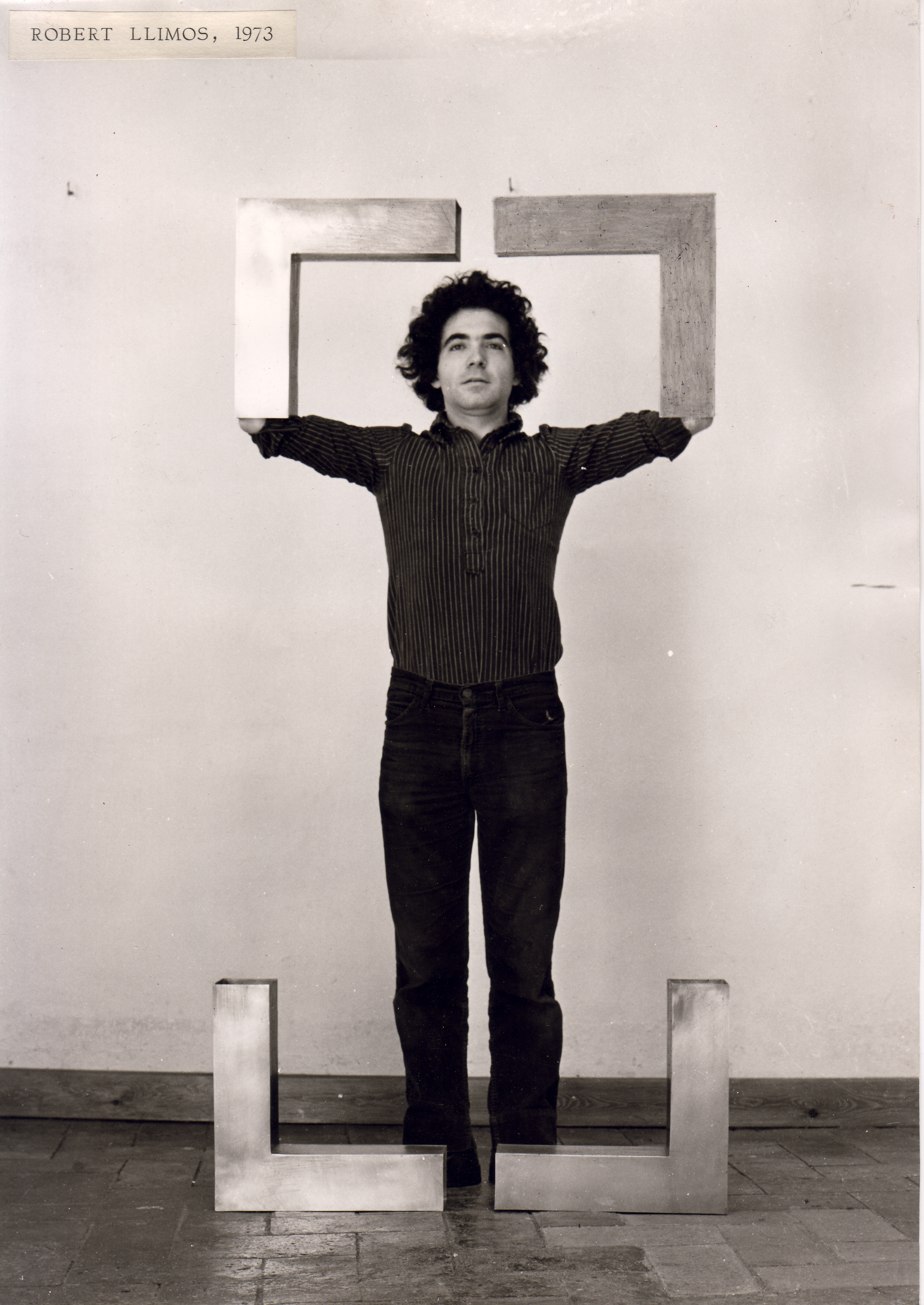
I will focus on three works from the exhibition: one from the conceptual stage, Angles (1972), where Llimós himself is framed between two metal pieces, one above his head and the other at his feet, creating a symmetry alluding to two spaces, one above and one below, a physical allegorical dimension of two worlds. The other work is also from 1970, a small piece representing a marble cloud, and finally the small watercolors appearing at the end of the exhibition, where we see some spaceships that are not reproduced in the catalog.
In all three examples there is a concern to unite two spaces: the lower one, the human, with the upper one, the divine or whatever may be up there.
Although in recent years he was obsessed with this theme, the show does not include his recent works, which are the visual testimony of his contact with extraterrestrial beings in 2009.
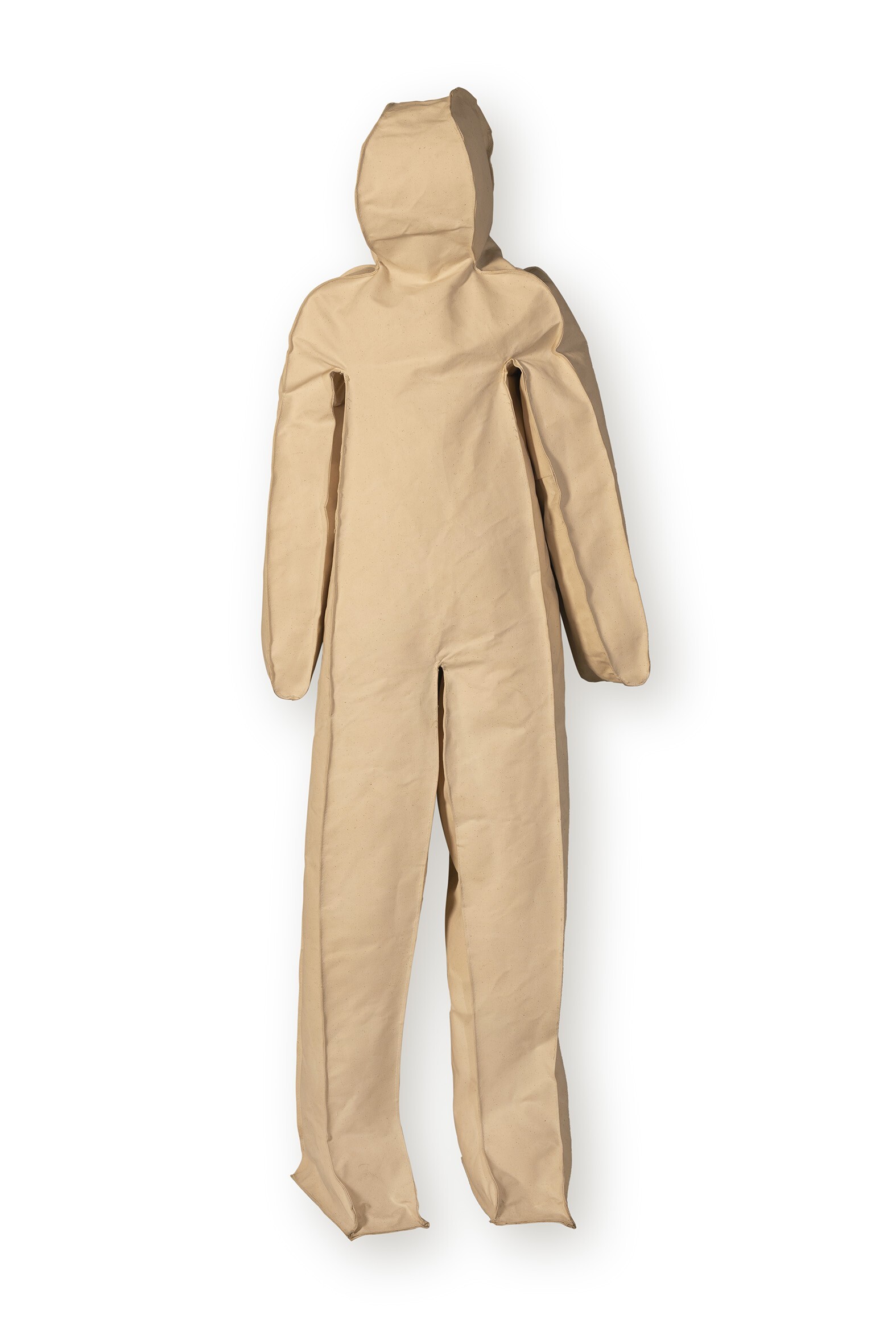
Robert Llimós, Frame, 1972, MACBA.
ET
I imagine someone approaching Llimós’s work with this account and reading that he painted extraterrestrials. Some consideration is urgent, although, if we adhere to Brossa's phrase collected in the catalog, the most convenient would be: "And if you like music, don’t ask for more details," a whole plea against interpretation and in favor of sensory enjoyment.
This obsession with extraterrestrials can be handled in several ways: one, by labeling Llimós crazy, turning the page and not writing a single line; another, by believing what he says; and a third, by taking advantage of his exhibition to reflect on current art. Obviously, I have chosen the latter.
We have seen the series of extraterrestrials in the exhibition Fortaleza, at the Volart Space of the same Vila Casas Foundation, in 2010, and at the Zieliński Gallery, Fortaleza Llimós, in 2022. Fortaleza is a place in Brazil where the UFO encounter occurred in the dunes of Aquiraz, a beach in the state of Ceará. The catalog text of Vila Casas was written by Eduardo Mendoza and no one was surprised, since he had already treated the theme in his novel Sin noticias de Gurb. It is also not unusual for the theme to appear in many ways in cinema, from Wells to Spielberg, or in comics, such as The Celestials, a fictional race from the Marvel Comics universe, or in many other ways in popular culture.
But painting is another matter. Intellectual prestige threatens artists because they consider entering this theme a commercial, frivolous, and cheap concession. I know few examples and one of them we saw in an exhibition about the shadow at the Thyssen Museum in Madrid (2009): a disturbing work by painter Christian Schad, his Portrait of Dr. Haustein (1928). But no one has dared to manifest this degree of alien hallucination through art as Llimós has, risking his reputation to mockery and derision, and he has done it with great conviction. This boldness deserves first recognition.
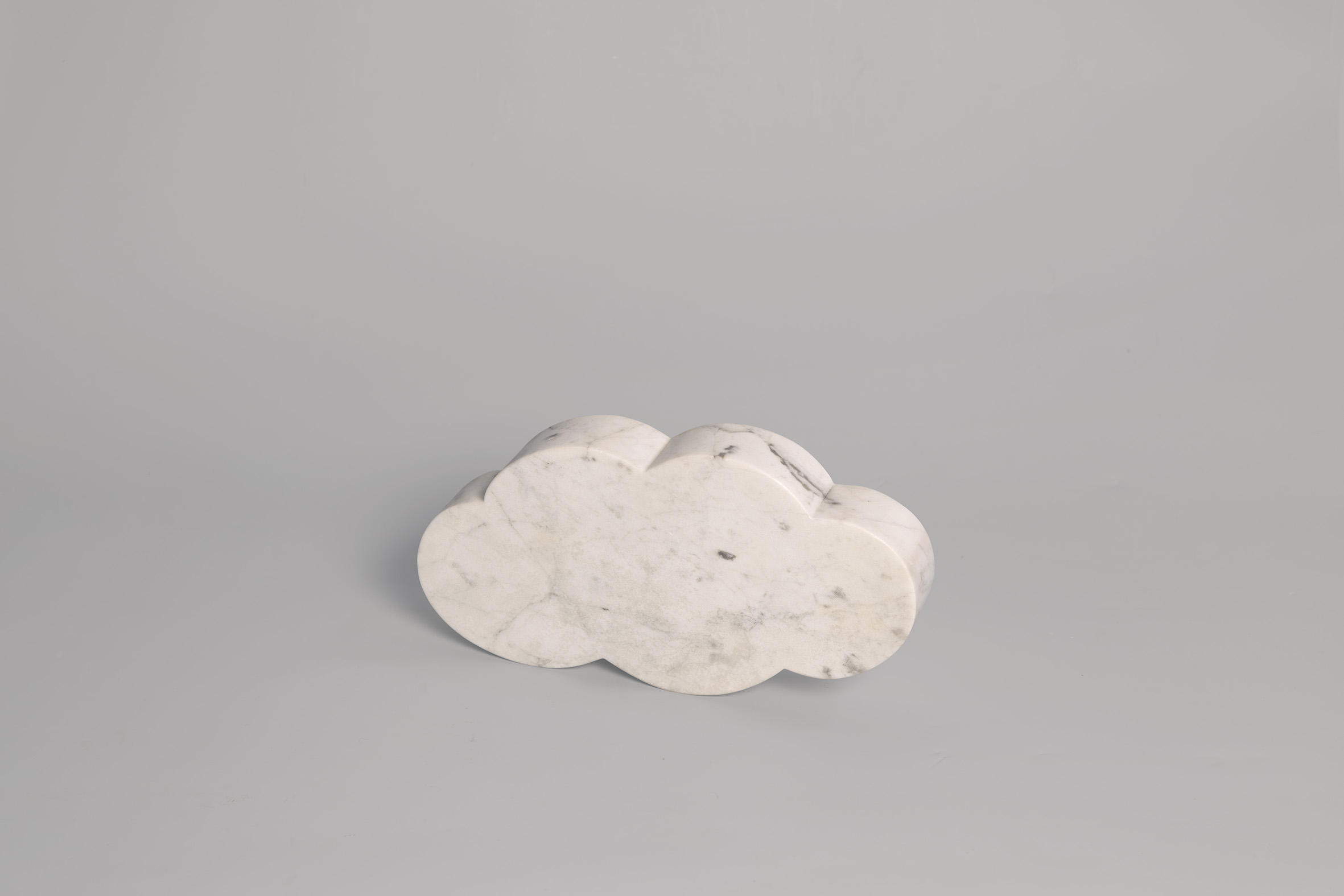
Robert Llimós, Cloud, 1970, Photograph by Xavi Padrós.
A religious art
And so, almost unintentionally, this concern of Robert Llimós for what we cannot verify becomes a radical manifesto in favor of the tradition of figuration and religious painting, as it has been considered in the West from Early Christian art to the avant-gardes of the twentieth century.
I consider it religious for three reasons: first, because religious art required the artist to exercise his craft with strict demands and rules. Here, Llimós claims the classical procedures of the painter’s craft: oils on canvas and paper, etchings with resin, linoleums, watercolor and pencil, on different supports, and even resin and polyester sculptures with patina, a whole repertoire of traditional techniques that seemed present in a show of almost all the techniques proper to his craft.
The second is that religious art has always disregarded abstraction in favor of figurative representation, and Llimós, with his work, through the figure, can make visible and document contact with beings from other worlds. Mendoza, in his text, alludes to the scanning the extraterrestrials did on Llimós to neutralize any photographic device that could verify their existence. They did not know that Llimós was a painter and did not need a camera, only visual memory to represent their presence on Earth.
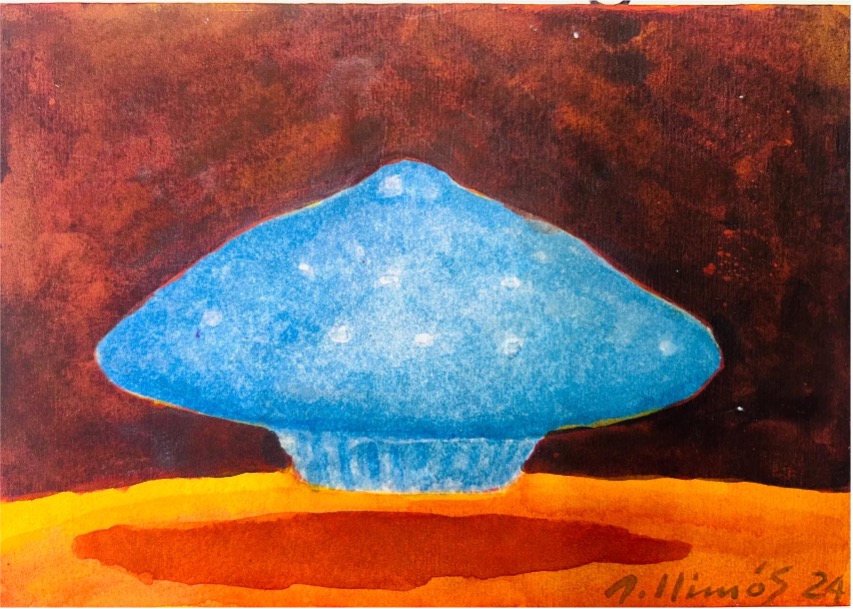
Robert Llimós, Untitled, 2024.
The third is, obviously, that Robert Llimós again raises with his work a topic on which aesthetics professors and theologians have always wondered. I refer to the relationship between mysticism and sacrality and the possibility of representing divinity, which has never been visualized, through images. Two different theological views: the cataphatic and the apophatic.
The cataphatic proposes a positive theological vision that assumes the possibility of knowledge of God. In "ufological" language, this would admit the possibility of accessing knowledge of what we have no experience of. Robert Llimós must share this position with his pictorial proposals to make knowable what no one has seen. On the other hand, the apophatic or theology of negation position assumes the impossibility of reaching the unknowable nature of God. This position is maintained, inevitably, by skeptics regarding ufology.
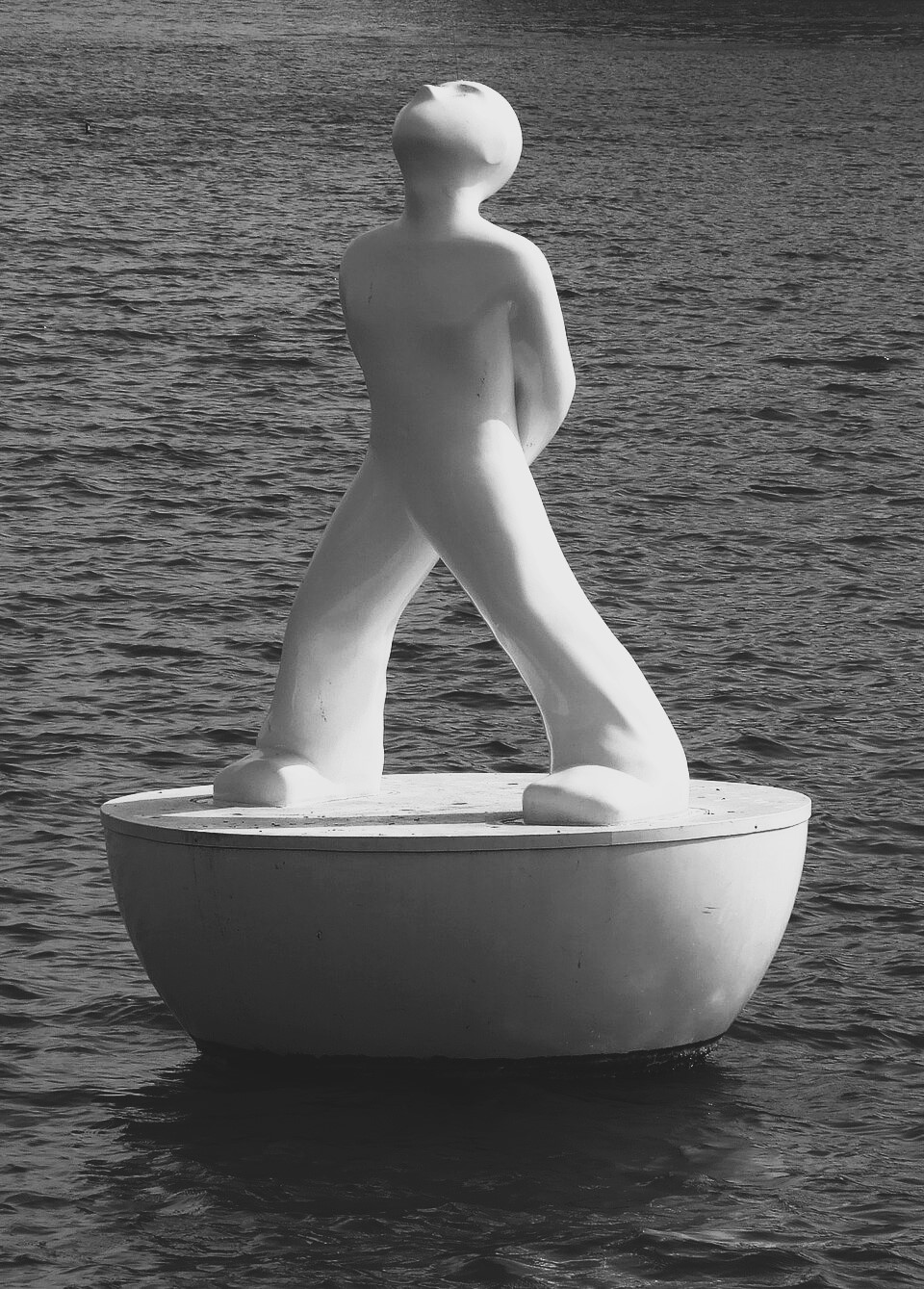
Robert Llimós, Stargazer.
Llimós’s art is religious because the Church has always entrusted art as a testimonial verifier of what is invisible, even though no one has seen God's lush white beard nor the angels' wings, in contrast to those who consider that the invisible world can only be represented as a whitish atmosphere or a blue gas.
Finally, I believe Robert Llimós creates religious art because, as in Christian iconography, there is death and sacrifice and perhaps the hope of a heavenly reunion, but only Robert Llimós could know that.
Meanwhile, 'RAISE YOUR GAZE,' as Llimós’s sculpture of this character, hands behind, called "Stargazer," a personal pain made sculpture looking upward, floating above the waters of the port of Barcelona. Raise your gaze was the slogan used on the occasion of the visit of Pope Leo XIV to Barcelona in 2026.

You may be
interested
...