Opinion
Robert Llimós and Jordi Benito or when art dared to look at the invisible
Can Framis recovers an essential decade of Robert Llimós in an exhibition that, beyond his work, invites us to reconstruct the ties with the Catalan conceptual avant-garde and with one of his fellow travelers, Jordi Benito.
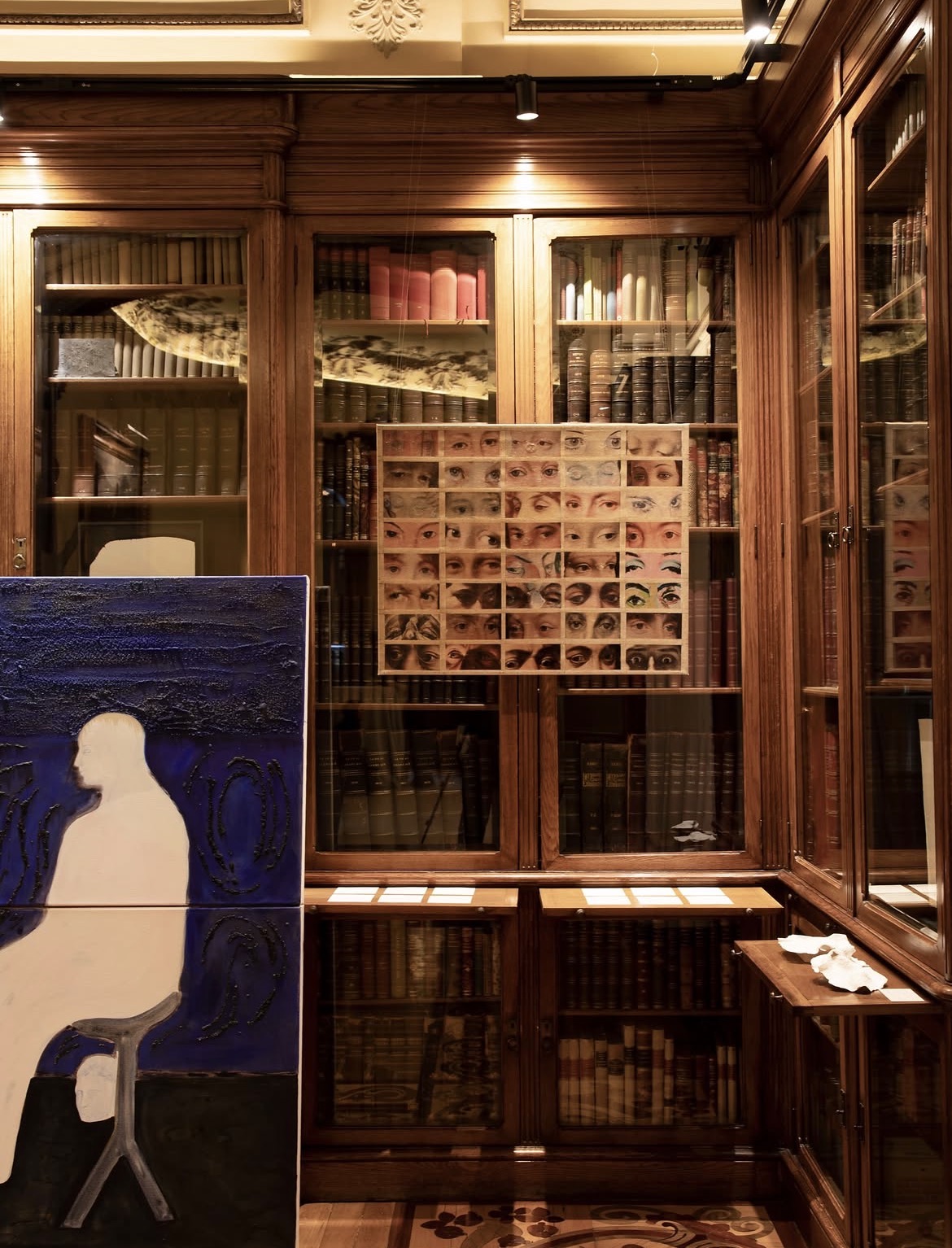
On November 10, the exhibition Robert Llimós. Aren't there enough eyes on the face yet? is presented to the public, which can be visited until February 7 at Can Framis, of the Vila Casas Foundation. An inauguration that comes at a particularly significant moment, just days after the death of the artist, Robert Llimós (Barcelona, 1943-2026), and which acquires, due to this circumstance, a dimension that goes beyond the exhibition review. It is also an opportunity to look again at a singular trajectory and reclaim a stage that helped shape some of the most intense episodes of contemporary Catalan art.
The work of Robert Llimós, a painter by birth and wizard of the invisible, is a threshold to the realm of the unprovable, a parenthesis of suspension of suspicion. With him, for a fragile moment, the gaze lends us the necessary confidence to surrender to the most mystical act: vision. This is one of the keys to entering his universe, but also to understanding the persistence of a search that crossed different languages and creative stages.
Curated by Blanca Arias, the exhibition recovers the body of work that Llimós developed in the late sixties and early seventies, within the framework of Catalan conceptual art. Through a conversation between languages —various ways to sustain the challenge of seeing— ranging from sculpture to painting, including action and word, the exhibition proposes a journey centered on a decade of his extensive production, but with the intention of resonating, with new rhymes, the entirety of his trajectory. Under this light, the entirety of his work is illuminated by a common destiny: the obstinacy to find a new image. Although the coordinates of the image's appearance vary throughout his career, the method persists: situate, observe, translate, repeat, insist.
But this exhibition also invites us to take a journey back. We must return to the early seventies, when Granollers became one of the nerve centers of conceptual art, with Jordi Benito as one of the great exponents of that generation. These were years of complicity, experimentation, and overflowing the limits of the artwork. A time that had other epicenters, such as the Galería Vandrés in Madrid or the Encuentros de Pamplona, and that also found spaces for action in seemingly peripheral places, like Vilanova del Vallès.
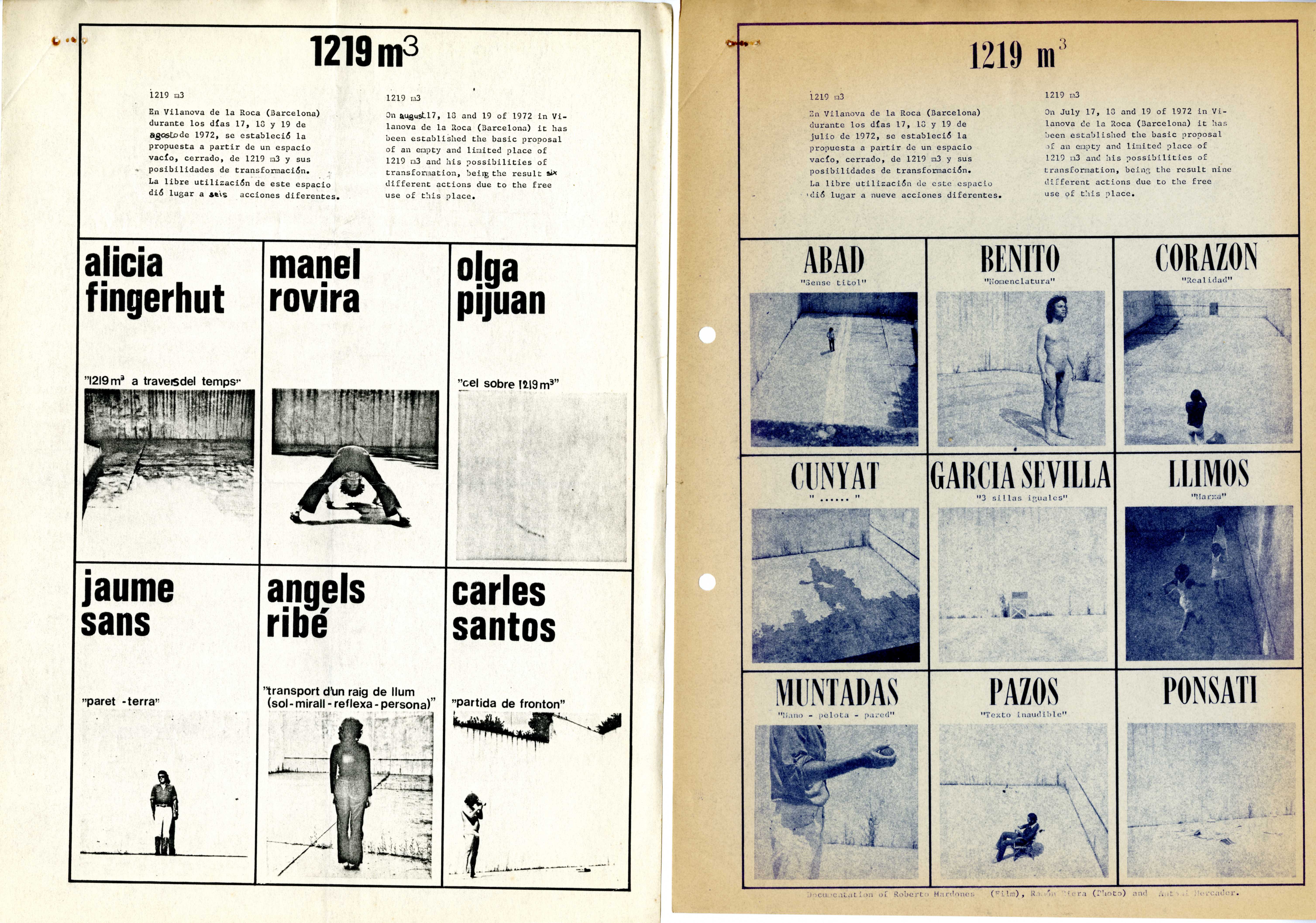
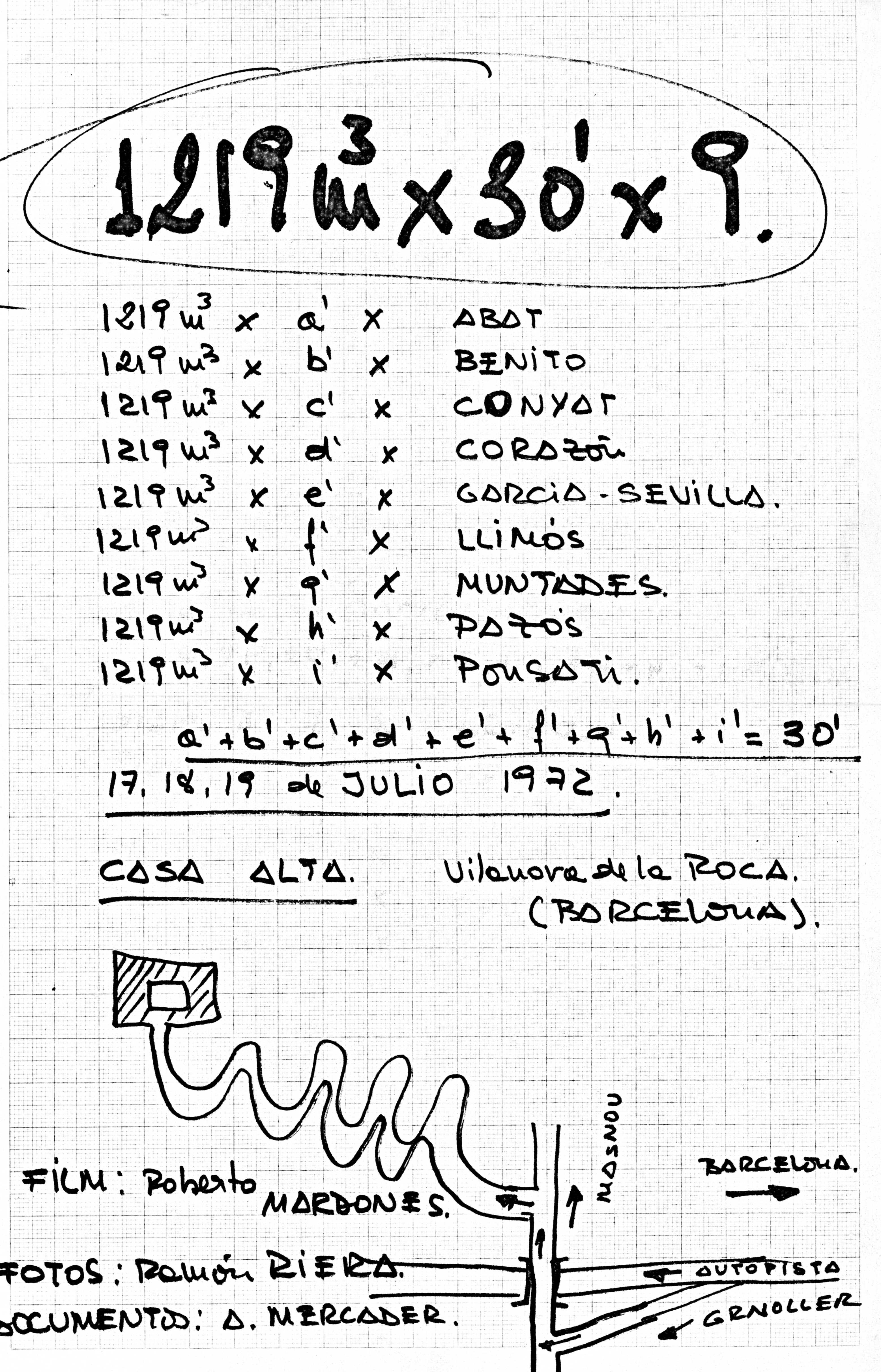
In the summer of 1972, on July 17, 18, and 19, after the return of the Encuentros de Pamplona, several artists —Francesc Abad, Jordi Benito, Rafael Bartolozzi, Cunyat, García Sevilla, Robert Llimós, Antoni Muntadas, Pazos, and Ponsatí— gathered in Vilanova del Vallès to develop free actions based on the occupation of the 1,219 square meters of the fronton. That meeting became a space of creative freedom where the body, space, word, and gesture became artistic matter.
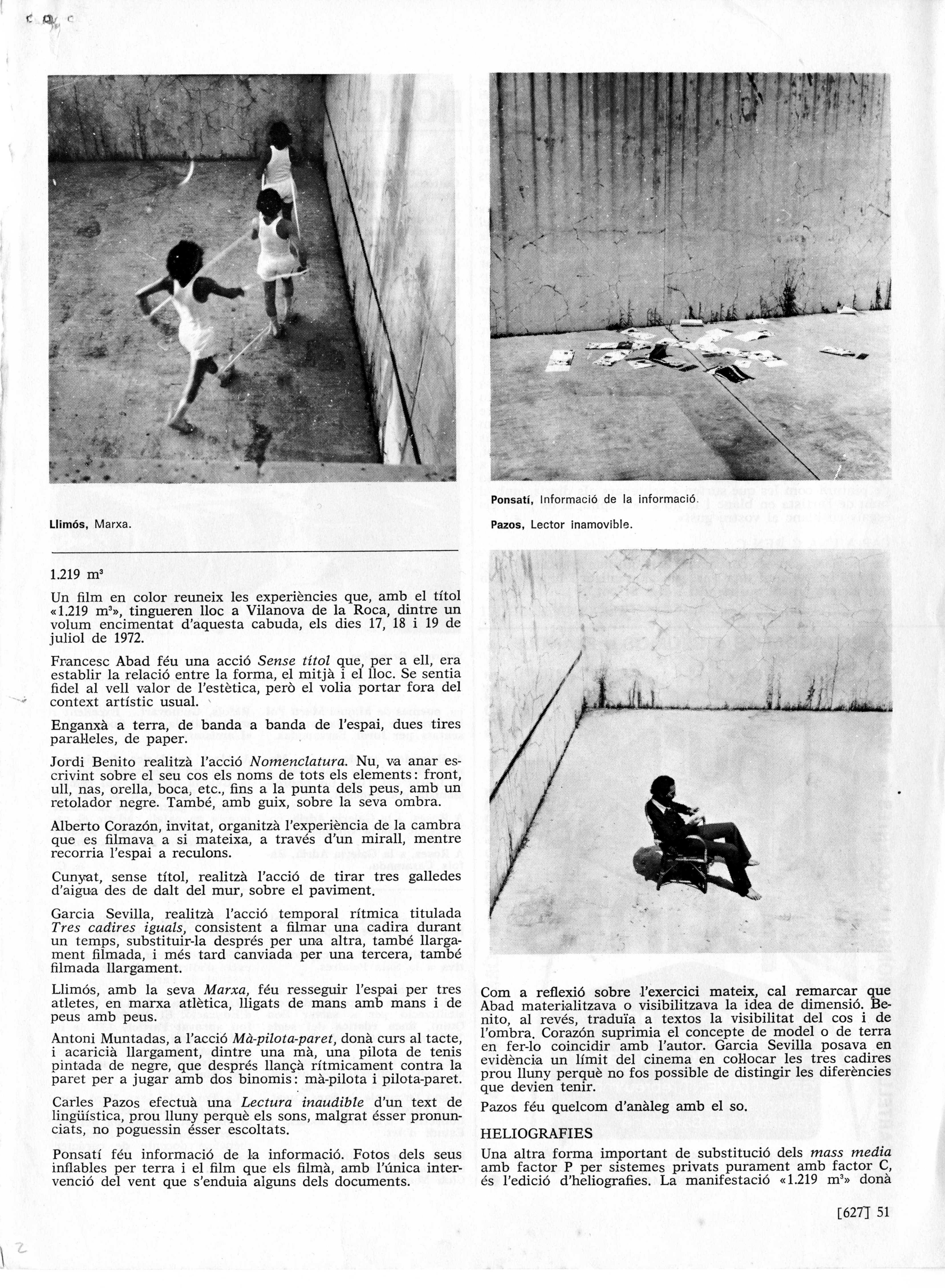
Benito presented Nomenclatura there, an action-piece divided into two interventions. In Nomenclatura del cos, completely naked, he traced his body with a black marker, naming its different parts, from the forehead —eye, nose, ear, mouth— down to the feet. In Nomenclatura de l’ombra, he transferred this operation to his own shadow, black in color, which he named with white chalk. The body ceased to be solely physical presence to become territory, language, and representation.
The actions of those days, as well as those developed by other artists of the same conceptual environment a month later, were documented through photographs and recordings. An essential visual memory to reconstruct an era when art moved away from conventional formats and sought new ways to intervene in reality.
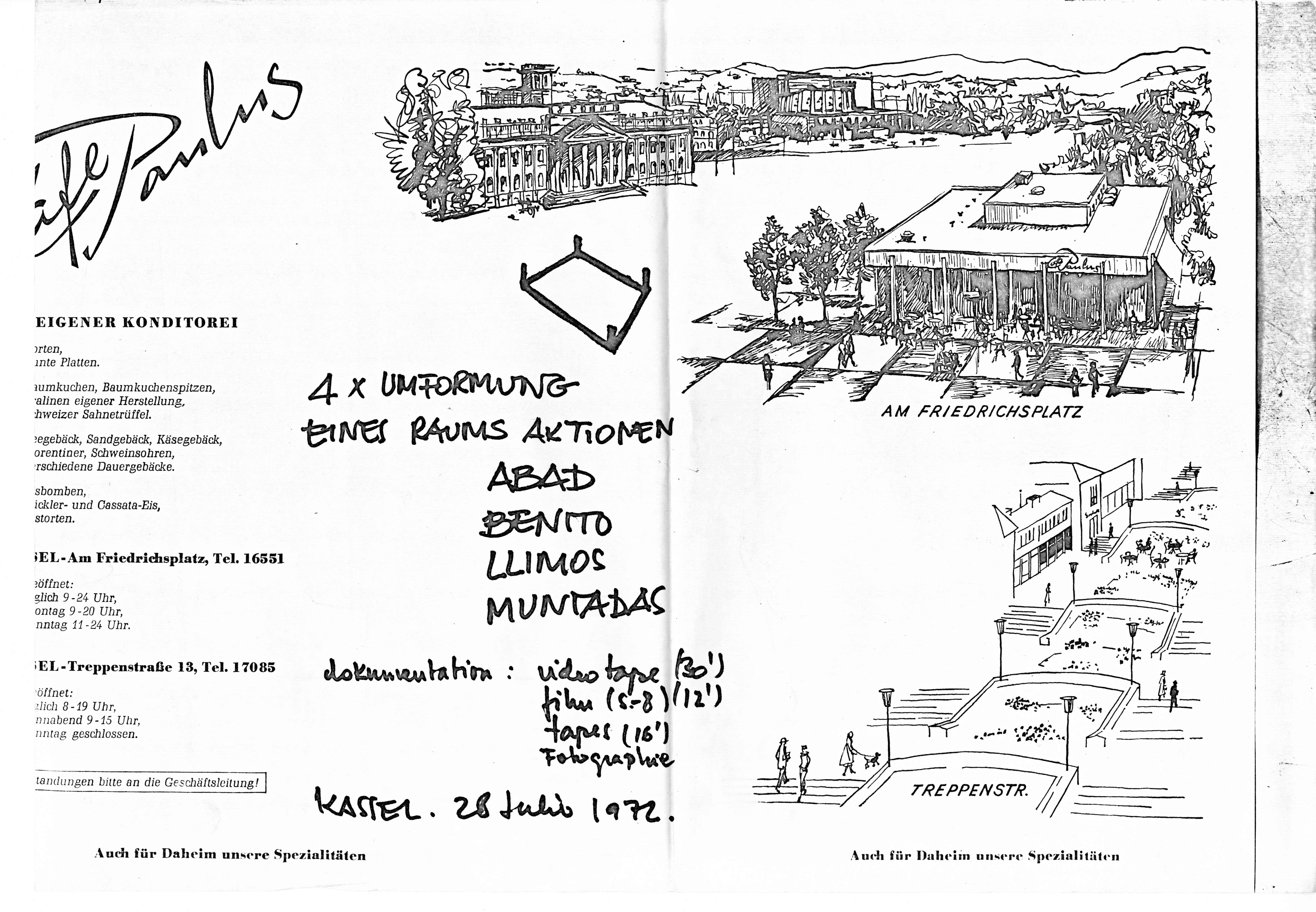
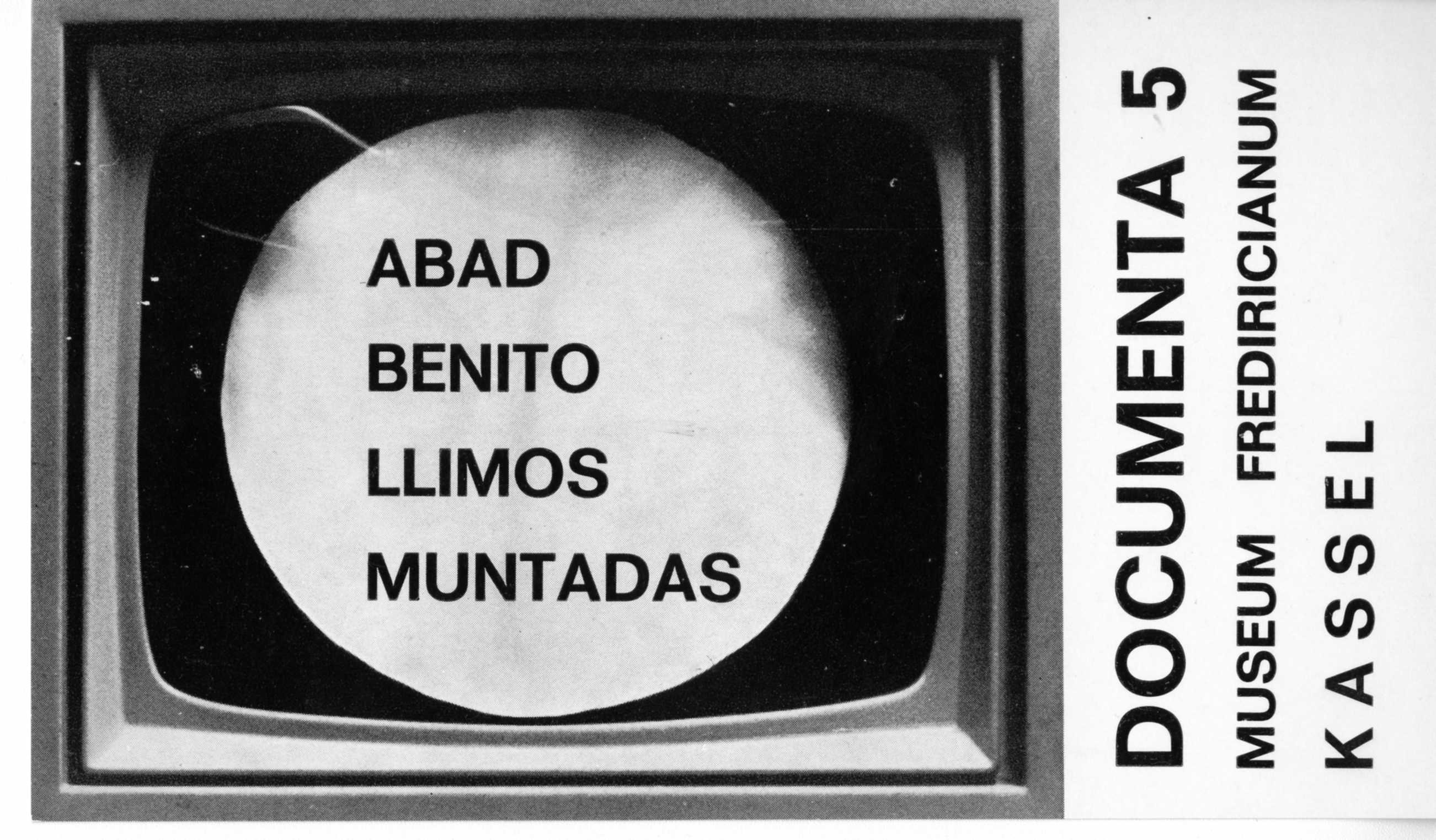
In parallel, from June 30 to October 8, 1972, Documenta 5 was held in Kassel, curated by Harald Szeemann. Under the title Befragung der Realität – Bildwelten heute (Interrogation of reality: image worlds today), and with Individual Mythologies as one of its main conceptual axes, Szeemann proposed a new way of understanding artistic creation, emphasizing personal narratives, subjective constructions, and the artist's capacity to generate their own universes.
In that context, the tandem formed by Jordi Benito and Robert Llimós found another scenario for experimentation. Both, along with Francesc Abad and Antoni Muntadas, traveled to Kassel, where they came into direct contact with one of the great international manifestations of contemporary European art. Besides visiting Documenta, the group participated in an action outside the official program. That shared experience constitutes one of the episodes that help understand the closeness between Benito and Llimós, two creators who coincided at a moment of profound transformation of artistic languages.
Their complicity must be read from this generation that understood art as an open territory, without disciplinary borders or closed answers. Benito delved into action art, body art, and performances of strong ritual intensity, while Llimós developed his own universe that, over the years, moved toward an expressionist figurative character and a very personal search for image. Two different trajectories, but with the same initial impulse: to question what could be seen, represented, and experienced.
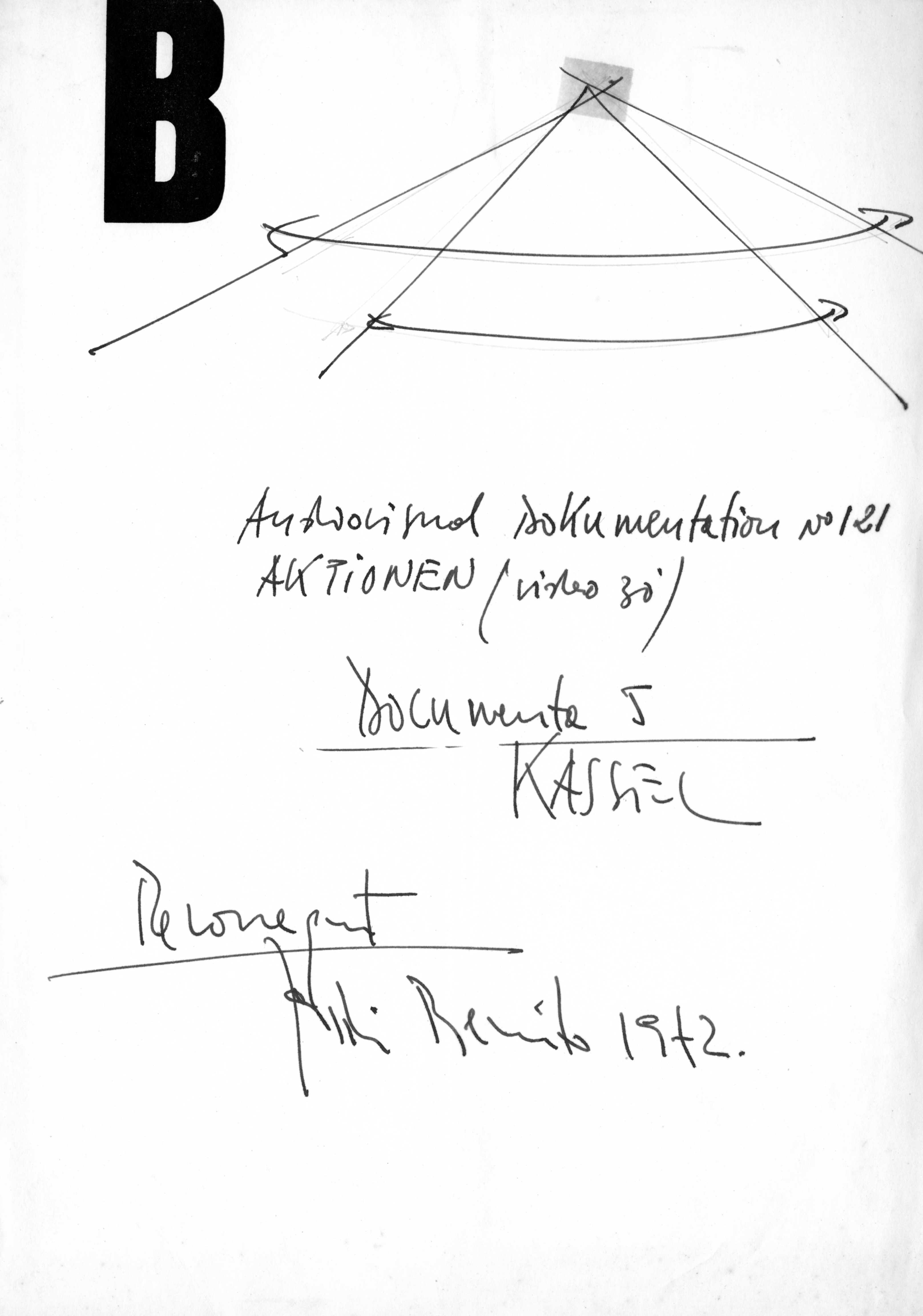
The relationship between them, therefore, is not a question of stylistic affinity, but of generational complicity and a shared way of understanding artistic practice as a space of risk and discovery. In this sense, recovering Llimós from the seventies also means placing Jordi Benito back on that map of relationships, actions, and experiences that made Granollers a fundamental laboratory of the Catalan avant-garde.
Now, facing the loss of Robert Llimós, the exhibition at Can Framis proposes another way of looking. It is not only about viewing a selection of works from a decade, but understanding how that first experimentation left a persistent mark on all his subsequent production. The exhibition opens a door to memory, but also to the discovery of an artist who made the gaze a form of knowledge and the image a territory of uncertainty.
Perhaps, after all, the question posed by the exhibition’s title —Aren't there enough eyes on the face yet?— is also an invitation to look beyond what we have before us. To recover those years when Llimós and Benito shared journeys, actions, and concerns, and when Catalan art found in experimentation a way to shake its own certainties. We must open our eyes wide and delve into this exhibition. Because sometimes, looking at a work is also seeing an entire era again.

You may be
interested
...