Exhibitions
Architecture | Trades, the poetry of matter and know-how
Eight Catalan architecture studios dialogue with craftsmen and specialized workshops at the ÚNICO gallery to explore the links between project, experimentation and material knowledge.
Architecture is also written with the hands, considering that in the gesture of the craftsman there is the transformation of matter, in the precision of a lace, in the texture of a surface or in the light that passes through a lattice, there is a way of thinking that goes beyond drawing and project. It is in this shared territory between the idea and its materialization that Architecture | Crafts is located, the exhibition that the ÚNICO gallery in Poblenou presents coinciding with the designation of Barcelona as World Capital of Architecture 2026 by UNESCO.
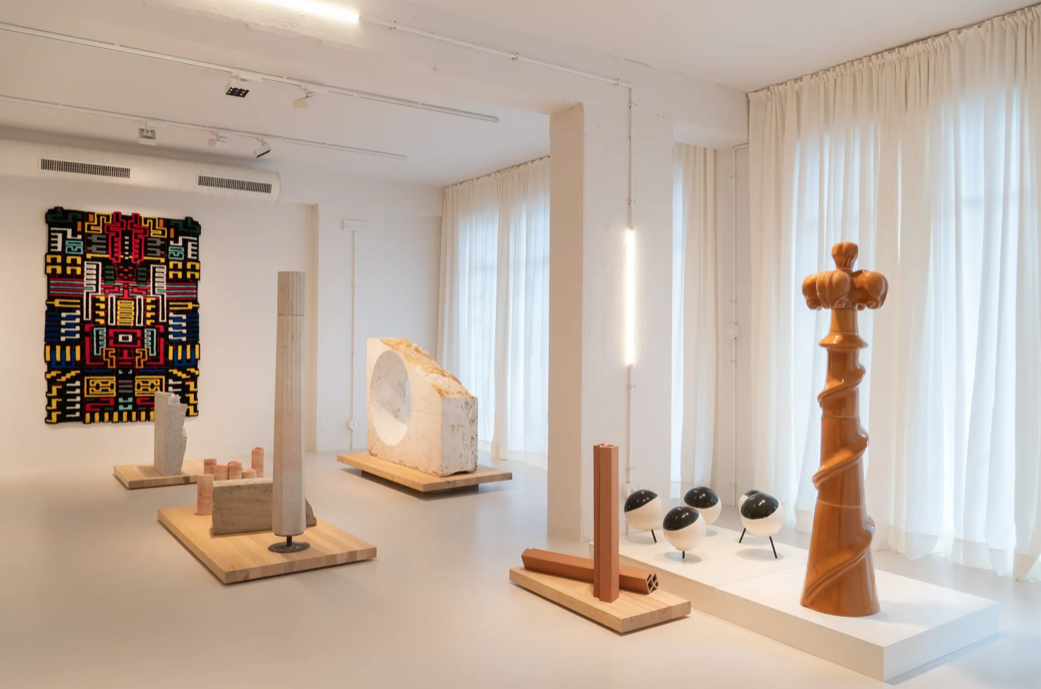
The exhibition, which opened on July 8 at the ÚNICO ICÓNICO & CO gallery and can be visited until the end of the year, brings together eight collaborations between some of the most relevant Catalan architecture studios and specialized craftsmen. GCA Architects, Mesura, RCR Arquitectes, Batlleiroig, AIA, Lagranja Design, Bofill Taller de Arquitectura and b720 participate in a project that proposes a transversal look at architecture made in Catalonia, claiming the trades as an essential part of its creative process.
Architecture | Crafts delves into the processes that have made them possible. Each piece starts from a real architectural project and a specific decision that, when brought into contact with the knowledge of a craft, is transformed, expanded and opens up new possibilities. Matter ceases to be a passive element to become an interlocutor; know-how, a form of thought capable of modifying the course of an idea.
Ceramists, cabinetmakers, metalworkers, textile artisans and specialists in various materials participate in this dialogue, contributing experiences and knowledge that challenge the initial limits of design. The resulting pieces are architectural fragments that contain a history of complicity, of trials and shared intuitions. In each one, architecture manifests itself as a collective practice, built through the relationship between those who imagine, those who interpret and those who transform.
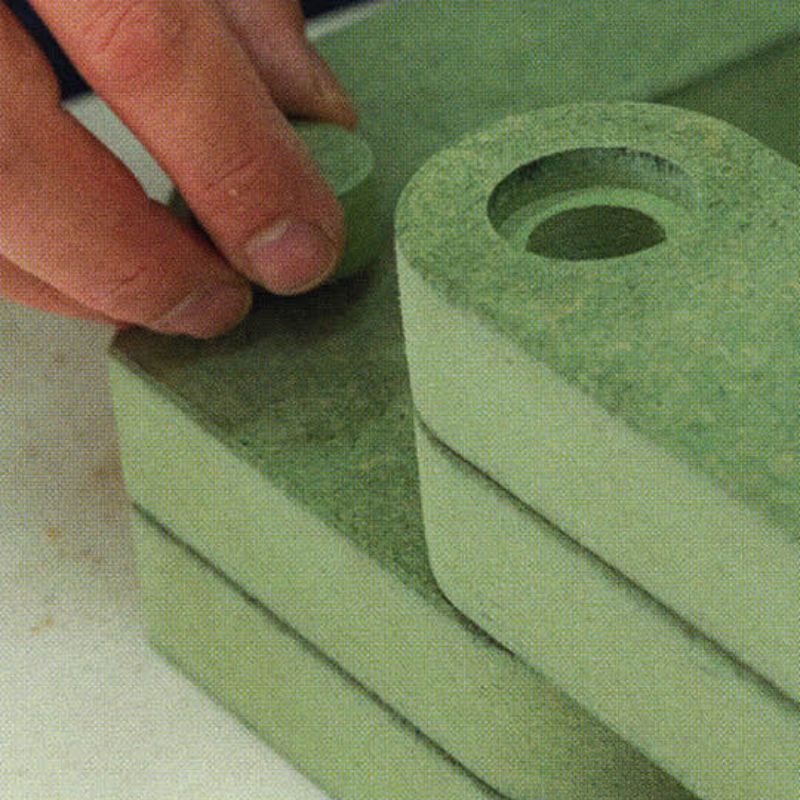
The exhibition also focuses on what is usually overlooked: the sketches, prototypes, material tests, conversations and technical adjustments that accompany the birth of a piece. This trace of the process allows us to understand that architecture does not arise solely from an idea, but from its ability to listen to the material and dialogue with those who know its deepest possibilities. It is in this negotiation between intention and reality that new forms, textures and solutions appear.
The craft becomes architecture
The diversity of projects that articulate the exhibition reveals the multiple ways in which this encounter can take shape. AIA, with Francesc Rubio, of Nord Taller, starts from the geometry of the Eixample to design a wooden lattice conceived as an autonomous unit, capable of being added to others and generating changing configurations. The piece evokes the city as a living system, built from repetition and variation.
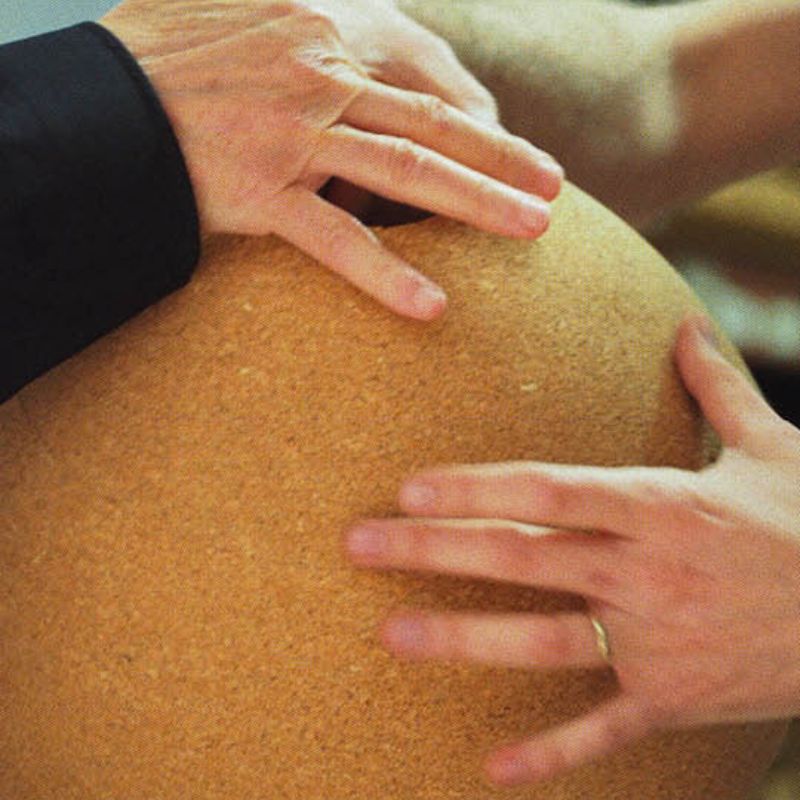
b720, Llenas NaturCork and Icónico Factory explore the possibilities of cork in a modular luminaire intended for the atriums of the Blue Tech Port in the Port of Barcelona, a project on which the studio is currently working. The material, linked to a long artisanal tradition, finds here a new architectural expression, between lightness, light and modularity.
Memory also becomes a subject of work in the intervention of Batlleiroig and restorer Daniel Moré on a set of armchairs from the old Jai Alai of the Teatre Principal in Barcelona. Recovered as part of the rehabilitation of the theater complex, the pieces preserve the traces of a space and a history, while also vindicating restoration as a craft capable of prolonging the life of objects and places.
GCA Architects and Cerámica a Mano Alzada develop a ceramic lattice for a residential project in Agadir, Morocco. Conceived as a transitional element between interior spaces, the piece works with light and continuity, establishing a permeable boundary that separates without interrupting and protects without enclosing.
Lagranja Design and Lluís Llenas, from NaturCork, propose a cork screen that allows multiple spatial configurations to be generated and adapted to different uses. For their part, Mesura, Fusió Metal and Sastres Paperers explore the possibilities of handmade paper in another screen, understood not as a fixed object, but as a dynamic device that transforms space through its presence and its ability to unfold.
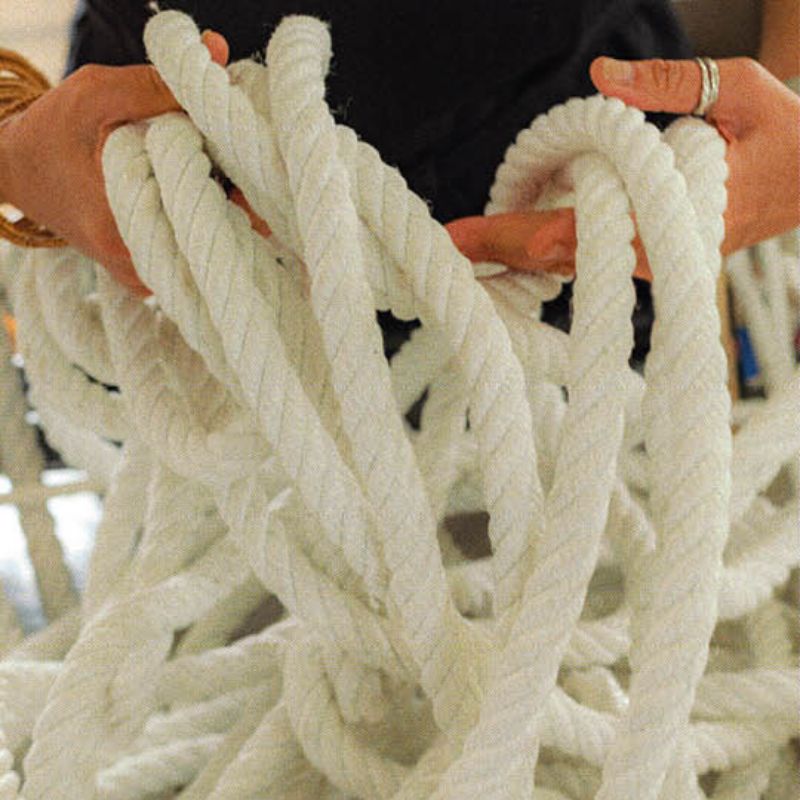
RCR Arquitectes, Metalmorphosis and Idoia Cuesta transfer the dialogue between architecture and craftsmanship to the textile territory with a pergola conceived for the rehabilitation of a factory. The piece, conceived as a large-scale system, generates shade and structures the central street of the industrial complex. The fabric thus becomes architecture, a skin that filters light and defines the space without losing its condition as a sensitive material.
Finally, Bofill Taller de Arquitectura and ceramist Jan Madrenas present a gutter conceived as an installation that transfers to the gallery the principles of an original architectural system of a residential project located on the coast of Alban. The color, geometry and the path of the water become the elements of a composition that transforms a constructive solution into a visual and spatial experience.
An architecture that listens
ÚNICO is a young project promoted by ICÓNICO with the aim of connecting art, craftsmanship and trades with architecture and interior design professionals. Arquitectura | Oficis is one of its first approaches to this purpose through real cases, in which collaboration manifests itself as a tool of transformation and discovery.
"We wanted to explain ÚNICO through real cases. Not from an abstract discourse, but by showing how an architectural idea can be transformed when it comes into contact with the deep knowledge of a craft. For us, this exhibition speaks of mediation, listening and the possibility of building new relationships between architecture, matter and territory", explains Claudia Divo, director of ÚNICO.
The exhibition thus claims a dimension of architecture that is often left in the background, but which is part of its cultural and constructive history: the transmission of knowledge, the precision of gesture and the ability to work together. At a time when production processes tend towards homogenization, the dialogue with the trades recovers the value of singularity, proximity and material experimentation.

You may be
interested
...