Exhibitions
The memory of the Transition reaches its final stage with three new exhibitions
The Local Museums Network closes the route of 'the first steps towards democracy' in El Prat, Tona and Vilafranca del Penedès, after a year of activity in 24 facilities and an itinerary that began at the Arenys de Mar Museum.
Twenty-four local museums have participated for a year in the Online Memory project, dedicated to recovering and explaining the early years of the democratic Transition. Now, the initiative is reaching the final stretch with three new exhibitions in El Prat de Llobregat, Tona and Vilafranca del Penedès, which focus on areas such as women's rights, freedom of expression and citizen mobilizations for democratic freedoms.
This sixth edition of Online Memory, organized around The First Steps Towards Democracy , recovers episodes and experiences that allow us to understand how society began to rebuild spaces for participation and collective expression between 1976 and 1978.
In El Prat de Llobregat, the Cèntric Espai Cultural recovers the history of the Family Planning Center, created in 1977 in a context of women's mobilization to conquer rights and overcome patriarchal structures inherited from the Franco regime. The facility was created to respond to the needs for information on contraception and sexuality, as well as to facilitate access to medical check-ups. Its pioneering work made it a reference for other centers in the State. The exhibition can be visited until December 20.
In Tona, the El Camp de les Lloses Interpretation and Site Centre presents, from 19 November, Freedom of expression, Catalanity and citizen participation . The exhibition recalls the birth, in 1977, of La Veu de Tona , a new means of communication that found in the recovery of freedom of expression a space to claim Catalanity. It also recalls the celebration of the Ciutat Pubilla in 1978, an event that had a special significance for the identity and collective life of the municipality. It can be visited until 31 December.
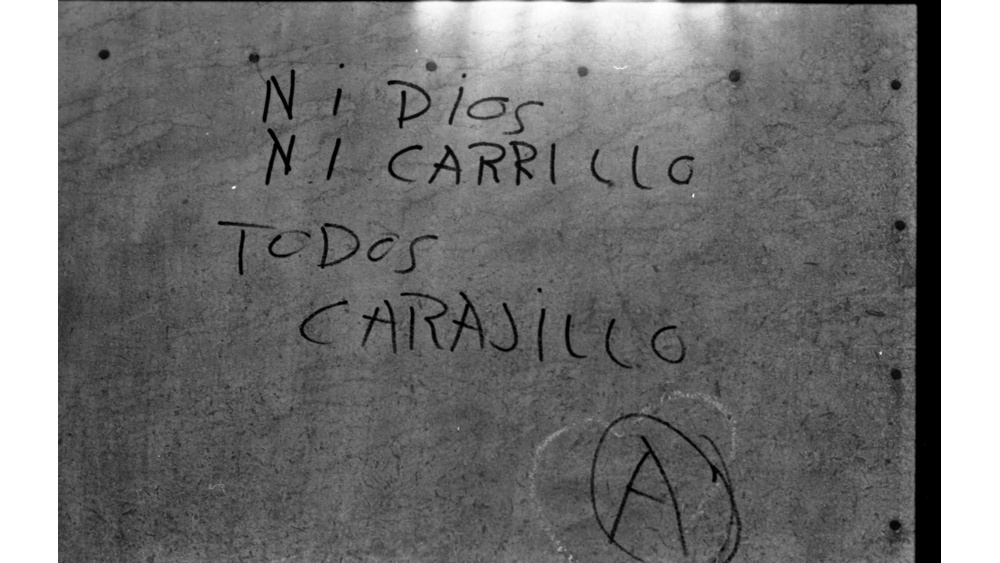
For its part, VINSEUM, the Museum of Wine Cultures of Catalonia, in Vilafranca del Penedès, dedicates its contribution to the political and social mobilizations that marked the last years of Franco's regime and the beginnings of the Transition. Through three photographs by Jordi Valls and Enric Tomàs, the exhibition documents the demands of entities, neighborhood movements and citizens in favor of freedom, amnesty, democracy and self-government of Catalonia. The images recover both the demonstrations and public acts as well as the anonymous expressions of protest that appeared on the streets of the town. This last exhibition can be visited until January 17, 2027.
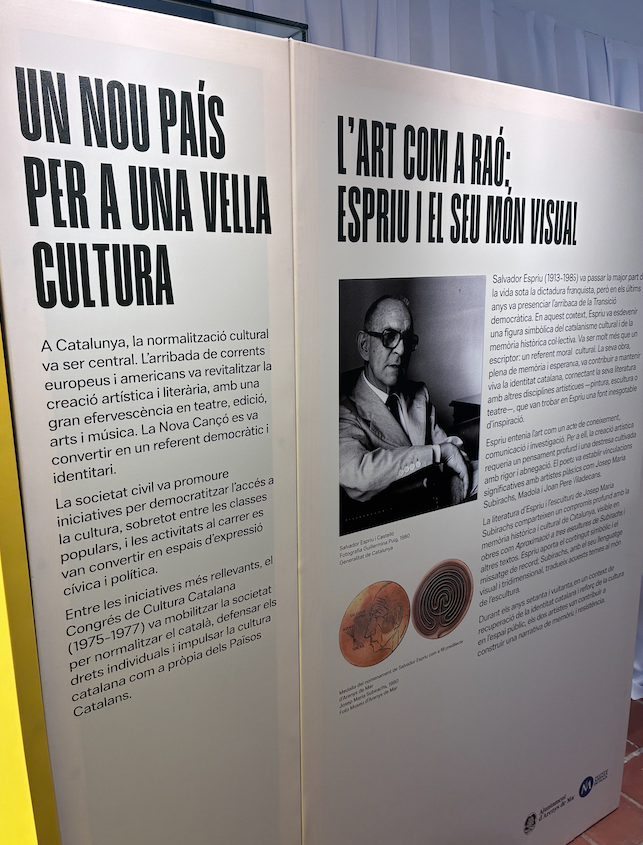
The journey had begun on April 19 at the Arenys de Mar Museum with Art as Reason. Espriu and his visual world , an exhibition curated by Carles Toribio that addressed the relationship between art, culture and democratic memory through the figure of Salvador Espriu. The proposal delved especially into the dialogue between the poet and the sculptor Josep Maria Subirachs, as well as the connections between Espriu's symbolic universe and other contemporary artists.

You may be
interested
...