
Exhibitions
MINIMAL ART at Swab / CasCaDas Art Space
Timon Hagen and the poetics of small dimensions in a reflection on scale, intimacy and the increasingly reduced spaces of contemporary art.
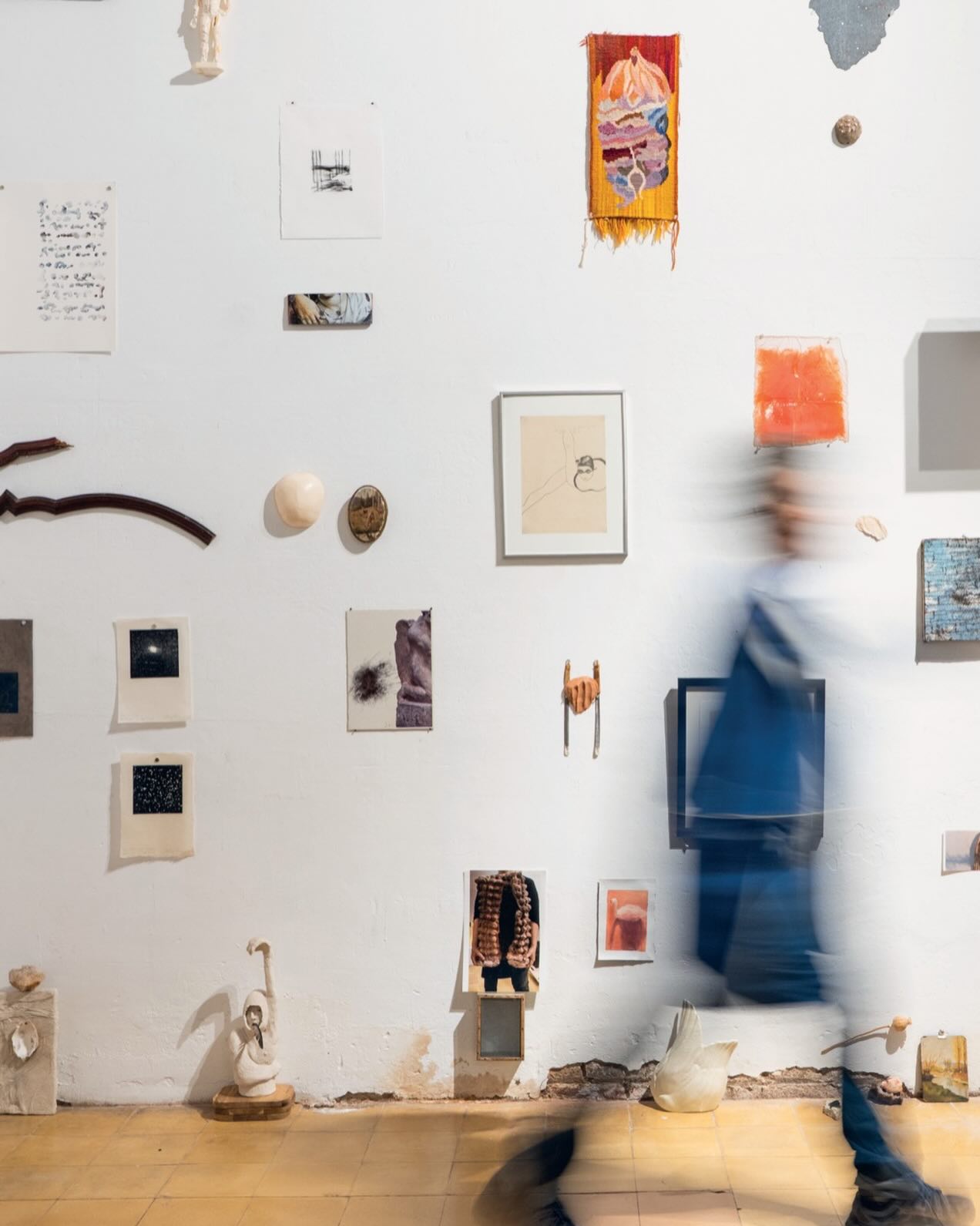
Writing about an exhibition by Anselm Kiefer or Miró is fine and I will continue to do so, but it is difficult to contribute something because almost everything has been said. I like to poke my nose into small-format fairs like Swab and hidden galleries that are almost always in the Raval, Gràcia or on the remote outskirts because they give me much more information about what is happening to us, to us and to art. In these areas of the city there are small spaces with affordable rents for emerging artists and curators. This is the case of CasCaDas Art Space, by the artist, curator and founder Fiona Fell, alongside Jimmy Paez Vidal, Krzysztof W. Wróbel and Maarten Renes. Here I was able to see the exhibition by the Amsterdam artist, Timon Hagen. The small gallery space expands towards the windows of an old shop on Carrer Bisbe Sevilla. I did not know this artist's work and I did not speak to him either, just a few smiles. I immediately saw that it was a verification of the impression that Swab had made on me, where the gallery was also represented, I saw that it was a good way to approach what I have called minimal art.
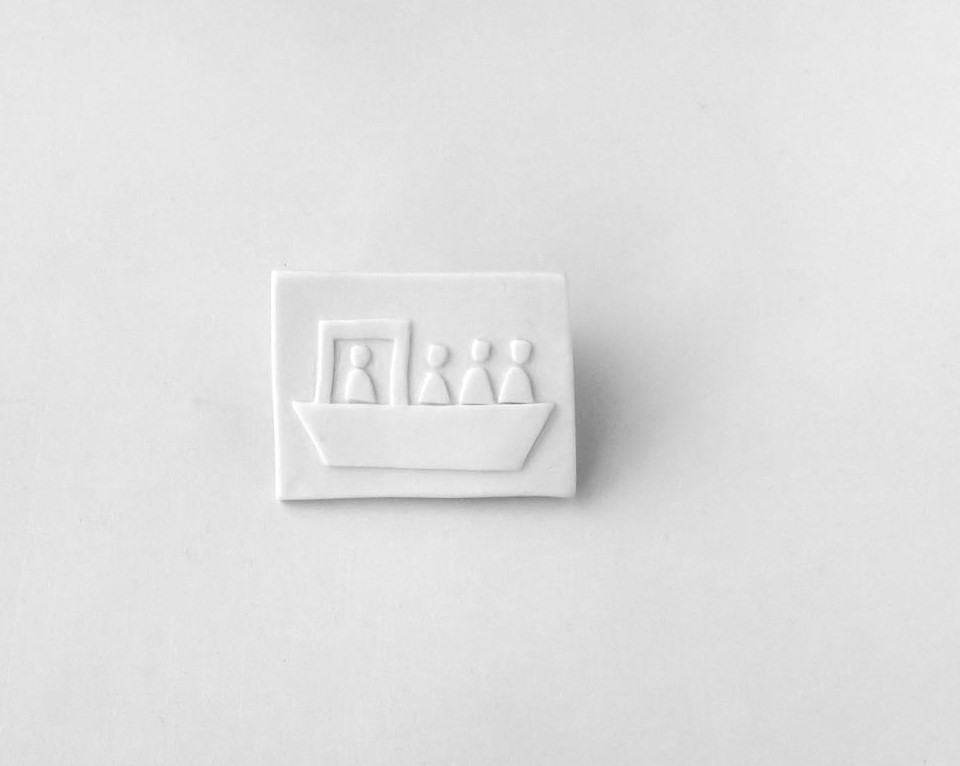
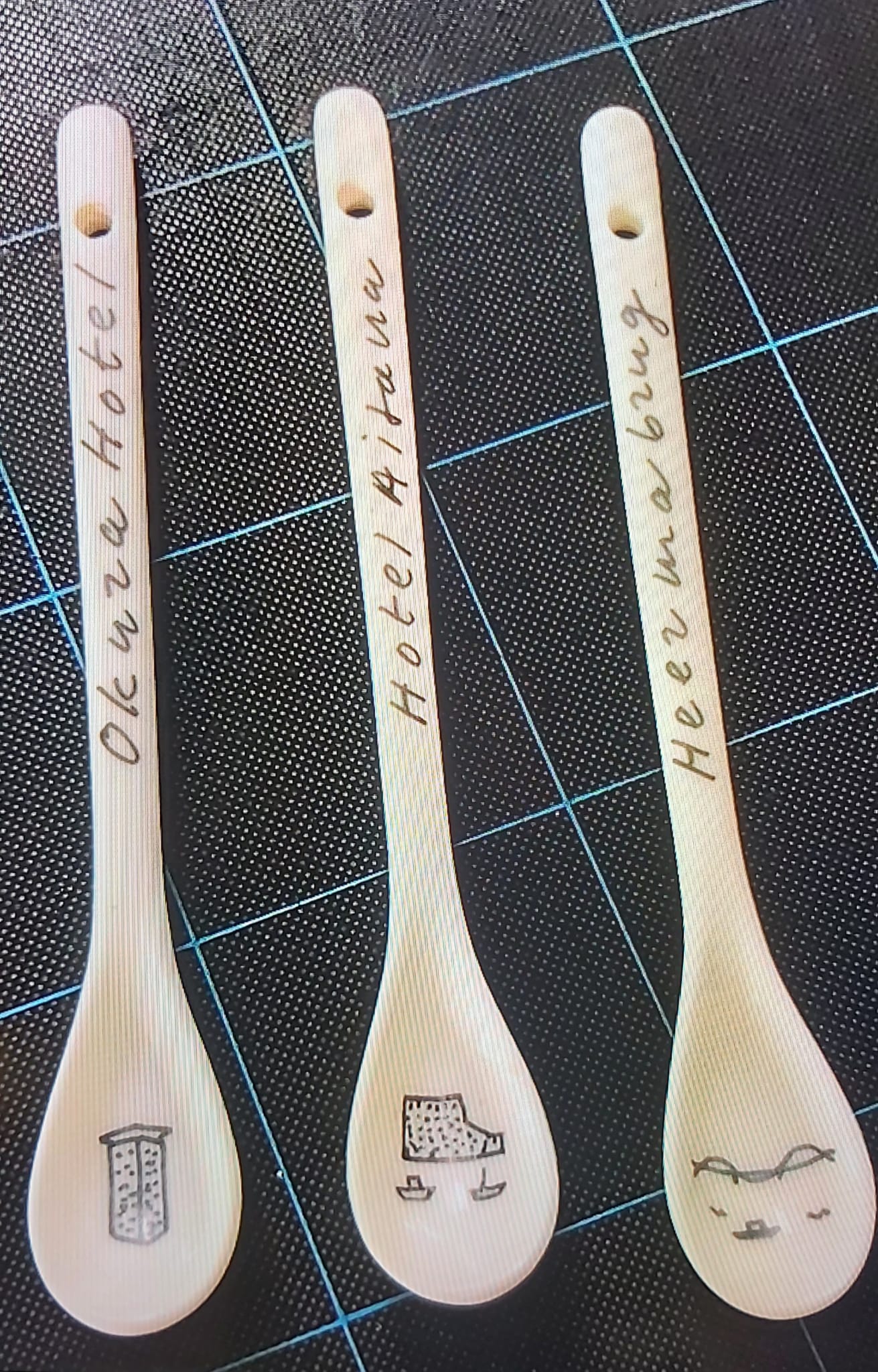
The training at the Rietveld school is perceived by his taste for the polished line in the drawing he makes in his notebook and on any surface. Here I see porcelain spoons, paper, also postcards and other materials. The aphorisms of the texts augur a kind of vital optimism. With mottos like 'from now on I am very skilled'... and everything has a certain adult naivety. He draws with the same pen that his father gave him when he was 15. The reduction to the minimum has a bit of an inner, intimate search, of a reserved dialogue with oneself, in a low voice. Without stridentness. Murmuring. Any bad gesture, any excess would end his poetics. The works become fragile and defenseless, they are surrounded by small signs, things that suggest and represent. The detail of a line that changes meaning becomes significant.
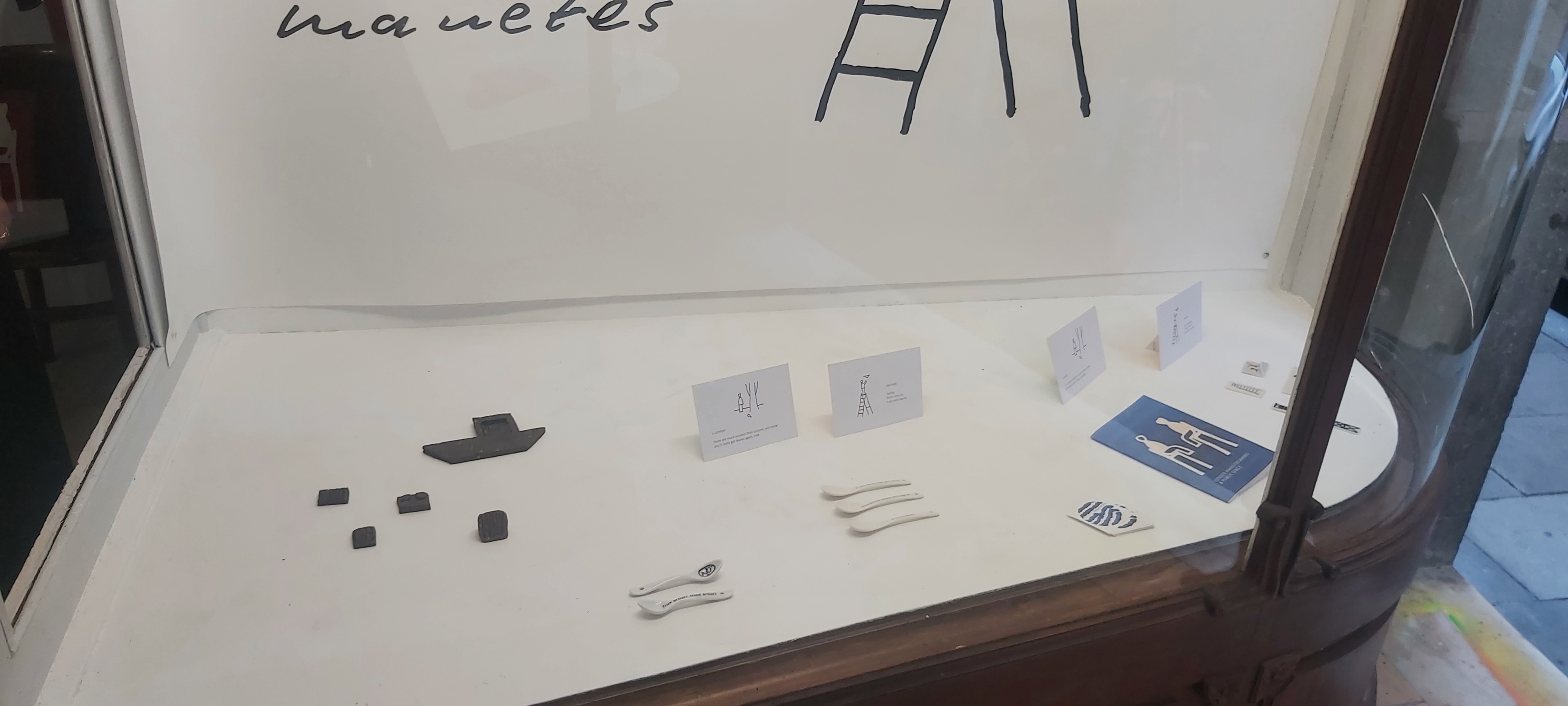
Work by Timon Hagen.
At the recent Swab exhibition I saw a small copy of a photobook by Elisa Portela with a suggestive title that gave me the key to what I was seeing at the fair. Quemar es brilar y reducirse , published by @museoenloscerros. It is a verse from the book Paisaje , by Salomé Esper. Certainly, everything I saw seemed reduced to the scale of the homes and studios in which a young person today is forced to live and work. Even a young collector must take measurements before buying a work. Houses are no longer what they were, and these small details affect art and collecting. This would be the most banal, even prosaic, side of the question, but now that some galleries are observing with interest the resurgence of artistic craft techniques, it is worth considering the space where the objects will be located. Space is getting smaller and smaller.
Moving on to more substantial subjects and drawing on experience, I think about what it could mean for artists like Stephen Conroy to make faces measuring 28 cm × 23 cm, which caught my attention back in 2008. The painter placed the immensity of a head on a small surface. It also happens in abstraction, Franz Kline in 1952 made some works with ink on the pages of a telephone directory measuring 29.2 × 24.2 cm, and they had the same strength of the stroke of the great later paintings.
Work by Timon Hagen.
There are many other examples such as the abstract expressionist works of Esteban Vicente, Ralph Rosenborg, Ralph Bernabei or Howard Hodgkin. In all these paintings there is a gestural action carried out on a small scale but with an enormous power of the brushstroke. This makes it very difficult for the stroke, being minimal, to retain the same force as if it were two meters long. Howard Hodgkin chose the small format as a hallmark to differentiate himself from the American abstract expressionists who painted monumental canvases. So much so that it is highlighted by the fact that the brushstroke comes out of the canvas and incorporates the frame itself within the gestural composition of the painting. Gesture dominates these works and I wonder how the energy of the stroke can be directed in a minimal space. This also happens with the pictorial work of Ralph Bernabei, which retains the same force in any format, and what I have chosen demonstrates this.
The reduction to the minimum indicates the value of the smallest in comparison with the demand, even current, to ask art for large formats. The minimum, not the minimalist, has a bit of austerity with the materials, of abstinence, of control of excesses. This gives it a certain charisma because when there is little, silence appears.
Work by Timon Hagen.
This is the litmus test of scale change, when works are good they resist changes in their proportions and measurements. That's right. Jorge Oteiza, in his plaster laboratory, demonstrated it. The monumental work The Wave in the MACBA square —which the "skaters" in their forties do not allow to be seen up close, at the risk of breaking an ankle— was born from a tiny bronze model of only 5 centimeters high that Jorge Oteiza sculpted in 1957 and retains the same value in both cases.
I do not know of any formula that would allow these intimate confessions to be turned into a public mural within reach of indecent looks. And much less to size them to a scale and proportion other than that of their small formats that emphasize, even more, the reserved nature of their works. I see here an insoluble problem, a conflict between the public and the private. In other words, I wonder about the relevance of formats, scale and appropriate proportion to deal with intimate or perhaps painful topics. From here I have gone on to imagine what would happen if a work of great emotion were sized, for example, in a gigantic format, covering the facade of a building under construction; we can agree that it would immediately be trivialized, it would become an unimportant anecdote.
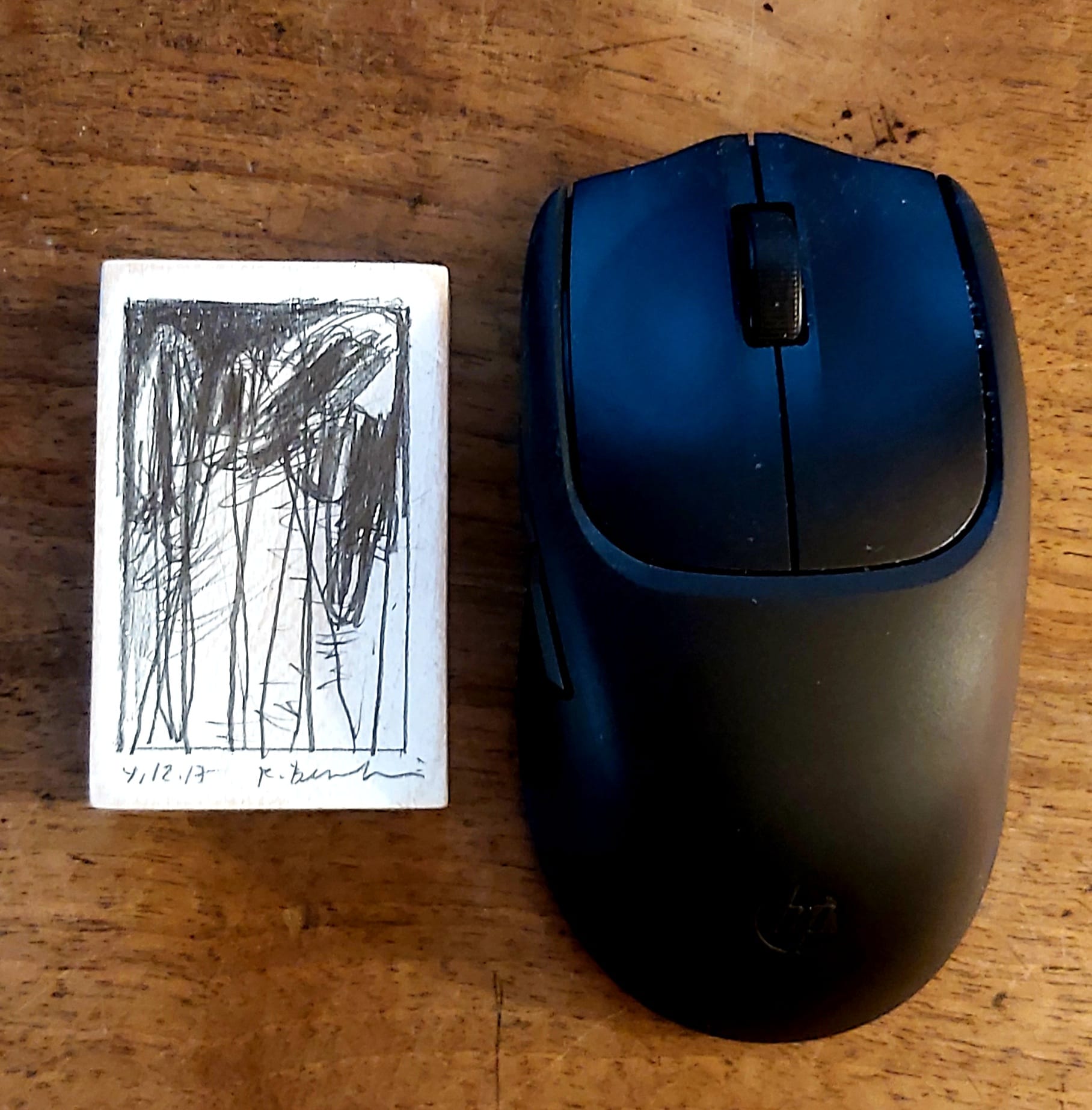
Work by Ralph Bernabeu.
In the opposite direction is the work of Ron Mueck, who carried out a kind of 'Gulliverization' process and built a five-meter baby. This resource that in Hollywood has served as the script for numerous films and that, despite being comedies, are still very disturbing. A world in which, breaking the rules of proportion, it places the viewer out of scale. In short, I wonder what is the scale, the appropriate proportion, the measurement of a wall or a sculpture when it comes to reflecting intimate, melancholic and sad issues. Own, private worlds, that can only be made with the stroke of a pen given to you by your father.


You may be
interested
...