
Opinion
MACBA: conflict and epiphany
A happy coincidence has meant that the start of the art season in Barcelona gives us the opportunity to reflect on the foundations of current art, nothing more and nothing less. On the one hand, the presentation of Valentín Roma's program for MACBA and, on the other, the proposals that the galleries have chosen for the Barcelona Gallery Weekend 2026, with exhibitions in 25 galleries and more than 50 artists. That's why I say it's a foundational moment, ideal for assessing and comparing the intentions between what the great museum wants, what the galleries propose and what the artists do.
Period canon
I don't usually write critical chronicles related to institutional aspects or the management of power centers in art, because they contain keys that I don't know or care about. What does pique my interest is how their decisions can affect artists and the cause of art.
First of all, we must be grateful that the director of MACBA has such clear ideas about what he intends to achieve with his management; it is a sign of great intellectual honesty. I have always said that galleries, critics and curators should explain what our vision of art is, because in this way we would avoid artists knocking on the wrong door, wasting time and complaining fruitlessly about not having a place in the programming.
When I read Valentín Roma's proposals, I see that they respond to a series of contemporary issues that have marked the artistic trends of recent years. They are commonplaces. It is not the result of an ingenious improvisation, but of an accumulation of ideas and intentions that have been operating for a long time and that, in part, he already put into action during his successful period at La Virreina. On this occasion he has been much more clarifying in reminding us of the main concepts on which he will act.
His proposal has the endorsement of the experience and support of two theorists and managers of contemporary art with whom he maintains a great intellectual affinity, two influential figures who have marked the trend of the last twenty years: I am referring to Manuel Borja-Villel and Pedro G. Romero. All three share a conception of art based on its relationship with politics, history and society.
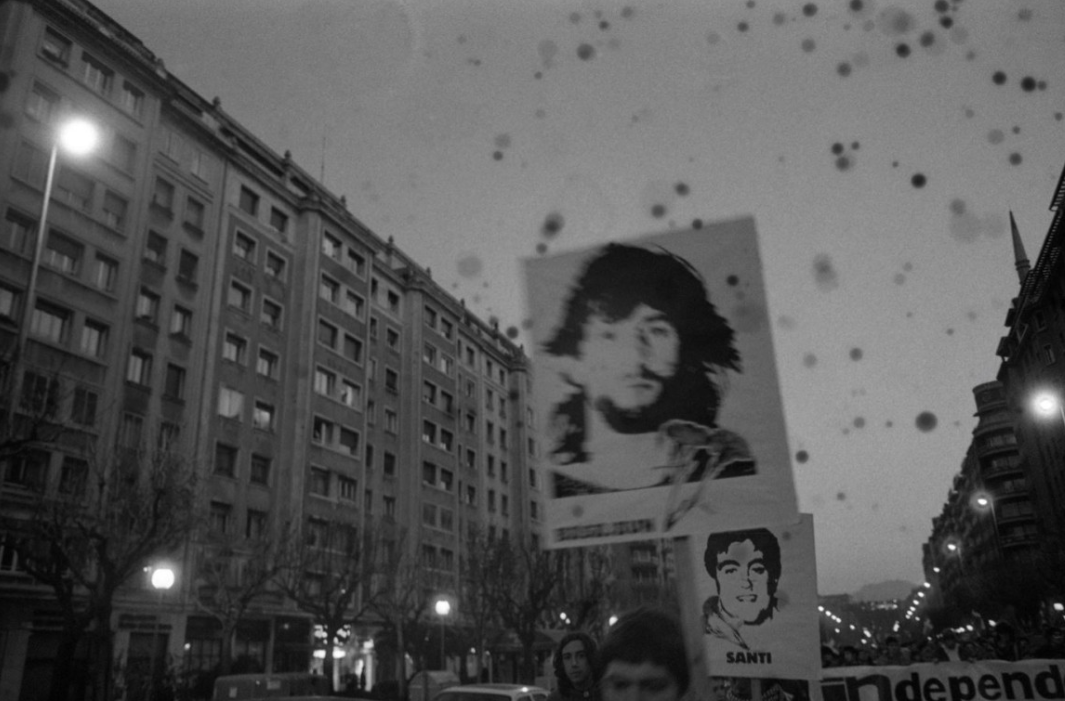
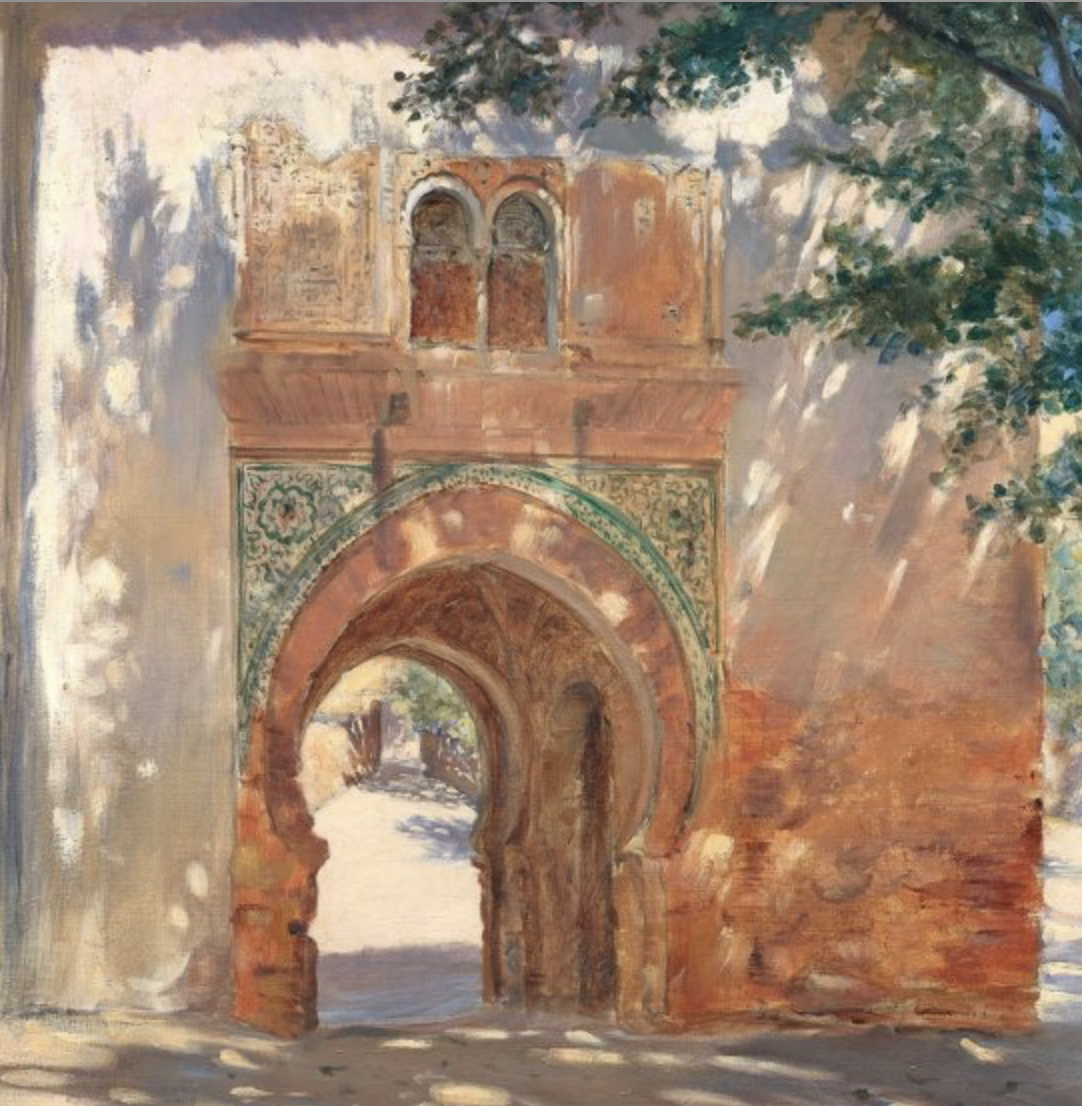
Clement Bernard, The Viceroy.
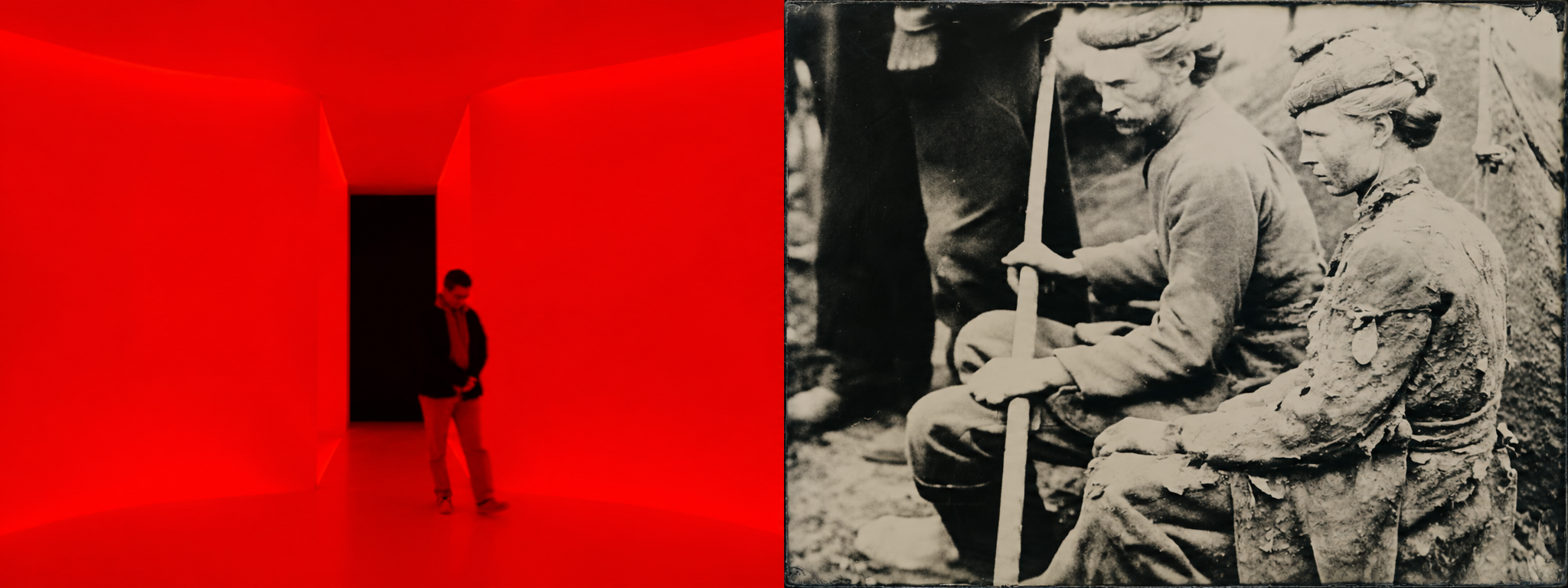
Specialists know the confluence of these ideas among themselves. But, for those who are not, I will give some historical data. Manuel Borja-Villel had put together a diverse and magnificent program at the Tàpies Museum, between 1990 and 1998; there we saw the best of the recent history of art. The promotion of Tàpies' own work coexisted with diversity, with essential names such as Louise Bourgeois, Lygia Clark, Fluxus, Joseph Beuys, Yoko Ono and Nam June Paik, ZAJ, Marcel Broodthaers, Hans Haacke and Krzysztof Wodiczko, Brassaï, Mario Merz, Victor Burgin, Chris Marker and others. Upon leaving his position and becoming director of MACBA, he decided on a change of direction and completely transformed it through a program with a strong political, critical and conceptual research charge between 1998 and 2007. In defense of this necessary balance that he demonstrated in these years, I propose—I have placed—some works by James Turrell from the exhibition that Borja-Villel himself curated for the IVAM in 2006.
Pedro G. Romero had made his Archivo FX: La ciudad vacía. Comunidad in 2006, at the Reina Sofía. Also by the same artist, Máquinas de trovar. Índices, dispositivos, aparatos (2021-2022), a retrospective proposed by Borja-Villel with the participation of Valentín Roma. Last year, Borja-Villel developed his proposal at the Victòria Eugènia pavilion in Montjuïc: he presented the Museu Habitat project, an initiative of critical thinking and experimentation on the future of museums in Catalonia that had as its main milestone the exhibition Fabular paisatges . This background supports him and verifies that he is following the same path. That is, at least twenty years of perseverance in common objectives between these influential critics. Taking into account this background, Valentín Roma's proposal is fully part of this trend of the time. He is not alone.
MACBA proposal
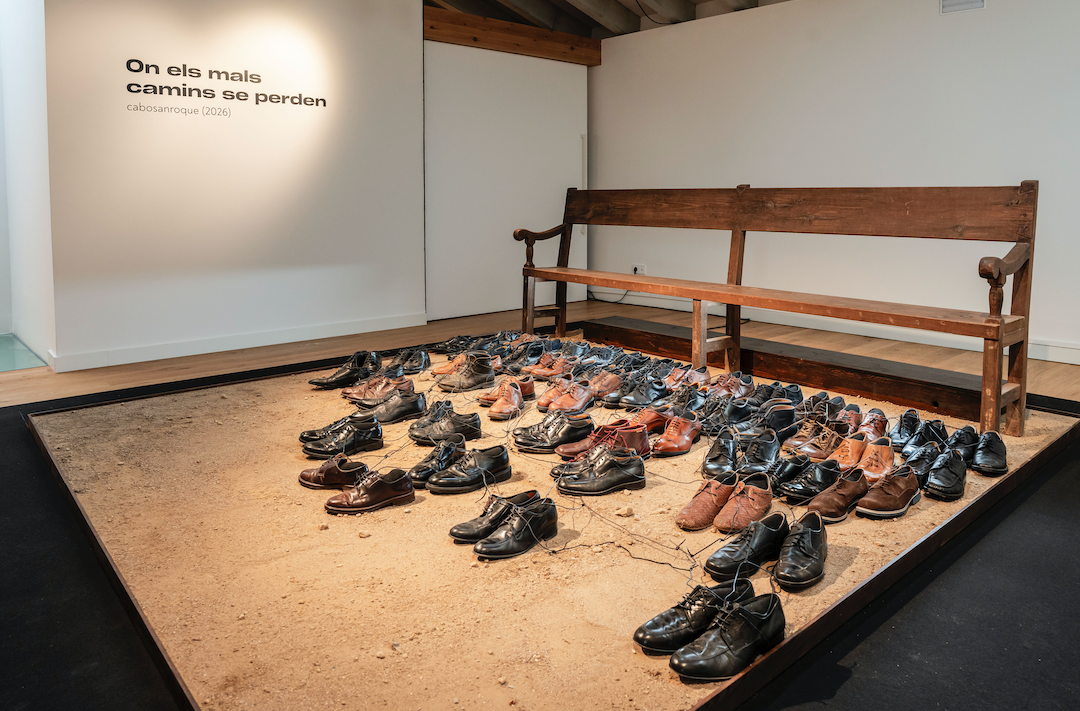
I read the proposal carefully and check the harmonies between the objectives of the MACBA and what I have explained so far. I deduce that there are five non-negotiable conditions: the first is critical belligerence with institutions, authority and hierarchy. The second is that Valentín Roma claims friction and antagonism as procedures for tense intellectual confrontation in museums. He proposes a bloodless battlefield that remains a witness in an archive. For this reason, the third has the archive itself as its protagonist. This, as can be seen in the image that accompanies the text, has established itself as the totem of modern art. Classifying, ordering, naming everything replaces the unmentionable or the disorder of thought. Laurence Rassel, director of the Museu Tàpies between 2008 and 2015, also wanted to impose this classificatory pattern without succeeding. The old Zen monk would not let go.
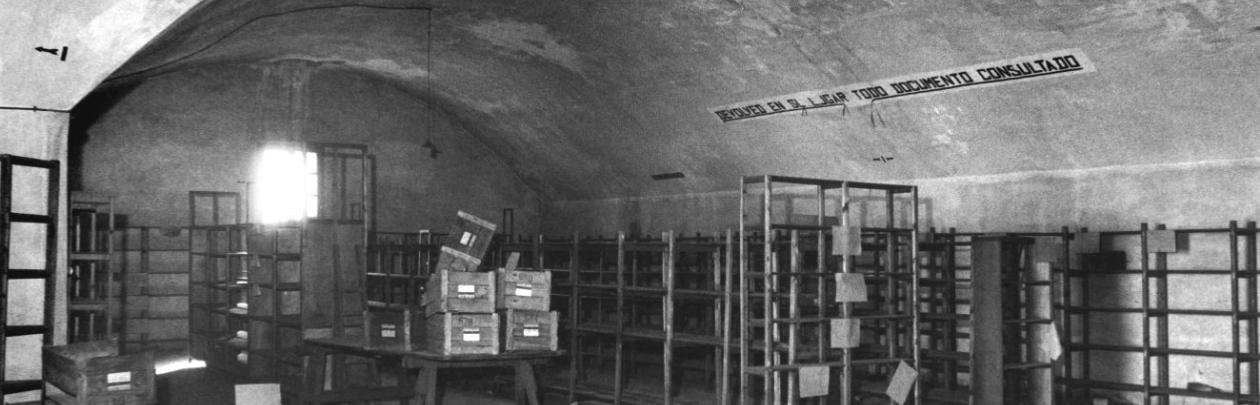
Icaria Archive, The Viceroy.
The fourth condition is the concept of historical memory. It is about recovering silenced and excluded voices. This happens with political and social conflicts and, above all, with the marginalized role of women in the history of art. The fifth refers to popular culture, understood as the instrument to overcome the hierarchies between cultured art and the street. Coinciding with this point, Borja-Villel says that the "situated museum" must be aware of the territory, history and its communities. The MACBA, located in a particularly complex neighborhood, offers a privileged setting for this issue. However, recognizing urban culture does not mean accepting all its manifestations. An equally important objective in the Rome project is to make "publics". For this reason, it must be recognized that neither graffiti nor the permanent presence of quarantined "skaters" in front of the museum are "cool" anymore. The area must be pacified for the benefit of visitors' ankles.
In short, Valentín Roma's program proposes that MACBA be the scene of the great contemporary conflicts. The list is endless, we know it well: wars, inequality, precariousness, migrations, racialization, climate crisis, artificial intelligence, disinformation, queer gender identities, feminisms, coloniality and the crisis of democratic institutions, etc.
The reiteration of terms such as tension, conflict, public sphere and critical thinking allows us to identify its ideological and aesthetic orientation. If we were in another era, I would say that it is a left-wing artistic discourse, but after the postmodern fissure I dare not assure you of this. I refer to the work of Juana Dolores in her intervention in La Virreina (2026), with her homage to Lenin, in which Marx's face appears on a Valentine's Day cake.
To position myself before the proposal, I would say that the question is not to deny the political dimension of art, but to ask whether it should become the main criterion for its evaluation, whether it should replace the artist's subjectivity, imagination, individual experience, expressive freedom and transcendental aesthetic contemplation. What Valentín Roma would call, with great grace, the "crazy themes", which I know he is also interested in. The problem is not to replace one canon with another, but to prevent any canon, old or new, from ending up limiting individual freedom in art. The faithful must keep the balance at the right point, as Borja-Villel did at the Tàpies Museum.
The galleries
Given this solidity of the proposed ideas, I start reviewing the programs of the 25 galleries participating in this Barcelona Gallery Weekend 2026, at the beginning of the season, and I note three groups of exhibitions, artists and gallerists that come closer, more or less, to the canonical program proposed by MACBA.
I have reviewed the map and studied the program, but, for the benefit of the reader and given the length, I will only refer to the concepts that I found in my search, without citing artists or galleries, which could stigmatize them in one sense or another. Although it may be too enumerative and didactic, I will explain some concepts-ideas that are fully in line with the line proposed by the canon, others that are less so and many that are not at all. This is not a critical interpretation on my part, but rather truthful and objective data extracted from the programs.
There are eight galleries that are very close to the canon in their programming and that use related concepts. This first group of galleries can be organized around large fields characterized by a conception of art as a critical, political and social practice. Consequently, we see that questions arise about what social tools can be and the concern about how contemporary mechanisms of value and power act. Finally, historical memory faced with the failure of modern promises; in short, all those topics linked to power and its political, historical and cultural mythologies that connect perfectly with Valentín Roma's program.
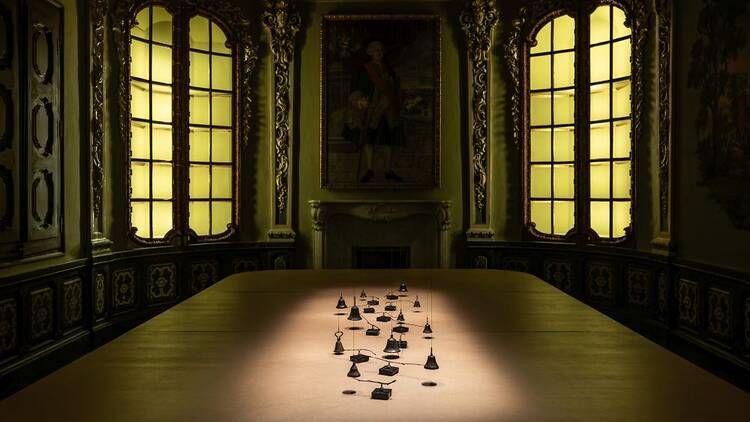
Mar Arza, La Virreina.
Seven of them are in an intermediate territory in which the usual questions of artistic practice appear. All those that refer to the material, the object and the phenomenology centered on the body, the object, the space, the architecture and the perceptual experience. Indeterminacy, uncertainty and unstable knowledge are also present. Everything starts from a highly conceptualized worldview, although not sociopolitical, but with poetic associations and displacements of meaning.
The ten galleries furthest from the canon proposed by MACBA are committed to art as expression and revelation. They claim the imagination, subjectivity, aesthetic experience, autonomy and poetic capacity of art. The ancestral and channeling ritual of the artistic. The relevance of the object rather than the text. Curiously, they are quite numerous and end up being the dominant ones. Hence the relevance of the spiritual and revelatory dimension.
Art is understood as a form of sensitive and intuitive knowledge capable of exploring that which cannot be fully explained by reason. The experience of the indeterminate. Shadow, mystery, absence, transience and poetic resonance refer to an aesthetic experience that goes beyond literal representation and favors symbolic analogy for the benefit of the profound aesthetic experience of art.
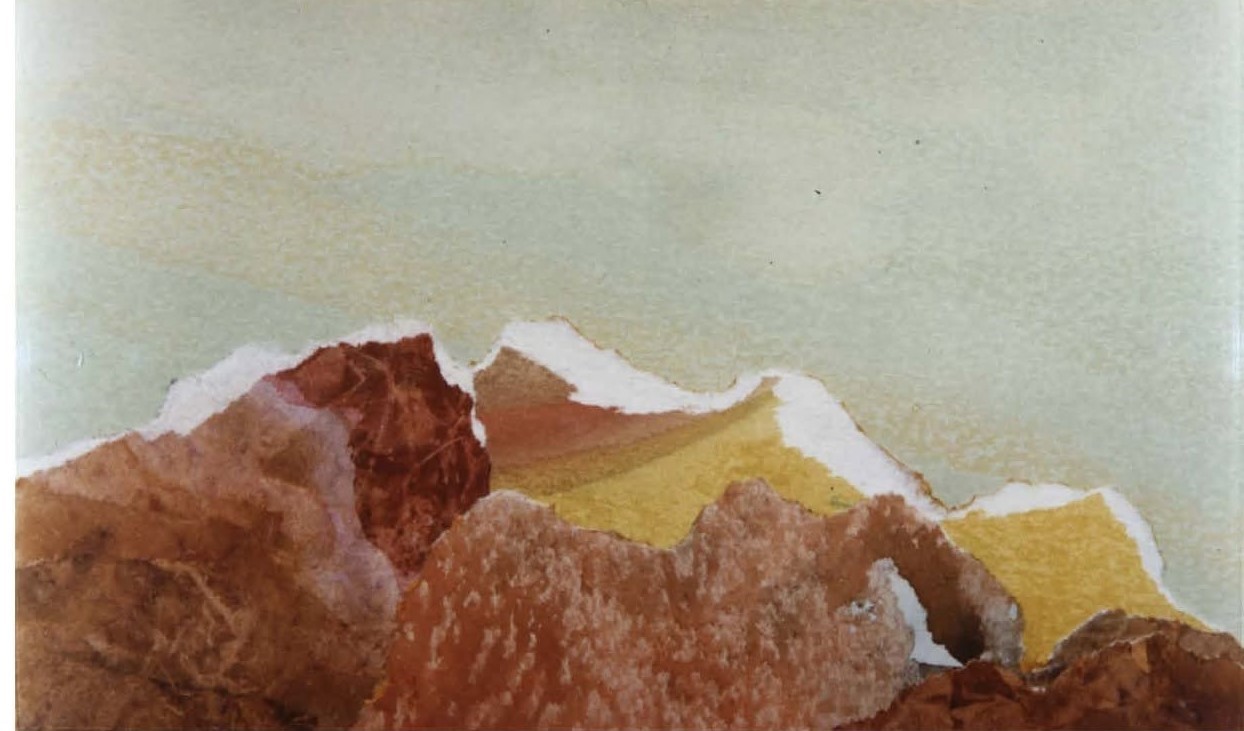
Antonioni & Ghirri.
The Viceroy as a model
The programming of Valentín Roma at La Virreina has been highly praised by everyone and also coincides with the contents of the three groups of galleries. On the one hand, we have seen exhibitions with a clear positioning of art as a political commitment: John Berger, Sara Gómez, Clemente Bernad, Paloma Polo, Isaías Griñolo. A struggle that includes feminism and the critique of identities: Barbara Hammer, Ketty La Rocca, Trinh T. Minh-ha, Leeds Animation Workshop.
On the other hand, the presence of hybrid, intermediate aspects, but with a strong subjective content. Exhibitions on experimentation and language ruptures: Copi, Cathy Berberian, Josep Iglésias del Marquet, Regina Silveira. Naturally, as required by the fact of being a center of image, cinema, photography and visual thought with Alexander Kluge, August Sander, Susan Sontag, Marguerite Duras.
But, above all, I will highlight very especially those proposals that coincide with the third group because they create a necessary counterweight in the balance. Those that address art and poetic subjectivity, the mechanisms of perception: Mar Arza, Èlia Llach, Oriol Vila-Puig and Álvaro Perdices. Lately, also Sergi Aguilar, Frederic Amat and Joan Hernández Pijuan, who indicate a good predisposition not to deny historical artists. But, as a program of intentions, I want to highlight above all the magnificent exhibition of synthesis between complexity and beauty in La muntanya anàloga , with Antonioni and Ghirri, curated by Frederic Montornès.
Conflict and epiphany
The role that conflict plays in Valentín Roma's episteme has been demonstrated and sufficiently verified. Continuing with the image of the scales, I would say that the left plate is full to overflowing. Now it is up to me to argue in favor of the balancing concepts that I find in the right plate. As a counterweight to the conflict, I have placed epiphany, this strange word included in the title of this article. My intention is none other than to demonstrate that in the new director the two sensibilities coexist: that of conflict and that of epiphany.
Valentín Roma used the term epiphany, so important in revealed creation, on the occasion of the centenary of Tàpies' birth. The current director, Imma Prieto, invited him to comment on the series Teresa , from 1966. He was faced with an image, a thing, an object, and from that encounter some wonderful concepts emerged, because art is not only textuality, but also an exercise of the gaze.
The evaluative language of criticism lacks brilliant concepts like those I heard from Valentín Roma. What he proposes to us is very inspiring and important. For example, the replacement of tension and conflict by lightness and pure pleasure. He presented this concept in relation to Juan Cárdenas' book entitled: La ligereza , from which he drew a brilliant conclusion: the idea that great art is that which floats. Gravity and heaviness are symptoms of dogmatic art; great art does not weigh. It is against heavy epistemes. To my surprise, he made an apology for feelings, for the scar, for lightness, for concealment, for atavistic "erotomania", in relation to Balthus, and for love as an artistic epiphany. In short, he made a reflection in defense of what I would call an "epiphanic" aesthetic, in which he cited the scar in Severo Sarduy, the lightness of Juan Cárdenas and the concealment of Maurice Blanchot. That was only two years ago; it is a short time and he can incorporate them into his program.
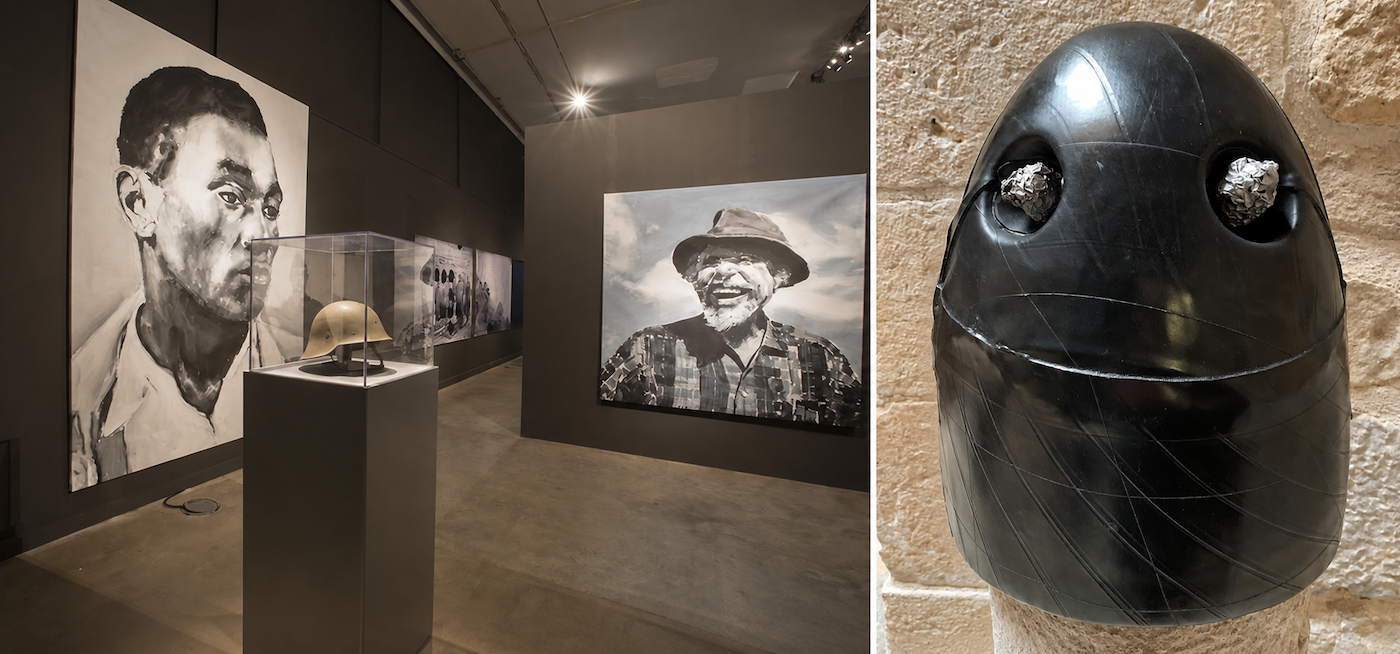
Torres / Gabriel.
But, above all, without reservations or cliché prejudices, he approached the work of Tàpies, which he knows well, and assured that all of it is nothing more than the narration of a loving epiphany. That he saw all of his work as a collection of epiphanies. In his words I understood that in his rationalizing episteme of conflict there was also room for restlessness and desire as engines of creation in contemporary art.
The apology for epiphanic revelation in the key of love was not limited to the commented work of Tàpies, but, to reinforce the argument, he cited the story of the blind truck driver by Alexander Kluge, which is nothing other than an allegory of unconditional love, of absolute trust in the other; in short, an apology for feelings.
I like this praise of rarity and subjective drives that I have found in the epistemological poetics of Valentín Roma, and it is necessary in art, although, due to its fleeting and complex evanescence, it is difficult to enumerate; it must be there, however, in a museum performance program.
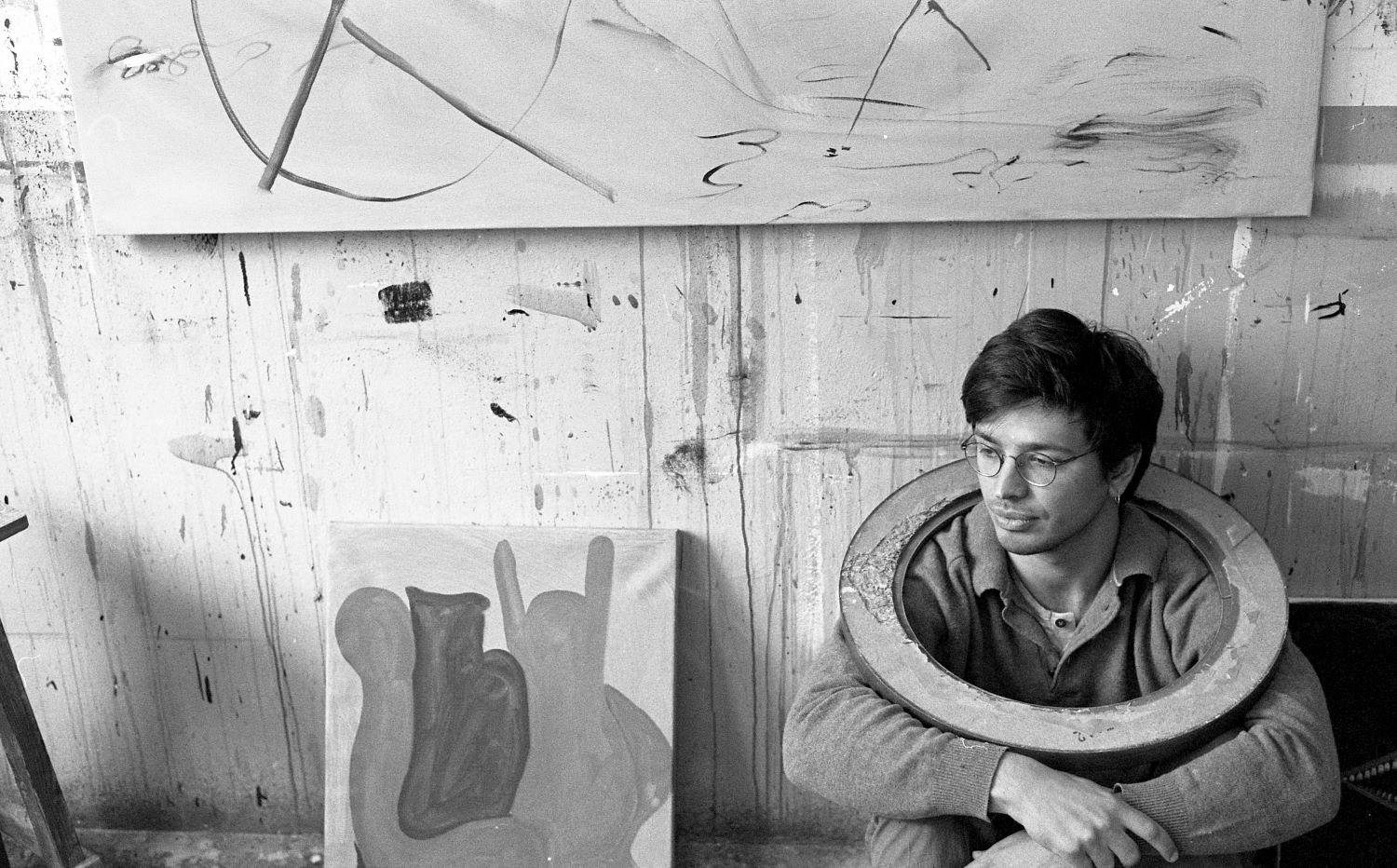
We have listened to the voice of institutions, curators and galleries. Now it is time to listen to the artists. The voice of the contributing artists, who are the true connoisseurs of art and have a lot to say in this new stage that will fully affect them. Among all of them I have chosen two consolidated artists: Francesc Torres and the sculptor Gabriel. Torres represents contemporary involvement and conflict and his word is heard by MACBA because it clearly coincides with the ideology of its new director. For his part, the sculptor Gabriel is established as a clear defender of epiphany in art. In his case there is also a full coincidence with this same principle maintained by Valentín Roma and it must be listened to. His position is less well known, but no less well-founded when he speaks of spiritual epiphany, of negation of the self, of phenomenology of form and the sensible, of poetic intelligence, of eccentricity as a virtue not subject to the dominating self, of existential pain and of values such as the principle of indeterminacy, of inexactness and the necessary strangeness in the face of the unknown. A true artistic manifesto that I fully share because it allows us to approach the restlessness that the being of art causes us.
We'll see. At this crossroads, the new director has the floor; he will decide whether to keep the needle of the scale at the right point between the conflict proposed by his rationalized ideology and the epiphany that his hidden and unconfessable need also demands of him.

You may be
interested
...