Opinion
When art entered the kitchen of Ferran Adrià and Santi Santamaria
From Ferran Adrià's creative laboratory to Tàpies' menu for Can Fabes, Catalan gastronomy found in art a way to expand its own limits.
The series Gènesi , which TV3 has dedicated to elBulli, has served to once again bring before our eyes one of the most extraordinary adventures of contemporary Catalan culture. The story of that restaurant in Cala Montjoi, in Roses, which was voted the best restaurant in the world on five occasions, is well-known, but that doesn't stop it from fascinating. Now that the series will also be coming to Netflix, with performances such as those of Miquel Fernández in the role of Ferran Adrià or Ivan Massagué as Juli Soler Bosch, we will once again talk about those years in which a small corner of the Costa Brava ended up becoming a place of international gastronomic pilgrimage.
But perhaps now is also a good time to look at elBulli from another angle. Beyond the dishes, the techniques, the textures, the foams and all that revolution that forever changed the way we understand cooking, there is a story that is less told and, in my opinion, especially interesting: the relationship between gastronomy and art.
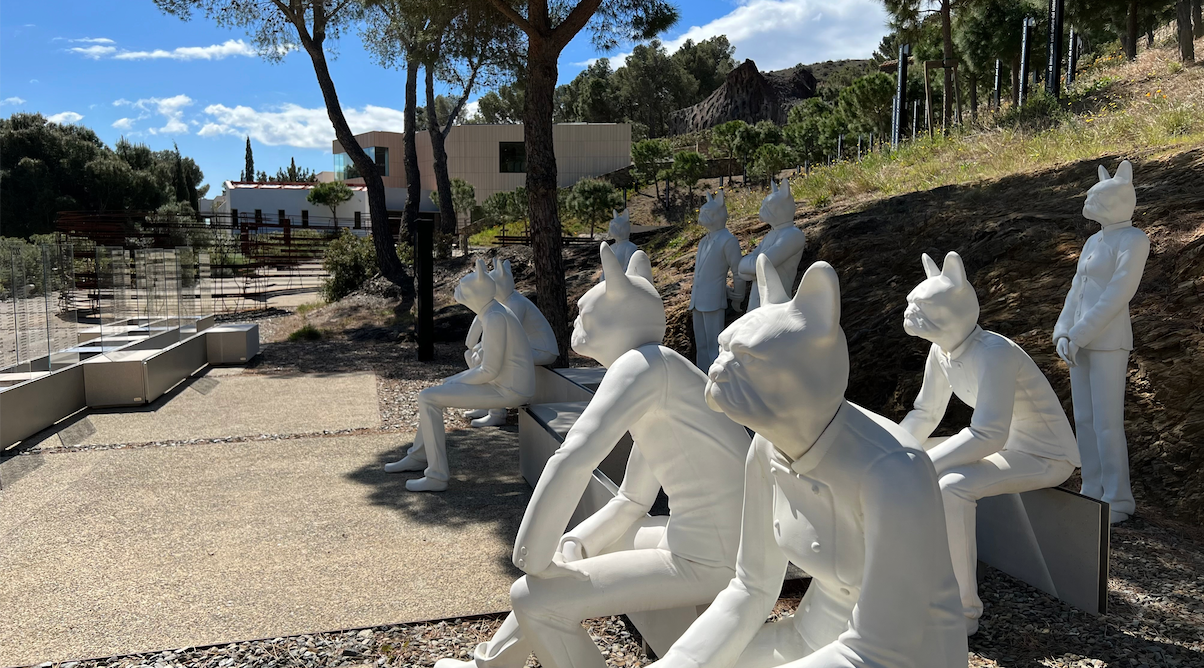
Because elBulli's great leap cannot be understood only from the kitchen. Ferran Adrià understood that creativity was not the exclusive heritage of the kitchen and that the processes of contemporary art could offer him tools to rethink gastronomy. And in this story there is a name that deserves to be recovered: that of the sculptor Xavier Medina Campeny.
In 1991, Medina Campeny invited Ferran Adrià to work in his studio in Palo Alto, in Poblenou, Barcelona. During the winter of 1991-1992, while the sculptor developed his work, Adrià cooked dishes in that same space. They ate together, talked and shared reflections on art, creative processes and the way to construct a work.
The importance of that experience lay not so much in the dishes that Adrià was able to cook there as in what he saw. For the first time he was able to observe closely the work of a visual artist, his way of researching, trying, making mistakes, documenting, going back and starting over. A methodology that he would later transfer to gastronomy.
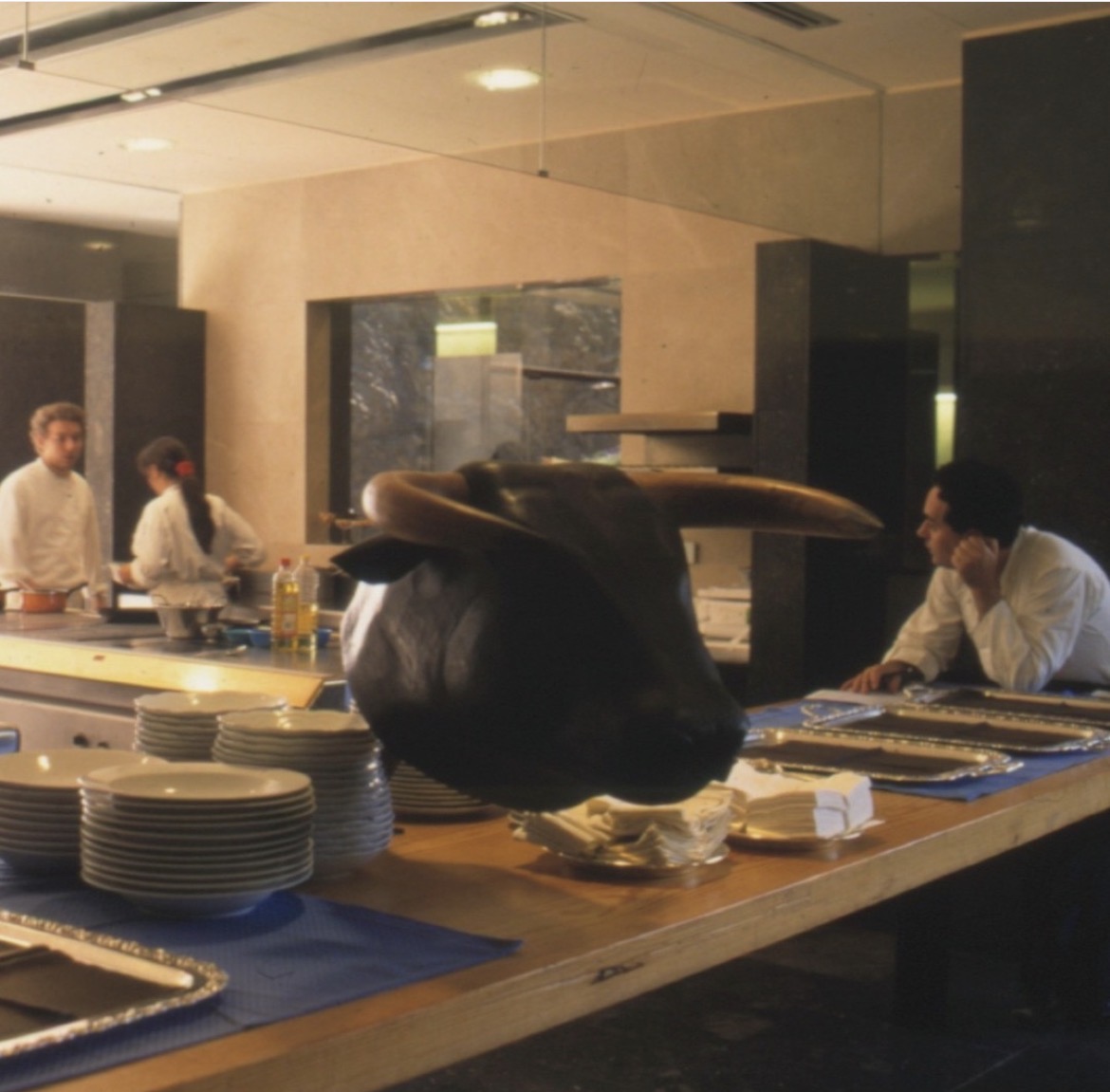
Photo: Francesc Guillamet.
That contact with Medina Campeny's workshop would be one of the seeds of the creative process that would end up characterizing elBulli and that would lead Adrià, in 1994, to create a professional team specifically dedicated to culinary innovation. The restaurant ceased to be simply a place where people cooked and became a kind of research laboratory.
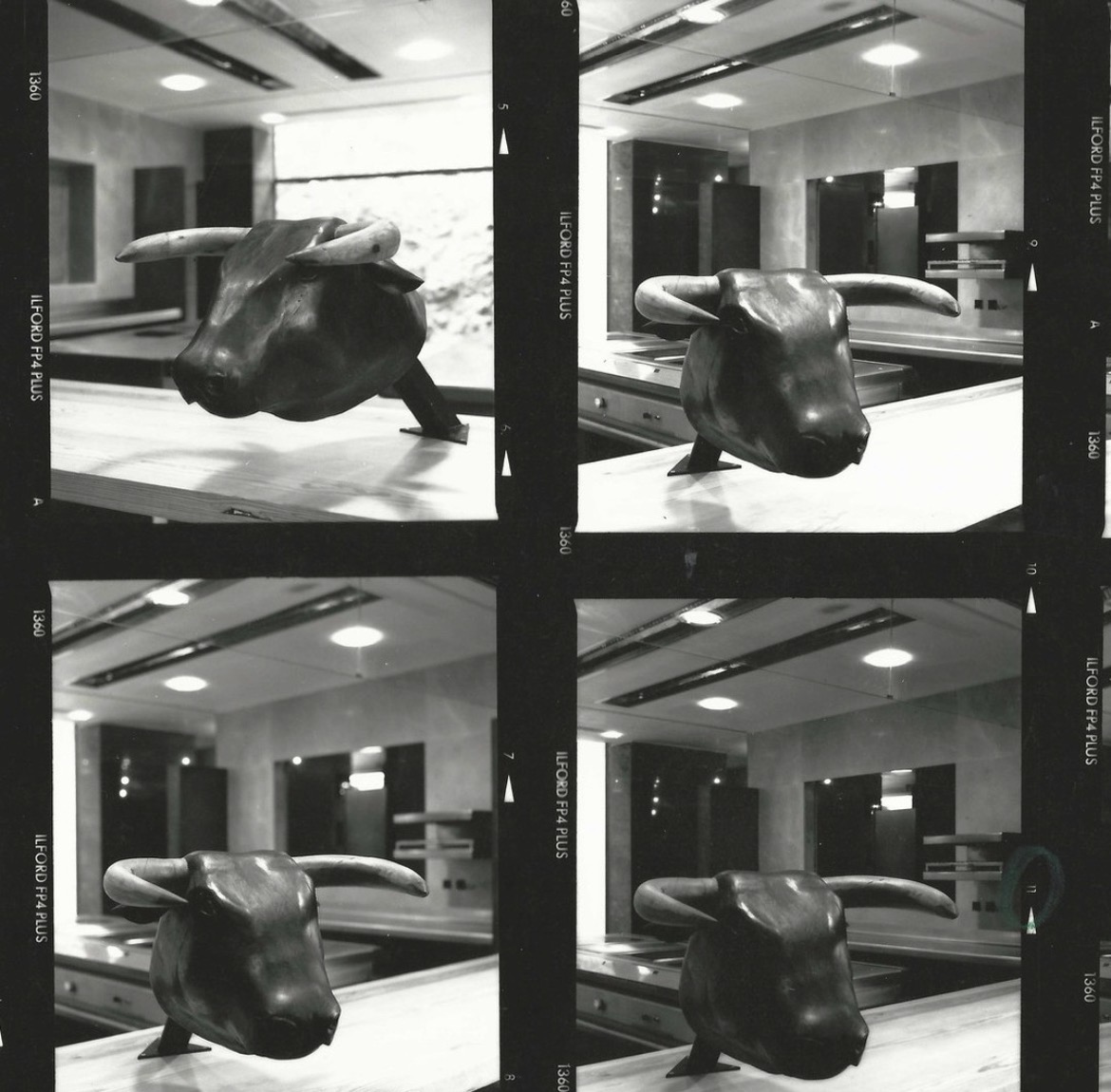
Also significant is the small bull that Medina Campeny gave to Adrià and that ended up presiding over the restaurant's promenade table. An apparently minor object, but loaded with symbolism: a sculptural piece that reminded us that that gastronomic revolution had also been nourished by other disciplines.
Today, the notebooks, drawings and menus from those years are part of the documentation preserved at elBulli1846. And it is precisely this documentation that allows us to understand that elBulli's legacy is not only culinary. It is also a legacy about creativity, about processes and about the need to document them.
This relationship between art and haute cuisine, however, did not begin or end with Ferran Adrià. In the same Catalan cultural geography we find another fascinating story: that of Santi Santamaria and Antoni Tàpies.
At Can Fabes, the restaurant in Sant Celoni that made Santamaria one of the great figures of Catalan cuisine, art also occupied a unique place. Antoni Tàpies, a friend of the family, gave them a work to be used in the restaurant's menu. It was not simply an illustration or a decorative element. It was a piece of art incorporated into the identity of a gastronomic space.
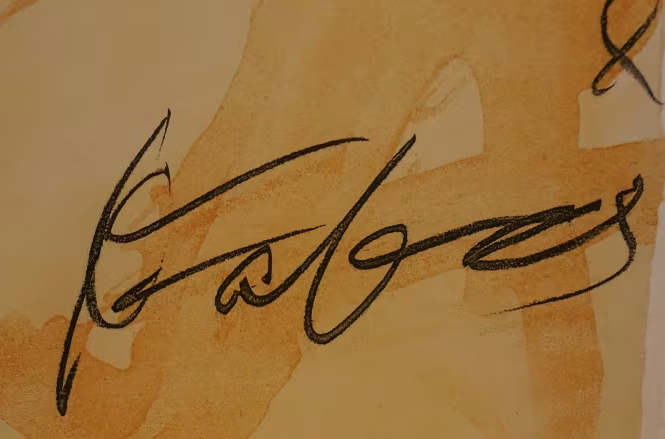
The story also has an almost domestic dimension that makes it especially revealing. Santi Santamaria had expressed his desire to have a letter painted by Tàpies, but he did not have the money to commission it. One day, as Regina Santamaria explains, the painter called his parents, asked them to come to his house and gave them a painting so they could use it in the letter.
That gesture says a lot about a certain way of understanding culture. Tàpies did not enter Can Fabes as a signature that legitimized the restaurant, but as a friend who understood that cuisine and art could be part of the same cultural ecosystem.
And this is where we may need to look back at that generation of chefs. Ferran Adrià and Santi Santamaria represented different paths, often even conflicting, but both understood that cooking could dialogue with a broader idea of culture. Gastronomy was no longer just food, a craft or catering, but was reclaiming itself as a territory of thought.
ElBulli took this idea to radical extremes. Cala Montjoi became a place longed for by chefs, artists, journalists, researchers and gastronomes from all over the world. That remote space on the Costa Brava acquired a cultural centrality that hardly anyone could have imagined decades earlier. The restaurant was no longer just a restaurant: it was a destination, a laboratory, a school, an archive and, in a way, a work in progress.
You may be
interested
...