Exhibitions
Girbent and the return of the gaze
The Bancaja Foundation presents Painting in the 21st Century, an exhibition that reviews the possibilities of oil through dialogue with tradition, contemporary images and the silent spaces of everyday life.
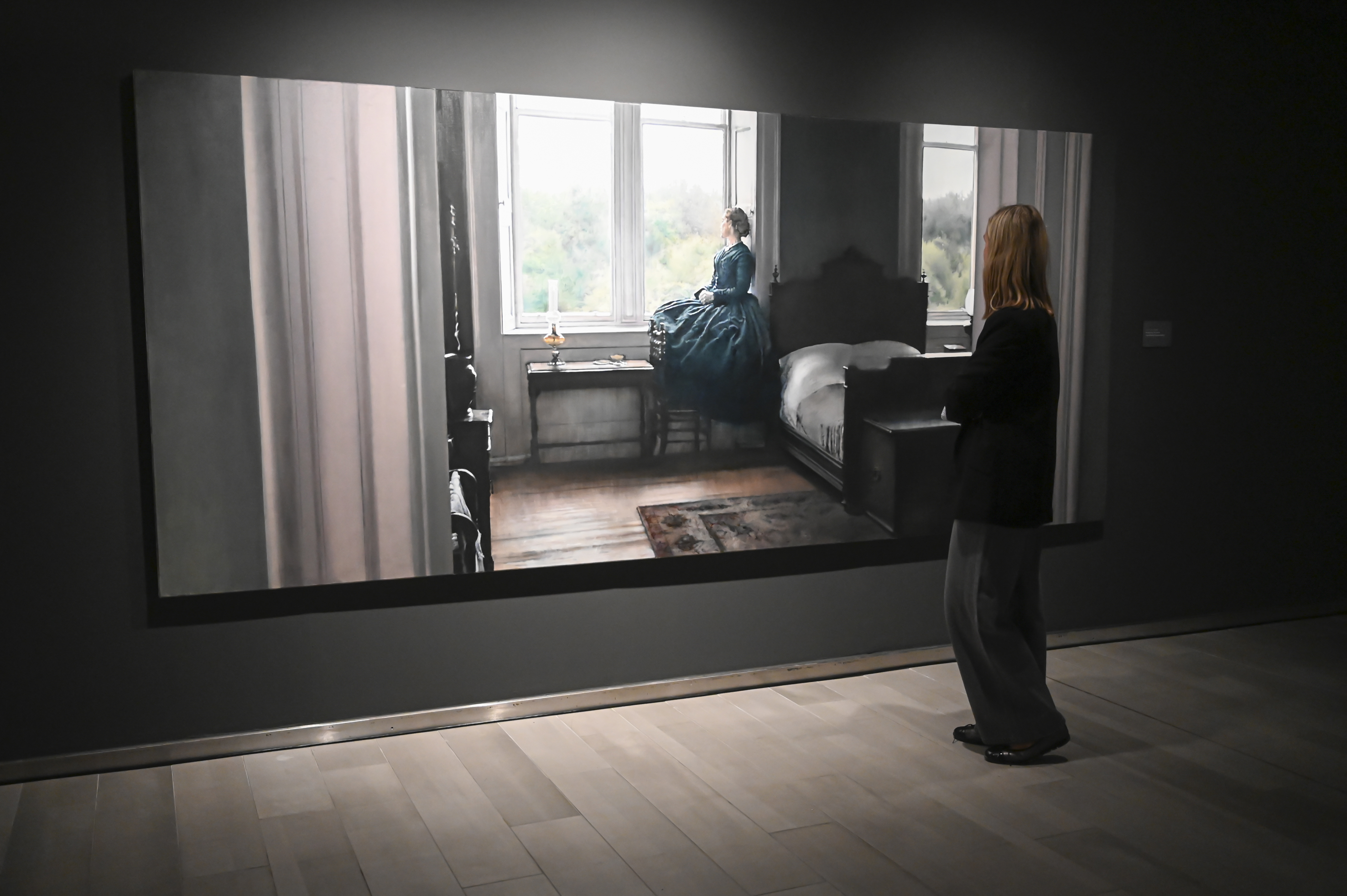
What does it mean to paint today, when painting coexists with an infinity of images that are constantly produced, reproduced and transformed? This is one of the questions that runs through Girbent's career (Sóller, 1969) and that takes on a new dimension in Pintar en el siglo XXI , the exhibition that the Bancaja Foundation presents from October 2, 2026 to January 24, 2027. The exhibition brings together around twenty works that allow us to get closer to his particular way of understanding painting as a territory of reflection, but also as a space of resistance of the gaze.
Curated by Arturo Castro, the exhibition articulates a set in which recent pieces coexist, some made expressly for this project, works that are presented for the first time and older works on which the artist has intervened again. The result is an unpublished corpus that highlights a pictorial practice in a permanent process of research, focused especially on the possibilities of oil painting.
Girbent starts from one of the most persistent genres in the history of painting: the interior with figure. But his interest lies not so much in the recovery of a model as in the possibility of subjecting it to a new reading. Domestic spaces, interior architectures, the effects of light and human presence become elements of a visual grammar marked by silence and a certain temporary suspension. They are scenes in which apparently nothing happens and, nevertheless, everything remains open to the perception of the viewer.
This painting is born from images of very diverse origins. His own photographic archive, the Internet, cinema or the history of art itself constitute a visual repertoire that the artist transforms through painting. The process does not simply consist of transferring an image to another medium, but of altering its time, density and evocative capacity. The photograph or the frame thus become starting points for constructing another experience of the image.
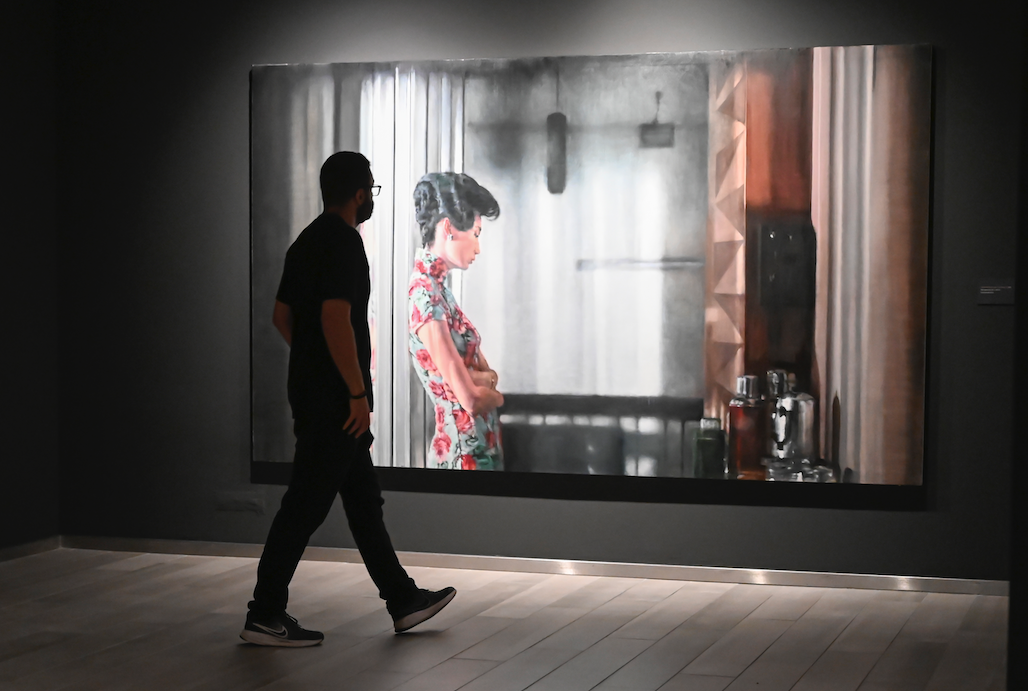
In this journey, the Western tradition appears as a constant interlocutor. The references range from the mosaic of Theodora and her retinue, in the cathedral of Ravenna, to the Romanesque frescoes and the representations of interiors in Dutch painting of the 17th century. Also appearing are Las hilanderas or the fable of Arachne , by Velázquez, as well as the intimacy of the spaces of Vilhelm Hammershøi and Edward Hopper, the vertical structures of Barnett Newman or the particular visual construction of the films of Wong Kar Wai.
This dialogue with works, artists and historical moments does not function as a simple accumulation of quotes. In Girbent, the history of painting is a living material that can be revisited, fragmented and reconstructed from the present. The past does not appear as a closed repertoire, but as a reserve of images with which to establish new connections. His painting moves, precisely, in this intermediate space between memory and contemporaneity.
The human presence takes on a particularly significant dimension within these interiors. Figures who watch, wait, work or simply occupy a space establish a relationship with the architecture that goes beyond representation. The individual is part of the construction of the space while also being an observer. This tension between looking and being looked at, between inhabiting a place and contemplating it, runs through much of the project.
The exhibition also includes works from the Ad museum series, a cycle in which Girbent brings this reflection into the interior of museums. The rooms appear populated by figures contemplating the works on display, generating a chain of gazes in which the viewer of the Bancaja Foundation becomes part of a game of successive contemplations. Here, the painting speaks of painting, but also of the way we look at art and the institutional space that conditions this gaze.
In these pieces, the artist radically reduces the chromatic palette to black and white. The restriction does not imply a renunciation, but another way of exploring the possibilities of oil. The color disappears to give way to the relationships between light, shadow, volume, depth and surface. An operation that reinforces the almost architectural character of these compositions and that shows the extent to which Girbent understands painting as a language that can still be subjected to investigation.

You may be
interested
...