Exhibitions
Who's hiding there? The bestiary of Josep Guinovart
The Espai Guinovart d'Agramunt recovers the artist's playful and surprising look at the animals that were part of his imagination, between rural memory, the discovery of nature and the pleasure of creating.
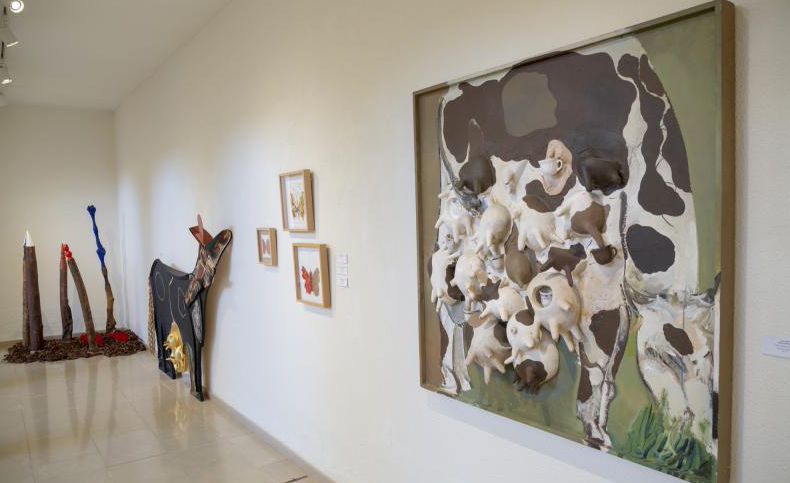
Rural memory, imagination, play, a feeling of discovery, of seeing an artist with a total capacity for questioning and searching, of the mystery before which he hides. There is a way of looking at the world that you don't learn in books. It is the gaze of the child who bends down, pushes aside the stubble and discovers that under a lump of earth there can be a whole universe. This is, in large part, the gaze that is recovered in Who Hides There: The Animal in the Work of Josep Guinovart , an exhibition that focuses on one of the most playful, vital and unexpected facets of the artist: his relationship with animals.
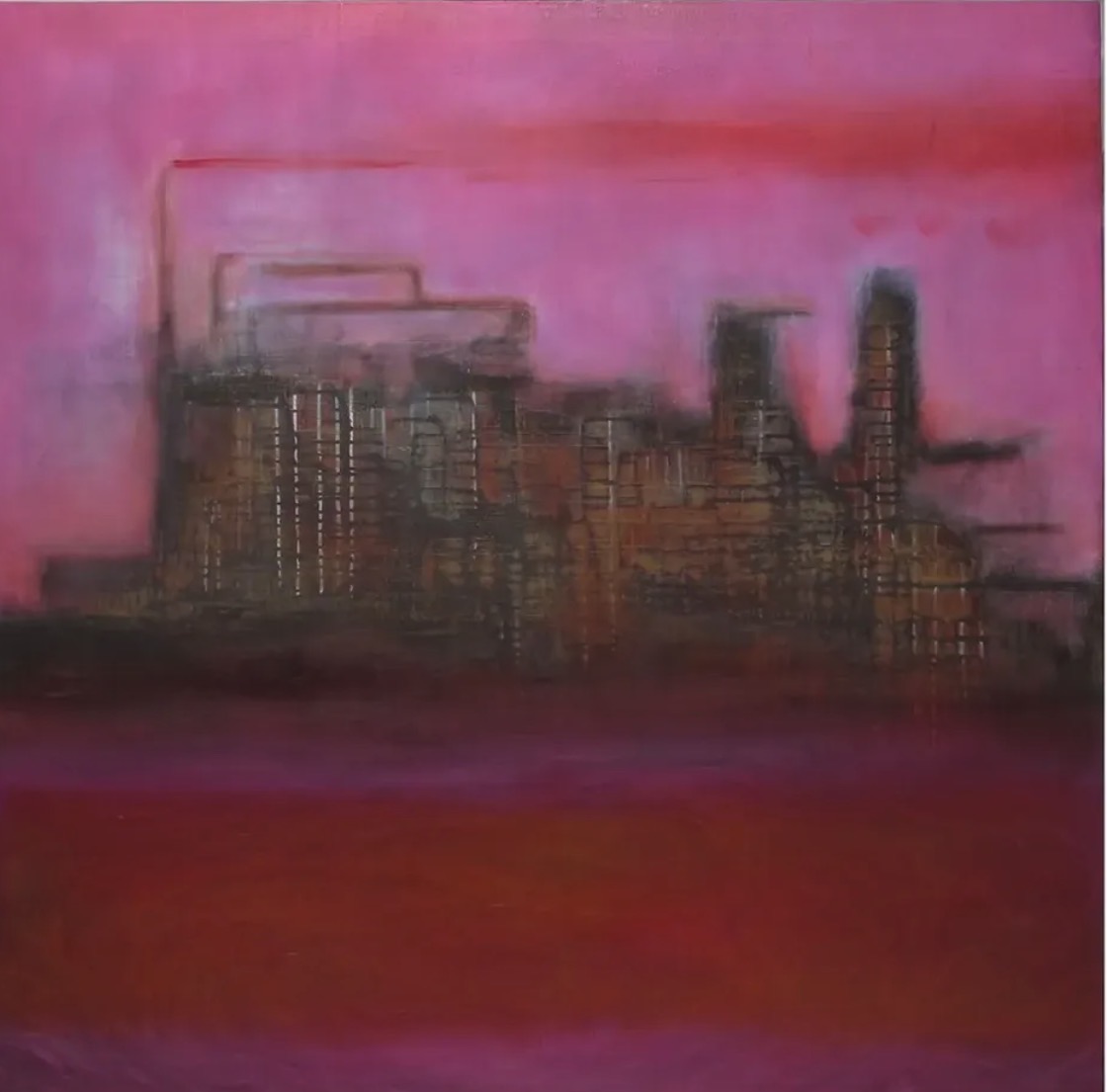
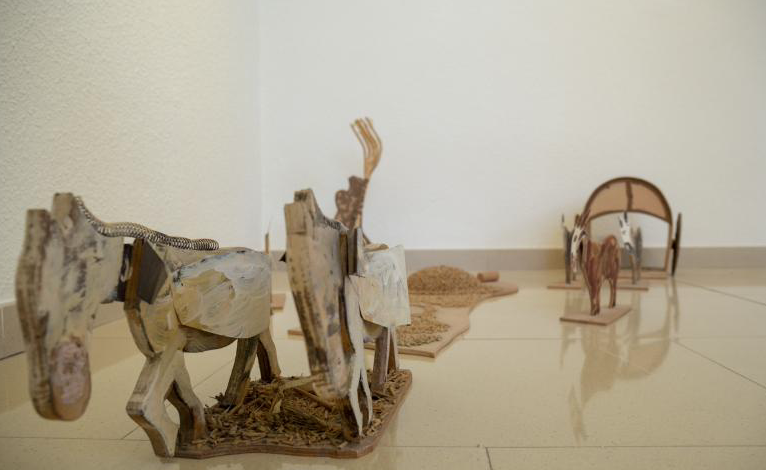
From September 20, 2026 to January 17, 2027, at the Espai Guinovat in Agramunt, the exhibition proposes to delve into Guinovart's particular bestiary and trace the footprint that nature left in his work. Owls, donkeys, chickens, bees, snails and ants appear as protagonists of a plastic universe where memory, observation and play are confused to form a single experience.
Photos: Albert Malet Mumbrú.
The origin of this fascination must be sought in the artist's childhood. The arrival in Agramunt during the Civil War represented a real shock to the senses for that child accustomed to the urban landscape of Barcelona. The dry land, the rhythms of peasant life and the proximity of nature revealed to him a reality that until then was unknown to him. The land ceased to be simply a space and became a territory full of sounds, movements, textures and creatures.
It is in that landscape of the Terres de Ponent that a fauna appears that, over time, will end up forming part of Guinovart's vocabulary. The animals are not there as simple decorative motifs, but as presences linked to memory and experience. The owl that remains motionless, the draft donkey, the hens that move nervously around the threshing floor or the bees that fill the air with their buzzing are fragments of an everyday life that the artist will preserve within himself.
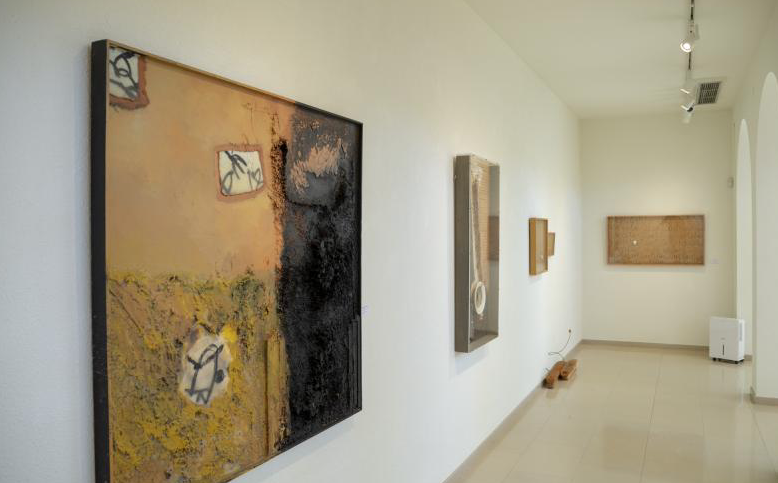
There are also the almost invisible animals, those that force you to change the scale of your gaze. Snails draw a slow geometric spiral; ants leave a nervous trail on the ground. And it is precisely in this gesture of lowering themselves until they touch the ground that one of the questions that gives meaning to the exhibition is born: Who is hiding there?
The question has something of a child's game, but also a declaration of principles. To look is to search. And to search means to accept that the landscape always holds something that we have not yet seen. Among the stubble, stones and clods of Agramunt, Guinovart discovered a miniature world, almost secret, where life manifested itself in the smallest forms. Those discoveries would remain engraved in his memory and, years later, would return to the workshop transformed into artistic matter.
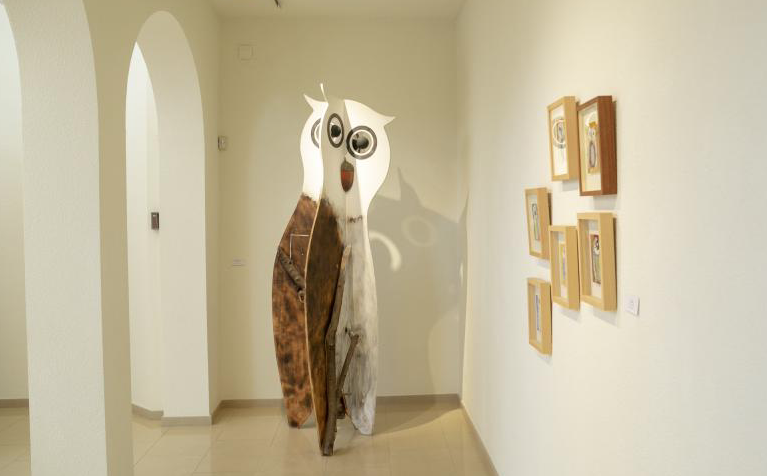
The shape, volume and colour of the animals offer the artist a territory of permanent recreation. Guinovart observes with the intact capacity for surprise of a child and then, through the craft, transforms what he observes into a tangible world. In this process there is an almost physical dimension of creation: getting his hands dirty, manipulating materials, experimenting with textures and giving new life to creatures that were already part of his memory.
Thus, the donkey, the bee, the hen or the owl are not just represented animals, but memories that have found a new skin. Guinovart captures them from proximity and affection, with quick strokes, diverse materials and a freedom that turns representation into recreation. What had been an experience lived in the countryside is transformed into a plastic experience.
Whoever hides in it therefore recovers a way of understanding art closely linked to curiosity. Nature is not a distant landscape that is contemplated from the outside, but a reality that is touched, listened to and discovered. And animals become companions on a journey that begins in childhood and that the artist resumes again and again from his studio.

You may be
interested
...