News
Gris Jordana, the photographic gaze that builds 'The black ball'
Shot in 35 mm, the Javis' film relies on the director of photography from Manlleu to construct a plastic, physical image far removed from any precious artifice.
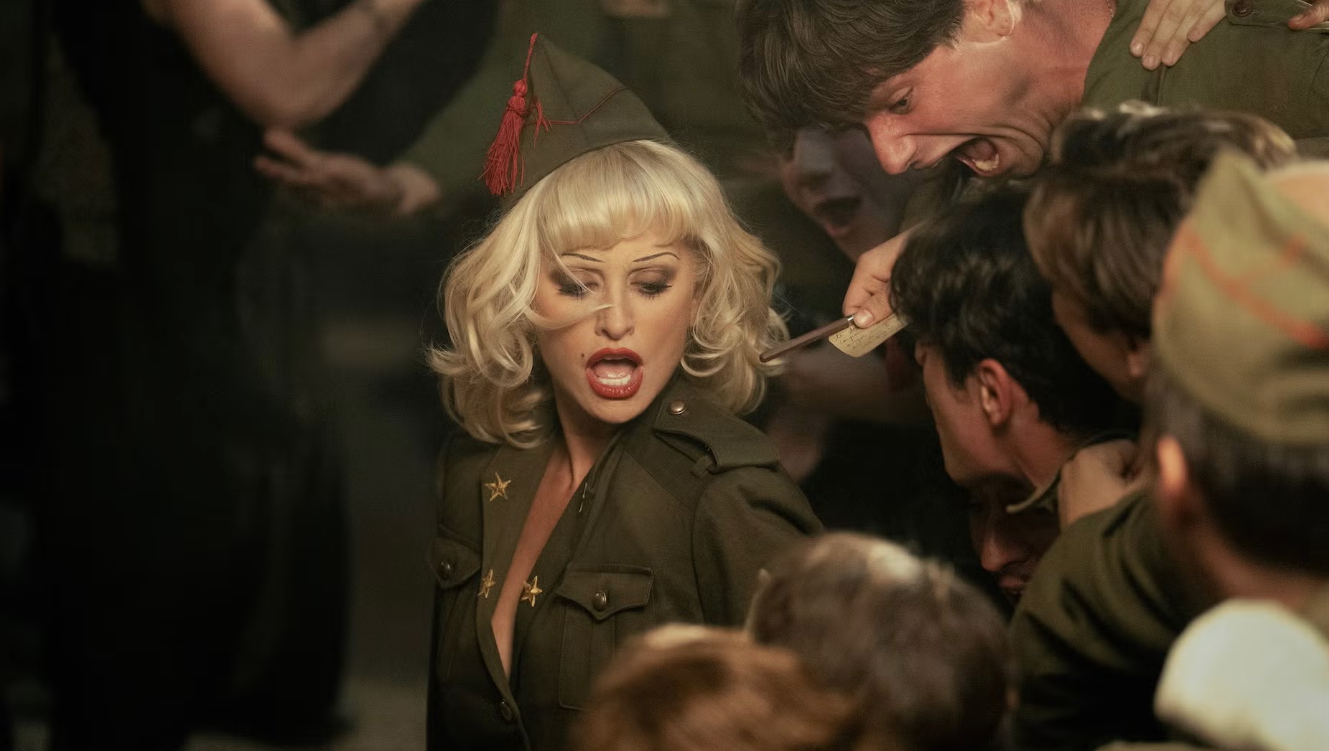
Photography occupies an essential, key, capital place in the universe of La bola negra . The framing, the light, the details and the presences build a story of its own that allows the experience to be expanded beyond the physical space and the specific time in which it occurs. In this process, the gaze of Gris Jordana (Manlleu, 1981) is fundamental. Director of photography of the film by Javier Calvo and Javier Ambrossi, Jordana has been in charge of giving visual form to a project that seeks a plastic and powerful image, but at the same time far from the precious, with the desire to build a certain anti-war epic without falling into already known formulas.
Her career largely explains this ability to work between narration and visual experimentation. Trained at the Escola Superior de Cinema i Audiovisuals de Catalunya (ESCAC) and the Politeknik Ngee Ann in Singapore, Jordana has developed an international career that has led her to participate in more than fifteen feature films shot in Europe, Africa, Latin America and the United States. Her work in Libertad (2021), Clara Roquet's debut, earned her her first Goya nomination for best cinematography, a recognition she would receive again for Soy Nevenka (2024), directed by Icíar Bollaín.
The relationship with the Javis has been going on for a long time. Since Veneno (2020), Gris Jordana has maintained an ongoing collaboration with Javier Calvo and Javier Ambrossi, who had one of his most unique moments in La Mesías (2023), where the photography combined 16 mm film and digital video. That experience was also a definitive gateway to photochemical cinema. Jordana herself acknowledges that the filming of La Mesías was a kind of 'analog milieu', she explained, because until then she had not had much opportunity to work with film. The initial insecurity, however, quickly transformed into fascination. When it was finished, the team was already clear that the next project would be shot in 35 mm.
And La bola negra was, according to Jordana, the right film to take this step. The decision to use 35 mm does not only respond to an aesthetic question, but also to the desire that the texture of the support be part of the cinematic experience itself. Before starting filming, the director of photography returned to ESCAC to participate in sensitometry seminars and delve deeper into the possibilities of the negative. For weeks, the team experimented with different types of film and development processes to find the definitive look of the film. At the same time, some students from the school were able to do internships alongside them, thus recovering an artisanal and pedagogical dimension linked to the process of constructing the image.
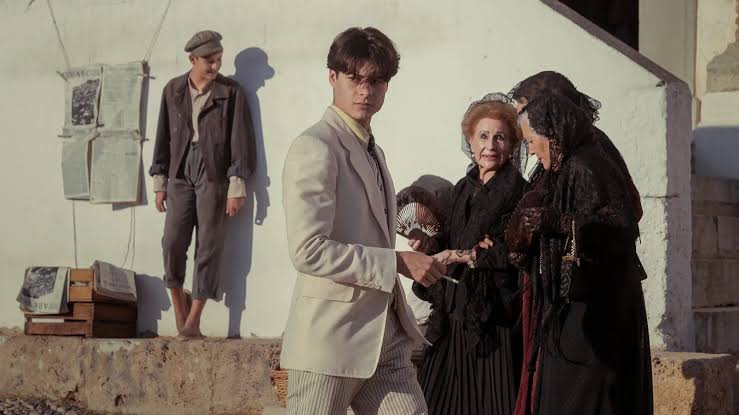
The result of this bet also has a considerable material dimension. The black ball used 112,501 meters of film, a figure that gives an idea of the scale of a shoot that recovers the physical value of the analog medium at a time when digital film production is the majority. The negatives were developed in Rome and the rushes later arrived at the team, generating an expectation that, according to Jordana, ended up further reinforcing the relationship with the photochemical material.
Shooting in 35mm, he explains, 'changes everything', but at the same time it does not necessarily change everything. Digital technology continues to intervene in the process through the Digital Intermediate, a tool that allows you to extract the maximum possibilities from the negative and subsequently work on the color with a precision that makes compatible two apparently opposite ways of understanding the image. The result is a photograph that preserves the texture, depth and materiality of analog cinema, but that can be worked with contemporary digital tools.
In La bola negra , this combination is put at the service of a gaze that does not simply seek the beauty of the image. Photography must narrate, create atmosphere and give body to the characters and spaces. It is also a way of placing the viewer in front of a story marked by memory, violence and the passage of time. The Javis have trusted Jordana to build this visual identity, to the point that on set her gaze becomes a central piece of the organization of the shoot: knowing where each person should be, what space each element occupies and how they relate to each other is part of an invisible choreography that ends up determining what the viewer sees.
Gris Jordana's career had already placed her name among the benchmarks of contemporary Spanish cinematography. Now, however, with La bola negra , her photography is also beginning to enter international conversations. The Hollywood Reporter has included her among the five main initial candidates for an Oscar nomination for best cinematography.


You may be
interested
...