Exhibitions
Fifty years of Teatre Lliure unfold at the Palau Robert
'A Free Theatre' revisits half a century of stage history through five installations that recover the memory, the trades and the forms of relationship that have defined one of the country's leading theatrical institutions.
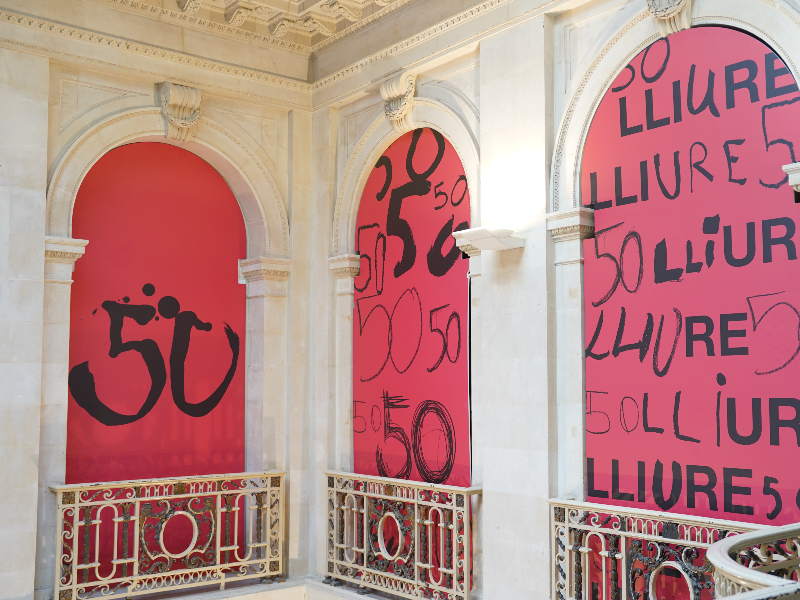
Fifty years after its birth, the Teatre Lliure looks back without getting caught up in nostalgia. The Palau Robert is hosting A Free Theatre until 17 January 2027, an exhibition conceived to mark the institution's fiftieth anniversary and which proposes a contemporary approach to half a century of history. Far from presenting a conventional retrospective, the exhibition emphasises the values, questions, professions and forms of relationship that have built the identity of the Lliure since its foundation.
Born in 1976 as a cooperative promoted by a group of young people from independent theater, the project was born with the desire to create "an art theater for everyone." Five decades later, that aspiration is part of a history that has positioned the Teatre Lliure as one of the essential facilities for Catalan stage creation and as a public service space linked to innovation, artistic freedom and the construction of a contemporary theatrical culture.
Curated by Tània Balló and the Teatre Lliure, with exhibition design by Alcubierreestudio, the Palau Robert proposal abandons the simple accumulation of documents, photographs and memories to propose an experience constructed through five installations conceived specifically for the occasion. Each one corresponds to a decade of the Lliure's history and is made by scenographers and set designers closely linked to the institution, maintaining as a background the figure and memory of Fabià Puigserver, one of its founders and a fundamental piece in the definition of the project.
The tour begins with Frederic Amat and the period 1976-1986. His installation brings together seven automated characters that evoke some of the historical productions of that first stage and establish a dialogue between theatrical memory and its capacity to return to the stage. Montse Amenós is responsible for the second period, corresponding to the years 1986-1996, with an intervention in which characteristic lands of the Lliure de Gràcia scenographies appear arranged vertically, acquiring the appearance of curtains and transforming elements of the scenography into objects of memory.
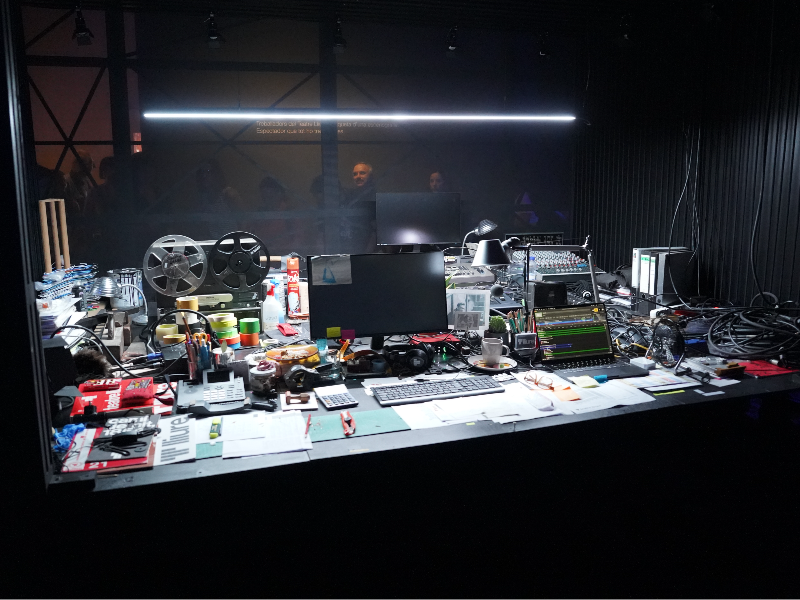
The third section, corresponding to 1996-2006, is starred by Max Glaenzel, who proposes a journey through the interior of a black box. The scenic space becomes here a subject of reflection on the architecture, the darkness and the physical conditions that make the representation possible. Lluc Castells addresses the decade 2006-2016 with Transfiguration , a work table and a living model that vindicate the trades, the processes and all those people who work behind the scenes and who often remain out of the viewer's sight, but who are essential to making theatre possible.
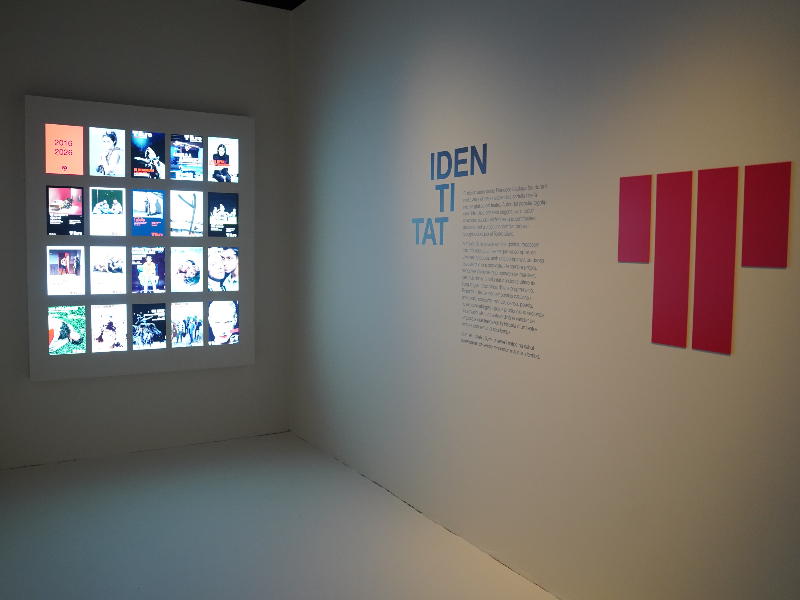
Finally, Sílvia Delagneau closes the tour with an installation dedicated to the period 2016-2026, in which she connects design, body and memory based on a selection of costumes from shows at the Teatre Lliure. The costumes are thus presented not only as a functional piece of the stage, but as a territory where interpretation, identity, design and character construction converge, while also allowing us to vindicate the work of costume designers throughout this half century.

You may be
interested
...