News
Genesis, the birth of a gastronomic myth
The new TV3 series recreates Ferran Adrià and El Bulli's path to international success and vindicates the movement that transformed Catalan cuisine.
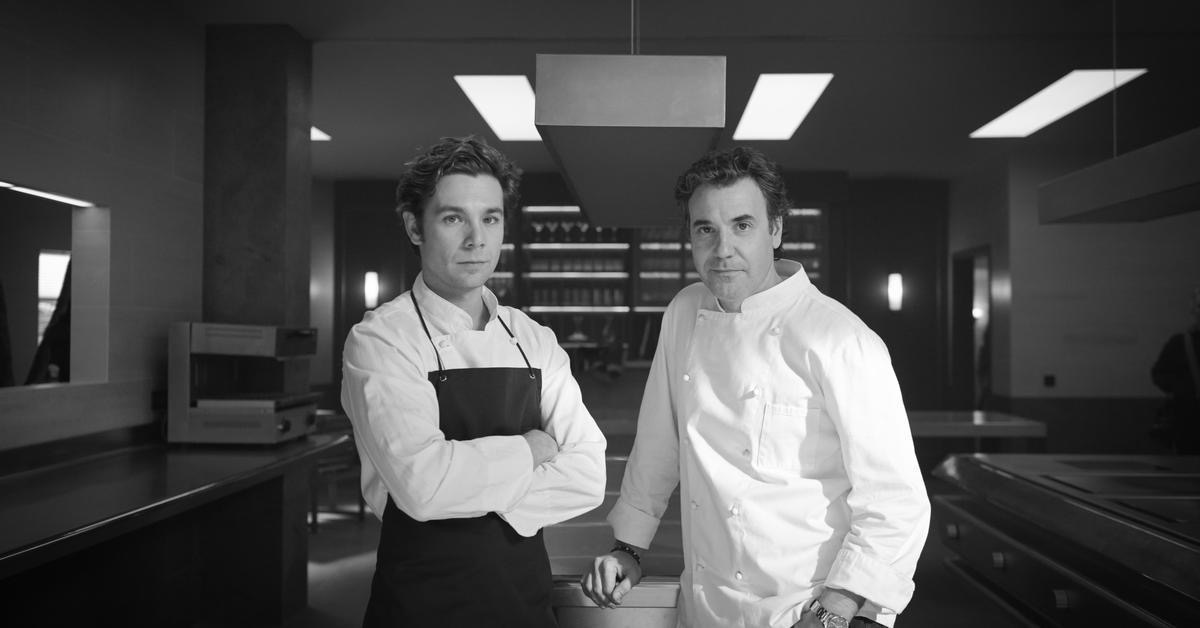
For years, the Cala Montjoi restaurant functioned as a true laboratory of ideas, a space where cooking ceased to be solely a practice linked to food and became research, experimentation and creation. At the centre of this revolution was Ferran Adrià and a team that ended up placing Catalan gastronomy on the international map.
It is this story, with its lights and also its shadows, that is addressed by Gènesi , the new TV3 and 3Cat series that premieres on September 21 and will later arrive on Netflix. The fiction starts from one of the most unique episodes of contemporary gastronomic culture to reconstruct the process that led El Bulli to become a global phenomenon and, at the same time, explore the personal and creative consequences of a transformation that went far beyond the kitchen.
The restaurant was voted the best in the world on several occasions —2002, 2006, 2007, 2008 and 2009—, but its significance cannot be reduced to a succession of awards. El Bulli introduced a new way of understanding the act of cooking, based on research, surprise, deconstruction and the constant desire to open new paths. Ferran Adrià thus became a figure of international projection, but his success was inseparable from a team and a Catalan gastronomic context that also underwent a profound renewal.
Played by Miquel Fernández, Adrià is one of the axes of a narrative that does not simply seek to reconstruct a biography. Genesis incorporates a second timeline and a fictional plot starring a retired gastronomic critic, played by Mónica López, who after the death of her father decides to reopen the family restaurant at the request of her niece. This structure allows the series to establish a dialogue between memory and present, between what was and what still remains of the gastronomic phenomenon that began decades ago.
The title itself, Genesis , points to this desire to go back to the origins. Not only to the birth of El Bulli as a restaurant, but also to the emergence of a new gastronomic culture that changed the relationship between cuisine, creativity and experience. In this sense, the series broadens its focus and incorporates other essential names to understand that transformation: Santi Santamaria, Fermí Puig, Christian Escribà or Oriol Castro, among others.
The constellation of names also extends to chefs such as the Roca brothers, Carme Ruscalleda, Fina Puigdevall or Nandu Jubany, figures who, from different languages and trajectories, have contributed to consolidating the international dimension of Catalan cuisine. The series thus proposes a choral reading of a phenomenon that cannot be explained solely through a single restaurant or a single creator.
One of the attractions of Gènesi is precisely the reconstruction of El Bulli, closed in 2011 and later converted into a space dedicated to research and dissemination. The recreation of the restaurant seeks to recover that universe of Cala Montjoi and give visual form to a place that, over time, has acquired an almost mythical dimension.
In this way, television fiction approaches a territory usually reserved for documentary: the construction of a contemporary myth. But Genesis does not only look to the past. It also raises a question about legacy: what remains after a creative revolution? What happens when a restaurant stops being simply a restaurant and becomes part of a country's cultural memory?
You may be
interested
...