Exhibitions
Isabel Servera breathes memory
'Alenades' recovers the traditional basketry of the Majorcan Levant in the Espai Zero of the Fundació Miró Mallorca to turn it into a reflection on the body, the territory and the transformation of matter.
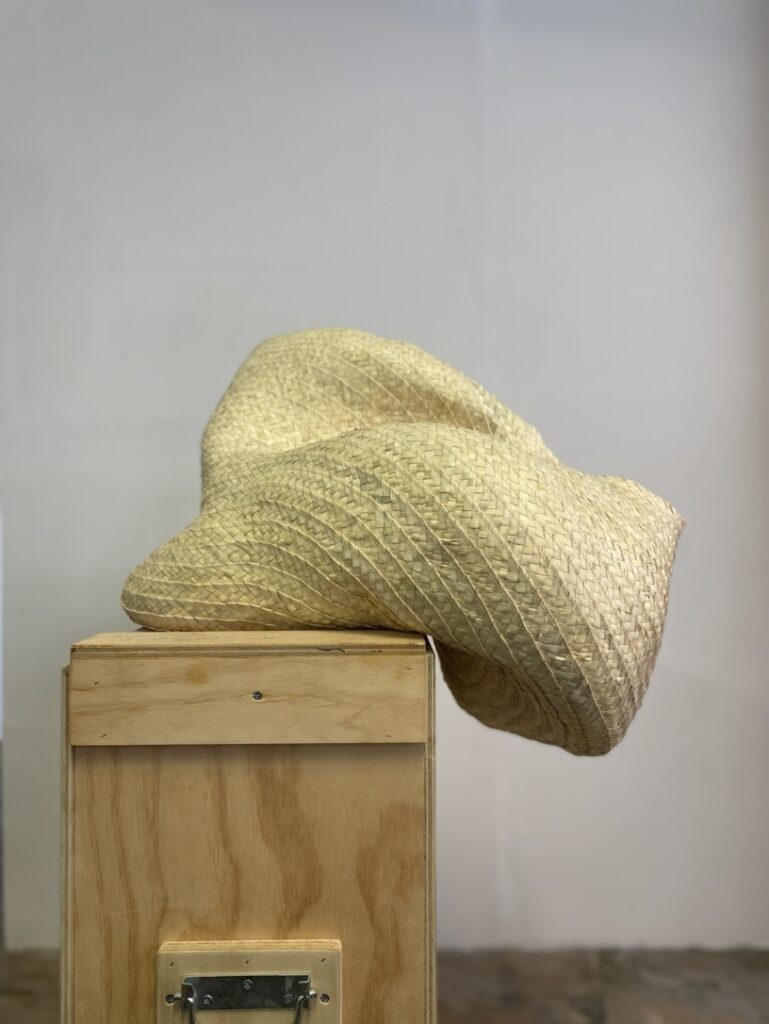
Gestures repeated for generations, work rhythms, ways of touching a material and transforming it that form part of a collective memory that is difficult to separate from the territory that produced it. In Alenades , Isabel Servera recovers this artisanal knowledge to bring it to another space of significance: that of contemporary art. The exhibition, curated by Pilar Rubí, is presented at the Espai Zero of the Fundació Miró Mallorca until April 11, 2027 and establishes a particular dialogue between craftsmanship, sculpture, body and landscape.
Servera starts from the traditional techniques of palm basketry typical of the municipalities of the Levant of Mallorca, especially linked to a material culture deeply rooted in everyday life. But Alenades does not propose a nostalgic recovery of craftsmanship or a simple heritage claim. His interest lies precisely in the way the artist displaces this knowledge towards a contemporary language, altering its functions and forms without losing the trace of the original gesture.
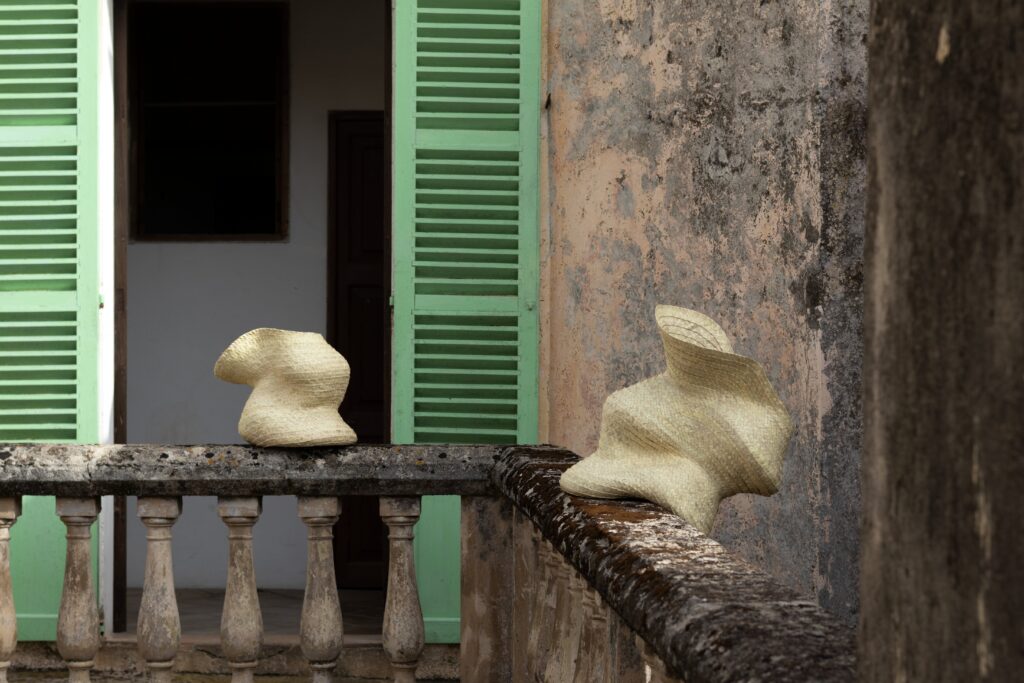
The exhibition occupies the Zero Space as a kind of cavernous space, a refuge or shelter that houses two families of works, Vetleria and Alenades . The forms that Servera constructs appear as organic structures, strangely familiar, located in an intermediate zone between the mineral and the vegetal. The installation suggests a natural scenography, but also an organism in transformation. We are not faced with a reproduction of the Mallorcan landscape, but with a material interpretation of its textures, rhythms and forms of life.
The title offers one of the keys to reading the proposal. Alenar , in Mallorcan, means to breathe: to inhale and exhale, to introduce air into the body and expel it again following a constant movement. Alenades , the breaths, turns this elementary act into a metaphor for the relationship between the outside and the inside, between the territory and the body, between matter and human experience. The sculptures seem to emerge from this same movement of expansion and contraction.
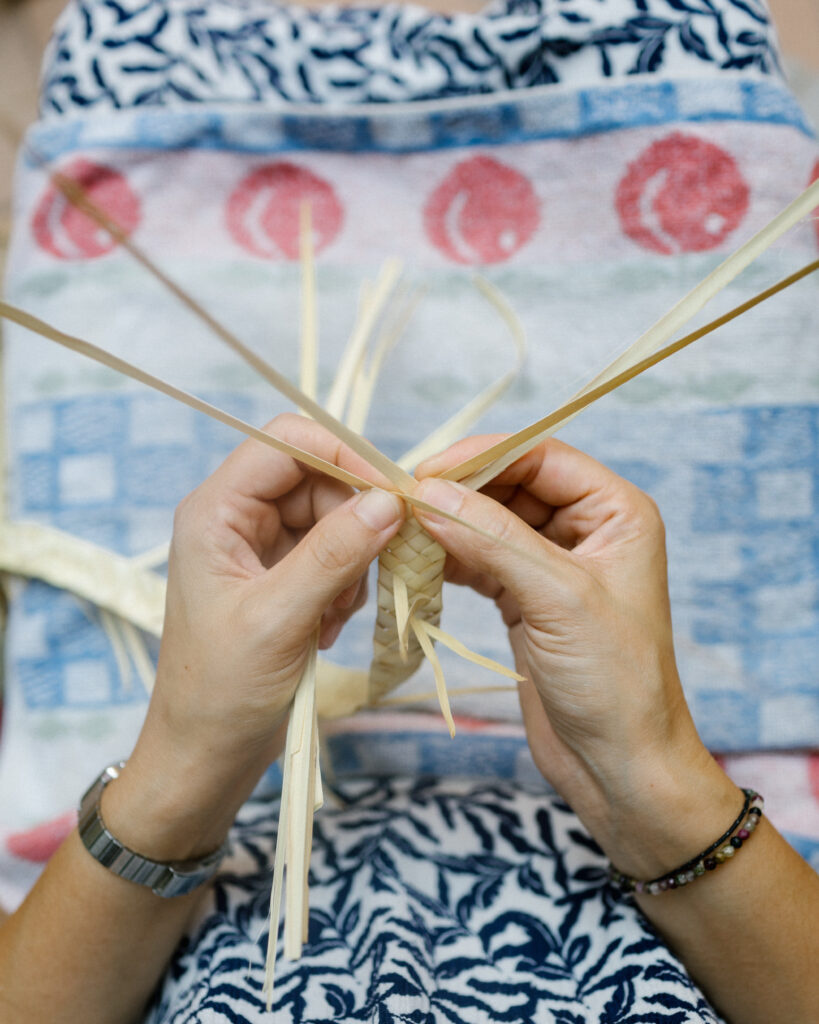
This bodily dimension is fundamental. Servera does not work only with the palm, but with the gesture that allows it to be transformed. The body participates in the process directly: the hands guide the llatra , the worked palm heart, while the sewing machine perforates and joins the fiber. The stitching, repeated over and over again, introduces an almost musical rhythm. The technique ceases to be simply a constructive procedure to become a choreography. The body that works is also the instrument that produces a kind of silent music.
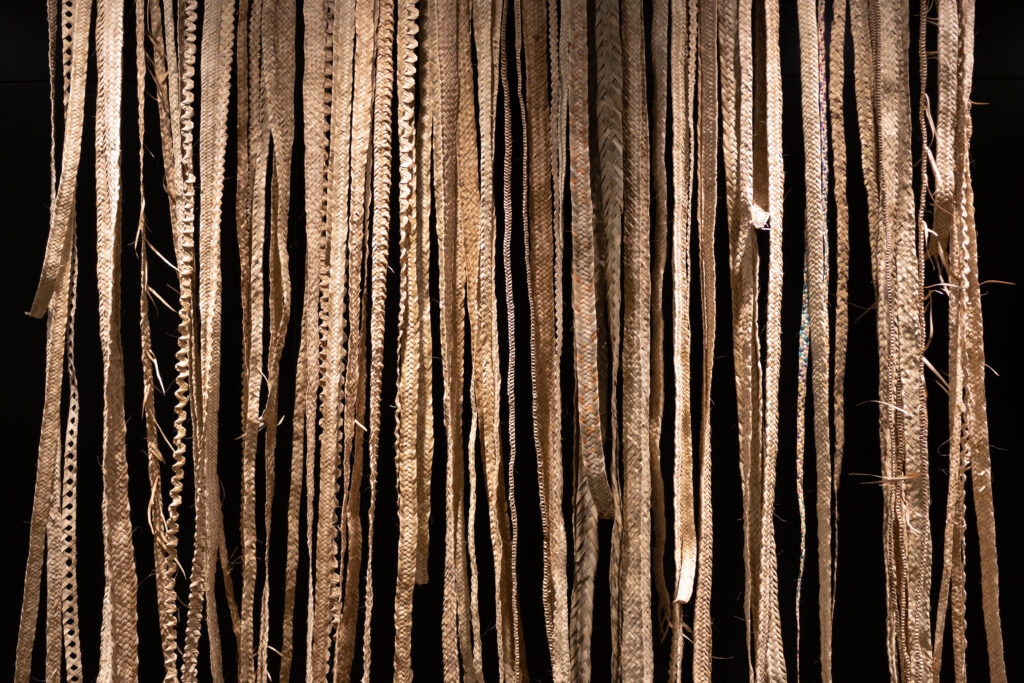
Here one of Alenades ' most interesting contributions appears: his ability to make visible what is usually hidden behind the artisanal object. Servera foregrounds the time, repetition and physical effort that exist behind each piece. The work is not only the final result, but also the memory of the movement that has made it possible. In this sense, craftsmanship ceases to be understood as a minor or auxiliary category to acquire a conceptual dimension of its own.
The artist also works from a space loaded with personal memory: her grandmother's workshop in Artà. Its occupation and reappropriation constitutes a particularly significant gesture. It is not simply a question of recovering a family technique, but of coming into contact with a feminine genealogy of work and transforming it from the present. Tradition does not appear, therefore, as an immutable inheritance, but as a matter that can be revised, questioned and reinvented.
At this point, Alenades also distances himself from any folkloric reading. Servera does not want to preserve a language of the past intact, but rather to stretch it until he finds new possibilities. The traditional technique is the starting point, not the arrival point. The result is forms that maintain the memory of basketry but that no longer respond to their original function. The palm goes from containing objects to constructing spaces, imaginary bodies and sculptural structures.
This shift between functionality and artistic autonomy is one of the axes that allow us to understand the exhibition. The plant fiber retains its nature, but acquires a new expressive capacity. What was previously used to transport, protect or store now seems to breathe, grow and occupy space. The works cease to be containers and become organisms themselves.
Silence plays an essential role here. Traditional artisanal work was accompanied by sounds, conversations, tunes, glosses and songs. Servera recovers this sound dimension precisely through its absence. The rhythm is incorporated into the matter and the gesture, but does not need to be reproduced acoustically. It is a sound that the viewer can imagine by observing the repetition of the points, the joints, the fibers and the shapes.
The dialogue with Joan Miró introduces another layer of reading. Alenades does not seek to illustrate the Miró universe, but shares with him a certain confidence in the expressive power of matter, in organic forms and in the capacity to transform the elements of the everyday world into signs. The Fundació Miró Mallorca thus offers a particularly pertinent context for a work that starts from the landscape and material culture of the island to arrive at an abstract and poetic formulation.
You may be
interested
...