Exhibitions
The color of a memory that crosses the Atlantic
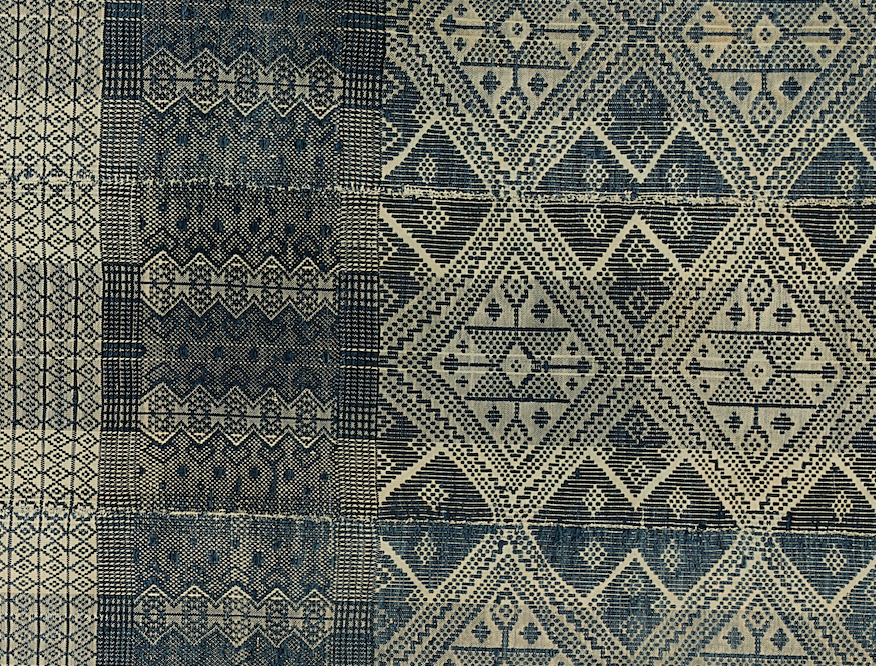
There are colors that cease to be a strictly visual matter and become a form of knowledge. Indigo belongs to that category. Its deep blue, obtained from a natural dye that has accompanied textile practices in different regions of the world for centuries, is associated with ideas of protection, healing, and identity, but also with extraordinary technical mastery and a cultural memory that has survived displacements, exchanges, and historical transformations.
This material and symbolic dimension is central to Cloth of the Earth: Indigo, Cape Verde, and West African Knowledge , an exhibition presented by the RISD Museum in Providence from August 1, 2026, to March 28, 2027. The exhibition brings together indigo-dyed textiles and garments from the museum's collections alongside various contemporary pieces from West Africa, loaned by Maria Tavares, a member of the local community and originally from the Cape Verde islands. More than just an exploration of a craft technique, the exhibition presents indigo as a vehicle for transmitting knowledge and as a meeting point between territories separated by the ocean.
At the heart of the tour lies a panu di terra , a Cape Verdean expression that literally means 'cloth of the earth'. This is a complex, handwoven textile whose significance transcends its formal qualities. Its weaves encapsulate stories of cultural memory, resistance, and renewal, while its relationship to other textiles reveals how certain techniques, forms, and meanings have circulated among African communities over time. The textile thus becomes a kind of material archive: an object capable of preserving knowledge that has not always been transmitted through written documents.
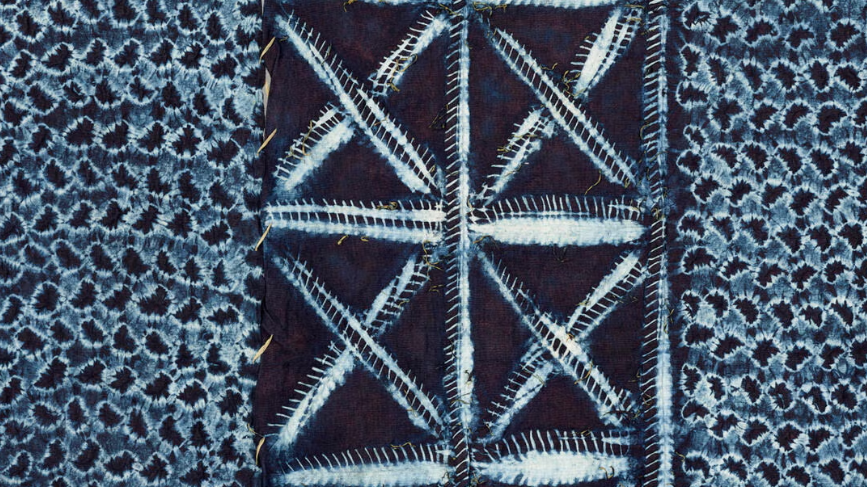
The history of panu di terra is closely linked to the position of the Cape Verde islands in Atlantic trade networks. During the second half of the 16th century, the archipelago was a Portuguese colony and a key connection point between West Africa, Europe, and the Americas. Goods, enslaved people, and indigo-dyed cotton textiles, including panu di terra , traveled along its trade routes, journeying from Cape Verde to various points along the African coast, from Senegal to Sierra Leone. The exhibition explores these connections to demonstrate that textiles were not merely objects of exchange, but also carriers of techniques, symbols, and ways of understanding the world.
The history of indigo thus allows us to broaden our perspective beyond geographical boundaries. More than 3,000 kilometers from Cape Verde lies Kano, in Nigeria, another of the great historical centers of textile production and dyeing on the African continent. Both territories are linked by indigo cultivation, fabric manufacturing, and trade networks that spanned Africa long before contemporary borders established new territorial divisions.
For Maria Tavares, a Cape Verdean educator and collector, these relationships took on a personal dimension through her friendships with Nigerians and her repeated visits to the historic dye pits of Kano. There, she recognized in Nigerian textiles certain characteristics of the indigo cloth worn by the women of the Badiu community in Santiago. This comparison reveals a shared material culture that connects different communities along the African Atlantic coast and allows us to understand indigo not as an isolated tradition, but as part of a vast geography of knowledge.
To this African dimension is added another story marked by mobility. Since the 19th century, numerous Cape Verdeans voluntarily emigrated to Massachusetts and Rhode Island aboard whaling ships, seeking new opportunities in a context shaped by droughts, famines, and the hardships of colonial rule. These migrations helped establish a Cape Verdean community that, over generations, has become one of the largest in the world outside the archipelago. The fact that the exhibition is being presented precisely in Providence adds a new layer of meaning: the museum becomes a place where the historical trajectories of the Atlantic return to a territory where Cape Verdean culture continues to be an integral part of the social fabric.
Cloth of the Earth thus proposes to view indigo from a perspective that combines history, anthropology, craftsmanship, and memory. Blue ceases to be simply a color, revealing a complex network of relationships between territory, knowledge, and community. Each textile speaks of raw materials, processes, and skills, but also of displacements, cultural exchanges, and strategies for continuity.
In this sense, the panu di terra takes on a special significance within the exhibition. Its status as a handwoven and hand-dyed object evokes a tradition that has been preserved through generations, even when the communities that practiced it have had to relocate or adapt to new circumstances. The weaving functions as a form of silent resistance: a way of keeping knowledge alive while the world around it changes.

You may be
interested
...