Exhibitions
La Mercè, almost half a century told in 48 posters
The Frederic Marès Museum brings together for the first time the official posters of the Barcelona Festa Major created between 1979 and 2026, a journey through the visual, cultural and social transformations of the city.
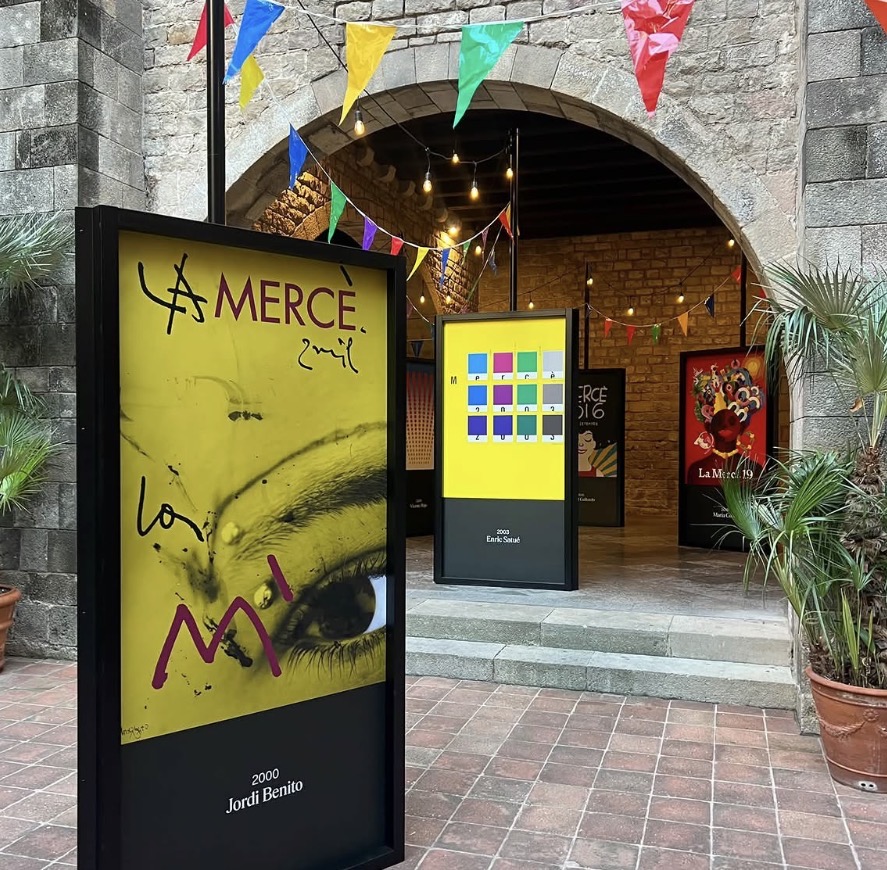
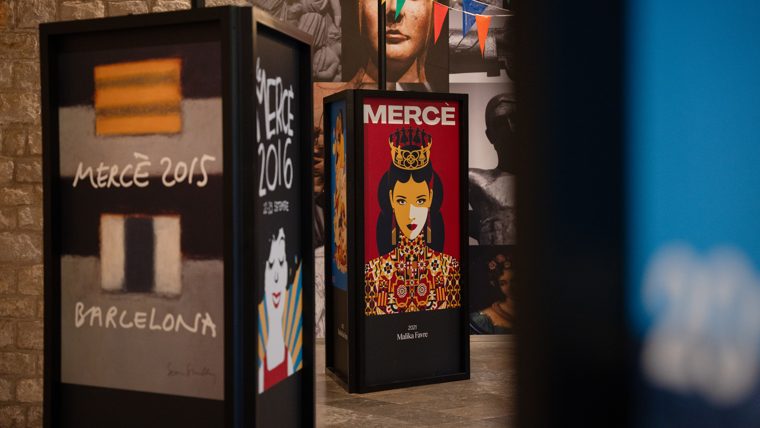
There are few celebrations capable of explaining the transformation of a city through a succession of images. La Mercè is one of them. Since the democratic recovery of the Festa Major, the poster that announces it each year has functioned as a space of creative freedom, but also as a mirror of the imaginaries, sensitivities and visual languages of each moment. Now, for the first time, the 48 official posters created between 1979 and 2026 can be seen together at the Frederic Marès Museum, in the exhibition Many Mercès. The posters of the Festa Major in Barcelona .
From September 15 to October 12, the museum courtyard will host this unique gathering of pieces, which allows us to reconstruct almost five decades of Barcelona's history through the graphics of its Festa Major. Beyond their initial function —announcing celebrations—, the posters constitute an extensive visual chronology in which we can recognize the different ways in which the city has wanted to represent itself and project its identity.
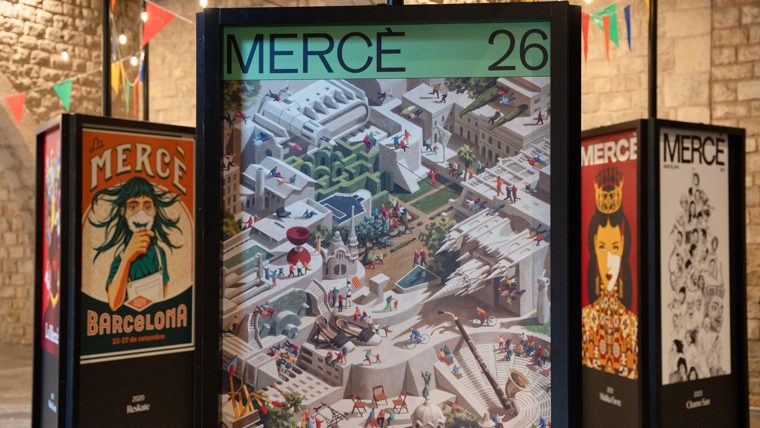
The uniqueness of this trajectory lies, in large part, in the commitment to the author's poster. Each edition has offered creators ample scope to interpret the festival from their own perspective, without being subject to a single graphic identity. The result is an extraordinarily diverse collection, in which art, illustration, design and popular culture coexist and in which the languages of each era leave their mark.
The list of authors contributes to giving a particularly significant dimension to the whole. Throughout this period, artists and creators such as Antoni Tàpies, Javier Mariscal, Jaume Plensa, Malika Favre, Jordi Benito, Joan Fontcuberta, Peret, América Sánchez and Cinta Vidal, author of the 2026 Mercè poster, have participated. The gathering of these proposals allows us to observe not only the different approaches to the festival, but also the dialogue that is established between generations and creative disciplines.
Taken together, the posters function as a kind of archive of the city. The shapes, colors, typographies, symbols and ways of representing Barcelona reveal changes in tastes and sensibilities, but also in the way of understanding urban space, culture and the celebration itself. La Mercè thus appears as a territory in permanent transformation, capable of incorporating new perspectives without losing its condition as a shared celebration.
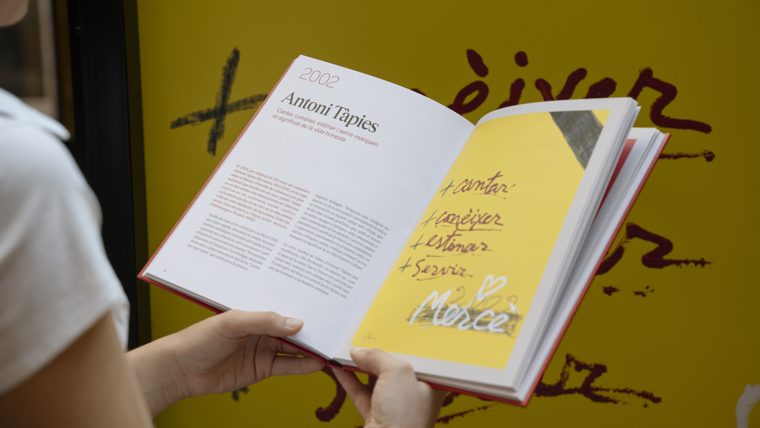
This reading is completed with the publication of the book Moltes Mercès. Els cartells de la Festa Major de Barcelona , published by Barcelona Llibres with design by Manel Terron. The volume brings together all 48 posters and constitutes the first exhaustive compilation of this graphic heritage. With texts by Julià Guillamon, the publication places the works in their artistic, urban and social context and allows us to delve deeper into the evolution of a production that, over the years, has acquired its own cultural autonomy.
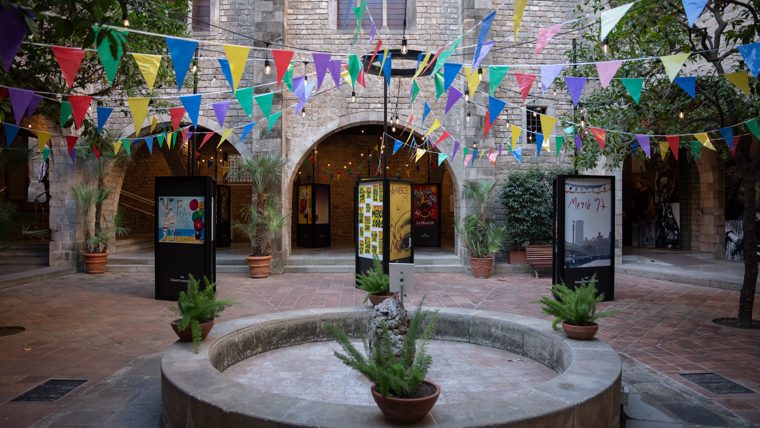
The book and the exhibition (with exhibition design by Lluís Danés) therefore share the same desire: to reclaim the Mercè posters as something more than a series of ephemeral communication elements. They are documents of an era, but also works conceived from the freedom of each creator. In each of them there is a certain idea of Barcelona and its relationship with the festival, the citizens and the public space.
You may be
interested
...