
Exhibitions
The grand Baroque of the Holy Charity arrives in Madrid
Until November 28, Madrid is hosting an exceptional opportunity to explore one of the most significant collections of Spanish Baroque art. The exhibition , "Art and Mercy: The Baroque of the Holy Charity of Seville in Madrid ," on display at the Condeduque Center since June 30, brings together a selection of masterpieces created specifically for the Hospital of the Holy Charity of Seville in the 17th century. The project allows visitors to view, outside their original setting, key works by Bartolomé Esteban Murillo, Juan de Valdés Leal, and Pedro Roldán—three essential figures for understanding the evolution of 17th-century Spanish painting and sculpture.
The exhibition is the result of a collaboration between Afundación, Obra Social ABANCA, the Madrid City Council, and the Brotherhood of the Holy Charity, and presents a collection whose significance extends far beyond Seville. These works are closely linked to one of the great artistic and spiritual programs of the Baroque period, conceived from the ideas of Miguel Mañara and centered around the works of mercy.
During the 17th century, the Hospital of the Holy Charity became a privileged setting for the union of art, religion, and social action. Mañara promoted an iconographic program designed to remind people of the Christian obligation to practice charity and care for the most needy. To bring this to fruition, he enlisted some of the leading artists of his time, resulting in an exceptional collection in which painting and sculpture were conceived in close relation to the architectural space and the moral message of the institution.
Among the Murillo pieces in the exhibition, Saint John of God Carrying a Sick Man and Saint Elizabeth of Hungary Healing the Lepers stand out, works in which the representation of charity acquires a profoundly human dimension. These are joined by two monumental compositions, Moses and the Rock of Horeb and The Multiplication of the Loaves and Fishes , examples of the Sevillian painter's ability to combine biblical narrative, Baroque theatricality, and a particular sensitivity toward the figures depicted.
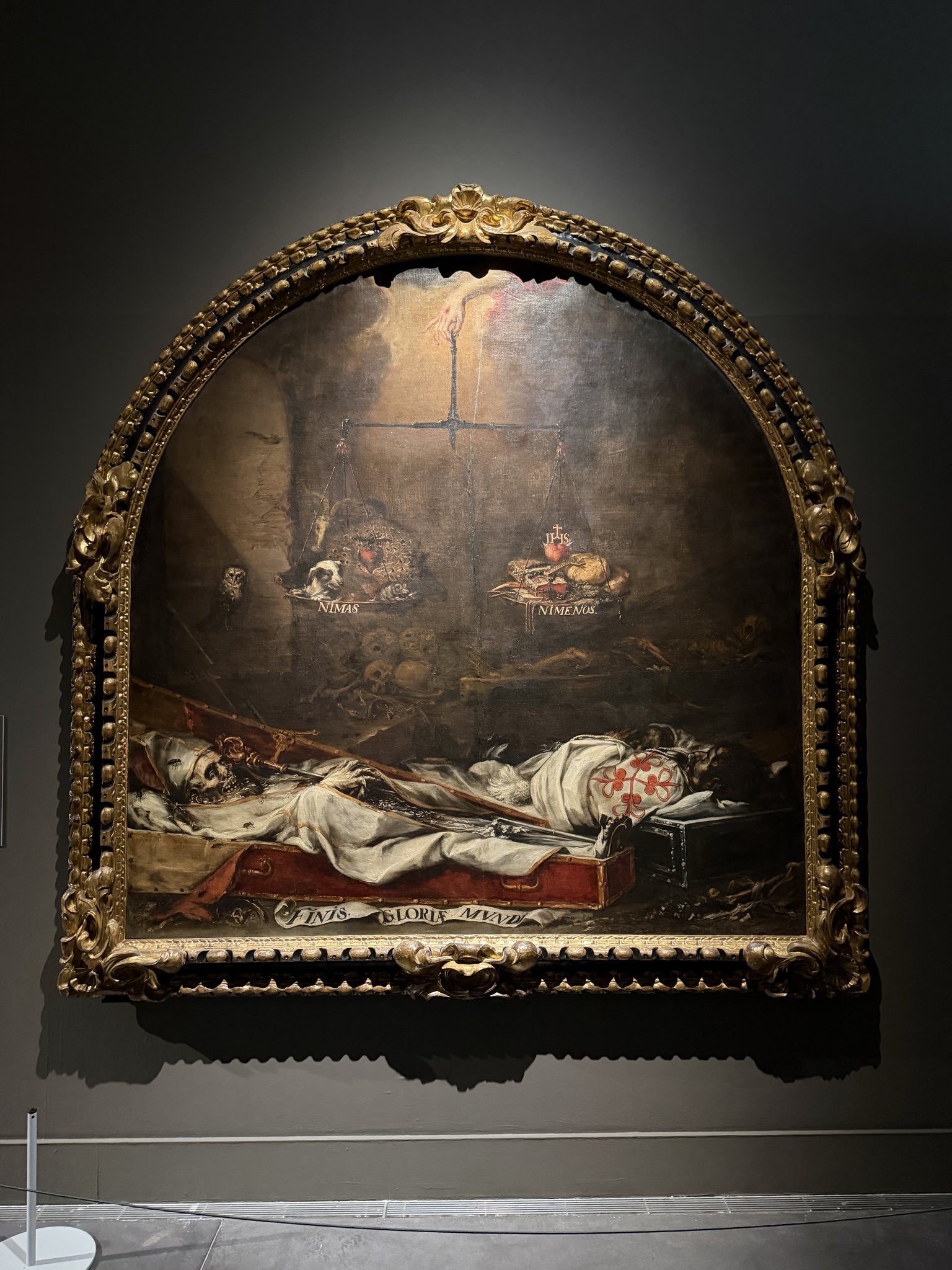
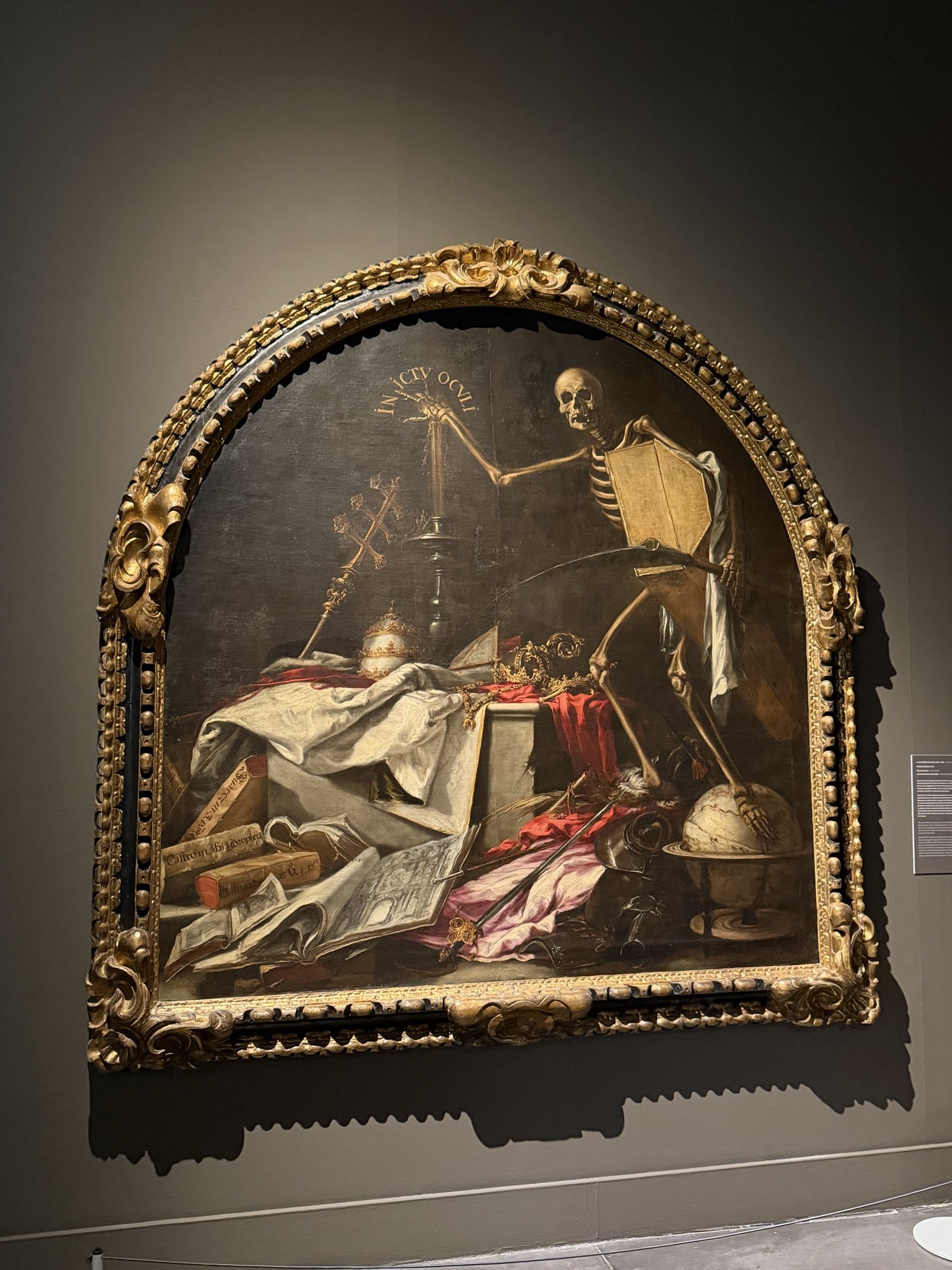
Emotional intensity reaches a different expression in the large canvases of Juan de Valdés Leal, especially in *In ictu oculi* and *Finis gloriae mundi *. Both works constitute some of the most powerful images of Spanish Baroque culture concerning the fleeting nature of existence, death, and the vanity of earthly possessions. Their presence in Madrid allows us to rediscover the radical nature of an artistic language that sought not only to move the viewer, but also to confront them with the awareness of death and the need to orient life toward mercy.
The sculpture by Pedro Roldán completes this extraordinary program. The Christ of Charity , along with the images of Saint Roch and Saint George , demonstrates the importance that sculpture acquired in the construction of a space intended to evoke an intense spiritual experience. The dramatic nature of the figures, the expressiveness of their faces, and the treatment of their bodies reflect a conception of art deeply rooted in Baroque sensibility, in which the image had to be capable of directly engaging the viewer.
The importance of the exhibition, therefore, lies not only in the individual quality of the works, but also in the opportunity to contemplate, in one place, an essential chapter of the history of Spanish art. These are pieces that form part of the country's artistic memory and allow us to understand the extent to which the Baroque was able to transform religious spaces into complex devices for representation, emotion, and thought.
The temporary transfer of these works to Madrid also offers a different perspective on a collection closely linked to its Sevillian context. Exceptionally separated from their historical location, the paintings and sculptures acquire new relationships with one another and allow for a clearer appreciation of the coherence of the program conceived by Mañara: a project in which artistic beauty was inextricably linked to a reflection on compassion, death, human fragility, and responsibility towards others.


You may be
interested
...