Exhibitions
Memory and fragility
Leonel Castañeda Galeano recovers objects, fragments and vestiges to question our way of looking at the body, difference and what we prefer to keep hidden.
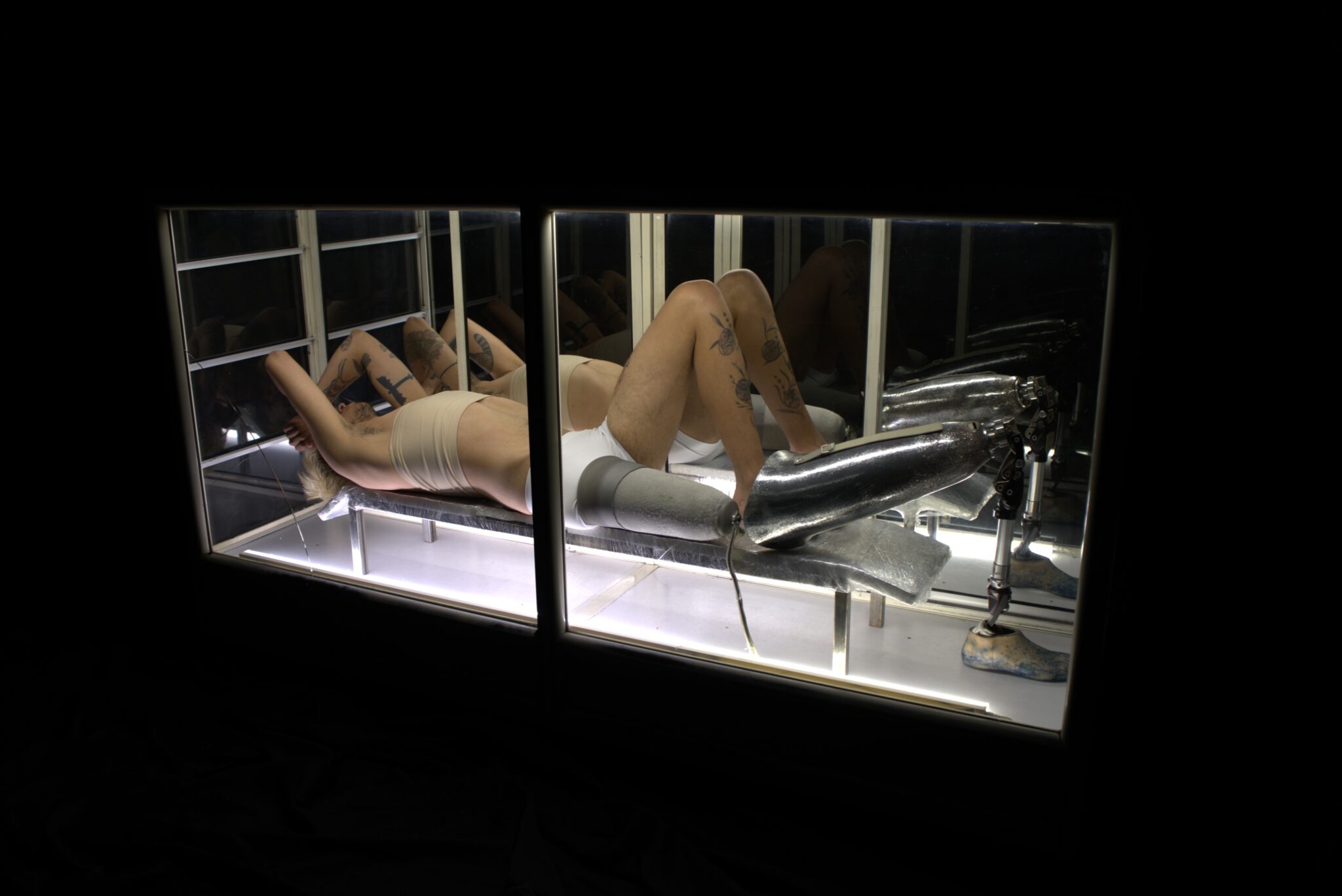
Leonel Castañeda Galeano's work starts from an apparently simple operation but one that is full of meaning: collecting what has been rejected, abandoned or has lost its function and giving it a new life within the artistic space. The Colombian artist, born in Bogotá in 1971, thus constructs a universe of fragments, everyday objects, bodily remains, prostheses, medical devices and other vestiges that, outside of their original context, acquire a symbolic dimension.
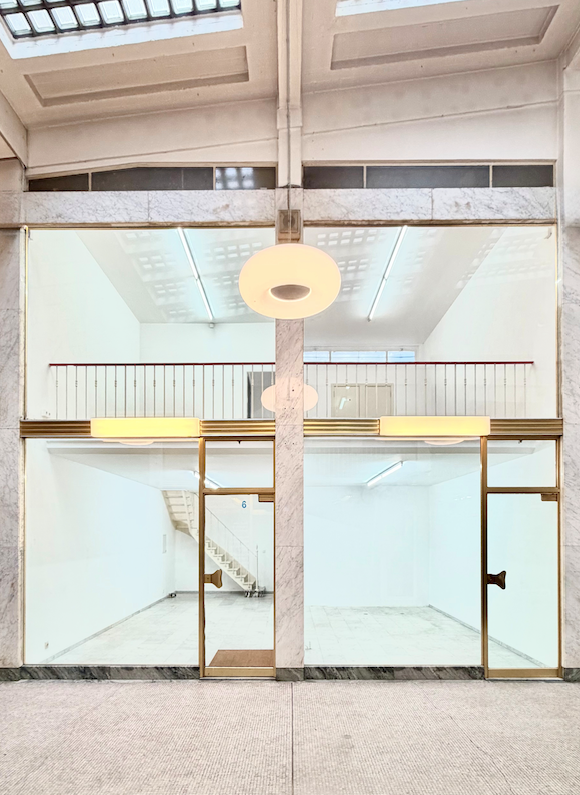
This way of working is especially visible in The Body of Bodies , the exhibition currently on view at the Espai Isern Dalmau in Barcelona , curated by Fernando Cuevas Ulitzsch. The show presents the body not as a closed or idealized reality, but as a changing, vulnerable territory traversed by memory, desire, illness, care and transformation.
Castañeda Galeano often works with fragmentation. A prosthetic leg, an anatomical model, a shoe, a medical object or an item that has been used by a particular body can become a kind of absent presence. The body is no longer there, but its traces remain in the objects. This tension between presence and absence constitutes one of the most powerful aspects of his work.
His practice also moves in a border zone between disciplines and imaginaries. Art, medicine, science, sexuality and popular culture appear connected through assemblages that do not offer a single reading. The display cases and accumulations of objects recall spaces of scientific classification, but at the same time they can acquire an almost ritual or intimate dimension. What in another context would be a waste or a worthless object is transformed into a piece capable of provoking attraction, discomfort or even rejection.
In this sense, the artist does not seek to hide the fragility of the body, but rather to place it at the center of the gaze. His works question models of normality and beauty and recover those corporealities that have often been left out of conventional representations. Vulnerability ceases to be a deficiency to become a form of knowledge and a possibility of transformation.
In The Body of Bodies , this perspective takes on a particularly suggestive dimension. The objects brought together by Castañeda Galeano do not tell a linear story, but rather establish connections between different experiences of the body, between what is shown and what is usually hidden. Memory and desire, dependence and autonomy, attraction and repulsion coexist in the same space and question the boundaries with which we tend to classify bodies and their experiences.
Leonel Castañeda Galeano thus invites us to look again, to establish a dialogue, of what we often exclude from our perception and to understand fragility not as a lack, but as an essential condition of existence. The body, fragmented and vulnerable, is finally revealed as a territory of memory, desire and identity, but also as a space open to infinite ways of being and looking.
You may be
interested
...