News
Postcards from Jaume Bosch Sala's exile arrive at the Girona Municipal Archive
74 postcards and a letter allow us to reconstruct the eleven years of exile, internment and repression of the last Republican mayor of Sant Daniel.
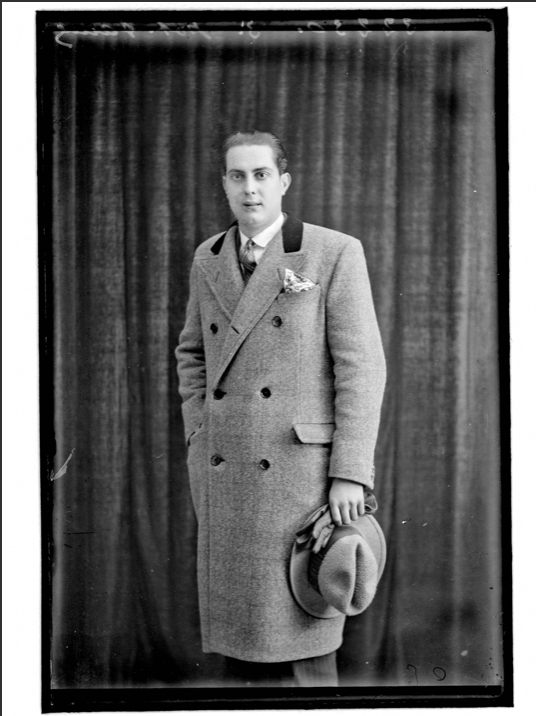
The Girona Municipal Archive has incorporated into its collection a documentary set of great historical and human value: 74 postcards and a letter sent by Jaume Bosch Sala during the eleven years he spent in exile and imprisonment between France and Algeria. Preserved for decades by the family, this correspondence has now been donated by his granddaughter and grandchildren and allows us to reconstruct, through necessarily brief messages and conditioned by censorship, an essential part of the life trajectory of the last Republican mayor of the Vall de Sant Daniel.
The postcards, dated between 1939 and 1949, were mainly addressed to his wife, Montserrat Grau Capdeferro, and his children, Teresa and Jaume Bosch Grau, although he also sent some to other relatives. Despite their apparently simple nature, the documentation offers a valuable insight into the living conditions of the exiled and reprisal-stricken Republicans after the Civil War.
The brevity of the messages is not accidental. The correspondence was subject to double censorship: that of the internment camps where Bosch Sala was and the Francoist one, which operated at the point of destination. The postcards often became simple signs of life, a way of letting the family know that he was still alive and of maintaining, despite the distance and circumstances, a thread of communication with his loved ones.
The set allows us to trace Bosch Sala's journey through the various prison camps and internment spaces where he was held during his exile. Beyond strictly biographical data, the postcards provide an intimate dimension to the history of Republican repression: family separation, uncertainty, surveillance and the need to turn a few words into a link with the life he had left behind.
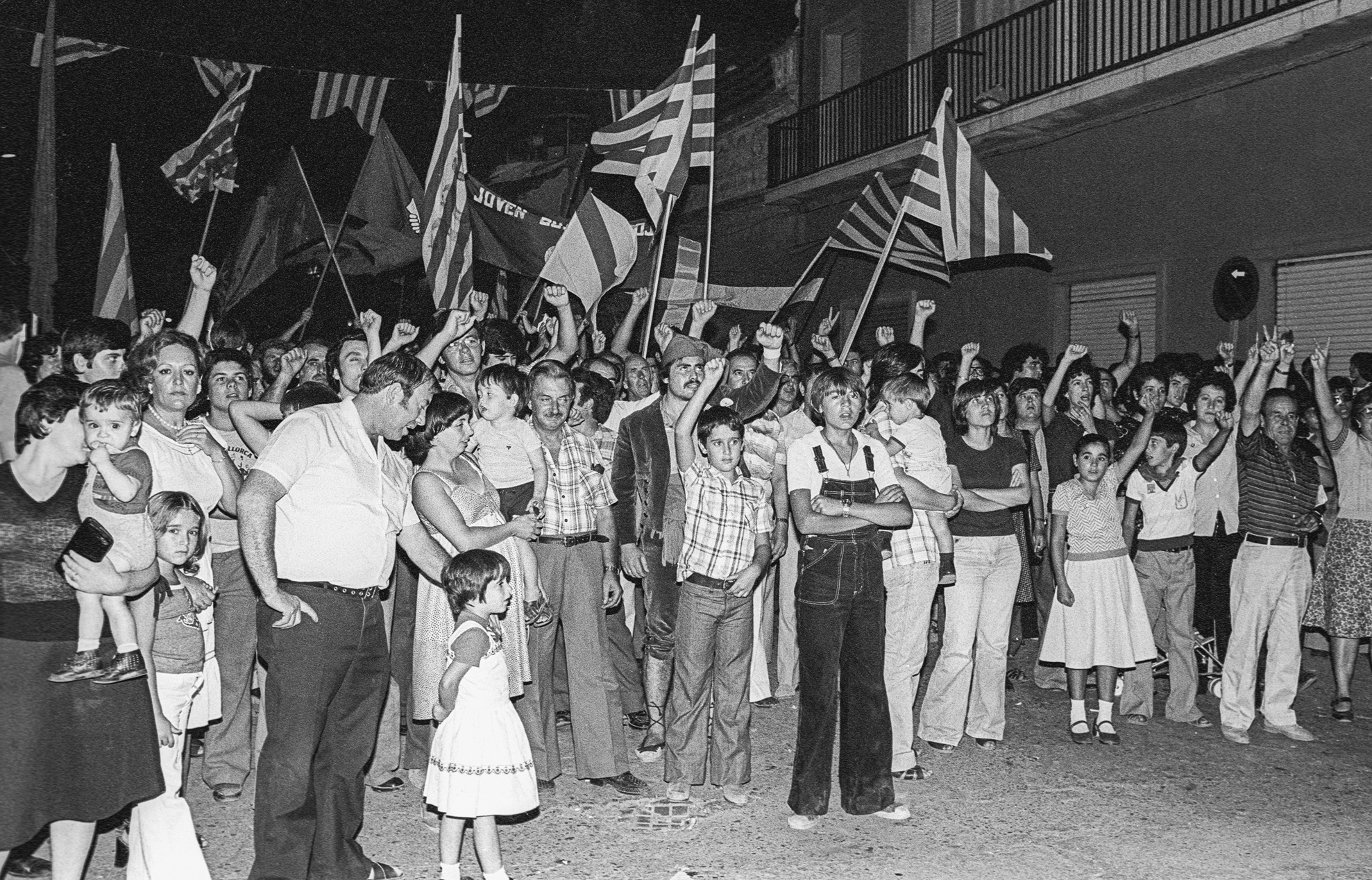
The incorporation of the documentation into the Municipal Archive was accompanied by an act of homage and democratic memory organized by the Girona City Council and the Vall de Sant Daniel Neighborhood Association as part of the neighborhood's Festa Major. The act vindicates the figure of Bosch Sala and also represents a moral and institutional reparation towards the last Republican mayor of the valley.
The mayor of Girona, Lluc Salellas i Vilar, has highlighted the importance of the donation and the recovery of the figure of Bosch Sala, whom he has defined as a person exiled and politically reprisaled, but also as an outstanding professional and a mayor who contributed to modernizing Sant Daniel. The incorporation of the collection allows, according to the mayor, to preserve a new piece of the city's history and to vindicate a key figure from its recent past.
Jaume Bosch Sala was born in Sant Daniel on May 30, 1909. His childhood was marked by family tragedy: at the age of four he was orphaned by his father and mother and also without a brother, in the context of the typhus, tuberculosis and diphtheria epidemics that affected the population between 1913 and 1914. His paternal grandfather, Jaume Bosch Menció, then moved to Sant Daniel with his unmarried sons and daughters to take charge of the family business and his grandson.
Bosch Sala later studied accounting in Barcelona and worked professionally as an accountant. His involvement in the public life of Sant Daniel led him to chair the municipal management board between 1933 and 1934. In the midst of the Civil War, on July 30, 1936, he was elected mayor representing the Republican Left of Catalonia.
His term of office was conditioned by the needs arising from the war, but also by a desire to transform the municipality. In October 1936 he temporarily resigned from the mayorship to join the ranks, but in November of the same year he returned to the position. He held it until December 25, 1938.
During these years, various social and urban development actions were promoted. Among the most notable are the creation of a war refugee center and a nursery school, which would later give rise to the Pi i Margall School Group, taking advantage of various facilities of the monastery. The section known as the "convent straight" was also opened and the partial implementation of public lighting began.
Another significant episode of his term took place on December 13, 1936, when the change of name of the municipality of Sant Daniel to Vall de Gallegans was unanimously approved.
The end of the Civil War opened a period for Bosch Sala marked by exile, internment and political repression. Between France and Algeria he spent eleven years away from his family and his municipality. It is precisely this period that now emerges with particular force through the postcards preserved by his descendants.
The correspondence allows us to recover a story that remained within the family circle for decades and turn it into a collective documentary heritage. Their words, limited by censorship and the conditions of exile, offer a close look at the human consequences of the Republican defeat and the lives of those who had to rebuild their existence far from home.


You may be
interested
...