Exhibitions
Nuu explores the face as a map of identity
Twelve artists from Europe, Asia, America and Africa explore contemporary portraiture through the streets of Rubí during the 12th edition of the international photography festival.
La Nuu, the international photography festival in Rubí, will celebrate its twelfth edition from October 1 to 31, 2026 with the portrait as the main protagonist and the motto The face as a map . Twelve artists from Europe, Asia, America and Africa will display different ways of understanding identity and the representation of the body and face through contemporary photography.
The festival will have its main meeting point at the Ateneu Municipal de Rubí, which will host the FOCUS weekend on October 2, 3 and 4. Throughout the month, however, La Nuu will take to the streets and occupy different spaces in the city with photographic installations in the Antiga Estació, the Rubí Library, Joaquim Blume Street and the squares of Celler, Nova Estació, Anselm Clavé, Doctor Guardiet, Pich Aguilera and Salvador Allende.
The program brings together artists such as Mariela Sancari, Kenji Hirasawa, Manel Esclusa, Alba Zari, Abdo Shanan, Liz Gorman, Miss Beige, Marjolein Martinot, Sabrina Komár, Sheung Yiu, Rose-Lynn Fisher and Veronica Barbato, in an edition that expands the traditional idea of the portrait and poses the face as a territory where memory, identity, technology, emotions and experience converge.
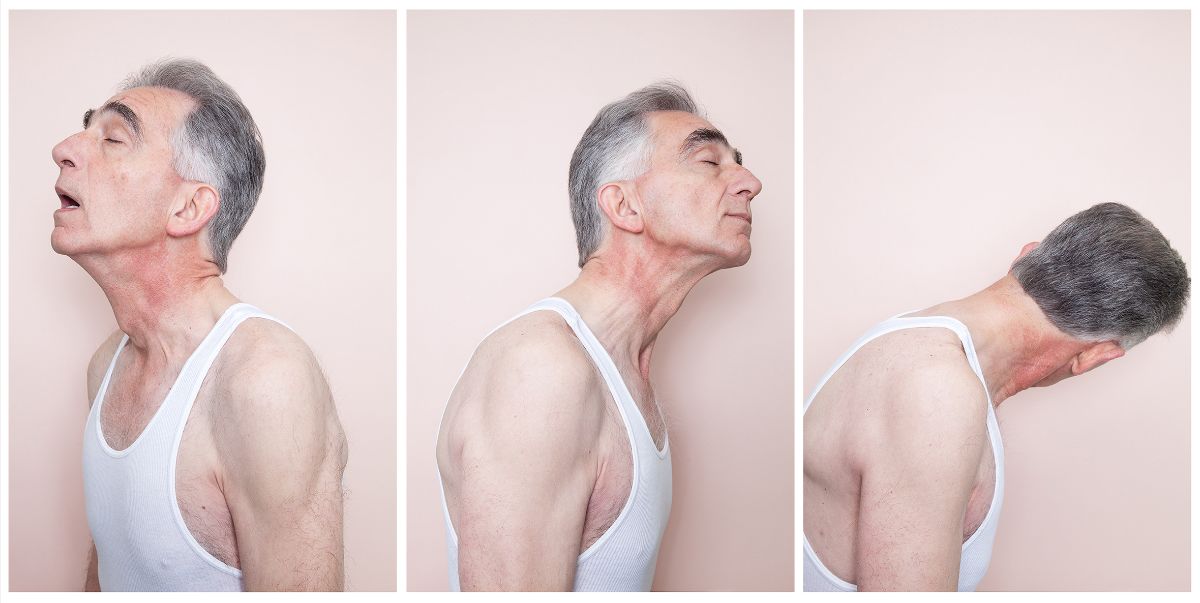
One of the lines of the program is based on absence, loss and mourning. In Moisés , the Argentine artist Mariela Sancari confronts the death of her father through a particular photographic fiction. When she and her twin sister were young, her father died and, years later, Sancari began to portray 70-year-old men, the age he would be if he were still alive. The project turns the portrait into a tool to reconstruct a disappeared presence and keep the relationship with memory open.
Also from the experience of grief, The Topography of Tears , by the American artist Rose-Lynn Fisher, transforms tears into a singular cartography of emotions. During a period of grief, Fisher began collecting tears produced by different emotional states and photographing them through a microscope. The structures that appear in each image reveal differences between the tears and turn an intimate experience into a surprising visual representation.
In YOUR SISTER , Veronica Barbato recovers the figure of her sister Mary, who died at the age of 23 after a period marked by drug addiction and depression. The Italian artist transforms her memory into an artistic and urban intervention that turns Mary into a kind of popular heroine, a "saint of transgression and love". Photography, sculpture, sound and performance come together in a proposal that reclaims public space as a place for artistic practice and memory.
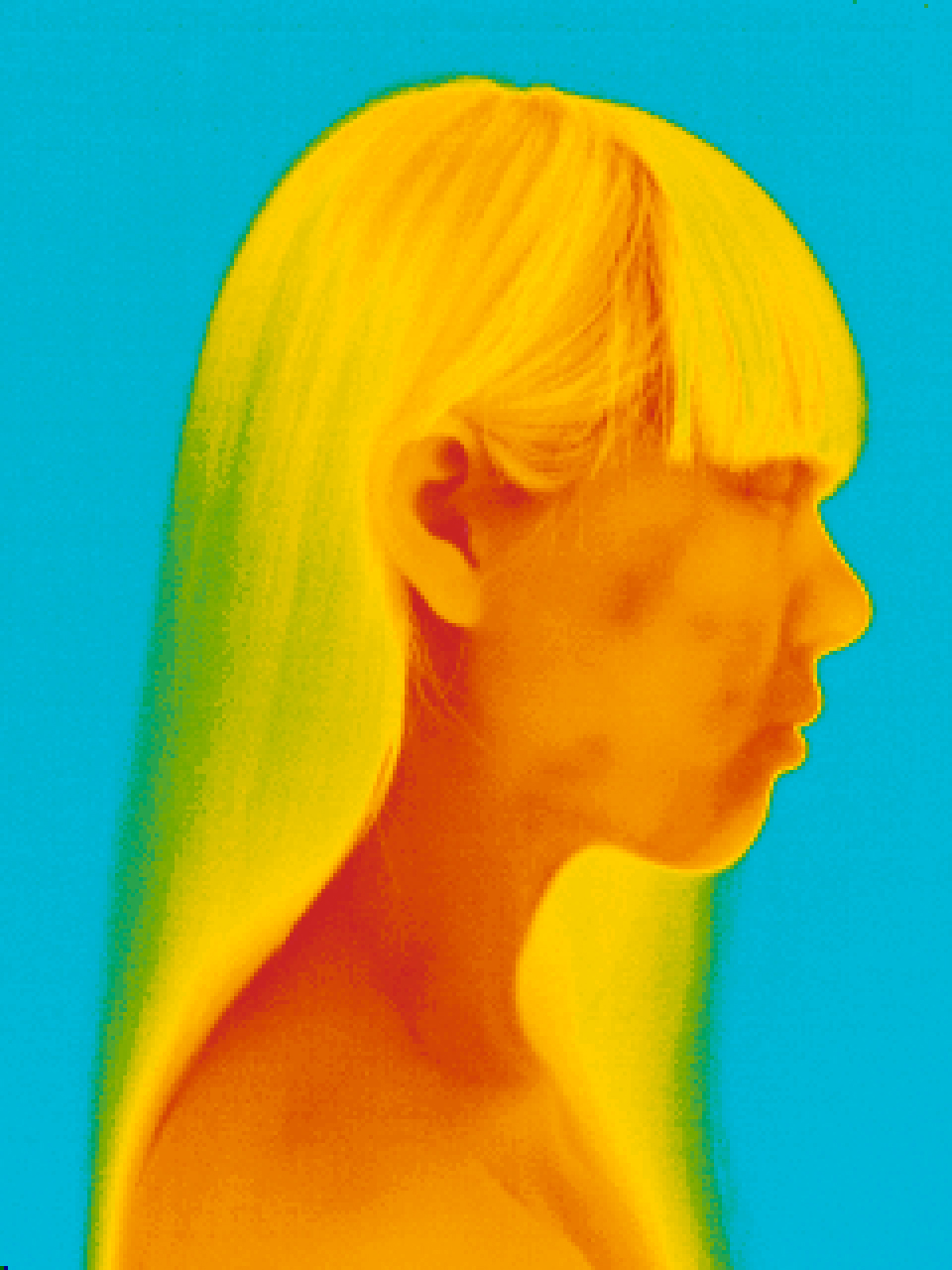
Technology also radically changes the way we understand portraiture in several of the festival's proposals. In Portraits , the Japanese Kenji Hirasawa uses thermography to record the internal heat of living organisms. His images dispense with clothing and skin to show a biological reality invisible to the naked eye and turn the body into a territory of temperatures, energy and information.
In the case of Manel Esclusa, Scantac starts from experimentation with images obtained through computerized axial tomography (CAT) scans to convert the head and face into a succession of shapes, volumes and internal structures. The proposal is part of a trajectory linked to photographic experimentation that has made Esclusa one of the fundamental figures of contemporary Catalan photography.
Meanwhile, Interfaces of Predictions , by Helsinki-based Hong Kong artist Sheung Yiu, focuses on the face as an interface for generating predictions. The project takes physiognomy, a pseudoscience that sought to deduce a person's character from their facial features, and confronts it with current facial recognition and machine learning technologies. Yiu thus investigates the intersection between photography and computing and questions the possibility of reducing the complexity of the human gaze to a purely computable problem.
Other artists approach the construction of identity and its self-representation from perspectives linked to digital culture, the critique of canons and urban intervention. In Fear of Mirrors , Alba Zari explores, through a photographic and sculptural installation, the influence of the digital revolution and patriarchal structures on the representation of the female body. Born in Bangkok and trained in Bologna, New York and Milan, Zari has also developed a career in documentary film, with White Lies (2025) as her first feature film.
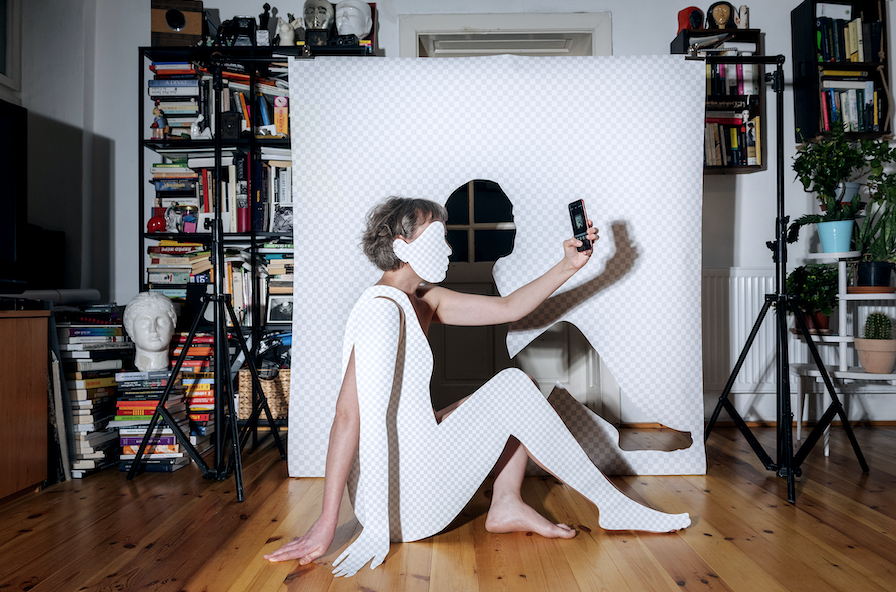
Hungarian photographer Sabrina Komár takes this reflection to the digital realm with Layer Masks . The fragmentation caused by constant notifications, algorithms and the multiplication of online identities becomes the starting point for a work that uses the Photoshop grid as a metaphor for an identity formed by modifiable layers. Digital photography, collage, embroidery and weaving combine to blur the boundaries between disciplines.
With Taking the Streets , Miss Beige brings the question of identity directly into the urban space. Created in 2015, Miss Beige is a counter-canonical identity that questions, through humor, traditional models of femininity and the canons imposed by social networks. Dressed entirely in beige, she constructs a figure that functions as a kind of anti-selfie: a heroine without a cape, without spectacularization and far removed from the usual sexualization of female representation.
The tour of La Nuu is completed with Dry , by Abdo Shanan, at the Antiga Estació; I Saw Me Seeing Myself , by Liz Gorman, at the Rubí Library; Riverland , by Marjolein Martinot, at Plaça del Doctor Guardiet, and the rest of the projects that will occupy various spaces in the city.

You may be
interested
...