Exhibitions
Maiolino, matter and memory
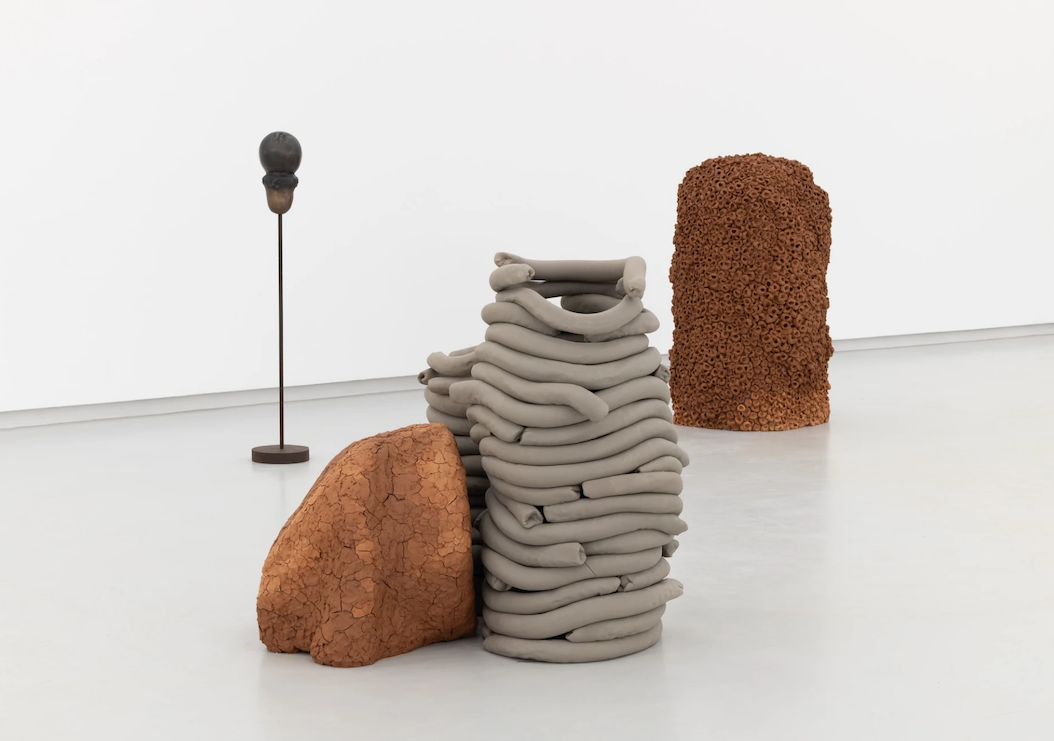
In Ana Maria Maiolino's work, repetition never means doing exactly the same thing. Each gesture contains a variation, an accumulation, and ultimately, a transformation. Terra Poética , an exhibition on view at the MAAT in Lisbon until August 31, 2026, brings together a body of work produced between 1975 and 2025 to focus on one of the fundamental dimensions of the Brazilian artist's career: sculpture and, especially, the physical relationship with clay.
Born in Italy in 1942 and emigrating to Brazil in the early 1960s, Maiolino developed a practice shaped by her migratory experience, the political contexts of 20th-century Latin America, and a persistent investigation into the body, language, and matter. Her work has encompassed drawing, printmaking, photography, performance, and sculpture, but a common thread connects her various mediums and eras: the importance of gesture as a form of thought.
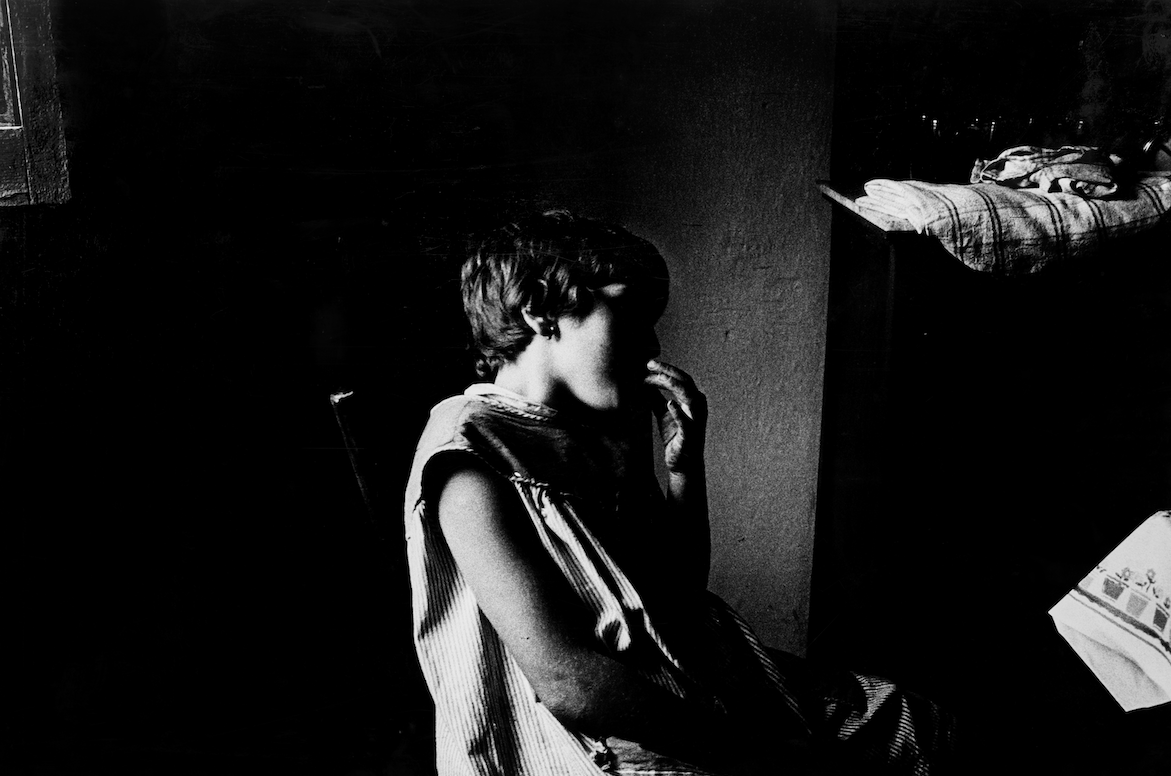
The exhibition begins with a seemingly simple yet profoundly evocative image. In Por um fio (1976), a black and white photograph depicts three women from different generations connected by a thread emerging from their mouths. Maiolino occupies the center, between her mother and daughter. The thread establishes a physical connection between the three figures, but it also constructs an image of genealogical continuity, of transmission and memory. At the same time, it anticipates one of the forms that will become a constant presence in her later sculptures: the cylinder.
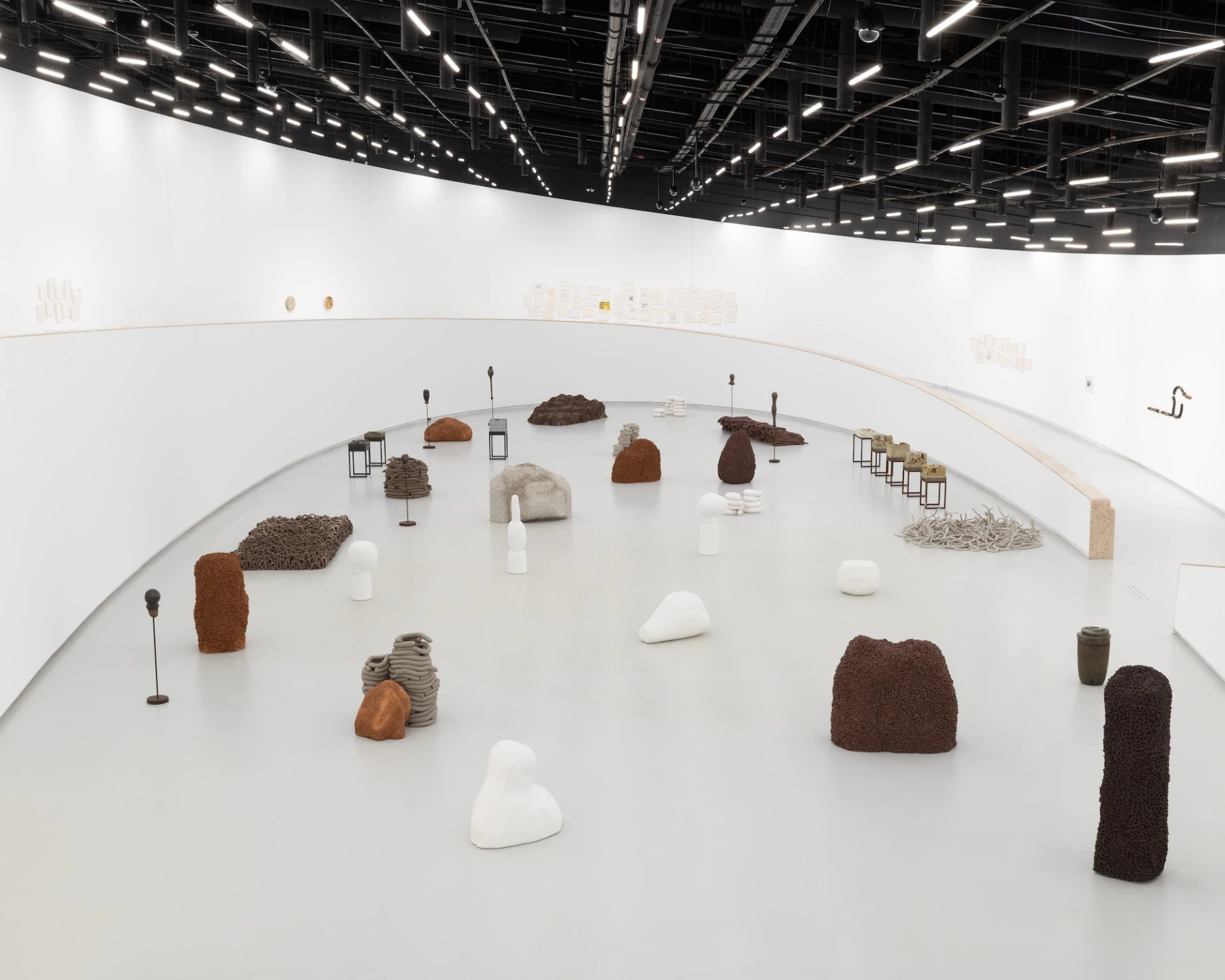
From this photograph begins a journey that descends the ramp of the Oval Gallery to the lower level. On the walls are works from the Tempestade de Ideias series, developed between 1990 and 2025, where drawing functions as a mental territory. The lines, strokes, and seemingly spontaneous forms are not merely preliminary sketches for sculpture: they constitute a record of thought and its possibilities. Drawing thus appears as a space for experimentation, a cartography of that which has not yet taken its final form.
The architectural descent also accompanies a change in language. The exhibition gradually shifts from paper to clay, abandoning linearity to open up into a space where the sculptures can be walked around and contemplated from different perspectives. The viewer no longer simply moves past the works but begins to move around them. This spatial transformation is significant because it also alters our relationship with matter: we are no longer faced with an image that represents, but with a body that physically occupies space.
In the early sculptures, small forms appear, riddled with cavities and internal voids. They are compact pieces in which the material seems to have been excavated from within. Their textures and densities evoke archaeological objects, remnants from a remote time that have survived to the present. The comparison with archaeology is not gratuitous: Maiolino works with a material that seems to retain the memory of the gestures that have transformed it.
This dimension reaches a monumental scale in the group of large sculptures that dominates the gallery. The clay has been progressively modeled in the exhibition space itself through a collective process involving the artist, members of her team, and local ceramists. The result, therefore, does not conform to the traditional idea of a sculpture conceived, executed, and finally presented as a finished object. Here, the process is part of the work.
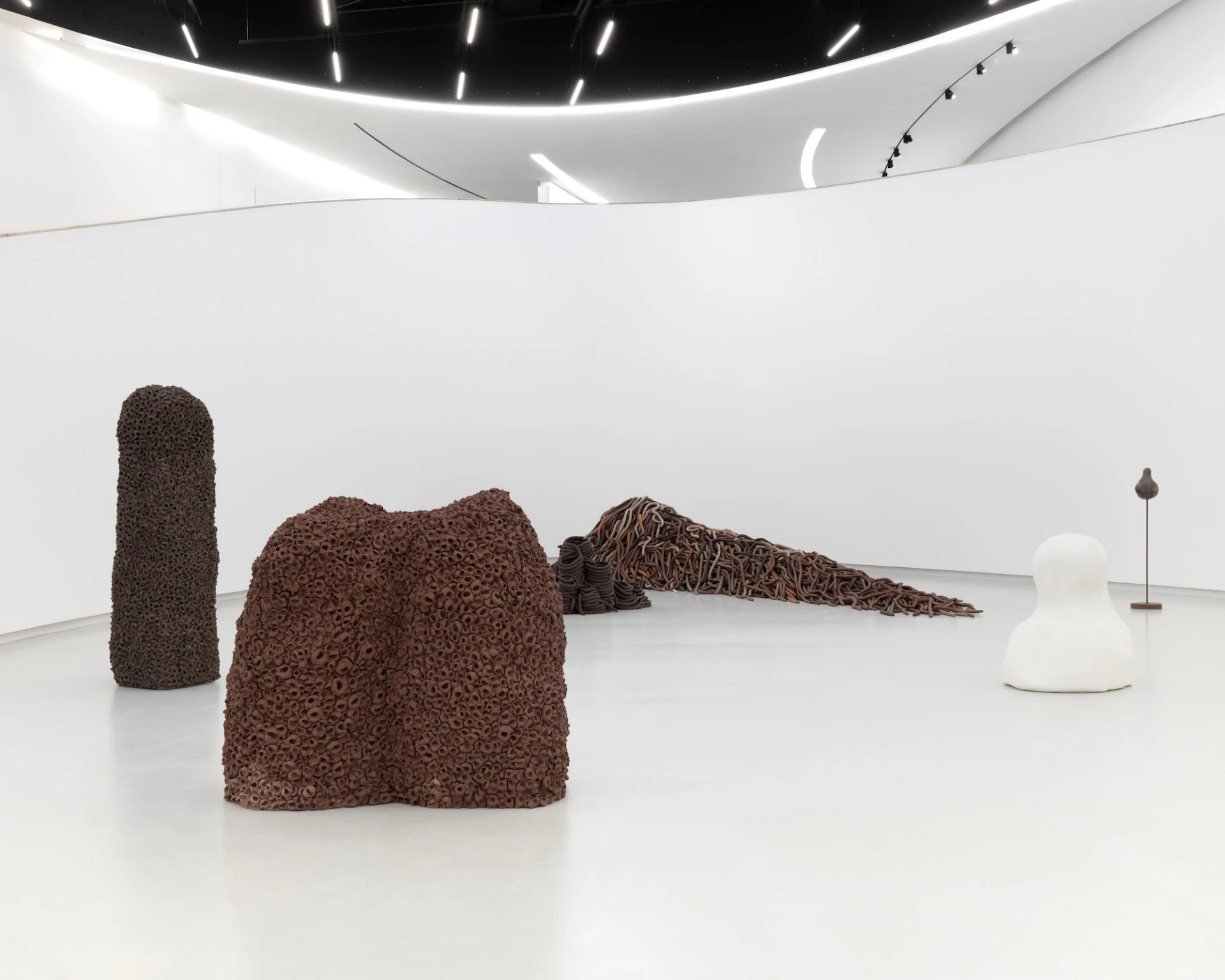
The clay changes as it remains exposed. The different pieces display shades ranging from the browns characteristic of dampness to lighter colors as the material loses water. The textures also change, and small cracks appear. Some forms even acquire a stone-like appearance, as if the material were undergoing a process reversed to the manufacture of an object: instead of becoming something stable, it seems to slowly revert to a geological state.
This transformation introduces a fundamental question: when does a sculpture end? In Terra Poética , the answer remains open. The pieces are not closed bodies but provisional states of matter subjected to time. The work ceases to be solely what we see and comes to include what is still happening. Dehydration, cracks, chromatic changes, and loss of consistency are all part of its existence.
The most basic gesture in the exhibition is also one of the most significant: rolling. The clay repeatedly takes on cylindrical forms that accumulate one on top of the other to build large-scale structures. The process evokes an everyday action, linked to food preparation and, especially, kneading. A movement historically associated with domestic and women's work leaves the private sphere here to acquire a monumental dimension.
Maiolino's critical operation lies precisely in this shift. It is not simply a matter of representing domestic work, but of transferring its logic to the realm of sculpture. Rolling, kneading, accumulating, and molding cease to be actions subordinated to a practical function and become artistic processes. The everyday gesture thus acquires a new visibility and a new scale.
The fingerprints that remain on some pieces reinforce this interpretation. The hand does not disappear behind the work, but rather becomes inscribed within it. Each mark constitutes evidence of contact between the body and the material. The anatomy of the hand literally becomes part of the sculptural surface.
In this sense, Terra Poética can also be read as a reflection on bodily knowledge. In contrast to an artistic tradition that has often privileged the idea, the project, or individual authorship, Maiolino foregrounds a different kind of intelligence: that which is acquired through repetition, practice, and physical contact with materials.
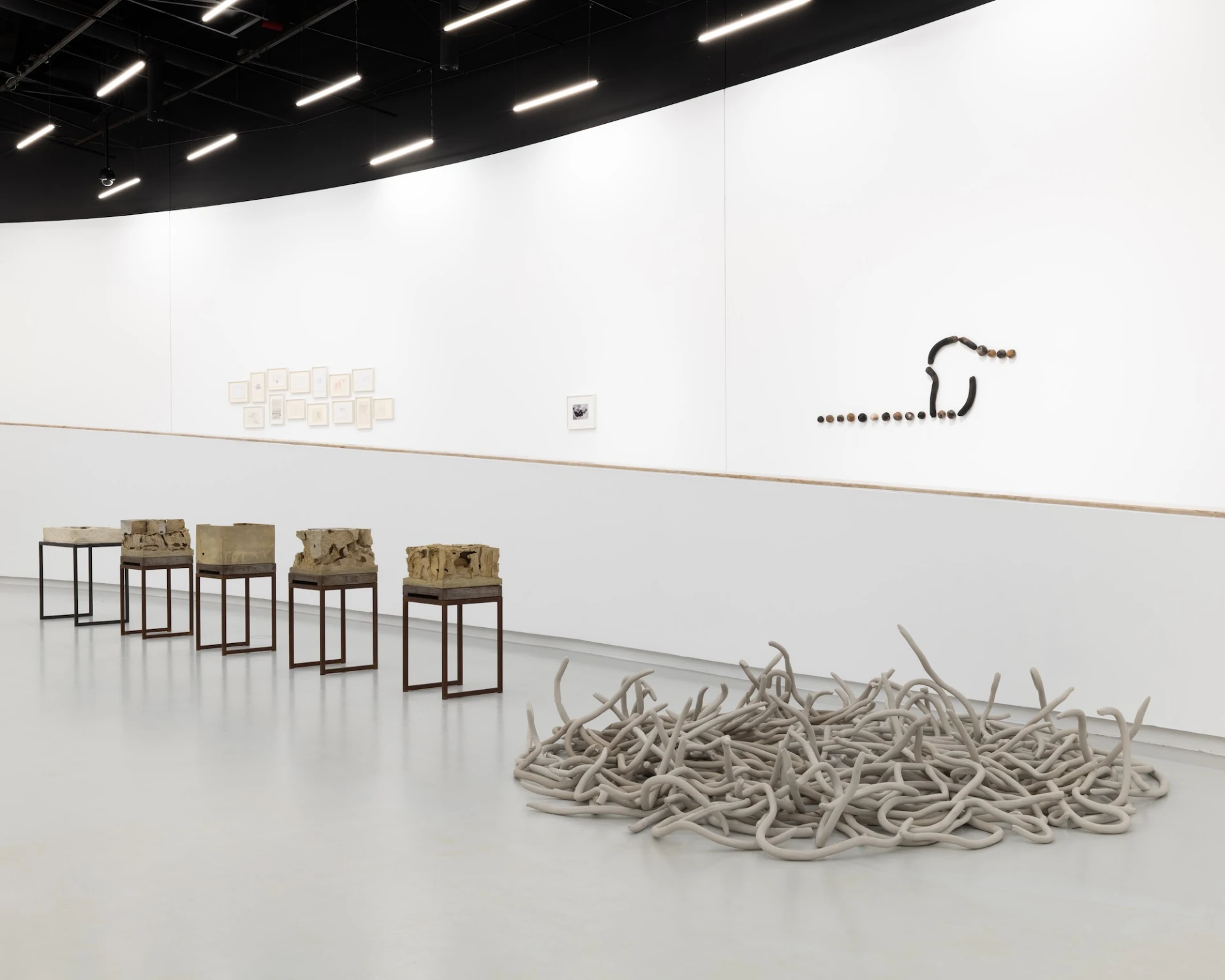
"You go to infinity doing the same thing," the artist states. The phrase serves as a kind of key to understanding the entire exhibition. Repetition doesn't necessarily lead to monotony; it can open up an infinite space of variations. Each cylinder is similar to the previous one, but never identical. Each gesture extends the preceding one and prepares the next. The accumulation generates a form that could not exist from a single movement.
There is also a temporal dimension here that extends beyond the exhibition itself. The large clay sculptures are destined to disappear once their run at the MAAT is over and will return to the ceramics studio that provided the material. Far from understanding this disappearance as a loss, Maiolino incorporates the return into the very logic of the work. Sculpture does not necessarily aspire to permanence.
This decision challenges one of the museum's historical premises: conservation. In contrast to the art object intended to remain intact, Terra Poética proposes a material that transforms, dries, cracks, and ultimately disappears. The museum ceases to be merely a space for preservation and becomes the temporary stage for a process.
There is, therefore, something profoundly circular in the proposal. The thread of Por um fio connects three generations; the drawings anticipate the sculptural forms; hands transform the clay; the cylinders accumulate until they build monumental bodies; the material dries and finally returns to its place of origin. Everything seems to be part of the same cycle of transmission and transformation.
Maiolino thus transforms a series of seemingly minimal gestures into a far-reaching reflection on the body, memory, work, and time. His most powerful achievement lies not in monumentalizing the everyday from a solemn distance, but in demonstrating that what for generations remained relegated to the domestic sphere already contained extraordinary formal and conceptual power.

You may be
interested
...