Exhibitions
Lyrical rigor: the thread is not the same as the line
MACA reviews the paths of geometric abstraction through its collections and vindicates the tension between rigor, space, movement and poetry.
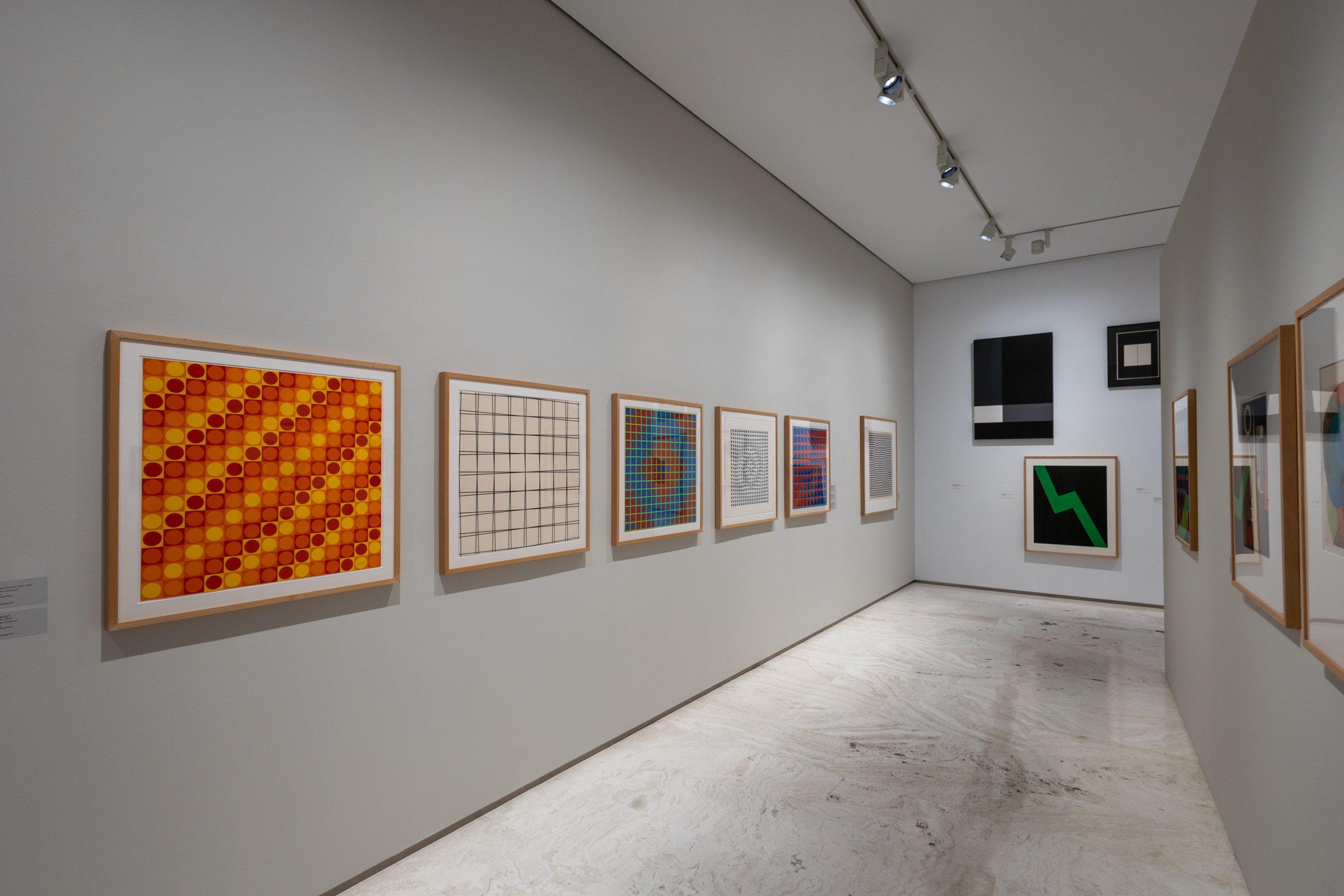
The Museum of Contemporary Art of Alicante (MACA) presents Lyrical Rigour: the thread is not the same as the line , an exhibition that delves into the territories of geometric abstraction based on a selection of graphic works from its collections. Curated by Rosa María Castells, the proposal presents a journey through the different forms that geometry has taken throughout the 20th century, from kinetic and optical research to constructivist structures.
The exhibition proposes to understand line, form, colour and space as elements capable of generating a visual experience. The rigour that gives the exhibition its title does not imply coldness. On the contrary, behind each apparently calculated structure there is a desire to explore what happens when order is set in motion and when a rational composition can provoke a sensory response.
The exhibition begins in Paris in the 1950s, a time when geometric shapes acquired a renewed prominence and began to be linked to a new sensibility close to industrial appearance. Light, optical effects and movement became fields of research for artists who sought to overcome the idea of the work as a closed and definitive object.
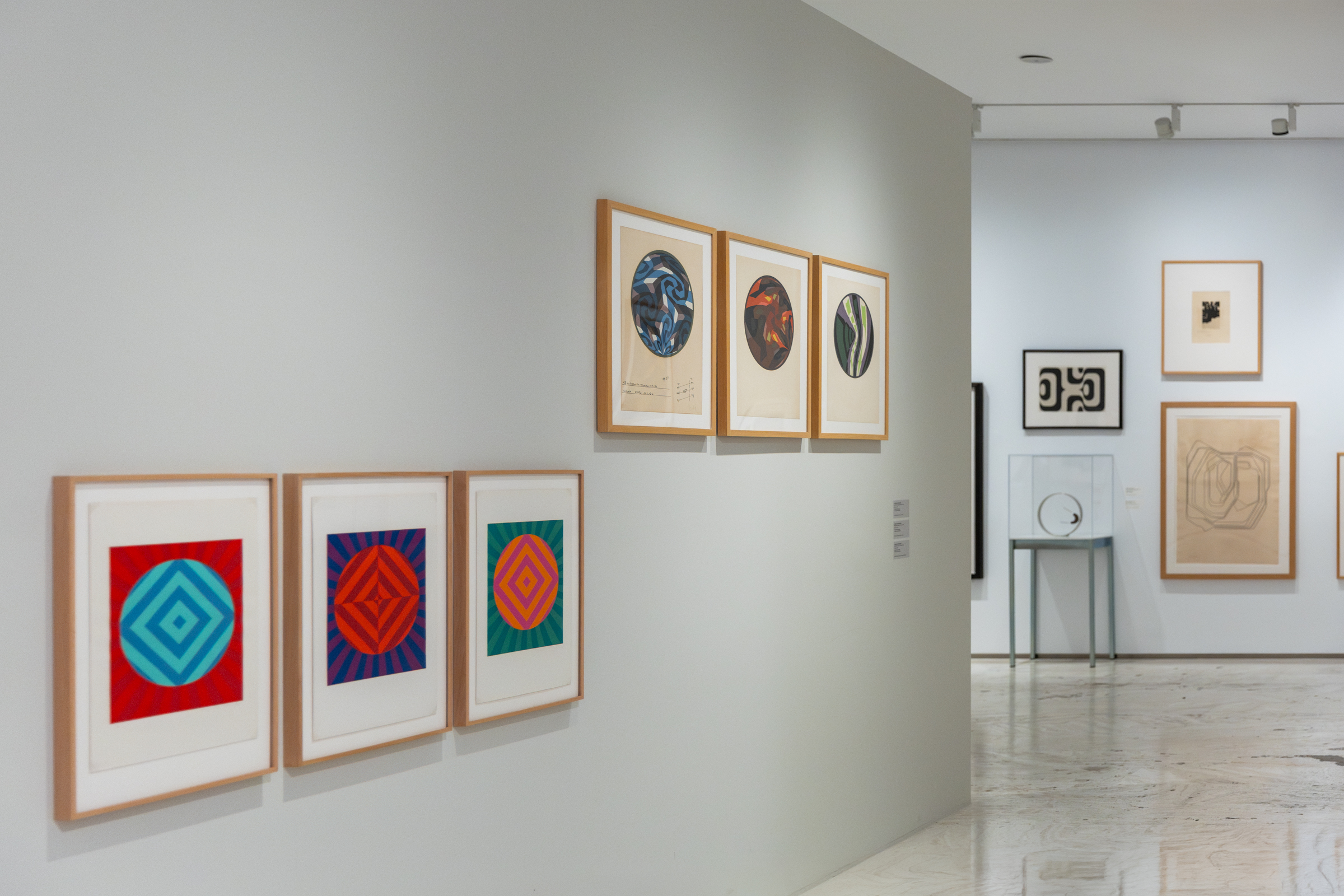
It is in this context that op art and kinetic art appear, practices that force the viewer to abandon a passive position. The works cease to be solely images to become perceptual devices. The gaze moves, doubts, completes and interprets. Movement can be physical, but it can also occur within the eye of the observer.
This idea of participation is one of the most interesting contributions of an abstraction that, at first glance, might seem excessively normative. Geometry here is not a closed system, but a tool for questioning perception. A line can vibrate, a surface can seem to move, and a static composition can acquire an unexpected sense of movement.
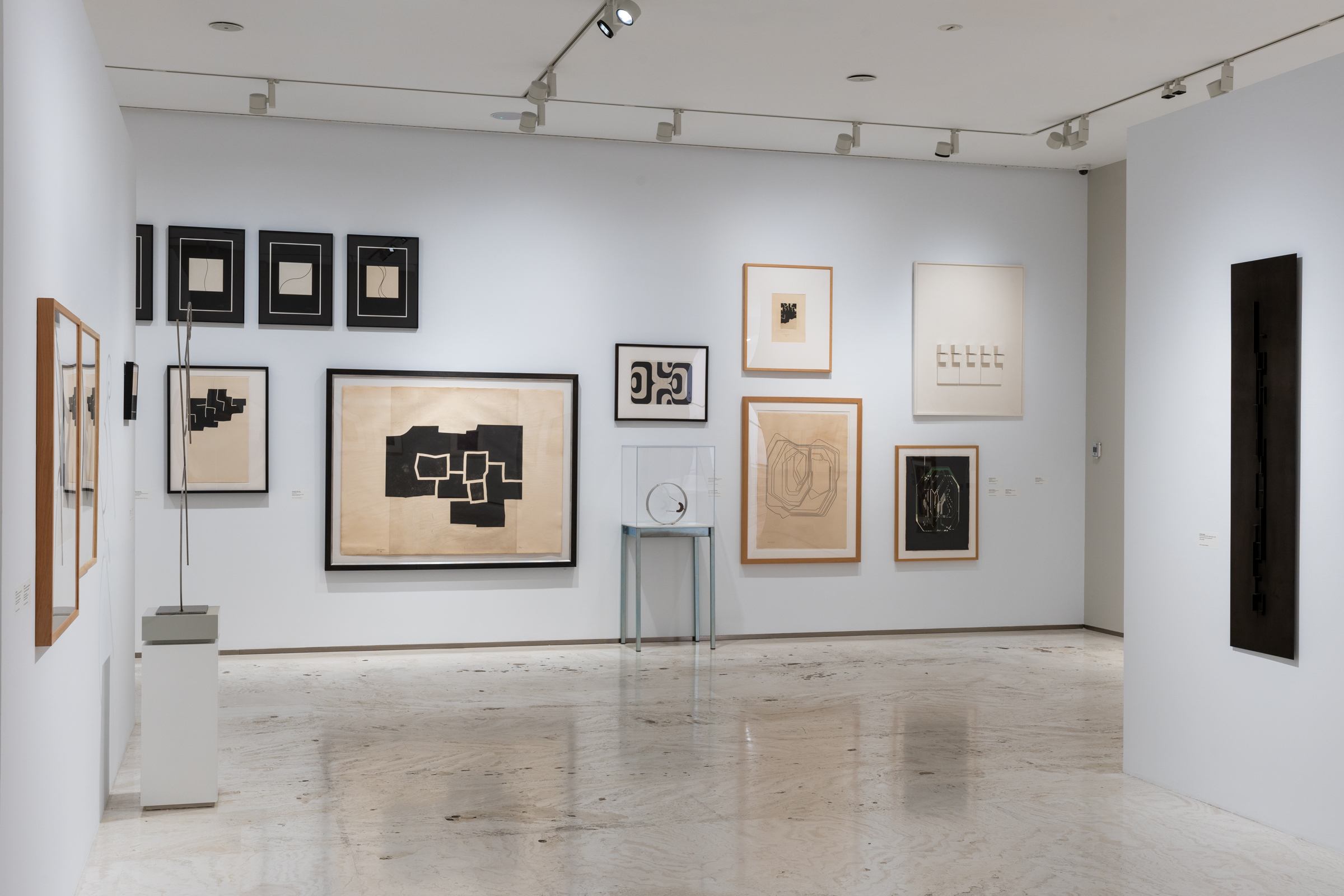
The second major area of the exhibition is situated in a more rationalist, concrete and normative trend, linked to the research of constructivism. Artists from Spain, Europe and America experimented with essential forms and volumes to study the relationships between space, movement and balance.
In these works, the elimination of the anecdotal does not necessarily mean a renunciation of emotion. What changes is the place from which this emotion is produced. The spontaneous gesture gives way to construction; the narrative, to structure; and the representation of the world, to a search for its internal laws.
Color, present or absent, thus becomes another construction tool. It does not act solely as a decorative element, but modifies distances, alters visual weights and transforms the perception of forms. Geometry becomes a way of organizing the gaze and, in a broader sense, an attitude towards reality.
One of the most suggestive aspects of Rigor líric is precisely this apparent contradiction between rigor and poetry. The compositions start from a reduced vocabulary—line, circle, square, plane, volume, color—but their combinations generate an enormous diversity of experiences. Order does not cancel poetry, but can be its starting point.
The selection comes mainly from the 20th Century Art Collection, in dialogue with works from the Michael Jenkins and Javier Romero Collection, also from MACA, as well as other pieces deposited in the museum. This confluence allows us to delve deeper into the rationalist trend and, especially, into the research of Eusebio Sempere, a fundamental figure in understanding the connections between geometry, light and perception within 20th century Spanish art.
In this sense, Sempere also functions as one of the conceptual guiding threads of the exhibition. His work demonstrates that formal precision can coexist with an extraordinarily lyrical sensitivity. The line, subjected to an almost mathematical discipline, ends up producing vibration, light and movement. It is precisely here that the title of the exhibition acquires its full meaning: the thread is not the same as the line. One is matter; the other is structure, direction and possibility.
The MACA proposal therefore avoids presenting geometry as a purely cerebral language. On the contrary, it highlights its bodily and perceptual dimension. The viewer does not only contemplate the works, but also participates in them with their gaze. Distance, movement, light and time modify what appears to be a fixed composition.

You may be
interested
...