News
Josep Maria Miró takes his theater to the heart of Off-Broadway
The 122CC in the East Village will premiere the first English version of 'The Most Beautiful Body Ever Found in This Place' in October, consolidating the Catalan playwright's international projection.
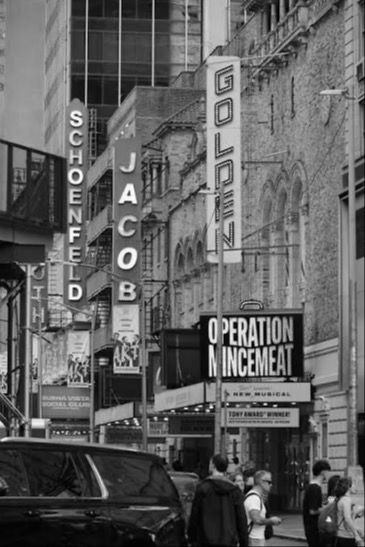
Josep Maria Miró's theater will take a new step in its international projection next October with the arrival in New York of The Most Beautiful Body Ever Found in This Place . On October 7, 122CC, one of the Off-Broadway venues located in the East Village, will host the premiere of the English version of one of the Catalan playwright's most unique and demanding texts, which will remain on the bill for at least a month.
The work's arrival in New York confirms Miró's ability to move his theatrical universe beyond borders and connect with international audiences and scenes. Until now, some of his works had already arrived in the city in Spanish, including Nerium Park and Arquimedes , but this will be the first time that one of his texts will be performed in English in New York.
The project is supported by the prestigious production company and theatre company PlayCo, linked to the New York scene and with a history focused on discovering and promoting new international theatre voices. The relationship with Miró began in 2023, when the playwright participated in a one-month residency in New York thanks to the support of the Institut Ramon Llull. That experience laid the foundations for a collaboration that is now taking shape with the play's arrival on Off-Broadway stages.
The Most Beautiful Body You Will Ever Find in This Place is a particularly unique text within contemporary dramaturgy. Conceived as a monologue performed by a single actor or actress, the work gives voice to seven different characters. The initial demarcation allows the performer to be a man, a woman or a non-binary person, thus reinforcing the flexible and conventional nature of the stage identity.
Throughout the piece, the same body is transformed to give life to different ages, experiences and perspectives. Among these voices appear a 17-year-old teenager, a 45-year-old woman or a 75-year-old man, in an interpretive exercise that turns the performer's body into the main space of transformation.
This exploration of the body constitutes one of the main axes of the work. Miró addresses the body that is attacked, mutilated or desired, but also the body that we want to possess or transform. And, at the same time, he introduces a reflection on the actor's own body, which on stage ceases to be simply a physical reality to become a theatrical convention.
The proposal thus turns the stage into a space of constant transformation, where a single physical presence is capable of containing multiple identities and trajectories. The result is a piece that combines intimacy, tension and reflection on the way we look at and interpret bodies, but also on the conventions that sustain the art of performance.

You may be
interested
...