Opinion
90
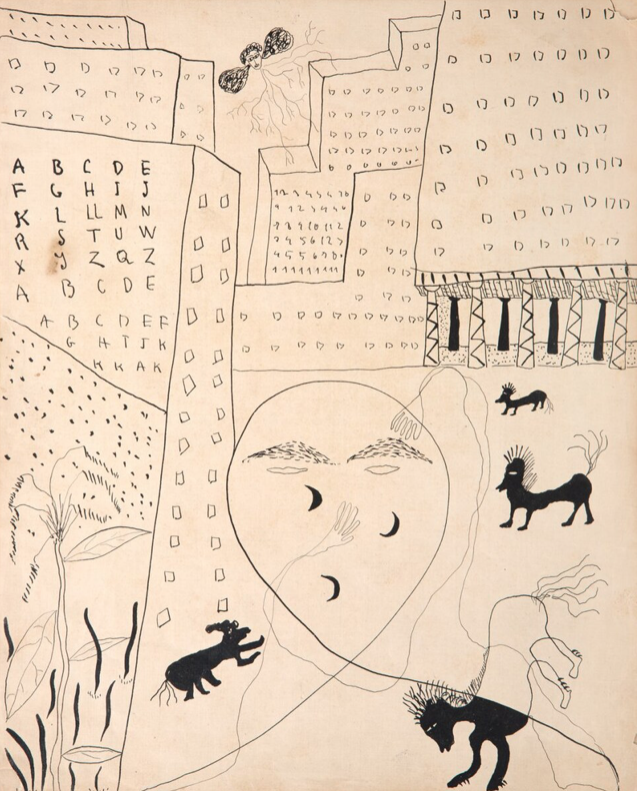
Ninety years have passed since Federico García Lorca was murdered in the early hours of August 18, 1936. Ninety years later, his stature continues to grow. Lorca now belongs to that select group of writers whose work transcends their time and whose deaths ultimately transformed them into symbols. A symbol of repression, of thwarted freedom, of a persecuted culture, and of a Spain incapable of protecting one of its most brilliant creators.
The exact circumstances of his assassination remain a subject of investigation and debate. His ties to Republican circles, his status as an intellectual, and his homosexuality are all part of the context of the persecution he suffered in the early months of the Civil War. But to reduce Lorca to the circumstances of his death would be, precisely, to betray the scope of a body of work that continues to resonate with extraordinary force.
He was one of the leading figures of the Generation of '27 and one of the most important authors of 20th-century literature. Gypsy Ballads , Poet in New York , Blood Wedding , Yerma , and The House of Bernarda Alba are part of a legacy that has outlived both his time and his tragedy.
But among all those books, there is one that offers a particularly revealing glimpse into the man behind the myth: *Poet in New York *. And it is precisely in that city, amidst its skyscrapers, its crowds, and its contradictions, that I want to pause to bring us closer to a more intimate, more vulnerable, and also more radical Lorca. It is from New York that we write the following lines, with the chords of *La leyenda del tiempo* playing in the background, like an imaginary soundtrack to return to that journey and that poet who, almost a century ago, found in the city a new way of seeing the world, of confronting his own wounds and transforming them into poetry.
In 1929, Lorca left Spain for New York. Officially, he was traveling to give lectures and continue his studies, but that move meant much more. The poet was going through a personal crisis marked by a failed romance, his inner conflicts, and a feeling of suffocation that made it necessary to get away from Granada and Madrid.
He arrived in New York on June 25, 1929. The city must have appeared to him as a gigantic contradiction. The skyscrapers, Broadway, the avenues of Manhattan, and the dizzying pace of the metropolis offered a fascinating spectacle. At the same time, beneath that monumental architecture, Lorca discovered a society riddled with profound inequalities.
He settled into Furnald Hall, Columbia University's student residence, and came into contact with a group of Spanish intellectuals connected to the university. But his true New York experience wasn't confined to the classroom. Lorca wanted to observe, to walk, to discover. He wanted to live the city.
And it was precisely that perspective that began to transform his poetry.
The visit to Harlem was decisive. There he came into contact with the African American community and with a social reality that contrasted radically with the image of progress projected by the big city.
Lorca frequented the jazz club Small's Paradise and discovered another New York, far removed from the postcards of Broadway and Wall Street. The modern city began to reveal itself to him as a land of contrasts: wealth and poverty, power and marginalization, technology and loneliness.
This discovery connects directly with one of the constants in his work: the defense of those who remain on the margins. Gypsies, Black people, the persecuted, the excluded, individuals who find no place in the dominant structures appear in Lorca as subjects of a poetry that is never indifferent.
Poet in New York was born from that shock.
It is not simply a book about a city. It is the result of the clash between a deeply vital poet and a metropolis he perceives as dehumanized. Capitalism, industrialization, the mechanization of life, and inequality appear transformed into violent, hallucinatory, and surreal images.
Lorca no longer describes New York: he turns it into a poetic nightmare.
There is something profoundly contemporary about Poet in New York . The book speaks of Wall Street, of crowds, of buildings and machines, but above all, it speaks of the loneliness of the individual within a society that seems to have lost its human dimension.
The poet projects his own crisis onto the city. Melancholy, desires, sexual urges, lost loves, and nostalgia for childhood mingle with social commentary. The personal and the collective cease to be separate realms.
That's why New York functions in the book as both an exterior landscape and an interior landscape.
The result is a poetry radically different from that of the Gypsy Ballads . The language becomes darker, more fragmented, and surreal. Images unfold like visions. The crowd vomits, the city sleeps without sleep, animals and machines seem to share the same nightmare.
Lorca finds in New York a new way of saying what until then perhaps he could not express.
On March 4, 1930, he left New York. After crossing the American East Coast by train, he arrived in Miami and from there traveled to Cuba, where he stayed for about three months. The Cuban experience was different. In contrast to the harshness and dehumanization he had perceived in New York, Cuba offered him a more intimate, warm, and luminous atmosphere. The language, the climate, and the character of its people made that stay especially stimulating for the poet.
There he also continued working on the materials that would eventually form Poet in New York .
The contrast between these two experiences is revealing. New York showed him the vertigo of modernity and its contradictions; Cuba gave him back a more sensory relationship with the world. Between these two geographies lies a Lorca who has definitively left behind the poet of his early works and is beginning to construct a much freer voice.
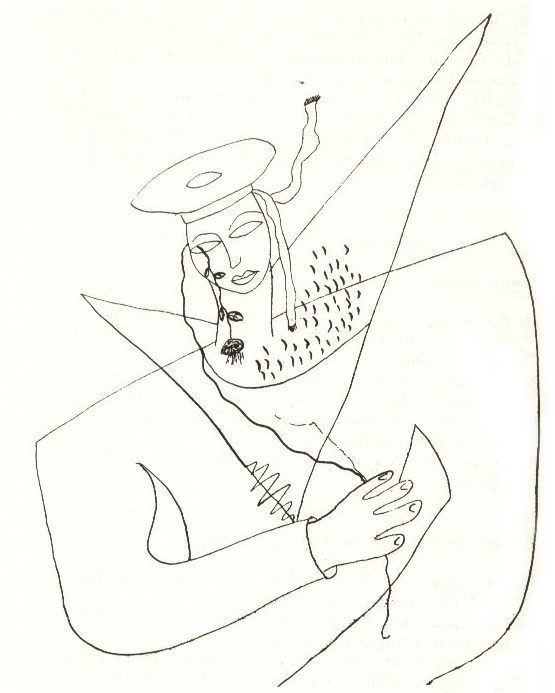
There is another fascinating aspect of Poet in New York : Lorca wasn't just thinking about a book of poems. The publishing project he prepared also included the incorporation of photographs related to the texts.
He had imagined images of the Statue of Liberty, Harlem, Wall Street, Broadway, crowds, landscapes, slaughterhouses, the Stock Exchange, or Havana. He even thought of photomontages and an image of Walt Whitman with butterflies in his beard.
The idea is particularly significant. Lorca wanted the New York experience not to be confined to words. He wanted to create an object in which poetry and image could engage in dialogue.
The project, however, did not materialize as he had conceived it.
On this anniversary, it is impossible not to return to Lorca. Not only to the Lorca murdered in 1936, who became a symbol of a collective tragedy, but also to the poet who was still discovering the world and discovering himself when he traveled to New York and Cuba.
Poet in New York allows us to glimpse a vulnerable, contradictory Lorca, fascinated and horrified by modernity. A writer capable of transforming a personal crisis into one of the great poetic works of the 20th century.
Perhaps that is why, 90 years after his assassination, Lorca continues to be contemporary.
Because his questions remain open: what happens to the individual when the city imposes itself on him, what happens when progress produces exclusion, what price does freedom have, and what can art do in the face of injustice.
Lorca died 90 years ago. His voice, however, continues to walk among the skyscrapers of New York, cross the streets of Harlem, travel towards Havana and return, again and again, to us.
Christmas on the Hudson River
That gray sponge!
That sailor who had just been beheaded.
That big river.
That breeze of dark boundaries.
That edge, love, that edge.
The four sailors were struggling with the world.
with the world of sharp edges that all eyes see,
with a world that cannot be traveled without horses.
There were one, one hundred, one thousand sailors
struggling with the world of sharp speeds,
without realizing that the world
I was alone in the sky.
The world alone for the sky alone.
They are the hills of hammers and the triumph of the thick grass.
They are the very lively anthills and the coins in the mud.
The world alone for the sky alone
and the air at the exit of all the villages.
The earthworm sang of the terror of the wheel
and the slaughtered sailor
He sang to the water bear that was to embrace him;
And they all sang hallelujah,
Hallelujah. Deserted sky.
It's the same, the same thing! Hallelujah!
I spent the whole night on the scaffolding in the suburbs
shedding my blood for the plaster casts of the projects,
helping the sailors gather up the torn sails.
And I stand empty-handed at the murmur of the river mouth.
It doesn't matter that every minute
a new child shakes his little bouquets of veins,
nor that the viper's birth, unleashed beneath the branches,
quench the bloodlust of those who gaze upon the naked.
What matters is this: emptiness. Lonely world. River mouth.
No dawn. Inert fable.
Just this: mouth.
Oh my gray sponge!
Oh, my newly slit neck!
Oh my great river!
Oh my breeze of limits that are not mine!
Oh edge of my love, oh wounding edge!

You may be
interested
...