Exhibitions
Palmira Puig and Marcel Giró, two perspectives from exile that transformed Brazilian photography
The Cervantes Institute in São Paulo is vindicating the legacy of the two Catalan photographers with an exhibition of more than a hundred images.
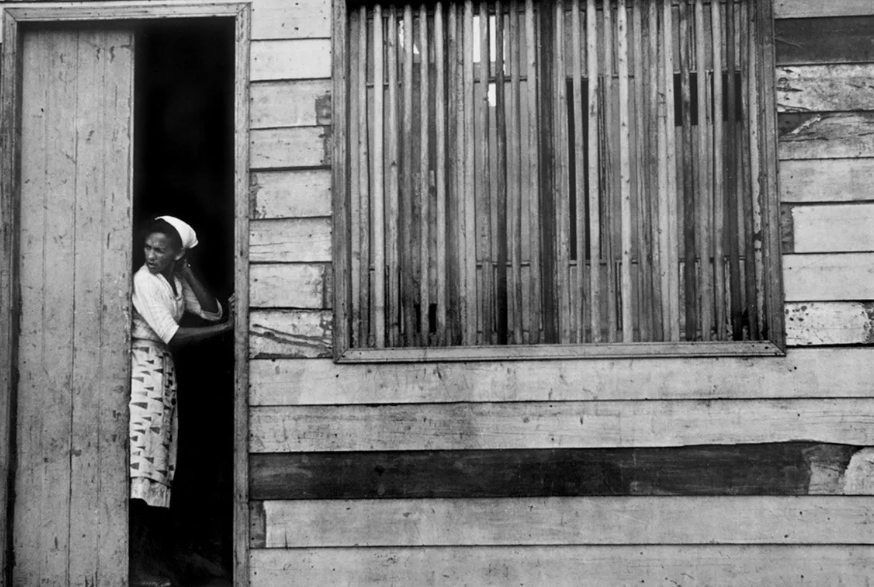
The Cervantes Institute in São Paulo will host, starting on September 5, the exhibition Palmira Puig / Marcel Giró. Humanism in Brazilian Modernist Photography , an exhibition that recovers the trajectory of two fundamental figures of modern photography in Brazil and vindicates their contribution to the renewal of the photographic language of the 20th century.
Organized within the framework of Spain's participation as Guest of Honor Country of the 28th São Paulo International Book Biennial, the exhibition will bring together more than a hundred photographs and reconstruct the vital and artistic journey of Palmira Puig and Marcel Giró, from their first works to their consolidation as leading authors in Brazilian photography.
Both arrived in Brazil after going into exile following the Spanish Civil War. In São Paulo they found an environment particularly receptive to artistic experimentation, a space of creative freedom that allowed them to develop a work marked by formal research and, at the same time, by a profound humanist sensitivity.
Photography, exile and modernity
Their association with the Foto Cine Clube Bandeirante, one of the main foci of Brazilian photographic renewal, was decisive. From this space they participated in the transformation of modern photography in the country, incorporating new forms of composition, framing and perspectives without giving up a close look at people and social transformations.
The exhibition journey starts from Palmira Puig's first works in Lleida, follows her journey of exile through Colombia and finally arrives in Brazil, where they both built a shared artistic career. The whole thus turns exile not only into a biographical episode, but also into an experience of artistic creation and renewal.
"It is an exhibition deeply linked to Brazil and, at the same time, deeply linked to Spain and Catalonia," said the director of the Cervantes Institute, Luis García Montero, who highlighted the importance of expanding cultural relations between the two countries beyond literature.
In this sense, the exhibition is part of a broader cultural program that aims to highlight the links between Spain and Brazil through visual arts, photography, music, thought, university and intellectual exchange.
In parallel with the exhibition, the Cervantes Institute centers in Brazil will develop an extensive literary program with the participation of Spanish writers present at the Biennial. The activities will include meetings with readers, students, translators and universities, reinforcing cultural dialogue between the two sides of the Atlantic.

You may be
interested
...