Exhibitions
Trash in a suitcase
The Eat Art Space of the Lluís Coromina Foundation in Banyoles is hosting, from August 21 to October 10, an exhibition curated by Ricard Planas that brings together twenty-five pieces and vindicates the poetic, visual and conceptual universe of one of the great creators of the Catalan avant-garde.
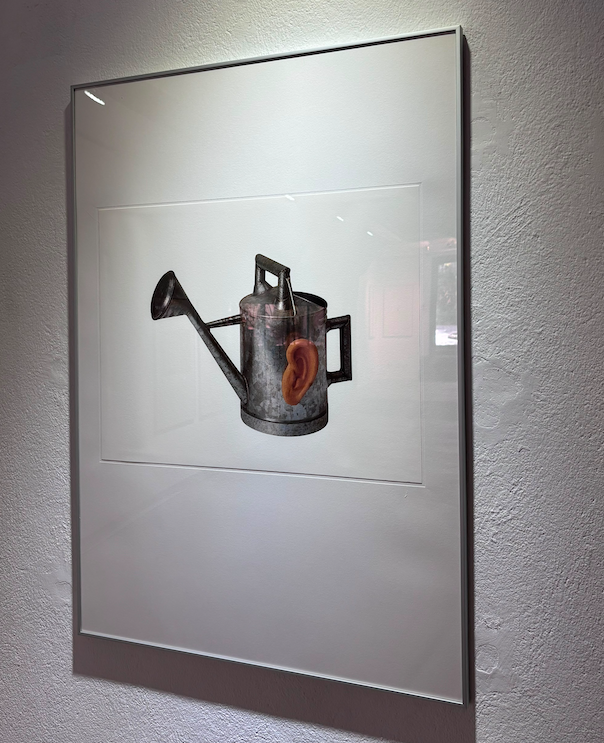
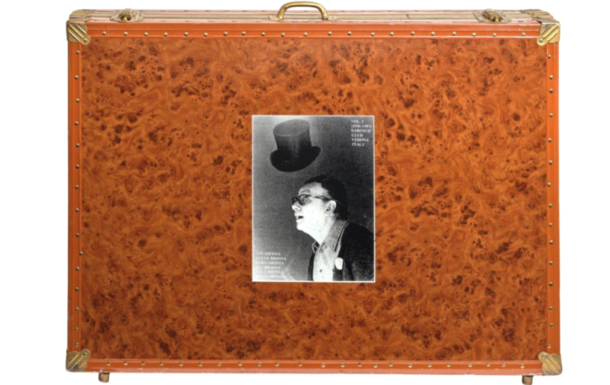
The Espai Eat Art of the Fundació Lluís Coromina in Banyoles will open its doors to Brossa portátil. La maleta museu , an exhibition curated by Ricard Planas, which proposes a unique approach to the visual universe of Joan Brossa. The exhibition can be visited until Saturday 10 October and is based on an idea as simple as Brossa's: turning a travel suitcase into a small museum capable of containing and transporting his poetic gaze.
The exhibition proposal makes a new stop and recovers the Tot Brossa portfolio, published in 1997, and brings together twenty-five pieces of visual poetry. The suitcase is thus transformed into a container of images, objects, words and signs that allows the public to be introduced to a work based on the ability to transform the everyday and alter our perception of reality.
Joan Brossa (Barcelona, 1919-1998) was much more than a poet in the conventional sense of the term. He defines himself as a poet in the broadest sense, because he worked indiscriminately with written poetry, visual poetry, objects, installations, theater, cinema and the so-called corporis poems. For Brossa, the boundaries between the different artistic disciplines practically did not exist.
His career began in the post-war period and was closely linked to some of the main names of the Catalan avant-garde. After the Civil War he came into contact with Josep Vicenç Foix, Joan Miró and Joan Prats, figures who would be decisive in his formation. In 1947 he participated in the founding of the magazine Algol and in 1948 he was one of the promoters of Dau al Set , together with Antoni Tàpies, Joan Ponç, Modest Cuixart, Arnau Puig and Joan-Josep Tharrats. This environment contributed to recovering the avant-garde spirit in Catalan culture after the war.
Visual poetry played an essential role in this process. Brossa produced his first experimental poems of a calligraphic nature in 1941, while in 1943 he created his first objet trouvé , Escorça . In 1950 he began working with the combination of different objects to generate new associations and, in 1956, he presented his first installation in a shop window. From the late 1950s, these visual investigations intensified with his Suites de poesia visual.
In Brossa, the object is never simply an object. A letter, a shoe, a letter, a hat or any seemingly banal element can become a poem when it is displaced from its usual context. Play, surprise, the association of ideas, humor and irony are tools to question conventions and force the viewer to look again at what they thought they knew.
This playful dimension does not imply, however, an absence of commitment. His work was also marked by a profound desire to break with the social, political and artistic conventions of his time. His encounter with the Brazilian poet João Cabral de Melo in the early 1950s contributed to reinforcing this more political dimension of his poetry and to deepening the formal rupture that would characterize much of his later production.
During the 1970s, Brossa's visual poetry reached a much wider audience. During this period he developed Poemes habitables , a set of forty-five books of visual poetry, and in 1971 he participated in the first concrete poetry exhibition in Catalonia, held at the Petite Galerie in Lleida. He also began to publish his visual poems using techniques such as offset and, later, screen printing.
The Banyoles exhibition recovers precisely this ability of Brossa to make poetry a visual and physical experience. Portable Brossa. The suitcase museum presents the suitcase as a compressed universe that, when opened, unfolds a creative world without borders. What is apparently a travel object becomes an exhibition space, and the pieces it contains function as small gateways to a work that continues to appeal to the imagination and critical capacity of the viewer.


You may be
interested
...