Exhibitions
Modern Cuba between Havana and New York
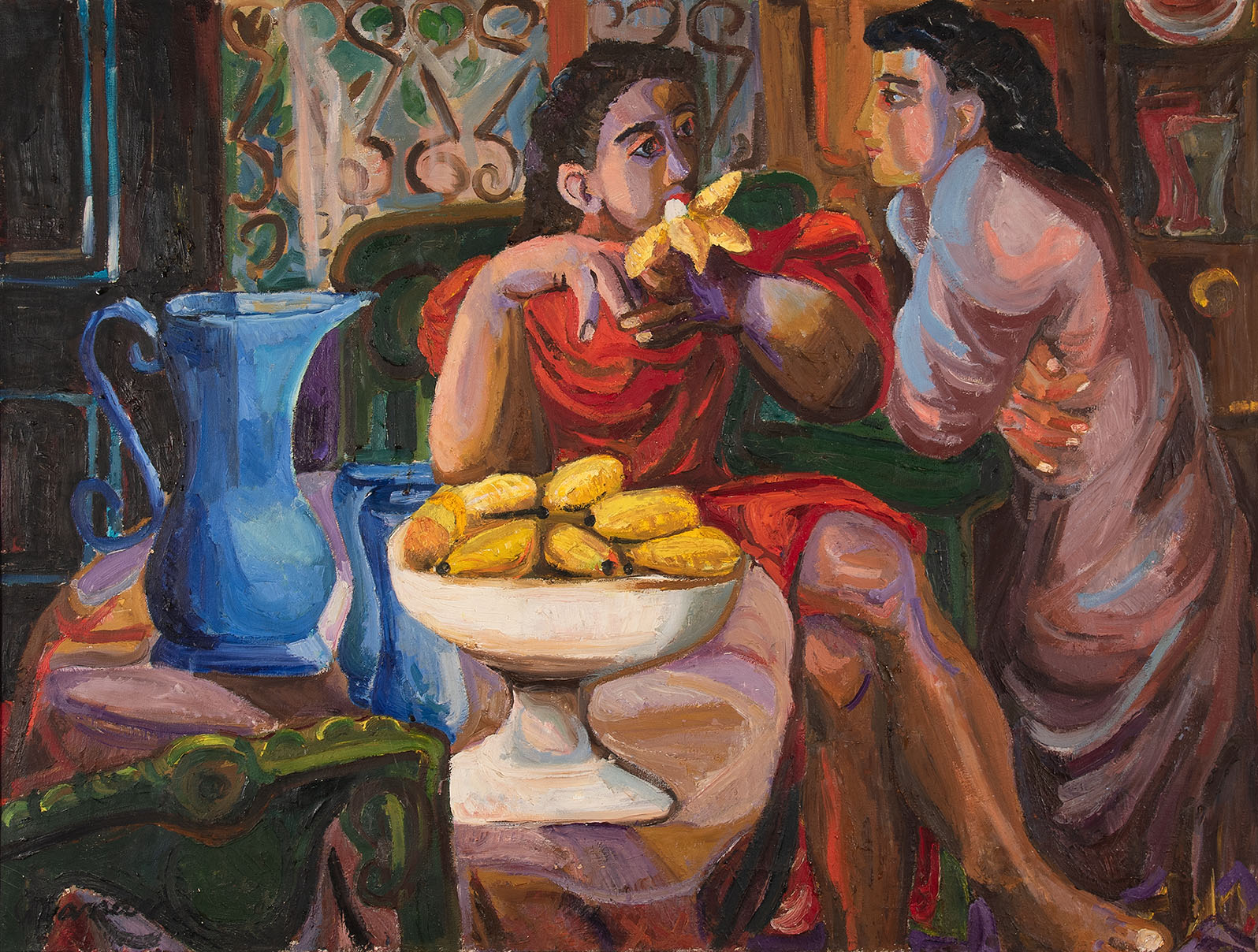
The Frost Art Museum at Florida International University revisits a pivotal moment in understanding the international reach of modern Cuban art with the exhibition Modern Cuban Painters from Havana to New York – Revisited , on view until October. Curated by Elizabeth T. Goizueta and Cristina Figueroa Vives, the exhibition examines the historical moment when Cuban art ceased to be primarily an insular experience and became integrated into the American art narrative.
The exhibition's starting point is 1944, when the Museum of Modern Art presented "Modern Cuban Painters," the first institutional exhibition in the United States dedicated to modern Cuban art. That initiative marked a shift in perspective within the narrative of Western modern art, broadening the focus beyond Europe, the United States, and Mexico to incorporate new geographies and creative languages from Latin America.
The Frost Art Museum’s new retrospective examines the role played by New York, then-MoMA director Alfred H. Barr Jr., and the city’s galleries in disseminating Cuban modernism during the 1940s. Through paintings, drawings, historical documents, and archival materials, the exhibition reconstructs a period of intense artistic transformation in which Cuba defined its own visual identity and achieved greater prominence on the international stage.
The artists featured include essential figures of Cuban modernism such as Wifredo Lam, Amelia Peláez, Mariano Rodríguez, Mario Carreño, Carlos Enríquez, Roberto Diago, Cundo Bermúdez, René Portocarrero, and Fidelio Ponce de León. Their works represent a generation that, beginning in the late 1930s, undertook a profound renewal of Cuban artistic expression.
These artists sought new forms of expression through a reinterpretation of the Baroque tradition, the incorporation of elements from Afro-Cuban culture, and a renewed focus on rural life and social sectors typically absent from artistic representations. The result was a movement capable of combining international influences with a clear desire to construct its own aesthetic, linked to the reality of the island.
The historical context was crucial. With the outbreak of World War II, New York began to solidify its position as one of the great centers of Western art, fostering exchange among European, American, and Latin American artists. In this setting, Cuban modernists engaged in dialogue with movements such as Surrealism, Mexican muralism, the European avant-garde, and Latin American visual traditions, while always maintaining a quest for their own distinct identity.
The connection between Havana and New York began to solidify in 1942, when Alfred H. Barr Jr. and curator Edgar Kaufmann Jr. traveled to Cuba to acquire works for MoMA. During their stay, they were received by patron María Luisa Gómez Mena, artist Mario Carreño—her husband at the time—and art critic José Gómez Sicre. Accompanied by them, they visited the studios of various Cuban artists and experienced firsthand a vibrant creative scene.
That meeting would eventually shape the 1944 exhibition, a project that not only introduced a new generation of Cuban artists to the American public but also helped redefine the idea of artistic modernity in the Americas. Modern Cuban Painters from Havana to New York – Revisited now revisits that chapter to show how Cuban painting managed to carve out its own space within the history of 20th-century art.

You may be
interested
...