Exhibitions
Running Fence: The Art That Changed Sonoma
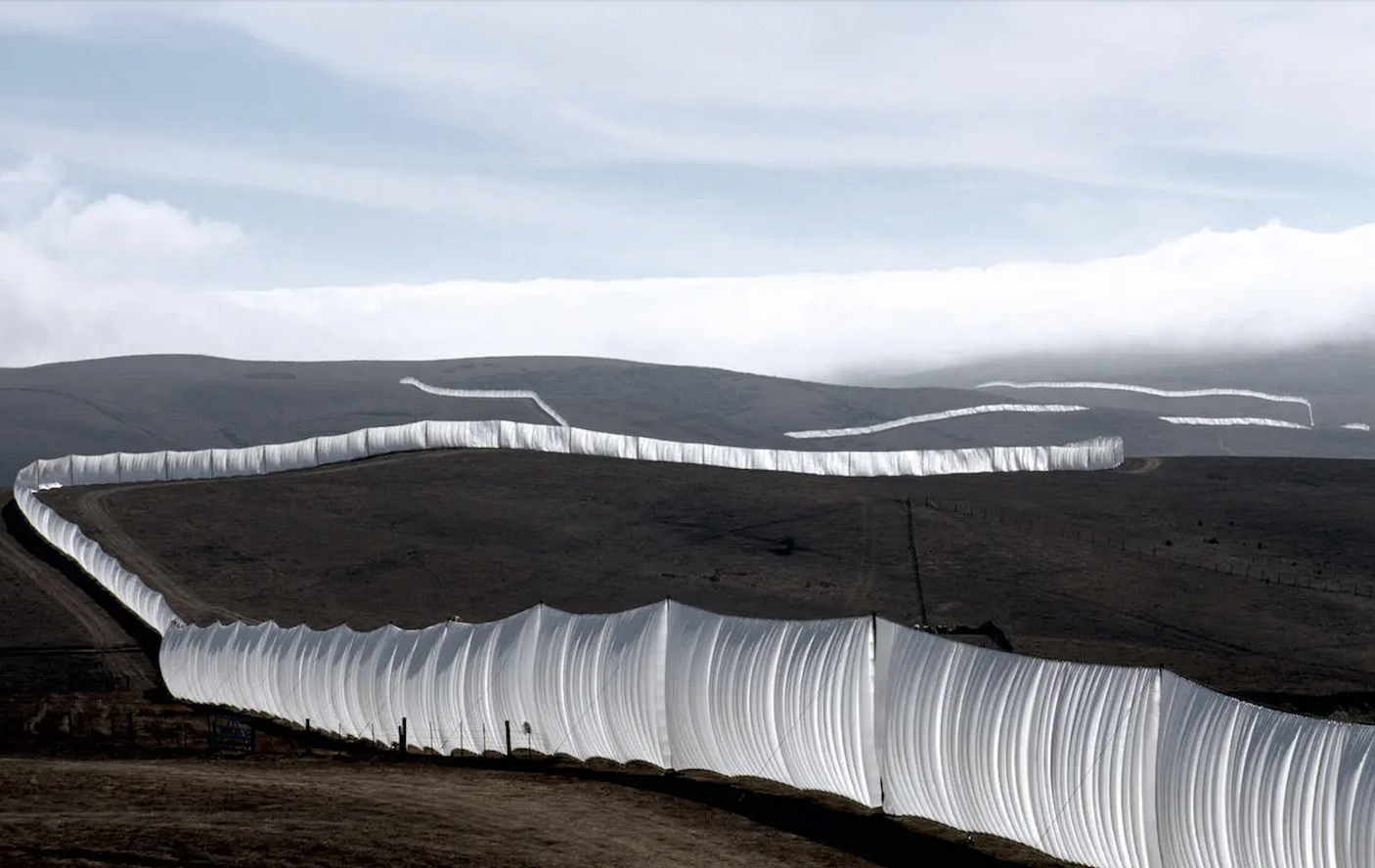
In 1977, the artist Christo made a statement as provocative as it was revealing: "Illegality is essential to the American system." The phrase encapsulated the spirit of Running Fence , one of the most ambitious contemporary art interventions of the 20th century, conceived in collaboration with Jeanne-Claude. More than an art installation, the project became a social and political experiment that redefined how art could engage with the landscape.
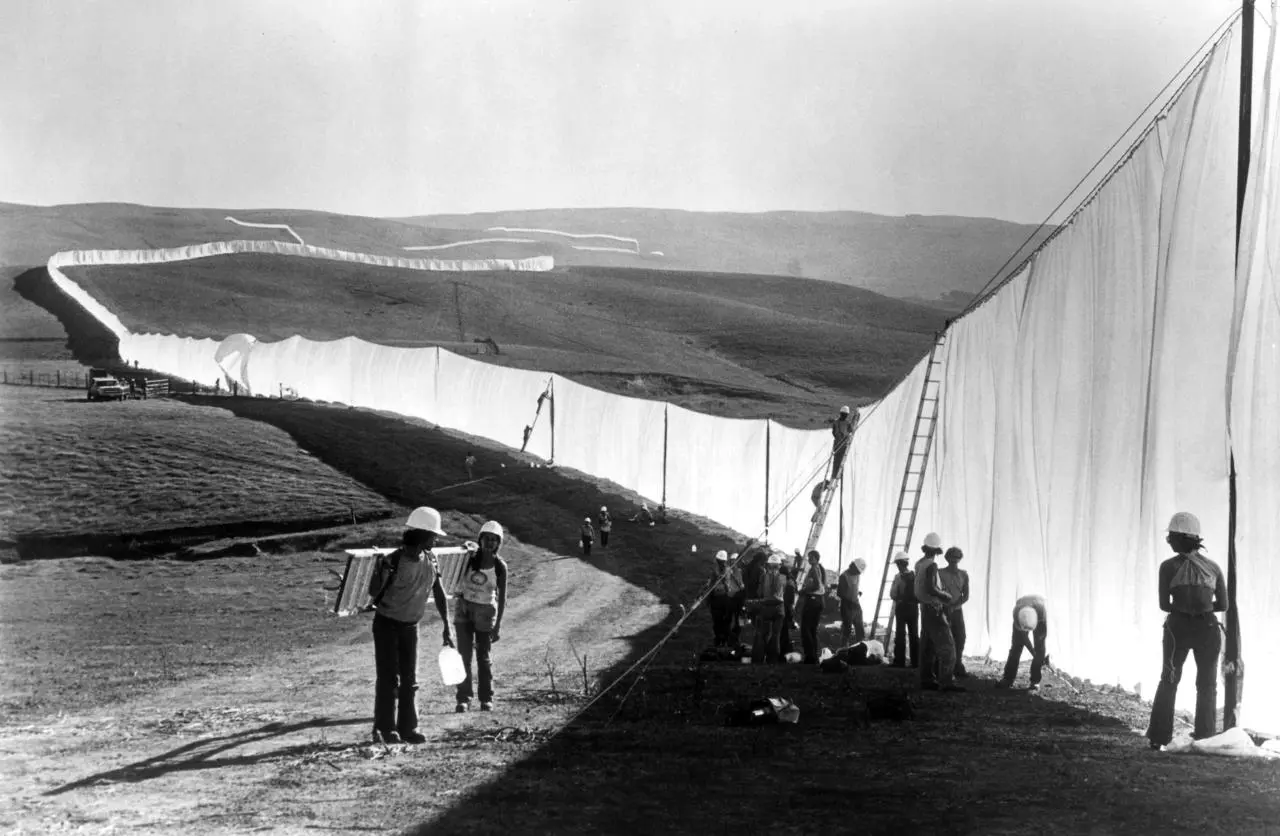
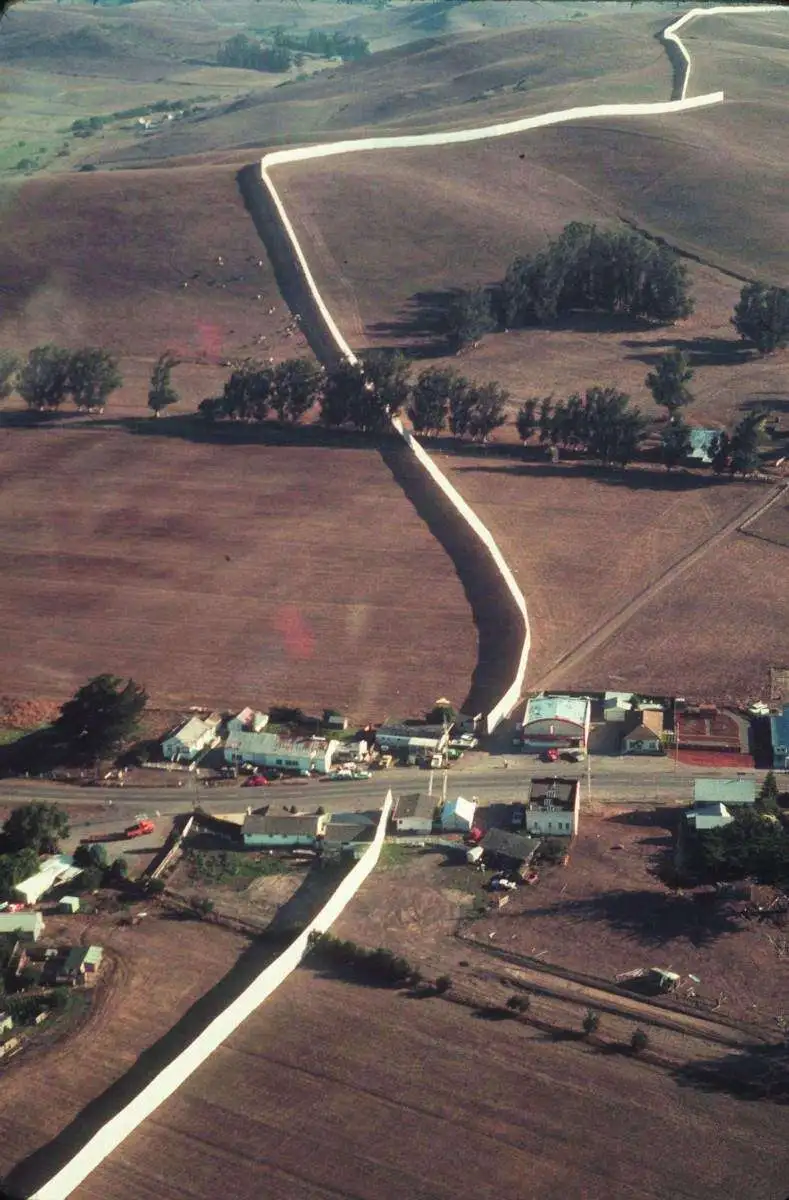
The artwork consisted of an immense 5.5-meter-high white nylon fence that stretched for nearly 40 kilometers from the vicinity of Cotati to the Pacific Ocean, crossing hills, ranches, and agricultural fields in Sonoma and Marin counties. Its purpose, according to the artists, was to offer a new way of viewing the landscape and to foster a sense of connection among its inhabitants.
Wolfgang Volz / Copyright Christo and Jeanne-Claude Foundation.
However, the proposal soon sparked intense controversy. The project became the epicenter of a clash between urban development promoters, rural landowners, and environmental movements concerned about the future of the area. From their headquarters in the historic Petaluma Inn, Christo, born in Bulgaria, and Jeanne-Claude, originally from Morocco, skillfully navigated conflicting interests, making the bureaucratic process itself an integral part of the project.
For more than two years, the project went through a complex administrative process that included 18 public hearings, three High Court sessions, and the preparation of a 465-page environmental impact report. For Christo, those negotiations, debates, and obstacles constituted the true artistic creation: the process was as important as the final installation.
Wolfgang Volz / Copyright Christo and Jeanne-Claude Foundation.
Today, half a century later, that story takes center stage again with the exhibition Christo and Jeanne-Claude: Running Fence at 50 at the Museum of Sonoma County, which will be on view from June 27 to November 8, 2026. The exhibition celebrates the fiftieth anniversary of a work that has become a symbol of Northern California's cultural identity and an international benchmark for ephemeral art.
Through an immersive experience, abundant visual material, and testimonials from those who participated in that adventure, the exhibition invites visitors to relive the experience of that white ribbon that seemed to float above the golden hills before disappearing into the Pacific. More than reconstructing a vanished installation, the exhibition explores how Running Fence lives on in collective memory, popular imagination, and the materials that survived its dismantling.
The scale of the project continues to amaze. The fence crossed 59 private properties along nearly 40 kilometers and required 165,000 yards of ripstop nylon fabric, woven into approximately 240,000 square yards of white panels, each measuring 5.5 by 20.7 meters.
Wolfgang Volz / Copyright Christo and Jeanne-Claude Foundation.
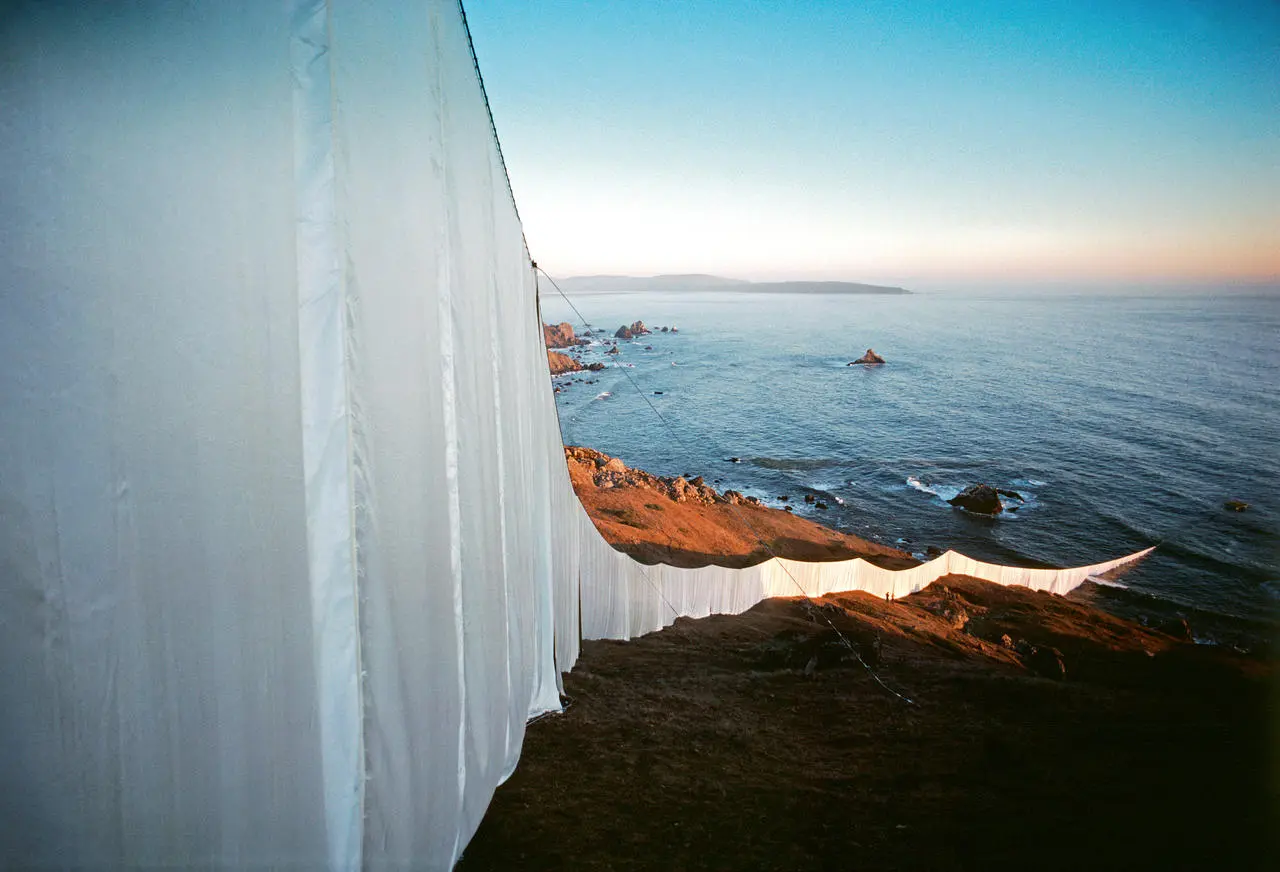
The choice of material is also part of the artwork's legend. Christo acquired the fabric for approximately $130,000 after it was rejected by General Motors. It had originally been developed for safety airbags, but it did not meet the company's technical specifications. Paradoxically, this very strength allowed the installation to withstand the strong winds of the California coast.
"The wind was so strong near the ocean that it bent the three-inch-thick steel poles placed on the ridges, but the fabric never tore," recalls Joe Pozzi, whose cattle ranch was one of the 59 properties crossed by the monumental project.
Five decades later, Running Fence continues to demonstrate that some works of art, even if they exist for only a few weeks, can leave a far more lasting mark than monuments designed to endure for centuries. Its legacy lies not only in the visual spectacle of that white ribbon undulating across the Californian landscape, but also in having transformed the dialogue between art, nature, politics, and civic engagement into a truly collective work.
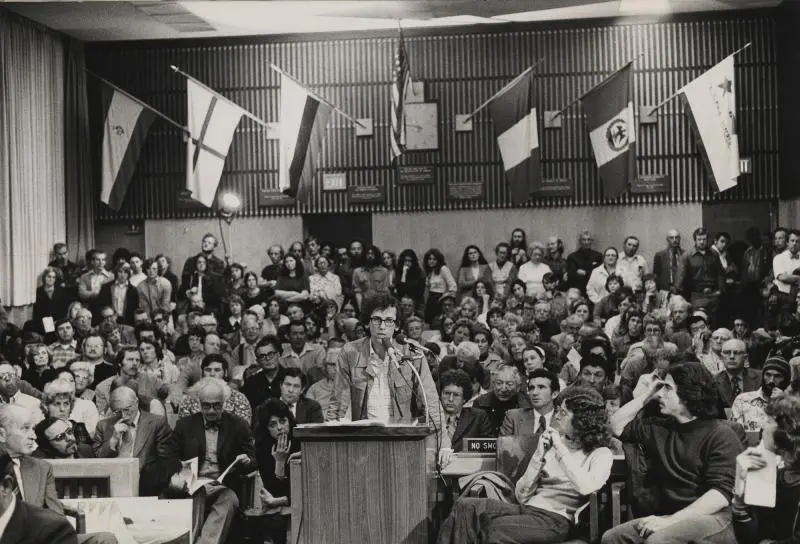
Christo during a public hearing on Running Fence, 1975. Photograph by Wolfgang Volz. © Christo and Jeanne-Claude Foundation.


You may be
interested
...