News
Barcelona ignites the global architectural debate under the Three Chimneys
The opening show of the UIA World Congress of Architects 2026 merges architecture, light and sound in a ceremony that vindicates the city as a global laboratory for imagining the future of the planet.
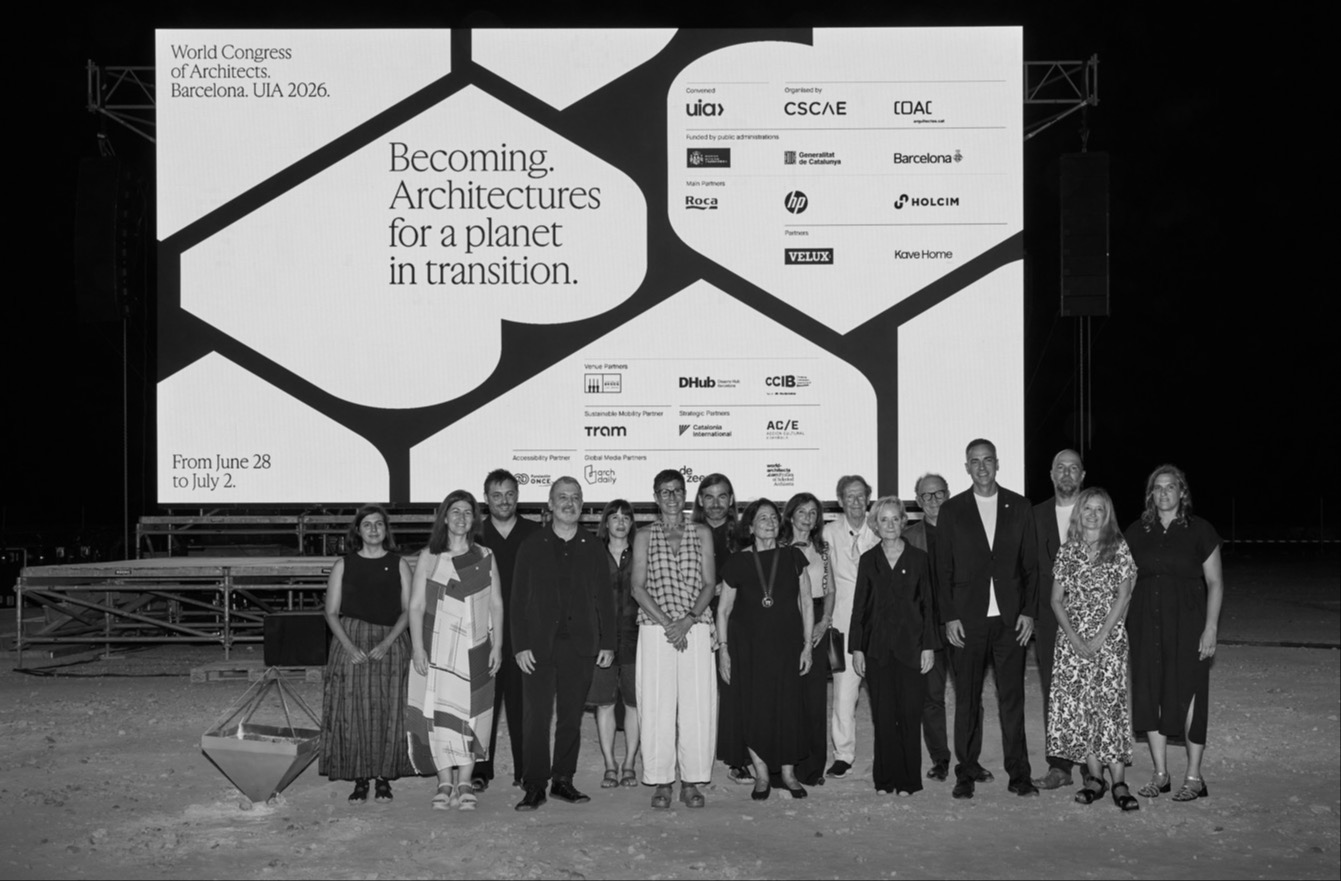
Thirty years after hosting a congress that marked a before and after in the city's international projection, Barcelona once again becomes the epicenter of global architectural thought with the inauguration of the XXIX UIA World Congress of Architects 2026. Under the motto Becoming. Architectures for a Planet in Transition , the Catalan capital begins five days of intense professional and cultural activity, complemented by a program that will last for more than a month and that invites us to rethink the role of architecture in the face of major global challenges.
The setting chosen to give the starting signal could not be more symbolic. The Tres Xemeneies venue, in Sant Adrià de Besòs, a former emblem of the metropolitan industrial past and today a space of urban transformation, hosted an inaugural ceremony far removed from conventional formats, conceived as an immersive artistic experience.
The day had begun hours earlier in the Saló de Cent of Barcelona City Council, with the official reception led by Mayor Jaume Collboni, who welcomed the delegations of the International Union of Architects, the representatives of the professional associations and the participating institutions. Afterwards, the authorities toured the Barcelona coastline aboard the Golondrines, from the Moll de les Drassanes to the Marina del Fòrum, on an itinerary that allowed them to observe from the sea some of the city's main urban and architectural challenges. The visit culminated with the inauguration of the Central Exhibition of the Congress, installed in the same area of the Tres Xemeneies.
The opening ceremony, hosted by architect and publicist Núria Moliner, brought together the main voices of the congress and the institutions that made it possible. The president of the International Union of Architects, Regina Gonthier, opened the speeches, followed by Marta Vall-llossera, president of the Superior Council of Architects' Associations of Spain and of the Congress, and Sandra Bestraten, dean of the Architects' Association of Catalonia.
The event also demonstrated the strong institutional support received by this edition, declared an event of exceptional public interest. The speakers included Filo Cañete, Mayor of Sant Adrià de Besòs; Jaume Collboni, Mayor of Barcelona; Iñaqui Carnicero, Secretary General of Urban Agenda, Housing and Architecture, and Elisabet Cirici, Director General of Territorial Planning, Urbanism and Architecture.
In the final part of the ceremony, Fuensanta Nieto, honorary president of the Scientific Committee; Guim Costa, director of the Congress, and the curatorial team formed by Pau Bajet, Mariona Benedito, Maria Giramé, Tomeu Ramis, Pau Sarquella and Carmen Torres took the floor, before the closing speech by Joan Busquets, honorary president of the Congress.
Beyond the speeches, however, the great protagonist of the night was the artistic proposal created especially for the occasion. In front of more than 5,000 attendees, CABO & CUBE SHOW, conceived by Cabosanroque and Estudio Cube, transformed the Three Chimneys into a living installation where architecture, light, sound and movement dialogued about the human capacity to modify the territory.
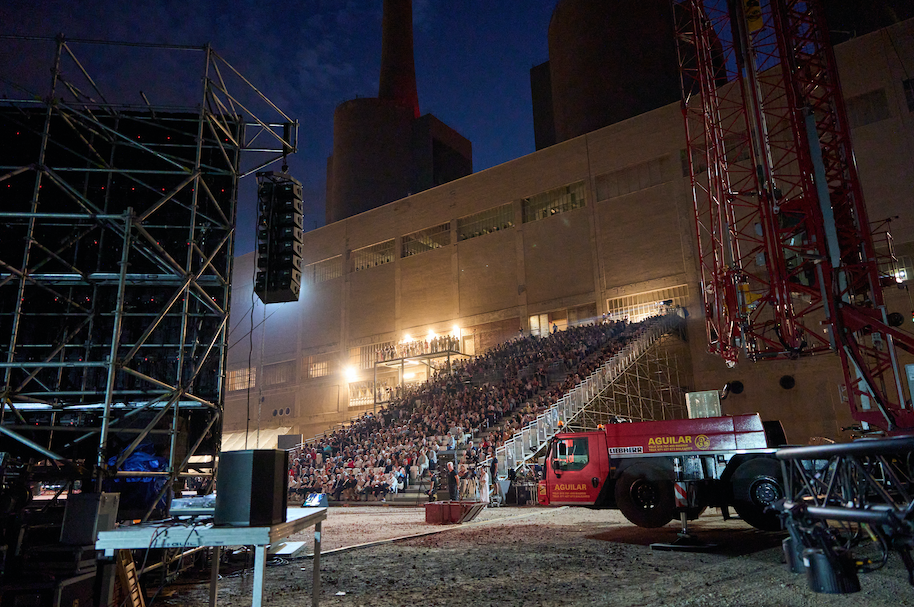
The spectacle, as poetic as it is disturbing, turned large cranes into protagonists of a symbolic action: the opening of a giant bottle of cava became a metaphor for the relationship between monumental scale and the most delicate gesture, between technology and fragility, between construction and uncertainty. In a space in constant redefinition, materials, technique and movement raised more questions than they offered answers, in tune with the critical spirit that underpins this edition of the congress.
An institutional toast put an end to an inauguration that eschewed protocol to become a declaration of intentions. Barcelona thus opens a congress that not only reflects on the architecture of the future, but also claims the discipline as an essential tool for facing the great social, urban and environmental challenges of a planet in full transformation.
You may be
interested
...