Exhibitions
The eloquent form of everyday life
The photographic work of Joaquim Tusquets de Cabirol at the KBr Photography Center recovers the gaze of an amateur who transforms the post-war period into a visual story through light, architecture and everyday gestures.
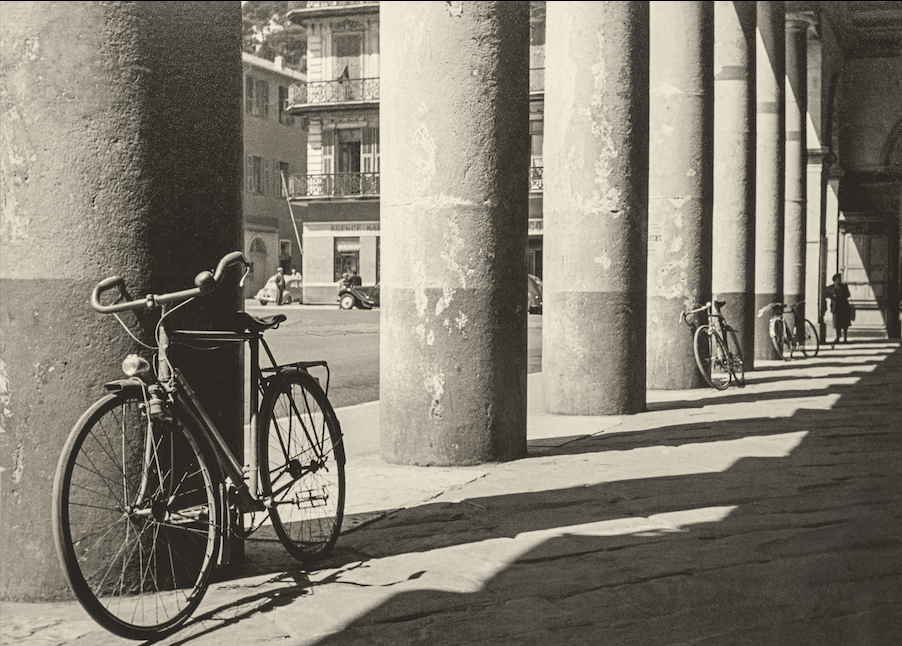
The KBr Photography Centre of the Mapfre Foundation is hosting the exhibition Tusquets de Cabirol. The eloquent form , a project curated by Marina Balagué and Arola Valls that is part of the line dedicated to Catalan photographic archives. The exhibition recovers the figure of Joaquim Tusquets de Cabirol (Barcelona, 1904–1979), an amateur photographer active between the 1940s and 1960s, whose production offers a unique look at daily life in the post-war period.
His legacy, consisting of nearly 5,000 negatives and around a thousand positive prints, remained virtually unknown for decades. It was not until 2004, with the fortuitous discovery of a significant part of the collection in Palma de Mallorca, that the reconstruction of his work began. The definitive attribution would arrive in 2020, at which point his photography has gradually gained recognition for its aesthetic and documentary quality.
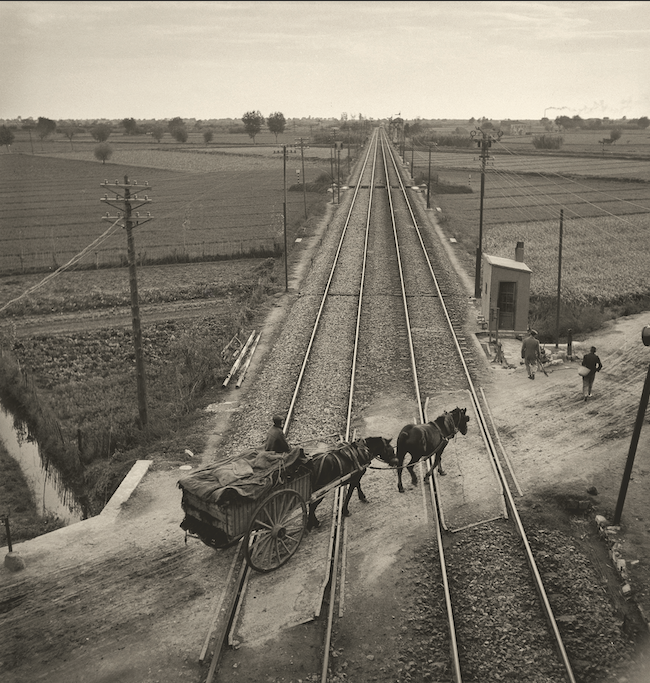
Joaquín Tusquets de Cabirol, El Prat de Llobregat, Barcelona, October 1952, Joaquín Tusquets de Cabirol Photographic Archive / Barcelona Maritime Museum © Joaquín Tusquets de Cabirol Photographic Archive.
The exhibition —organized by the Mapfre Foundation in collaboration with the Photographic Social Vision Foundation— is divided into four thematic areas that propose a transversal and non-chronological reading. This journey allows us to observe the coexistence of different registers and the progressive refinement of the author's visual language.
One of the central axes of his work is the claim of the amateur gaze as a tool of knowledge. Far from the artistic and museum circuits, Tusquets de Cabirol constructs a visual story based on the careful observation of everyday life. His images of the coast, the city and the rural environments shape a post-war imaginary that does not depend on major events, but on small gestures and seemingly ordinary scenes.
The port of Barcelona becomes one of the most recurring spaces in his work. This environment, shared with other members of the Agrupació Fotogràfica de Catalunya, is transformed into a visual laboratory where the photographer explores industrial architecture, work dynamics and human presence. The figures, often absorbed in work or leisure, become reasons to experiment with framing and composition.
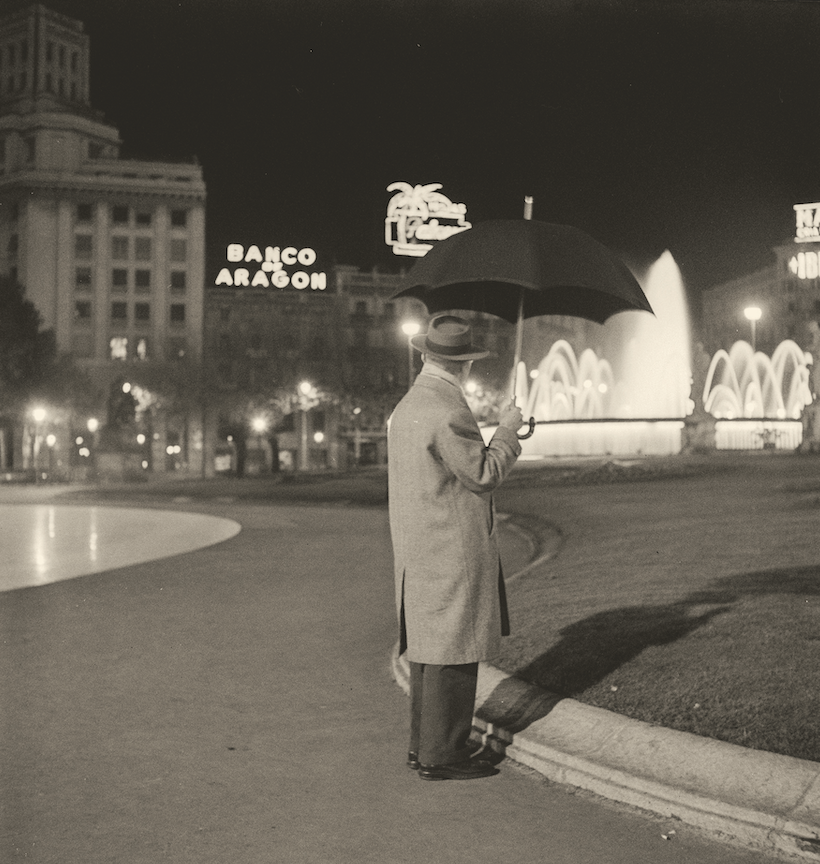
Joaquín Tusquets de Cabirol, Plaça de Catalunya at night, Barcelona, December 1959, Joaquín Tusquets de Cabirol Photographic Archive / Barcelona Maritime Museum © Joaquín Tusquets de Cabirol Photographic Archive.
The coastline, for its part, appears as a peripheral and poetic space, where everyday life coexists with the horizon as a symbolic element of projection and recollection. This tension between the local and the infinite runs through much of his production.
Barcelona —and, more specifically, cities like Paris and Venice— constitute another of the great settings of his work. His walks, close to the figure of the flâneur, construct a sensitive and contained look at urban space. Without renouncing emblematic places, the author delves into peripheral areas where daily life adopts more precarious and spontaneous forms.
In this sense, his photography dialogues with certain traditions of European, especially French, photographic humanism, in terms of attention to composition and the dignification of ordinary scenes. Reality, in his work, is not only recorded, but interpreted through light, rhythm and visual balance.
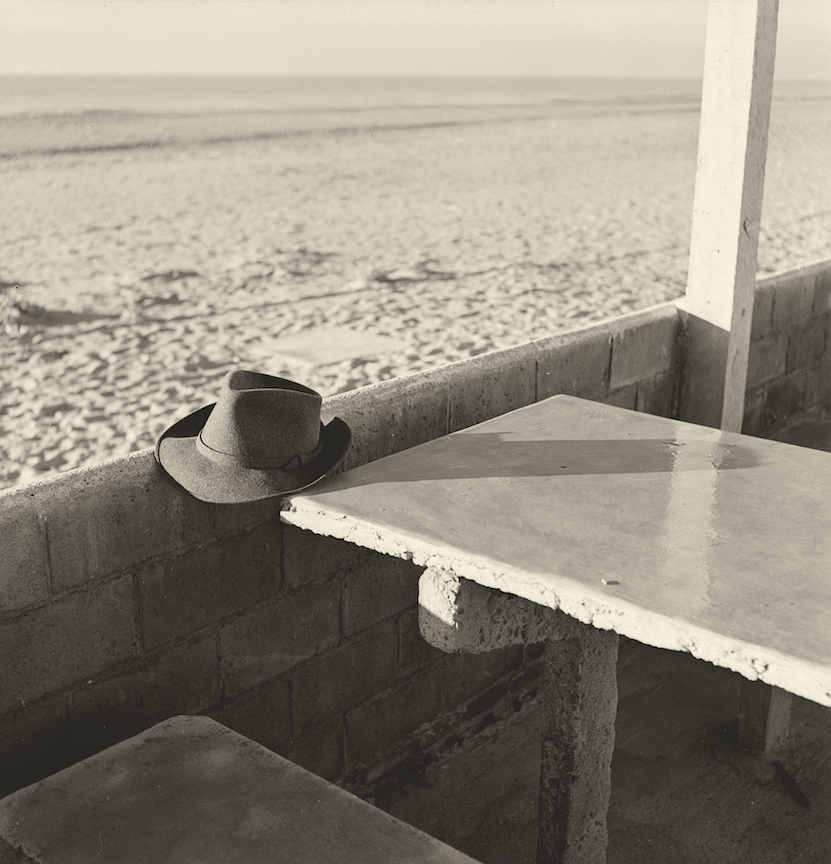
Joaquín Tusquets de Cabirol, Untitled, December 1955, Joaquín Tusquets de Cabirol Photographic Archive / Barcelona Maritime Museum © Joaquín Tusquets de Cabirol Photographic Archive.

You may be
interested
...