Exhibitions
Jaume Plensa turns silence into an act of resistance
The Mirage exhibition occupies the former Sainte-Anne church in Montpellier with monumental figures that challenge a society saturated with noise, violence and polarization.
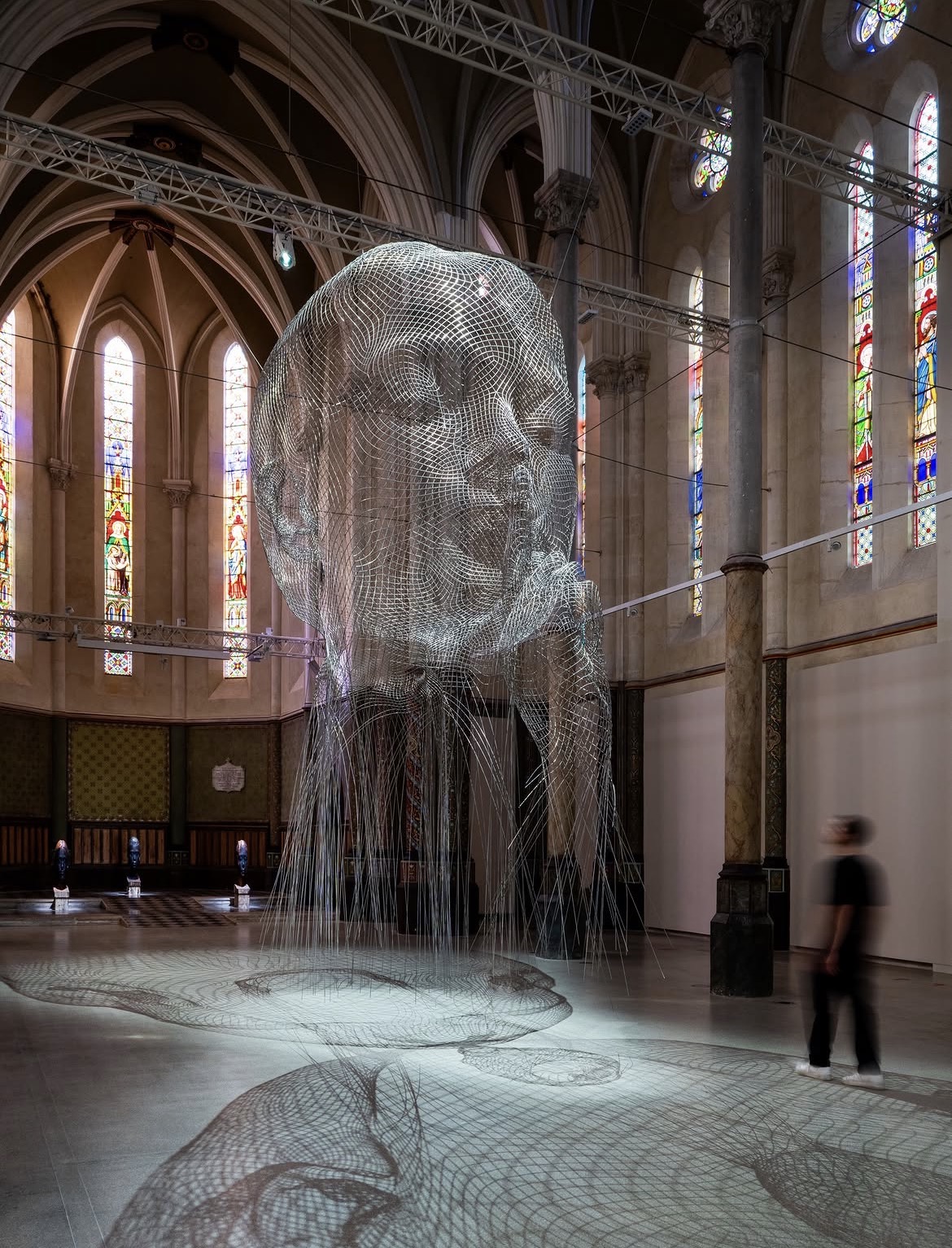
The Catalan sculptor has transformed the former Sainte-Anne church in Montpellier, a desacralized temple converted into a space for contemporary art, into a place of retreat where contemplation stands as a response to the agitation of the present.
Entitled Mirage , the exhibition revolves around two monumental sculptures located in the building's central nave. Constructed from delicate metal mesh, both represent large-scale human faces with an index finger to their lips. The gesture, universal and immediate, transcends a simple request for silence, becoming an invitation to rediscover inner listening. Faced with the noise of information, wars, and the growing political polarization that characterize the current context, Plensa advocates for a space of introspection where the individual can reconnect with themselves.
The choice of location is essential to understanding the exhibition. Sainte-Anne, built in the 19th century and deconsecrated in 1986, retains much of its spiritual atmosphere. Since 1991, it has functioned as an exhibition center, but the stained-glass windows, the neo-Gothic verticality, and the presence of the old organ maintain a sense of transcendence that naturally engages with the artist's work. The colored light that filters through the stained glass projects shifting patterns onto the floor and sculptures, introducing an almost immaterial dimension that reinforces the meditative nature of the whole.
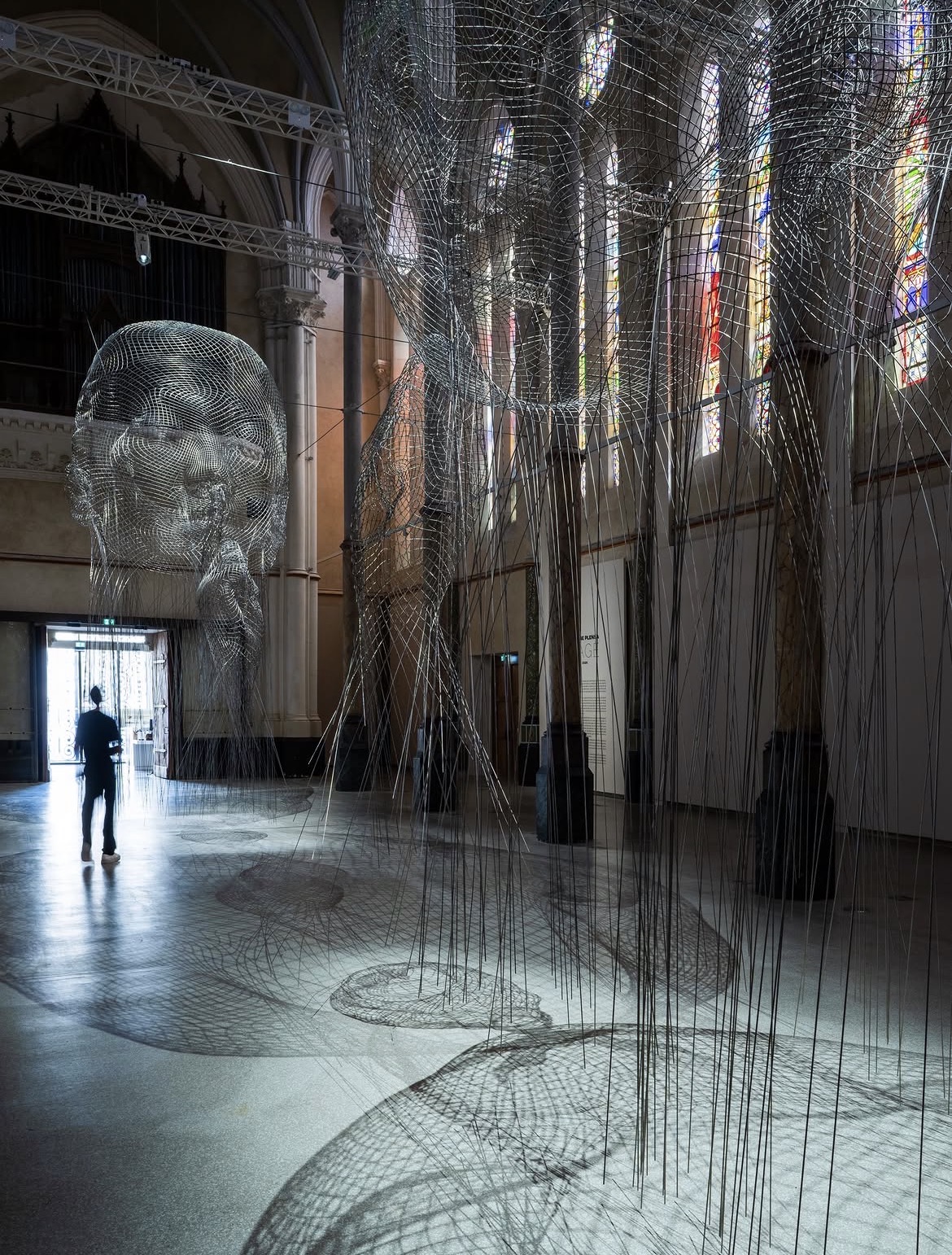
Beyond the two central pieces, the exhibition displays five sculptures that delve into recurring themes in Plensa's work: dreams, identity, and contemplation. Among them , Le Rêve de Martine ( Martina's Dream ) stands out, an alabaster work depicting the head and hands of a female figure lost in repose. The closed eyes and the serenity of the face encapsulate a recurring idea in the sculptor's universe: silence not as absence, but as a state of fullness and attentive listening.
Of particular interest is a previously unseen piece consisting of three female heads carved from black mahogany. Located on the altar in the nave, the work combines monumentality with a powerful symbolic charge. The wood comes from the beams of a centuries-old building that collapsed in Belgium, a circumstance that adds a temporal and archaeological dimension to the ensemble. The grain, scars, and coppery stains of the material evoke the memory of that which disappears only to acquire a new life through art.
The exhibition confirms Plensa's ability to generate experiences that transcend mere aesthetic contemplation. His sculptures do not seek to impose themselves through the spectacular nature of their dimensions, but rather to activate an intimate reflection in the viewer. In Mirage , monumentality functions as a paradox: the larger the figures, the more they invite contemplation.
The second exhibition scheduled at the Carré Sainte-Anne since the space reopened in 2025, following two years of renovations and an inaugural exhibition by the French artist JR, Mirage stands out as one of the most significant offerings of the cultural season in the south of France. More than an exhibition, it constitutes a sensory and spiritual experience that reminds us that, perhaps, silence is today one of the most urgent forms of resistance.


You may be
interested
...