Opinion
Claudia Pagès Rabal. The empty forms of power
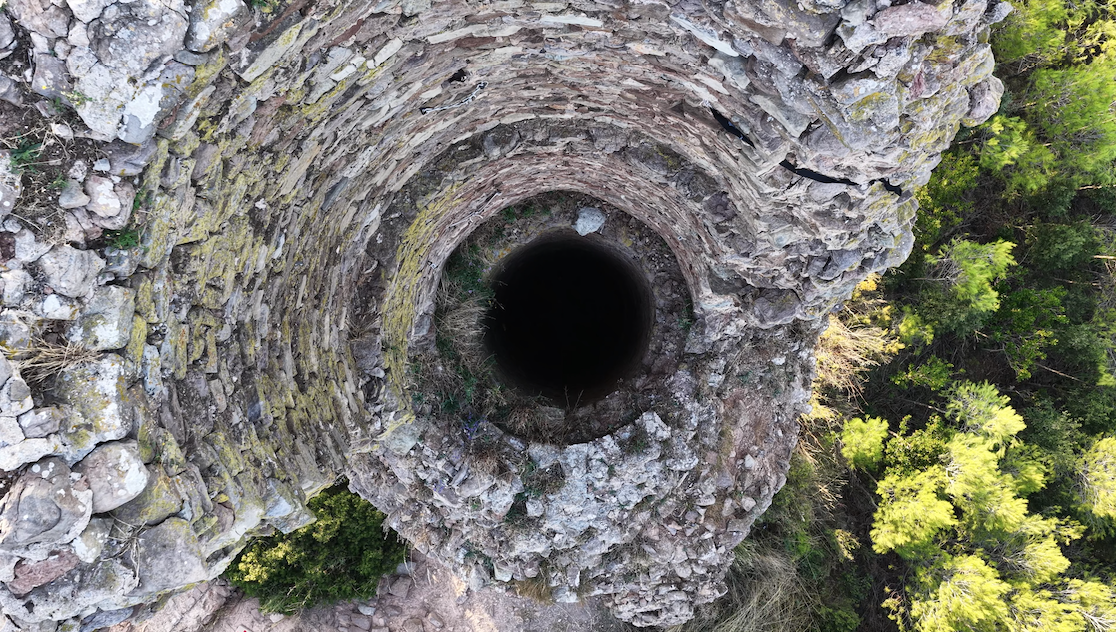
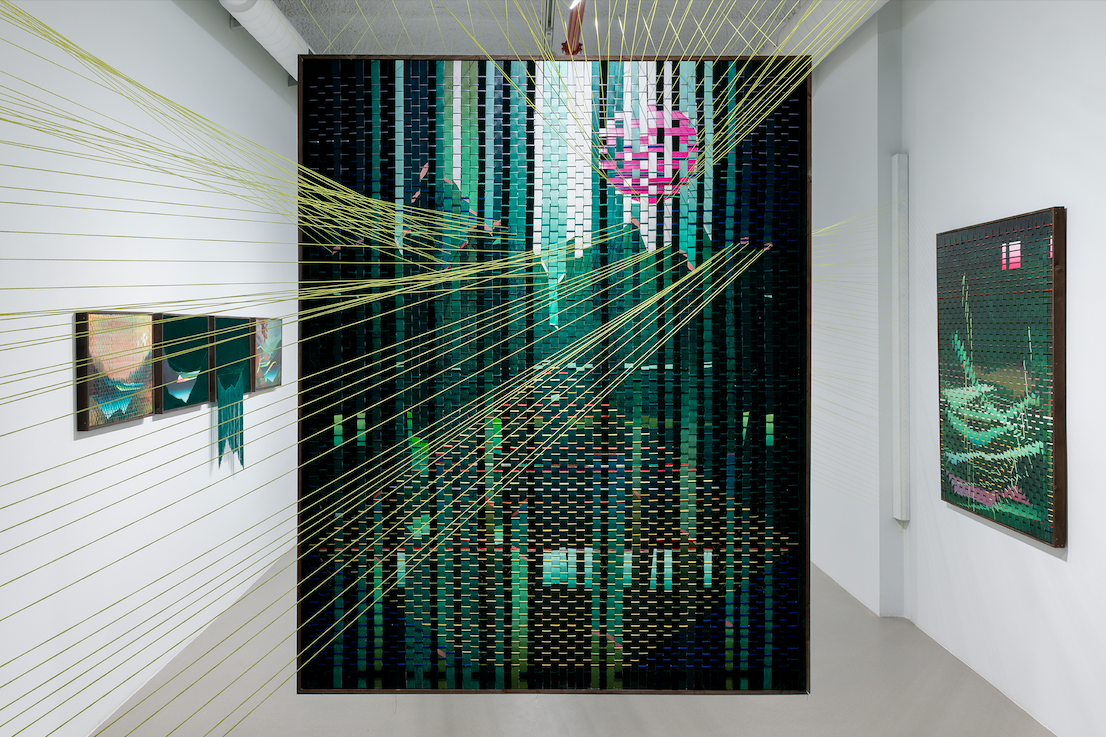
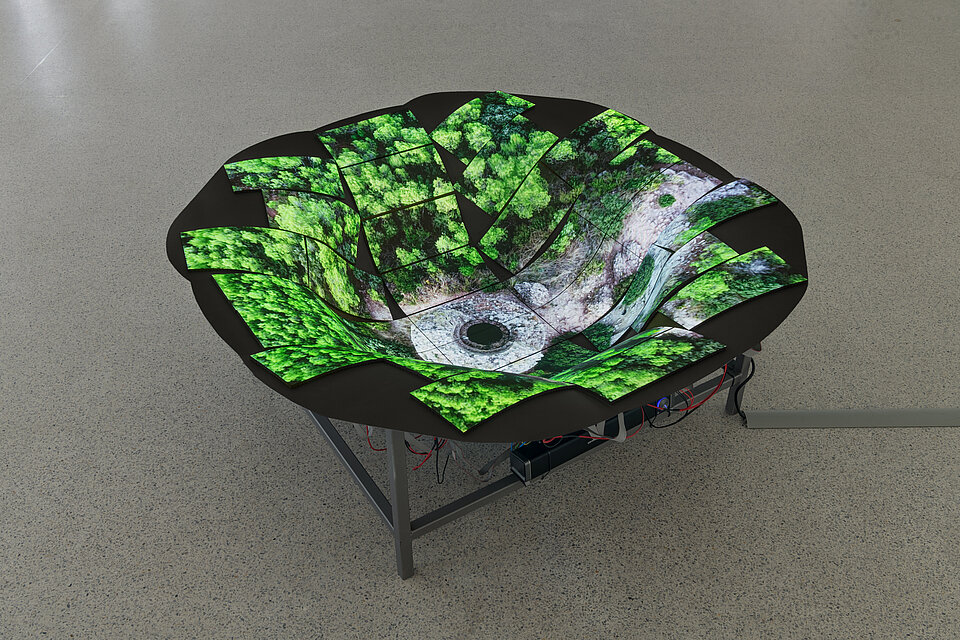
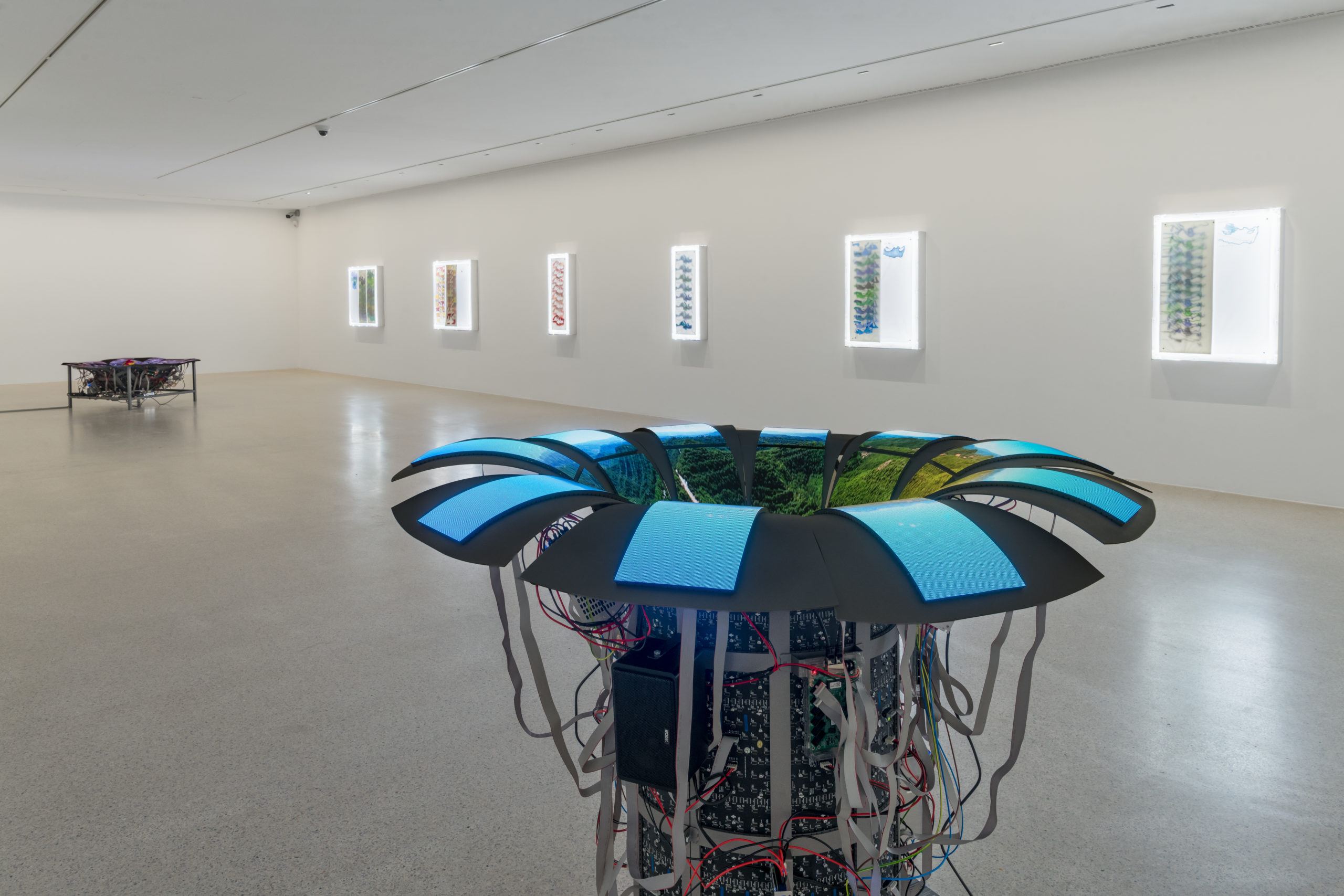
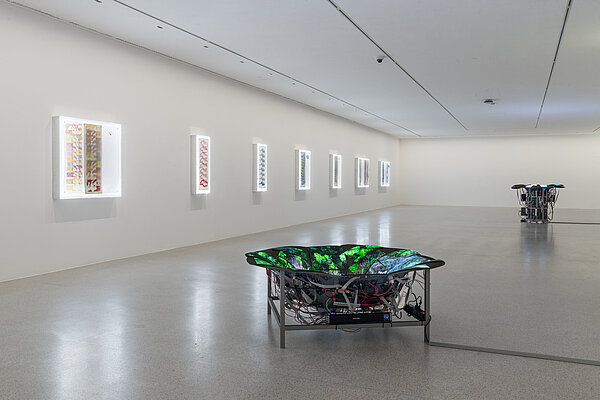
In her recent exhibition Feudal Holes at mumok in Vienna, Claudia Pagès Rabal deploys a sustained investigation into the devices that organize knowledge, territory and memory. Rather than presenting a historical narrative, the Catalan artist constructs a system of relationships where images, bodies, language and architecture operate as vectors of power.
The exhibition in Vienna functions as an expansion of Five Defence Towers , previously presented at the Chisenhale Gallery in London in 2025, consolidating a practice that moves naturally between international institutional contexts. This transit is not anecdotal, but is part of an accelerated projection that places Pagès Rabal in a global circuit increasingly attentive to practices that question European genealogies from within. His presence at the upcoming Venice Biennale representing Catalonia, as well as in several international projects, confirms this consolidation, which does not respond so much to a fashion as to the consistency of a work that has been able to articulate research, form and critical positioning.
In Feudal Holes , the starting point is the so-called Marca Hispànica, a medieval borderland whose history—traversed by religious disputes, displacements and identity ambiguities—continues to resonate in the contemporary construction of Europe. Pagès Rabal does not approach this past as a closed archive, but as an active field of forces. The watchtowers he investigates, structures conceived to delimit and control, appear here reconfigured through visual devices that insist on their ambivalence: protection or domination? limit or circulation?
Formally, the exhibition is structured around video sculptures that refer to open cylinders, almost like wells or cavities. Inside, images captured with a drone penetrate architectural spaces that are usually inaccessible, introducing an almost violent dimension to the act of looking. The operation of penetrating, recording and translating is not neutral, but rather highlights that all forms of knowledge imply a power relationship. As the artist herself has pointed out, these structures function as “strategies of topographic control” that trap the viewer in perceptual loops.
It is here that Pagès Rabal's practice aligns, without needing to be explicit, with a critical tradition linked to Michel Foucault and the idea that knowledge is not external to power, but one of its fundamental instruments. Maps, archives, legal documents or cartographic representations do not appear as descriptive tools, but as technologies that produce reality. The artist does not illustrate this thesis; he materially activates it.
Another key element is the notion of circulation. His research on the Silk Road, understood not only as a network of exchange of goods, but also as an infrastructure for the transmission of knowledge, introduces a long-term historical dimension. What circulates are not only objects, but also forms of organization, hierarchies, classification systems. In this sense, Pagès Rabal's work insists on an uncomfortable idea, namely that the structures that we associate with the feudal past have not disappeared, but rather persist in other forms, stabilized in apparently neutral flows of information, capital or mobility.
This reading becomes especially pertinent if it is placed in relation to the Catalan context from which the artist originates. At a time when Catalan culture oscillates between institutionalization and symbolic exhaustion, Pagès Rabal's practice introduces a significant fissure. There is no direct claim of identity in his work, but rather an interrogation of the very mechanisms that produce identity, language, territory, archive. Catalonia thus appears not as a homogeneous subject, but as a space historically crossed by conflicts, translations and displacements.
In this sense, her international projection acquires a particular nuance, since it is not only about the recognition of an artist, but also about the ability to inscribe a practice situated in broader debates without diluting its specificity. Faced with a certain tendency to export simplified narratives, Pagès Rabal proposes a complexity that is not easily translated. In its desire to make the devices of power visible, the work sometimes runs the risk of being trapped in the same regime of visibility that it criticizes. Formal sophistication, conceptual density and institutional insertion can, at certain moments, dampen the friction that the work itself tries to generate.
And yet, it is precisely at this limit where his practice is most interesting. Not when he explains, but when he destabilizes. When language becomes opaque, when the image does not quite settle, when history appears as a contested field rather than a given narrative.
This line of work finds precise continuity in his upcoming participation in the Venice Biennale 2026, where he will represent the Catalan pavilion with Paper Tears , curated by Elise Lammer. If in Feudal Holes he addressed historical devices of control through architectures and surveillance structures, in Venice he shifts this same concern towards paper as a technology of inscription.
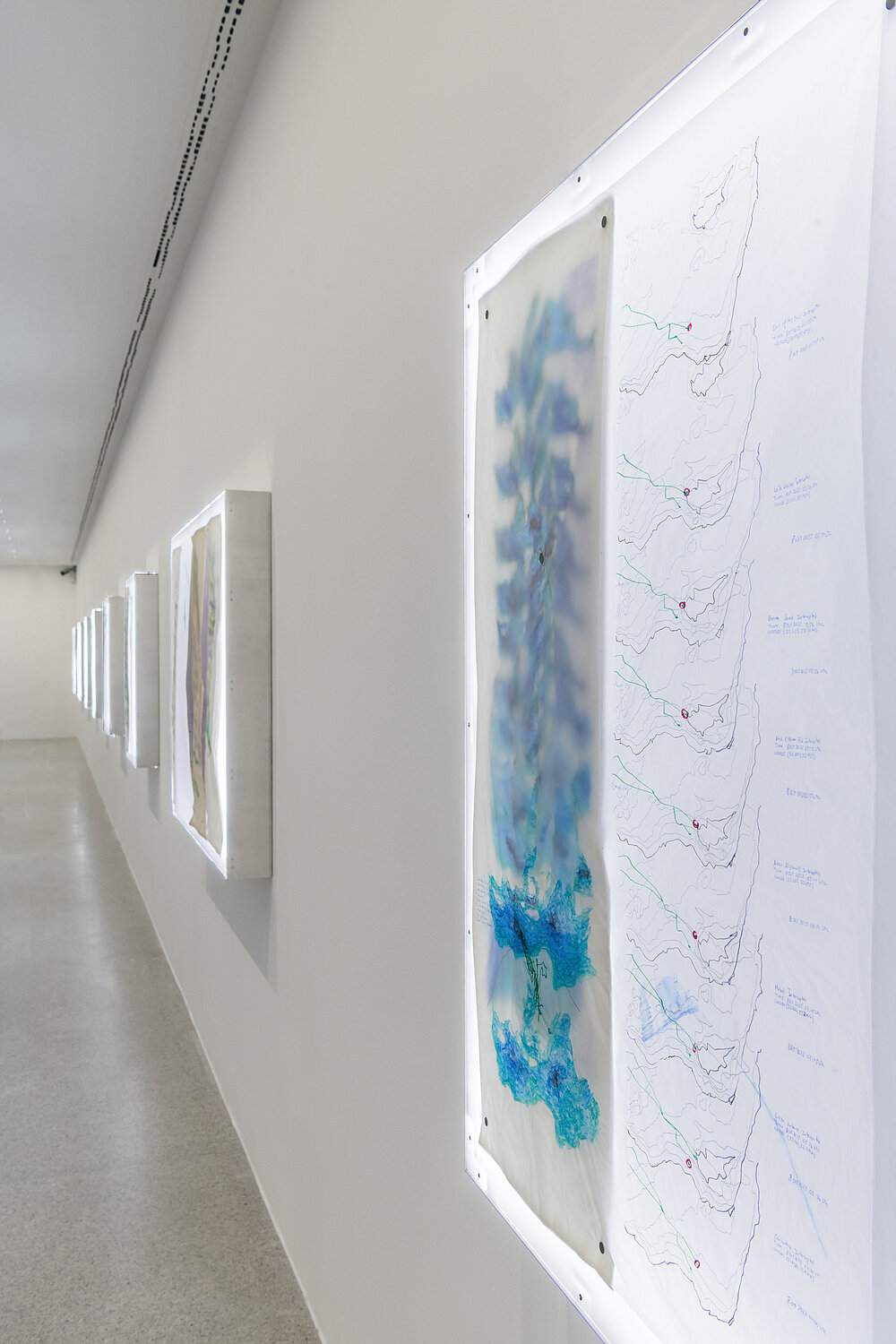
Based on the watermarks preserved in the archives of the Capellades Paper Mill Museum —documents dating back to the 12th century—, the artist activates a reading where the visible and the submerged, the material and the symbolic, intertwine. The watermarks, enlarged and animated in drawing, sound and projection, operate as traces of a knowledge that is not only preserved, but also circulates, moves and reconfigures.
More than a new direction, Paper Tears condenses a drift already present in his practice, thinking of the image not as representation, but as infrastructure. A fully situated practice that insists, without resolving it, on the same question: under what conditions do we see, read and inhabit what we call history.
You may be
interested
...