Exhibitions
Pipilotti Rist: cathartic destruction
Pipilotti Rist is one of the most recognized video artists of the last three decades. She began to stand out in the eighties by integrating the aesthetic of the music video with audiovisual art, along with other influences such as popular culture, technology, and historical feminism, developing her own style with a strong sensory and emotional charge. From October 1 to January 17, 2027, the Guggenheim Museum Bilbao presents the video installation Ever is Over All (1997), awarded the prestigious 2000 Prize at the 47th Venice Biennale, held in 1997. This recognition placed Rist as one of the most outstanding emerging talents in contemporary art.
Video installation is one of the most transformative languages of contemporary art, and Ever is Over All (1997), by the acclaimed Swiss artist Pipilotti Rist (Grabs, Switzerland, 1962), is undoubtedly one of its most iconic and influential examples. It is now presented at the Guggenheim Museum Bilbao as a key piece to understand the evolution of modern feminist art, the aesthetic of the music video, and the disruption of the traditional urban space.
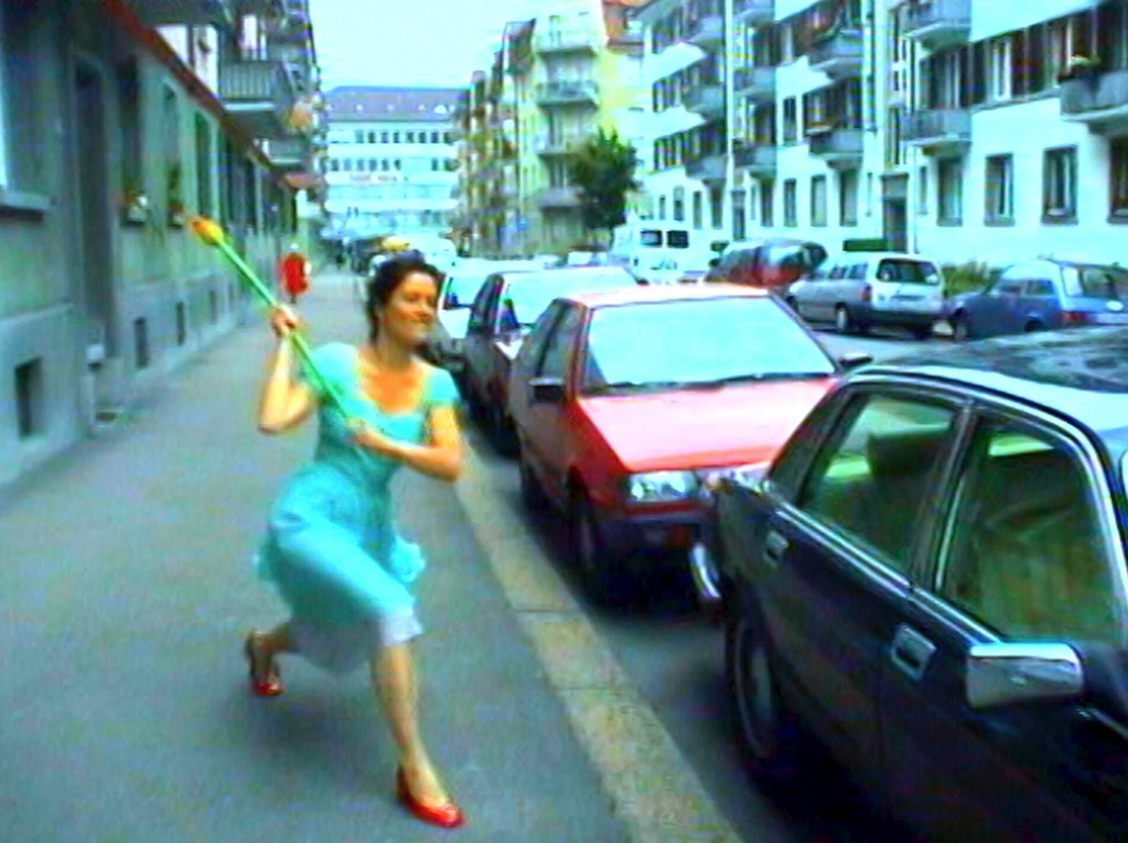
The structure of Ever is Over All is based on a double projection displayed over two large adjacent walls, creating an immersive atmosphere that completely envelops the viewer. On the left screen, a young woman—played by Rist herself—can be seen happily walking along the sidewalk of a conventional urban street.
She wears an elegant, flowy blue dress with a lyrical air and red shoes that inevitably evoke the classic iconography of fairy tales like The Wizard of Oz. In her hand, she holds an exotic plant with a long, sturdy stem, identified as a flower of the Kniphofia species. The most impactful narrative twist occurs when, with an expression of absolute happiness and a radiant smile, the woman uses this flower to hit and break the windows of parked cars. Each hit generates an explosion of glass that breaks the order of private property, but does so without apparent anger or aggression. The sequence, filmed in slow motion, stylizes the destruction and turns it into a poetic dance.
On the right screen, in parallel, close-up images of green fields and lush flowers swaying in the wind are projected. This visual contrast fuses wild nature with the rigidity of the urban landscape, creating a visual metaphor about liberating desire and the eruption of vital impulse within the patriarchal and capitalist structures of the modern city. A key moment in the installation is the appearance of a female police officer walking in the opposite direction. Instead of stopping the act of vandalism, the officer greets the protagonist with a gesture of female complicity, validating the act of rebellion and dismantling.
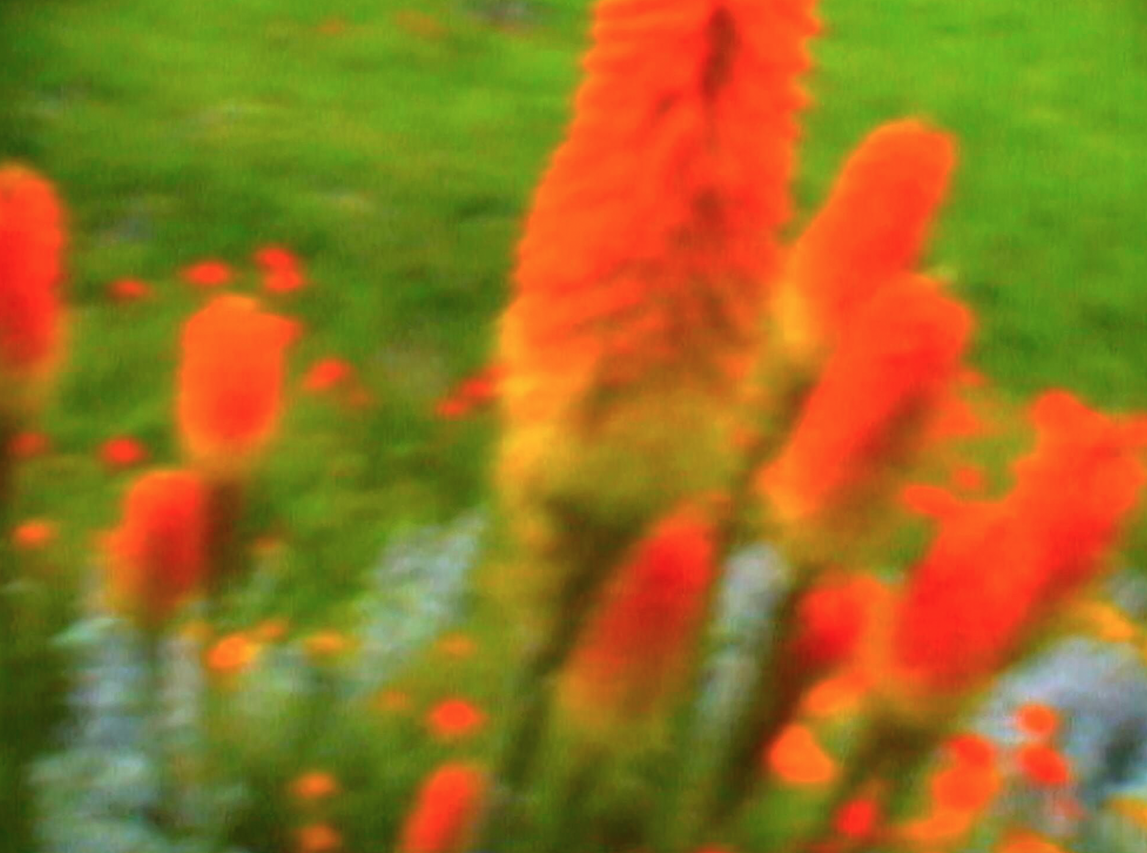
III Still 4 (flowers) Pipilotti Rist - Courtesy the artist, Hauser & Wirth, Luhring Augustine and Videoart.
The sound component of the work, composed by Rist and Anders Guggisberg, is a hypnotic melody, a kind of abstract lullaby with a sweet humming mixed with the crystalline sound of breaking glass, reinforcing the dreamlike sensation. In Pipilotti Rist's installations, sound is never a mere accompaniment to the image; it functions as a physical and three-dimensional element that shapes the space. Since the 1990s, her collaboration with Swiss musician and composer Anders Guggisberg has been essential in creating the magnetic atmospheres that define her work. Rather than generating tension, the music makes violence seem a natural, beautiful, and redemptive act, removing any feeling of guilt.
Before fully dedicating herself to visual arts, Pipilotti Rist was part of the post-punk music band Les Reines Prochaines. This musical heritage is perceived in the way she uses her own voice in the installations: Guggisberg treats her voice—whether singing, whispering, or humming—as another instrument, applying reverb and echo effects. This first-person voice adds great intimacy, as if the viewer were listening to the inner thoughts of the installation's protagonist.
Presenting this piece at the Guggenheim Bilbao, curated by Mikel Onandia, allows emphasis on the relevance of its message. Decades after its creation, Ever is Over All remains a manifesto of enormous aesthetic power. Rist dismantles stereotypes of gender violence by using codes traditionally associated with femininity—the sweetness, bright colors, flowers—to execute an act of pure annihilation. It is not devastating, nihilistic fury, but a cathartic and joyful destruction that proposes a new configuration of the world.
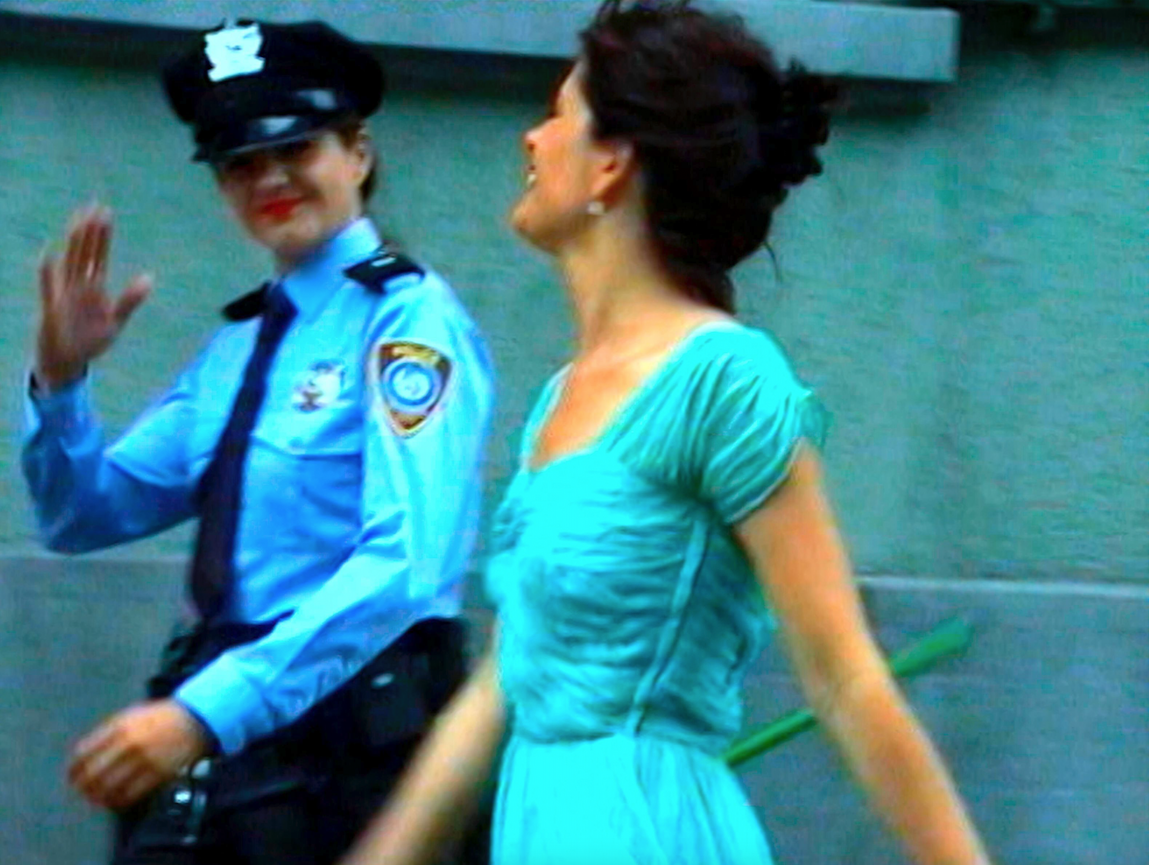
II Stil 5 (smash) Pipilotti Rist - Courtesy the artist, Hauser & Wirth, Luhring Augustine and videoart.
At the end of the 1990s, feminist art underwent a radical transformation. It moved away from the more austere or explicitly anatomical militancy of the seventies to embrace technology, pop culture, and visual pleasure. Within this transition, Swiss Pipilotti Rist became one of the most disruptive and influential figures globally. One of the great changes of those years was the representation of women, no longer as victims of social structures but as active and happy agents of subversion. In Ever is Over All, the act of breaking glass is not born of frustration or uncontrolled rage; it is an exorcizing and aesthetic annihilation. The notion of "female hysteria" is reversed to transform it into an act of collective and poetic liberation, also supported by the complicity of the system itself.
It is also worth noting that during the second half of the nineties, improvements in domestic video cameras and projectors allowed artists to enlarge images to monumental scales. Two decades later, singer Beyoncé directly drew inspiration from this work for the aesthetics of her music video Hold Up, included in the album Lemonade (2016).

You may be
interested
...