interviews
Daniel Cuevas: "The galleries are almost to extinction"

The Consortium of Contemporary Art Galleries has once again placed the reduction of the cultural VAT at the center of the political debate. Just days before the general elections, the organization issued a statement calling on political parties to commit to implementing in Spain the European regulations that would allow for reduced taxes on the sale and purchase of works of art. This demand is not new, but the lack of progress and the growing competitive disadvantage compared to other European countries have made this issue an urgent concern for the sector.
Daniel Cuevas, treasurer of the Consortium of Contemporary Art Galleries, analyzes the situation, explains the consequences of maintaining a 21% VAT rate, and warns that the continuation of this tax policy threatens both the survival of galleries and the internationalization opportunities of Spanish artists.
Carles Toribio. What is your assessment of this legislative term regarding the demand to reduce the cultural VAT? Has any progress been made?
Daniel Cuevas. The truth is, very little. From the Consortium, along with the president, Idoia, and Enrique, here in Madrid, we've met with all the political parties. They all have kind words, they understand our problems and listen to us, but when the meeting ends, our proposals and demands go into complete limbo. They always tell us they'll call us back, that they'll give us an answer, and this has been going on for years.
Spain maintains a VAT rate of 21%, while other European countries apply much lower rates. What consequences does this difference have on the art market?
The world is globalized, and so is the art market. Years ago, collectors traveled less and there were fewer art fairs, but now anyone interested in art can easily travel and check prices online.
For example, I have a Portuguese artist whose photographs I sell in Spain with a 21% VAT rate. Since these are limited-edition photographs, with print runs of three or five copies, it's very likely that other galleries representing the same artist have the same works. In Portugal, they're selling them with a 6% VAT rate.
So what does a collector who regularly buys from a gallery do? Obviously, they compare prices and end up buying where it's cheapest. The difference is significant. What we're asking for is to be allowed to work on a level playing field, because otherwise, it's practically impossible to survive. Galleries are on the verge of extinction.
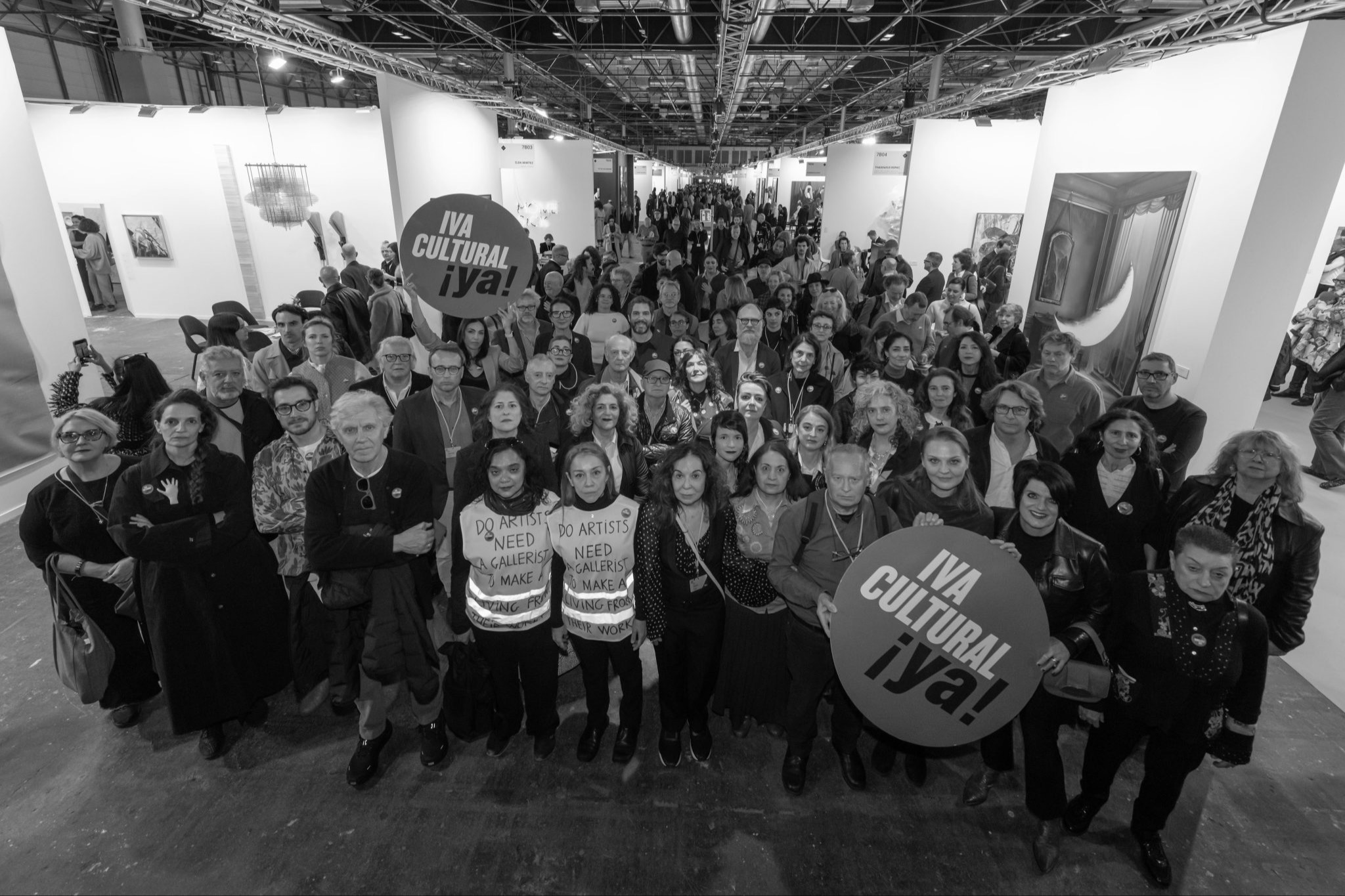
Does tax competition become even more evident at international fairs, where galleries from different countries coexist?
Yes. In Spain we have another big problem, which is art fairs. When ARCO or any other international fair comes around, in the same aisle you can find a work by a Spanish artist being sold by a Spanish gallery with a 21% VAT. You walk a few meters, cross to the next stand, and that same artist is represented by their French or Italian gallery, which applies a much lower VAT.
Ultimately, what happens is that sales drop so much that neither the 21% nor the 6% VAT is collected, because transactions simply cease to take place here. This problem could lead to business closures.
And we're not just talking about galleries. It also affects Spanish artists, who struggle to make that international leap. When a work is released on the international market, a collector might choose to buy another artist simply because they save a significant amount of money. Among international collectors, there's a perception that buying in Spain is complicated due to taxes and fees.
We're not asking for anything extraordinary. In Europe, there are regulations that allow for reduced tax rates to protect the cultural sector, but in Spain, they've been gathering dust for years.
If there is a European framework that allows this reduction, why has Spain still not taken the step?
I think, above all, there's a lack of understanding of how our sector actually works. There's still this idea that collectors are people with a lot of money and can therefore easily afford a 21% VAT.
But there are many studies on average art collecting in Spain, and we see that it is made up of people who are primarily interested in culture: professionals, architects, doctors, lawyers… Of course, there are very wealthy people who buy art, but galleries also depend on collectors with medium-to-high purchasing power and, above all, with a genuine artistic sensibility.
It's important to understand that protecting galleries means protecting a heritage of artists and the gallery industry. Furthermore, galleries are practically the only cultural spaces that remain open to the public free of charge. Anyone can enter a gallery in Madrid, Barcelona, Seville, or any other city, visit exhibitions of exceptional quality, and do so without paying an entrance fee. This is something that is becoming increasingly difficult to find.
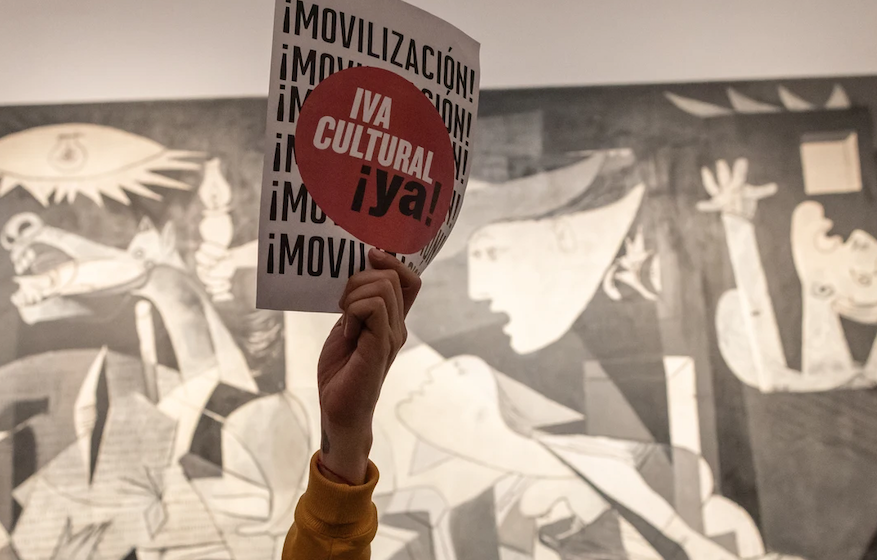
Has there also been a lack of political will due to fear that a VAT reduction would be interpreted as a tax benefit for the wealthy?
Yes. Initially, the Minister of Culture understood the problem and seemed to intend to push for a VAT reduction. However, a sort of trial balloon was floated on social media, and the reaction was highly critical. It was framed as if a progressive minister were lowering taxes for the wealthy while not reducing taxes on basic goods.
There's a fear of going down in history as a progressive minister who reduces VAT for a sector considered to be for millionaires. But that perception doesn't reflect the reality of the art galleries. In other countries, like Italy, Portugal, France, and Germany, they've understood that this particularly vulnerable sector needs protection. In Spain, if we don't manage to reduce VAT, we risk disappearing.
With the general elections on the horizon, what response have you received from the parties you've met with? Does the Consortium's statement aim to secure a concrete commitment?
In principle, they understand what we are explaining and tell us that, when they come to power, they would apply the reduced rate to bring us in line with Europe and allow us to continue working.
But we have our doubts. In an interview with Borja Sémper about his potential decisions as head of the Ministry of Culture, he spoke about patronage and other issues, but didn't mention VAT. Perhaps it simply slipped his mind, but it's striking that the main problem we face is conspicuously absent.
We have also met with the PSOE. In our last meeting, they told us that the issue depends on reaching an agreement with the Ministry of Finance, which is the body that must understand the need for this reduction.
We don't have direct communication with the Tax Agency. We always have to channel our requests through the Ministry of Culture. What they tell us is that the Tax Agency doesn't see the VAT reduction as a viable option, doesn't understand our demands, and offers us no explanations.
The current government assures us that it will try to make progress during the remainder of its term, but with elections so close, we know this issue will not be resolved during this legislative period. Our hope, and the objective of the statement we have released, is to secure a commitment from the parties that may form a government to implement the reduction. We are not asking for anything unusual or a privilege that other countries do not have.
If this tax change does not occur, what consequences could it have in the medium term for the gallery sector and for Spanish artists?
We understand this perfectly, and we're already seeing the effects. Collectors know that buying from outside Spain offers advantages because they pay a much lower VAT rate. They can build a magnificent collection with international artists, but what happens then to Spanish artists?
Younger artists, who are just starting to enter the market through galleries, have a particularly difficult time because sales are drastically reduced. It's a problem that's only going to get worse.
When we speak with foreign galleries in Paris or Berlin, they also don't understand why Spain hasn't reduced the VAT. Nobody understands why this step hasn't been taken. And I don't think that aligning the Spanish VAT with the European rate would provoke a major controversy or protests. In Italy, for example, even right-wing governments have understood that this is a vulnerable sector that needs support.


You may be
interested
...