Editorial
The culture that does not obey
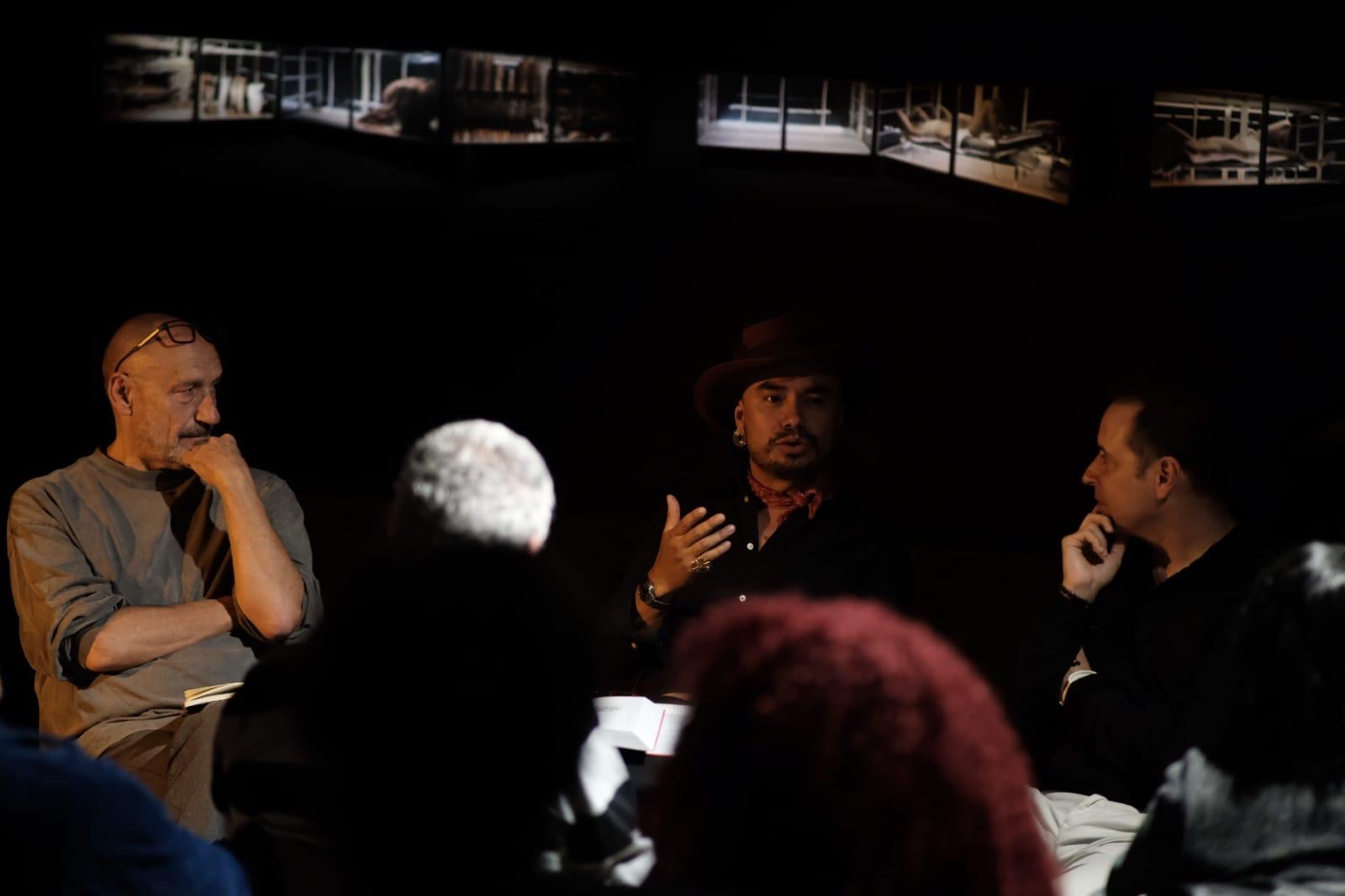
I had the good fortune to present, alongside Christian Padilla, his magnificent book , *The Cultural Cold War in Colombia: Marta Traba, Gómez Sicre, and Rockefeller Shape Modern Art* , at the Fundació Lluís Coromina Isern. We were joined by Martí Peran, a committed intellectual who, with uncommon modesty, explained that his contribution to the doctoral thesis from which this research originated had consisted, practically, of passive accompaniment. Listening to him, I reflected that knowing how to accompany without appropriating another's thoughts is also a form of intelligence.
The conversation led us to an uncomfortable question: who decides which art deserves to be seen and which stories should be left out of history? Padilla investigates the relationships between US diplomacy, the economic interests linked to Rockefeller, and the construction of the modern Colombian canon. Her work shows how the networks of José Gómez Sicre and Marta Traba, with the backing of ESSO, favored certain trends and contributed to displacing the influence of Mexican muralism and socially conscious art. The defense of creative freedom could, paradoxically, serve as a strategy of ideological orientation.
During the conversation, a particularly fruitful point of disagreement emerged. To what extent had the rise of abstraction and informalism contributed to displacing social realism and protest art? In that small forum of ideas, I introduced a nuance: in Spain, informalism and other non-figurative avant-gardes had also opened a breach in academicism and the predominance of a classical conception of art. Their disruptive capacity could not be erased by the fact that the Franco regime had appropriated some of those proposals to project an image of modernity.
Therein lies the paradox. A movement can question an aesthetic order and, at the same time, be used by those in power to legitimize themselves or to diminish the space for other expressions. It can expand the freedom of artistic language while the institutions that promote it restrict political freedom. And it can contribute to renewing perspectives without justifying the marginalization of socially conscious art.
It is also important to distinguish between socialist realism, which became the official doctrine, and social realism and the many forms of critical figuration: not all denunciation is a response to a slogan, nor is all abstraction an act of escapism. To confuse the value of the works with the political uses to which they were subjected would lead us to another oversimplification. The task is to recognize their artistic power and, simultaneously, examine who promoted them, with what interests, and at what cost of silence.
But culture has a quality that is inconvenient for its patrons: it produces independent thought. That cultural policy coexisted with US interventionism, support for dictatorships, and the repression of dissent. This contradiction contributed to breaking the affinities that the Pan-American project had attempted to build. Artists and intellectuals did not relinquish their interpretation of reality to please those who financed their visibility.
The conversation took on a disturbing relevance when it addressed what had happened at the National Museum of Colombia. On October 15, the Ministry of Culture removed pieces related to political violence, feminist struggles, sexual diversity, and the memory of peace, coinciding with President Abelardo de la Espriella's announcement of a cultural counterrevolution. The affected narratives had been constructed during previous administrations of different political persuasions. Pluralistic memory was beginning to be treated as a political adversary.
Among the removed works was Alfonso Quijano's * The Harvest of the Violent* , also reproduced in Padilla's book. Its image is difficult to forget: around a monumental tree, corpses occupy a landscape of unbearable serenity. Violence appears organized, almost incorporated into the order of things. Removing this image does not eliminate the dead; it reduces the possibilities of looking at them and asking about them.
The book's reproduction is credited to the Bachué Project Foundation. Their work highlights the role of collecting when it assumes a public responsibility. The collection of José Darío Gutiérrez and María Victoria Turbay is also featured in "Independence: Five Ways to Question the Present ," scheduled for November 7 at the Museum of Antioquia. This exhibition connects art, memory, territory, and the unfulfilled promises of freedom.
From Catalonia, the word independence speaks to us in a particular way. In Colombia, it evokes the break with the Spanish monarchy and the establishment of a republic. But no political emancipation can definitively resolve the question of freedom. We must also cultivate the ability to tell our own story, to acknowledge our own contradictions, and to listen to those who have been left out of the national narrative.
The pieces from the National Museum returned to their galleries on October 30, following a court order. This is both good news and a warning: cultural autonomy requires institutions capable of defending it and a society willing to demand it. Freedom cannot be taken for granted.
The far right, which seeks to erase historical memory, deserves an unequivocal response. So do the left when it subordinates creativity to doctrine and equates dissent with disloyalty. Defending pluralism requires upholding this principle even when it makes one's own side uncomfortable.
It was a pleasure to welcome Christian Padilla: a brilliant researcher who contributes knowledge and opens up necessary discussions. His book reminds us that the debate surrounding art affects our understanding of the world. And it leaves us with a question that transcends borders: when we talk about transforming it, do we want people to be able to think more freely, or do we simply expect them to agree with us?
You may be
interested
...