interviews
Sergio García, the cartoonist who breaks all boundaries
Sergio García (Guadix, 1967) has built a career in which illustration, comics, and graphic research engage in dialogue with a creative freedom that has transcended borders. Awarded the National Illustration Prize in 2022, he is one of Spain's most internationally renowned artists, with work for leading publications such as The New Yorker , The New York Times, The Washington Post, and El País . His visual universe has also found expression in large-scale projects, such as the installation he created with Lola Moral, his life and creative partner, in the Paris Metro for the Olympic Games.
His artistic history, however, maintains a deep connection with Granada, the city where he serves as a professor in the Drawing Department of the Faculty of Fine Arts at the University of Granada, mentoring new generations of artists. Previously, his years in Terrassa marked a fundamental stage in his development and the discovery of his own artistic language. From those beginnings to his most emblematic creations, from his creative dialogue with Lola Moral to projects yet to come, Carles Toribio speaks with Sergio García for bonart about a career that understands drawing as a territory open to experimentation, storytelling, and knowledge.
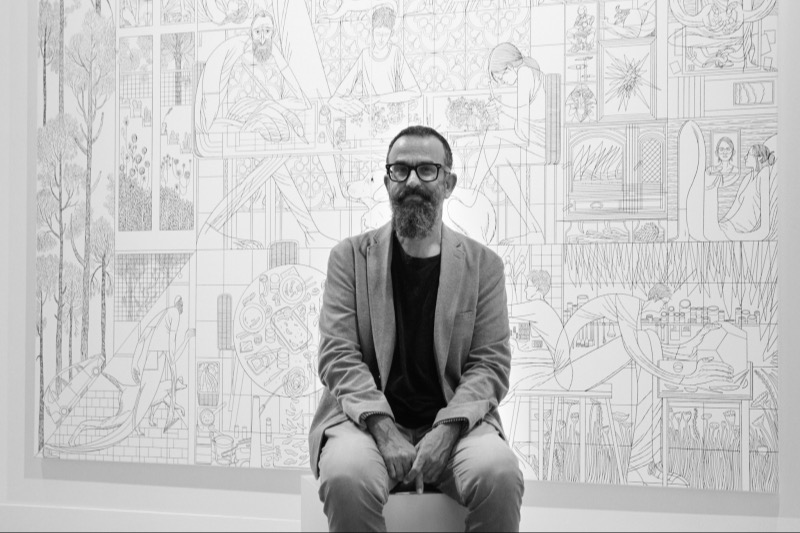
Carles Toribio. Let's take a journey back in time to the present. How did your relationship with drawing and illustration begin? Do you remember a moment when you thought, "I want to dedicate myself to this"?
Sergio García. It's a curious story. My parents were teachers and were assigned to Terrassa. I lived there for eight years, where I completed all of my primary education. At that time, Catalan was forbidden in schools, although it was spoken in the streets. My parents saw that there was a great deal of cultural interest in it there and felt that I should learn Catalan. So, they arranged for me to have a teacher, a colleague of theirs from school, who taught Catalan to the children of other teachers.
Furthermore, they subscribed me to Cavall Fort , and it was one of the best things they could have done for me. There I discovered the whole Franco-Belgian school of comics, with authors like Franquin and other great classics that were being published at that time.
I wanted to draw like Franquin. I watched how he drew and, even though I was very young, I understood that there was something magical about his way of approaching drawing and representing reality.
I would see a can of Coca-Cola, and in his drawings, that can was exactly as he envisioned it. Everything was consistent with his style. In a way, I already understood the concept of style and wanted to do the same: to create my own language with which to express myself.
I started by copying Franquin and, little by little, I evolved. Later I discovered Moebius and many other cartoonists, as well as contemporary artists and creators of the 20th-century avant-garde. All these references added layers of influence and knowledge to my work.
How has your drawing style changed from those early works to the present day?
SG Precisely because of that journey and the constant search, I consider myself a draftsman in continuous evolution.
In the world of comics and illustration, many artists strive to create a consolidated style that defines them and with which they can work. The most paradigmatic example would be Hergé, the artist behind Tintin, who developed a highly refined style and created the concept of the clear line.
That approach, however, doesn't interest me as much. I'm a professor and chair of the Drawing Department at the University of Granada, where I teach illustration and comics. I'm constantly researching the evolution and treatment of line, as well as the possibilities of drawing as a narrative tool.
I also develop lines of research related to multilinear storytelling, the territories of history, and the expanded format. These are concepts that are incorporated into my work like layers of an onion.
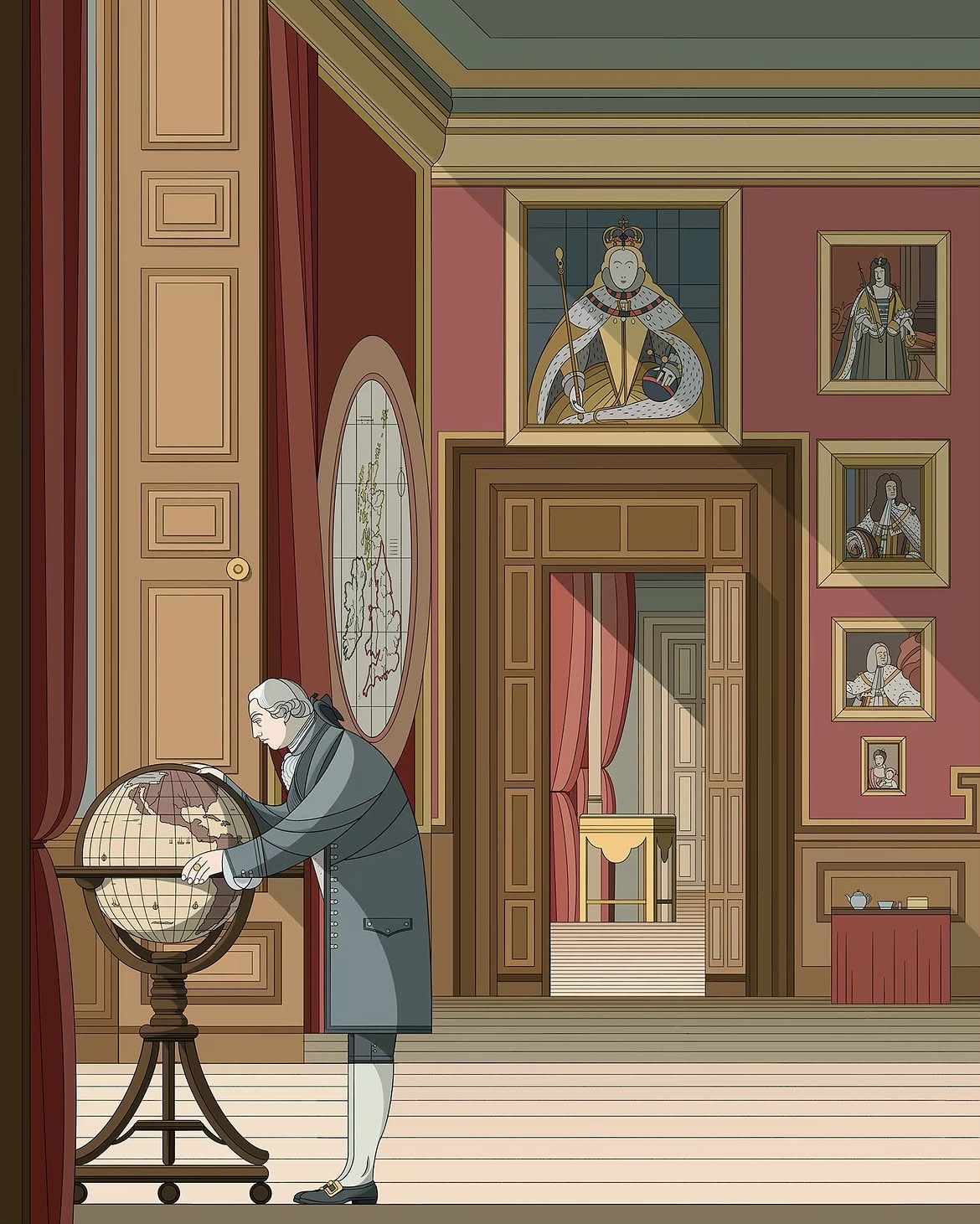
America 250, special series for The Washington Post.
Does your style change over time?
Sergio García. My style is constantly changing. I started by childishly imitating Franquin's drawing style, and over time, I've developed a language that I consider more interesting and coherent, closely related to the thinking of the avant-garde movements of the early 20th century, with their ways of representing spaces, visual hierarchies, and the influence of primitive drawing, or what has traditionally been called children's drawing, in the representation of reality.
My work has changed a lot over the years, until reaching the refined style I use today.
Sergio García and Lola Moral, Lola Moral and Sergio García. You share life and professional projects. How did your collaboration begin and how has the partnership evolved over the years?
SG We met at the university entrance exam and have been together ever since. At first, Lola wasn't very interested in comics or illustration. She specialized in art restoration and also studied art installation at university.
Little by little, I convinced her to take charge of the color. I'm good at working with patches, contrasts, and areas of color, but I don't have as much of a knack as I should for choosing them.
She, on the other hand, is absolutely masterful. She has a natural gift, also the result of knowledge and study, and she knows how to work with color and relate to it.
Gradually, she agreed to collaborate on our projects, something I am eternally grateful for. Today, she is a fundamental part of our work. For example, the illustrations we do for The New Yorker are inconceivable without her input.
I believe that in this profession, as in the art world, one must be generous and understand that individualism is a mistake. Consider, for example, artists like Jeff Koons: the concept may be his, but many people participate in the execution of the work, and their contributions deserve recognition.
We tend to personalize everything around a single figure, but I believe much more in teamwork. Lola has a huge responsibility for the final result, but so do the art directors, editors, and other professionals involved in the process. I think we should value all of those contributions.
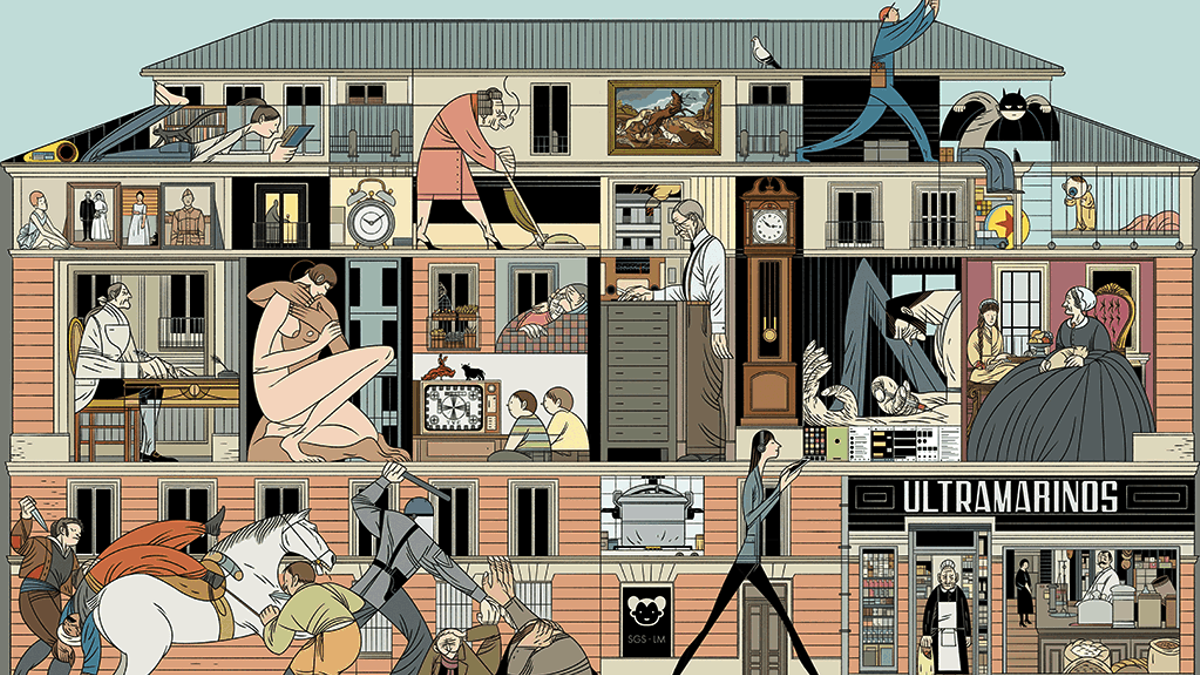
Drawing is not limited to representing an image; it also allows for constructing narratives and establishing relationships between elements. Is that how you understand your work?
SG Yes. In my case, I'm a bit of an oddball in the creative world. I can afford to invest much more time in a piece than other colleagues, who often have to respond to commissions that come in from one day to the next.
I don't usually work that way. I prefer to develop pieces that allow me time for reflection. Editors already know this, and that's precisely why they call me for projects where I can have two or three weeks to think about what I want to do.
When I have to work on a subject, the first thing I do is study it. I have always maintained, also in my classes, that drawing is knowledge.
Drawing is one of the ways humans approach knowledge through graphic representation. That's why I try to understand and internalize what I have to draw. Only when I understand it do I feel ready to create an illustration.
The process begins with research, reading, and understanding the subject. For example, if I'm commissioned to do a cover about Putin for El País , it's not enough for me to simply create a superficial caricature of him. I try to understand who he is, where he comes from, and what he represents. From there, I often look for a visual metaphor to complement the depiction.
In that case, I used an Egyptian funerary mask as a reference, due to the hieratic nature of Egyptian representation. I was interested in conveying that feeling of coldness and lack of human expression that I associated with the figure.
This is how connections and relationships are created, and from there the illustrations emerge.
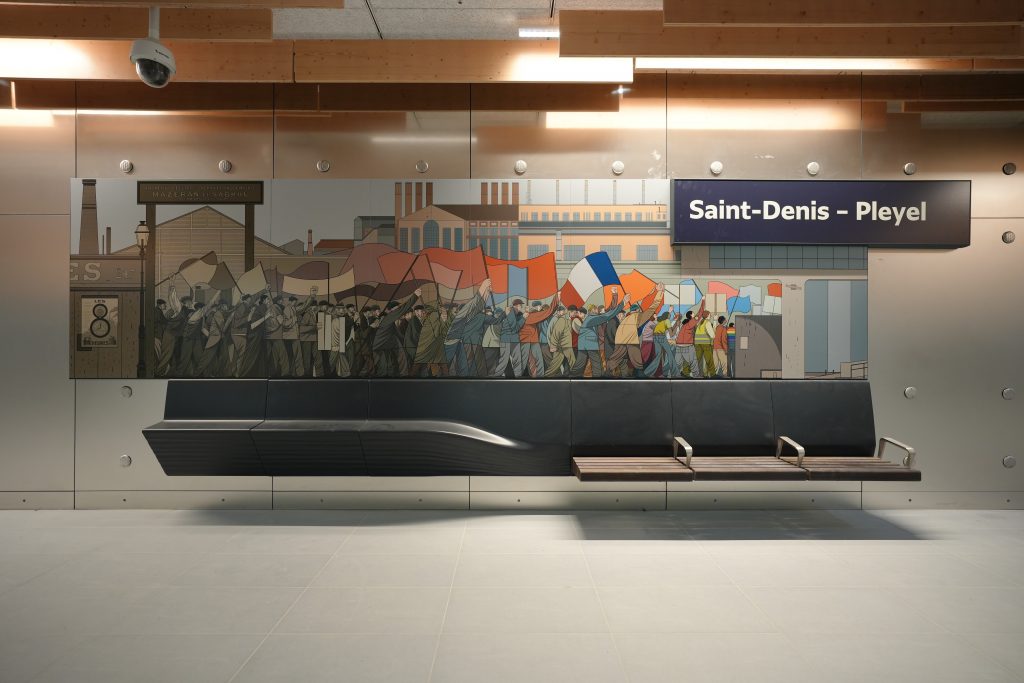
Generations artwork by Sergio García and Lola Moral for the Paris 2024 Olympic Games.
You've done several covers for The New Yorker . How did that collaboration come about, and what's the process of creating a cover for the magazine?
SG So far I have made twelve covers and the thirteenth one, which has already been approved, will be published soon.
There are different ways to get a cover. We operate as a kind of group of illustrators whose identities are known to the art director, Françoise Mouly, along with the magazine's management. I don't know exactly how many contributors are part of that group.
Every year we receive a beautiful blue planner at home, which lists, in general terms, the topics the magazine plans to cover. From there, new ideas emerge throughout the year. If an accident or a particularly shocking event occurs, the possibility of creating an illustration related to it might arise. However, they usually work well in advance and don't typically cover current events, except on very rare occasions.
Sometimes you receive an email with a list of ideas. Other times, you're the one who brings up the topic. It's not the typical assignment you'd get from any other publication: at El País , for example, they usually ask for a specific piece; at The New Yorker , on the other hand, you have much more initiative to propose ideas.
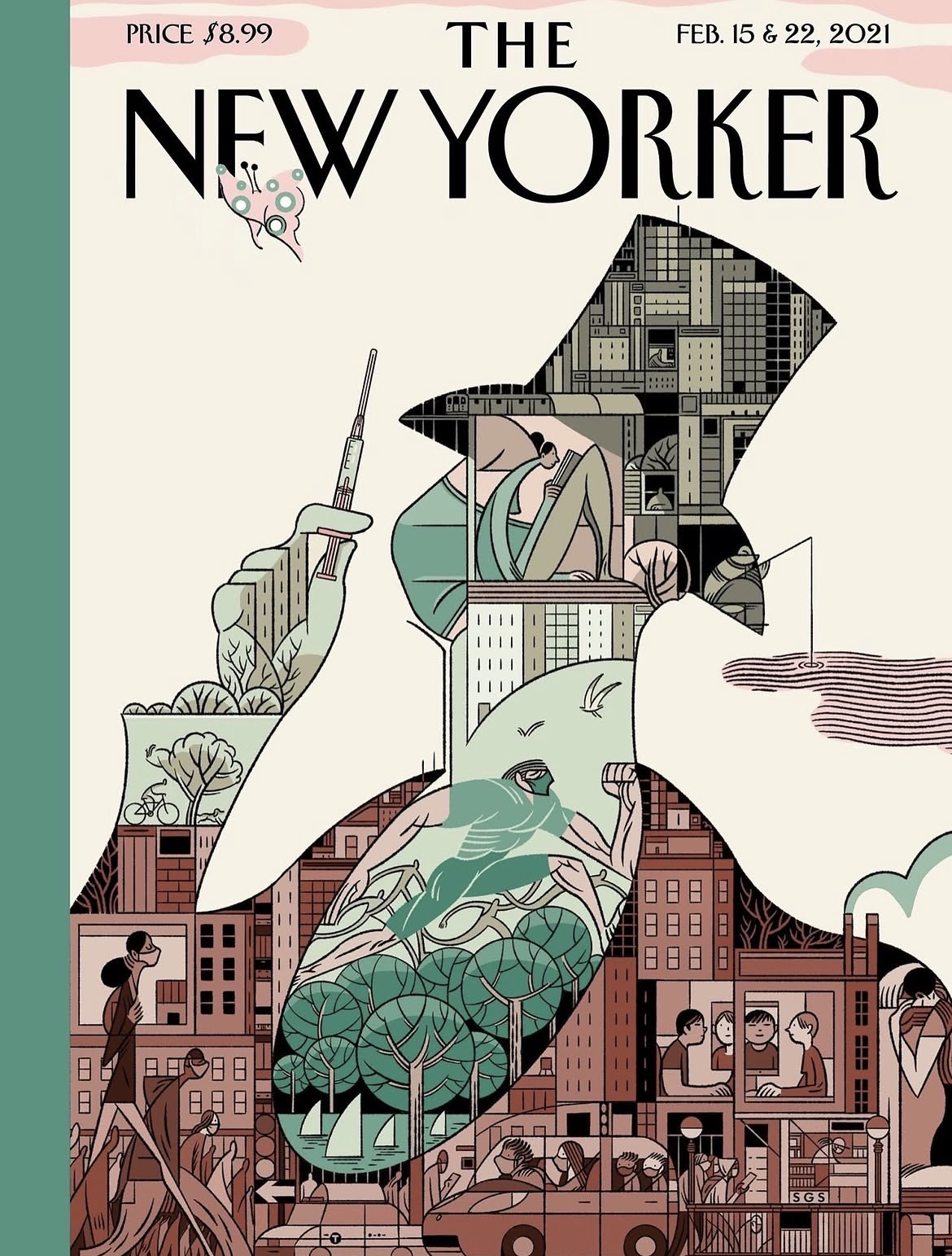
Commemorative cover for the 96th anniversary of The New Yorker, February 2021.
How did the idea for the New Yorker cover dedicated to the Knicks come about, and what was the creative process like?
SG The basketball-related cover came about very spontaneously. We had just finished lunch, and although I don't usually watch television, that day I was watching the news. During the sports segment, the commentator announced that a basket had been scored in the last second. At that moment, the idea struck me.
I was looking for a sports cover that hadn't been published yet, and I thought that scene could work perfectly.
In the original version, the score was tied at zero. However, the magazine's editors, who are big basketball fans, wanted the Knicks to win and altered the scoreboard so they appeared to be ahead by one or two points, regardless of whether the basket went in or not.
I don't think anyone examines a cover as closely as the team at The New Yorker . There are so many people paying attention to every detail because they know it will be seen by an audience of millions.
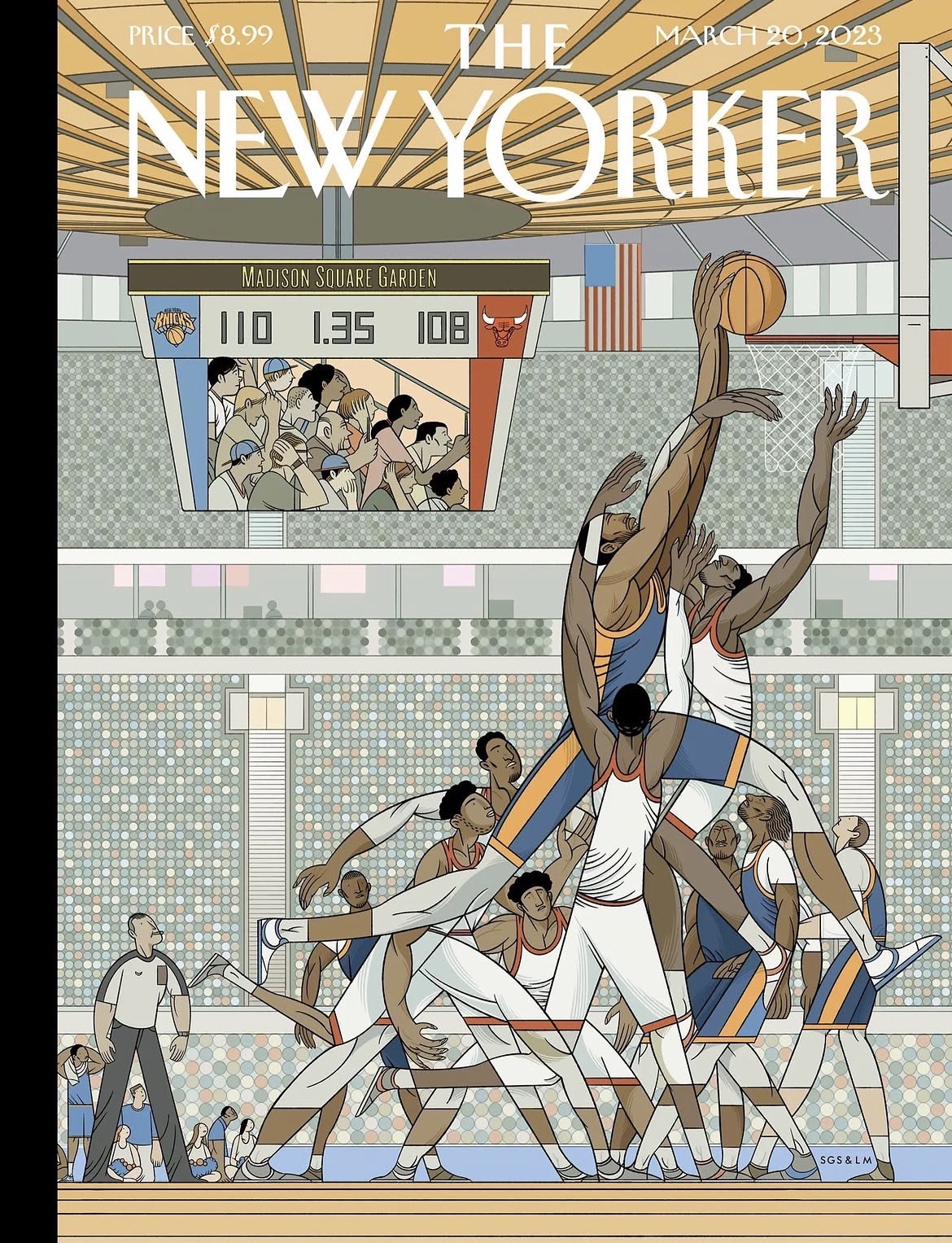
Pulling ahead by Sergio García, The New Yorker, March 2023.
Are there differences between American and European editorial illustration, especially French or Spanish?
SG It depends a lot on each publication. Even within the United States there are significant differences.
With the Washington Post , for example, we did a year-long series called America 150 , based on thoughtful pieces about American independence. They were critical pieces, generally very well written, that addressed issues such as the Revolutionary War.
In that project, we had a lot of freedom to work with drawing as a communication tool. When you work for the press, you have to make sure the drawing communicates.
At The New Yorker , on the other hand, experimentation is somewhat more limited. Each publication has its own codes and way of working, and you have to adapt to them if you want to get published.
It's like working for a gallery: you know its profile and what kind of artists and works fit its vision. There's a lot of freedom for the artist, but there's also a balance the gallery must maintain among the artists it represents.
Something similar happens with editorial illustration. You have your own language, your own way of expressing yourself and articulating the graphic and the narrative, but you must adapt them to each medium.
The key lies in the degree of experimentation each commission allows. In my case, experimentation is usually quite high. In the pieces I create for the Cayón gallery, for example, I have virtually no limits and can work with complete freedom, because the ultimate goal isn't necessarily to communicate information, but rather to create a graphic element that will be of interest to the client.
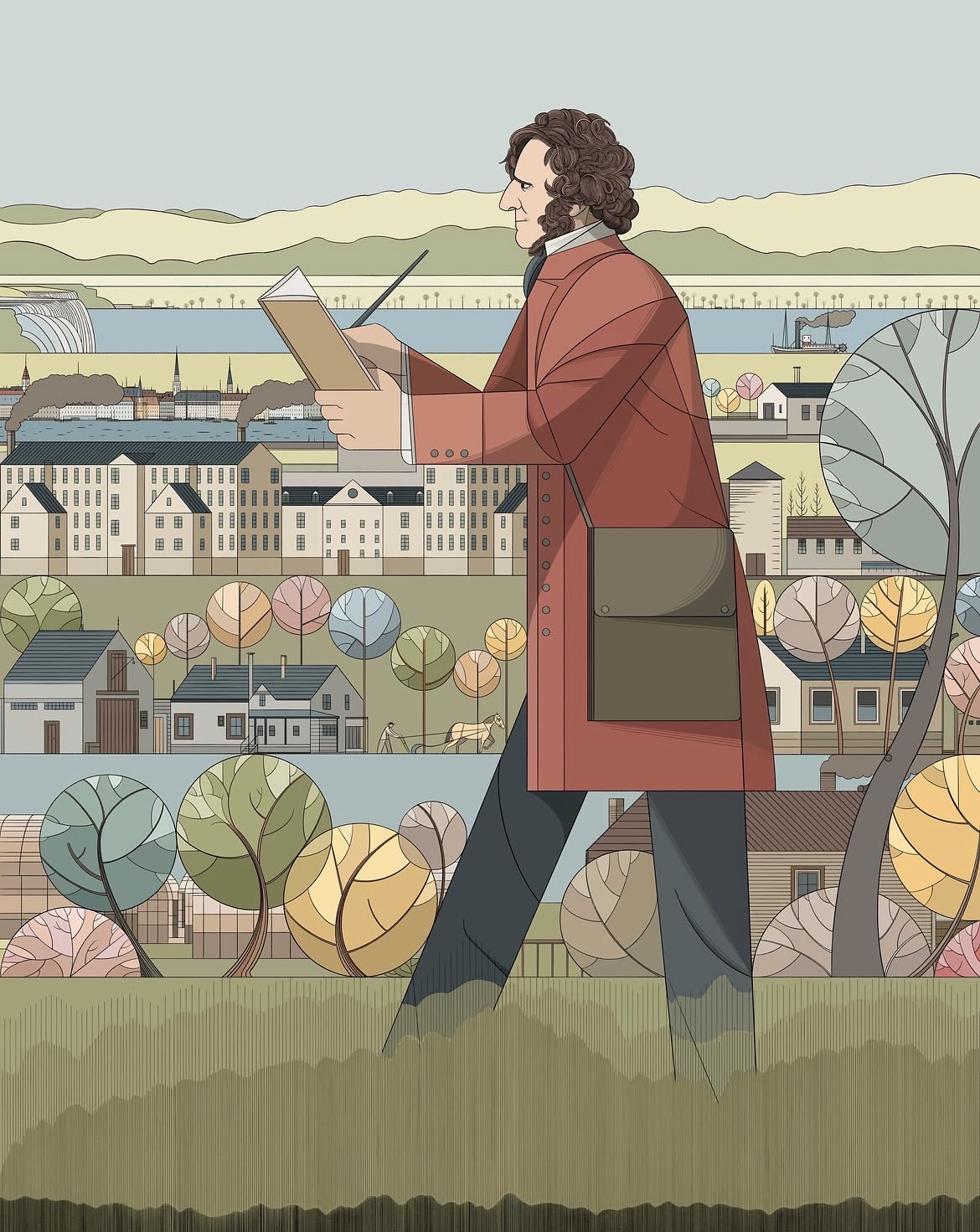
America 250, special series for The Washington Post.
Illustration has been gaining ground in museums and art centers. Do you think it has finally found its place in these institutions?
SG Yes. What happens is that, when you abandon the publishing format, the work ceases to be illustration in the strict sense. Conceptually, it becomes a drawing done on a particular surface.
First and foremost, I am an illustrator. Above all else, I champion drawing as an essential tool. I cannot be anything other than an illustrator: I am one when I teach, when I do illustration, and when I work for a gallery.
In this latter area, I work with diverse formats, sometimes on canvas and other times on paper. Currently, for example, we are developing works on paper.
It's true that these languages have become more normalized within the art world. They were less accepted before, but I think popular culture, through different forms of communication and social media, has helped bring them into major museums.
We are finding more and more examples in institutions like the Reina Sofía Museum or MoMA. We were also at LACMA in Los Angeles, where we were invited in connection with George Lucas, who had acquired works for the Lucas Museum of Narrative Art.
There you can find illustrators who come from the world of illustration and whose work is exhibited in a contemporary art museum without any hang-ups or problems. I think that normalization is very positive.
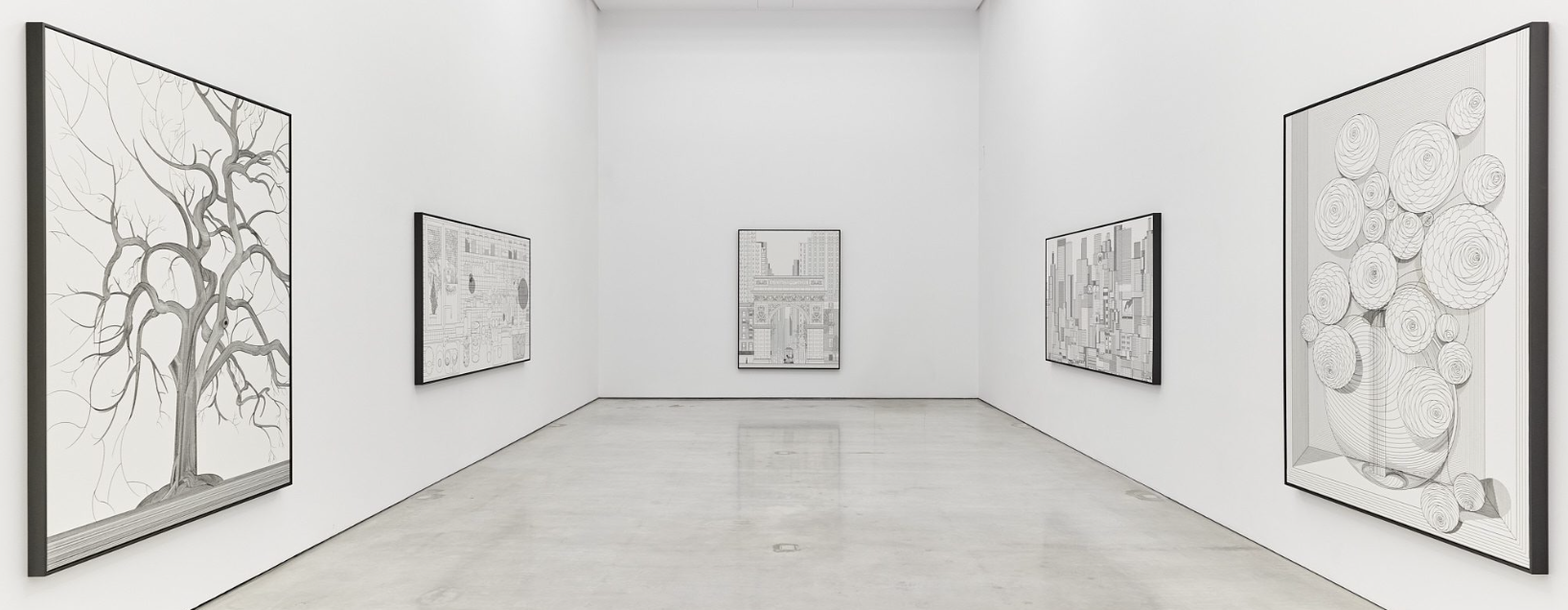
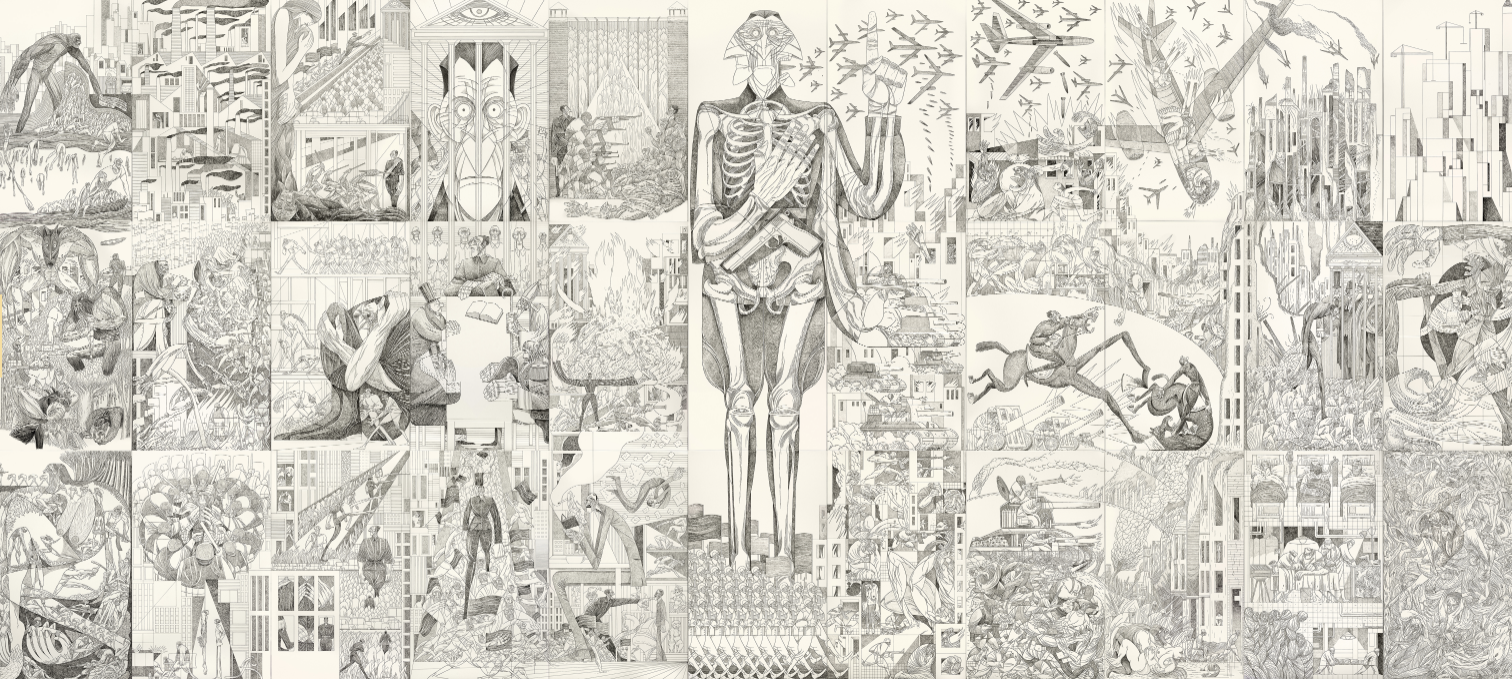
'The line that builds', an exhibition by Sergio García from April to May 2025 at Galería Cayón in Madrid.
You've been teaching for years. Has the way students relate to drawing and images changed?
SG Yes, at least in my faculty, the Faculty of Fine Arts in Granada. When I was a student, some professors reprimanded me for drawing comics or doing illustrations. They told me to stop drawing little figures and dedicate myself to serious things.
Now, however, these languages are fully accepted and standardized.
I have many students in my illustration, comics, and experimental comics classes. Some have gone on to have magnificent careers, and I've even suggested to them on occasion that their work might be better suited to a large format rather than a small illustration.
Gradually, the same approach we see in museums and art galleries is being adopted in educational institutions. It is becoming increasingly accepted that comic book artists can develop their work in other formats and creative fields.
One of the current issues is artificial intelligence. How do you assess this transformation, and what consequences do you think it might have for artistic creation?
SG My perception has changed over the years. I have good friends who are professors of artificial intelligence, and we've debated the topic extensively. There are many interconnected problems and different levels of interpretation, both from the perspective of creation and publication.
But I'd like to focus on the consumption of art. I pose a question: if, through a prompt , or even in the future without needing to phrase it that way, you can dialogue with an artificial intelligence and ask it to generate art in real time, what happens to the cultural experience?
Imagine I'm a huge fan of a TV series and I'm not satisfied with just one movie; I want artificial intelligence to continuously generate new versions and variations. Technology will be able to do this very soon, and I'll be able to consume these productions individually, at home.
At that point, culture risks disappearing as a shared experience. That, for me, is the main problem.
Artificial intelligence-driven creation could change the entire paradigm. What we understand as culture could shift from a collective entity to a completely individual experience. This is dramatic, because while there will undoubtedly be interesting productions and others that are less so, many will remain confined to the private sphere and never be shared.
I think it's a very serious problem. That's why, right now, I'm very much against artificial intelligence, although I recognize that it can offer some interesting possibilities and that there are authors who work well with it.
Finally, we've talked about the present and the evolution of your work, but is there any project that you and Lola would like to develop in the future, regardless of time, budget, or format?
SG Right now we are working on a project that is already a reality: an exhibition in the Empress's Hall, in the Alhambra, in which we will both work on luxury understood as a creative field for a museum space.
We had already carried out a small hybrid intervention in this area during the pandemic, in a small room in Granada called Arrabal. Now we want to tackle the project on a larger scale.
We will intervene in a very specific space of the Alhambra and develop a reflection on its flora and fauna through contemporary drawing and painting, and probably also ceramics.
Lola is a multidisciplinary artist: she works with ceramics, embroidery, drawing, and color. I, on the other hand, dedicate myself primarily to drawing. The combination of our artistic languages will materialize in the exhibition, planned for spring, although we don't have a confirmed date yet.
I would like our path to continue in that direction, developing increasingly hybrid and alternative projects that are neither clearly editorial nor strictly expository. I feel comfortable in that territory.
I remember that when I got the permanent position, people told me they didn't know if I was an illustrator or a comic book artist. It's funny, because I received the National Illustration Prize when, at that time, I was mainly working on comics.
Our trajectory has always been somewhat unusual, situated on the border, on the edge, on the boundary between different disciplines. And we want to continue there, in that ambiguous space where it's not easy to determine whether what we do is publishing or art.
Ultimately, it's drawing. And that's precisely what we want to keep doing.
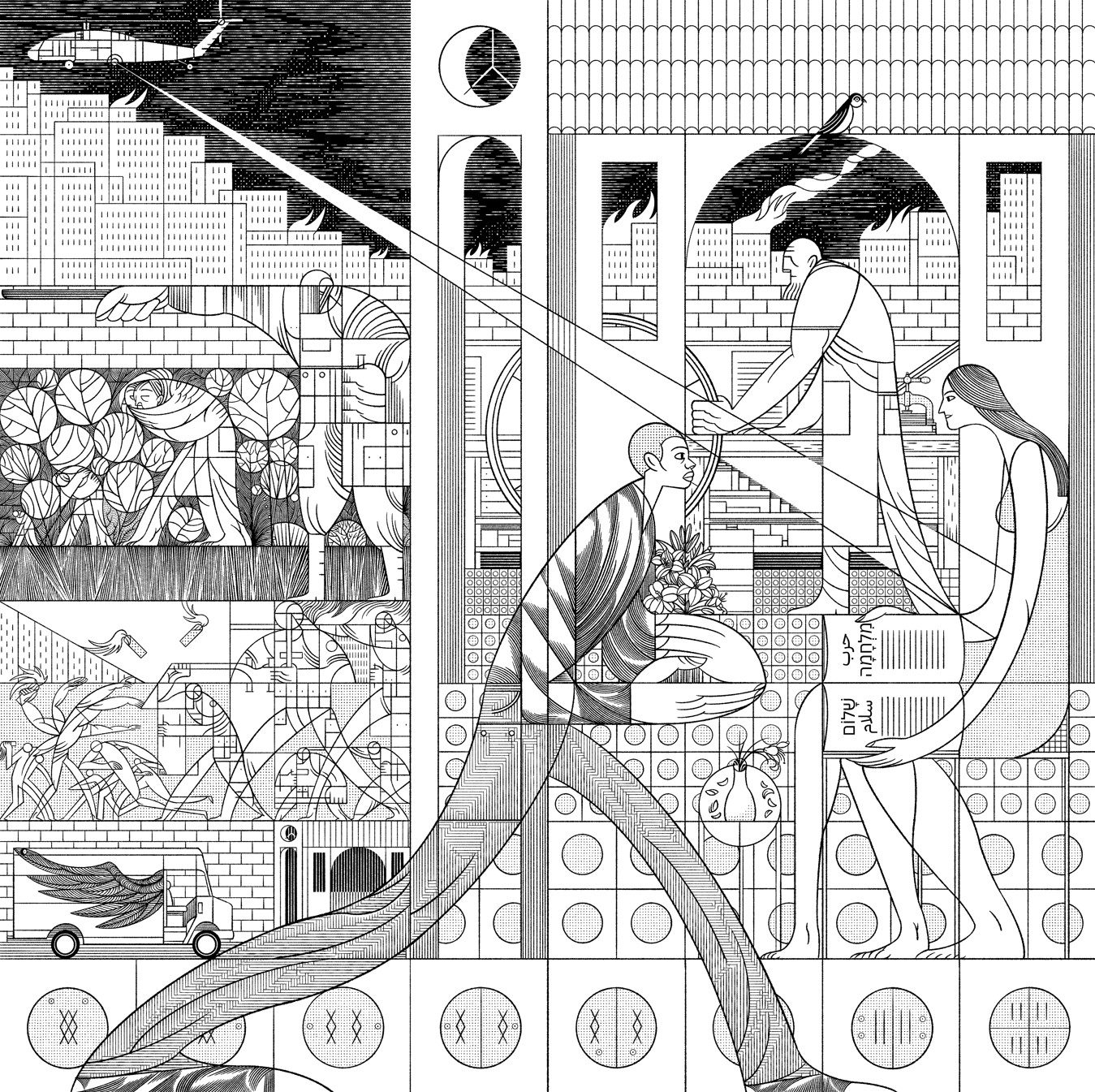
María de Sergio García, 2023, Cayón Gallery.
Lola Moral participates in the Gráfic Festival
The third edition of the Grafic Festival, dedicated to the creation and dissemination of graphic art and art on paper, opens its program with "Synchronous Paper," an exhibition that brings together paintings, drawings, and paper sculptures by Lola Moral and Belén Mazuecos, with the participation of guest artist Bettinna Geisselmann. The exhibition, which opens on October 14, 2026, at 6:30 p.m., is being held in the exhibition hall of the Higher Technical School of Architecture of Granada. This exhibition explores the expressive possibilities of paper from different disciplines and artistic languages, and also offers an opportunity to discover the work of Lola Moral, an artist who has developed a creative career alongside Sergio García, with whom she shares research and projects in the field of illustration and visual creation.
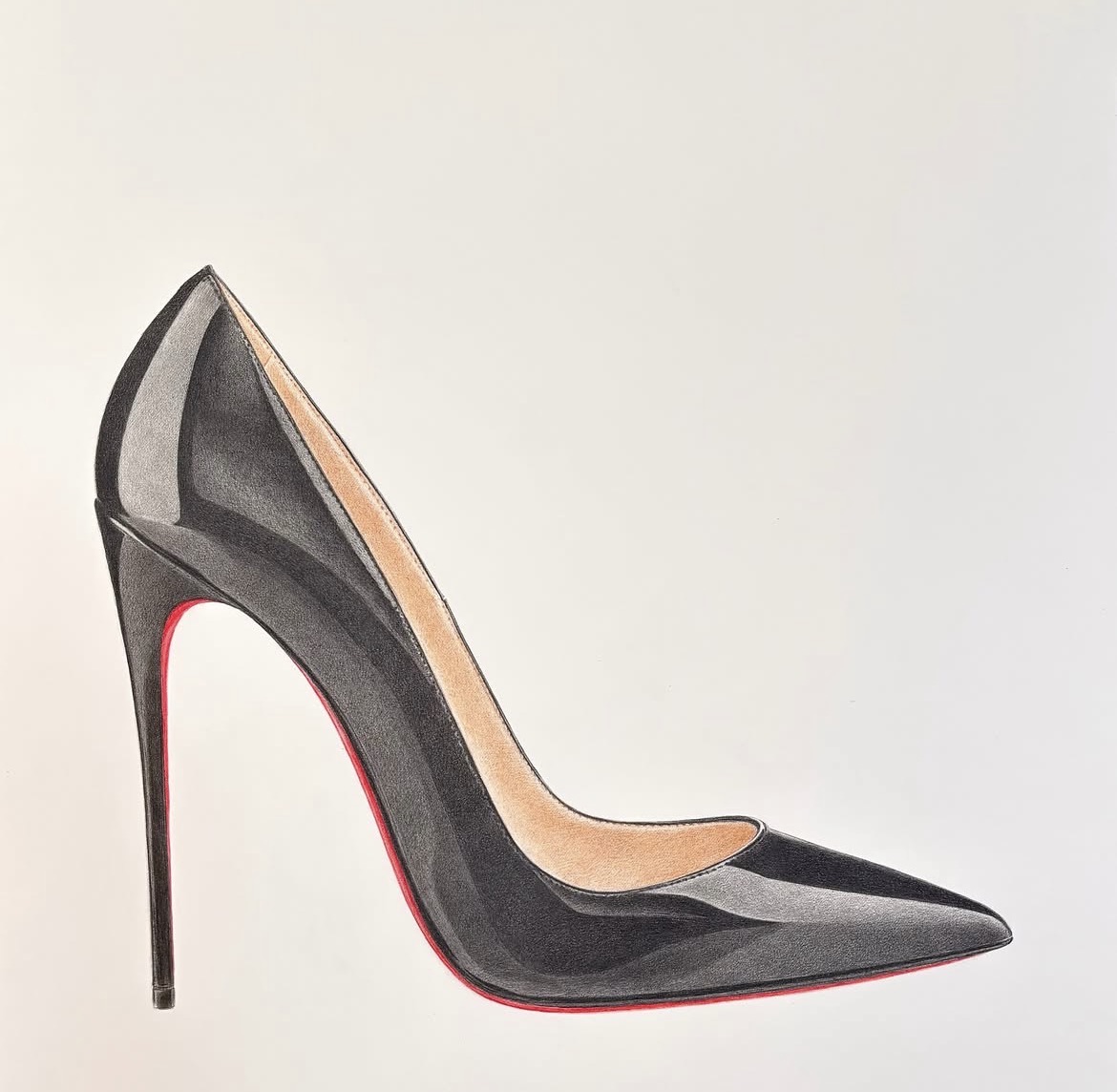
Lola Moral at the Grafic Festival in Granada with 'Papel synchronous'.

You may be
interested
...