News
'Open plots': collecting, architecture and artistic crafts
The seventh edition of By Invitation transforms the Círculo Ecuestre of Barcelona into a space for dialogue between modern and contemporary art, collecting, architecture and artisanal practices, from November 5 to 8, 2026.
Coinciding with the start of the exhibition season, the Círculo Ecuestre event once again shows its proactive side in the city between November 5 and 8, 2026. It has done so since its first edition, in 2020. An important incentive is the promotion and debate around collecting, galleries and the art market, but they have also known, in these seven editions, to combine them with very challenging conceptual themes for anyone interested in the world of contemporary art.
Words from the president and promoter
Enrique Lacalle, current president of the Círculo, began his project in 2020, in the midst of the pandemic, and reminded us in a press conference that it had been like a breath of fresh air to create a fair-salon on modern and contemporary art at that time. He also considers that, in these seven years, the 'By Invitation' event has already been perfectly consolidated. He tells us that the purpose of bringing modern and contemporary art closer to Barcelona society has been fulfilled and that even the members themselves have shown renewed interest.
The change has been gradual and new proposals have been incorporated without losing its identity. This makes it something different from a conventional fair, something unique in the world. A unique, selective and quality space where art and business, business and art, come together. From Barcelona, he says, we promote collecting and the passion for art. At the same time, he acknowledges the members and their generosity, because every year all the spaces are emptied and filled for a few days with contemporary art.
Also on a domestic level, he informs us that this year there is another novelty: the Círculo Ecuestre has been transformed, leaving it as new, without losing its essence of more than 150 years, and a new auditorium has also been inaugurated where the “Talks” program will be held, with talks and presentations. The president thanked the proximity and curatorial support, as well as the commitment of galleries such as Senda with “By Invitation”. In fact, Enrique Lacalle introduced Carlos Durán, director of Senda and Lab 36, as the triple responsible for the event: member of the executive committee of the Circle, personal friend and gallerist.
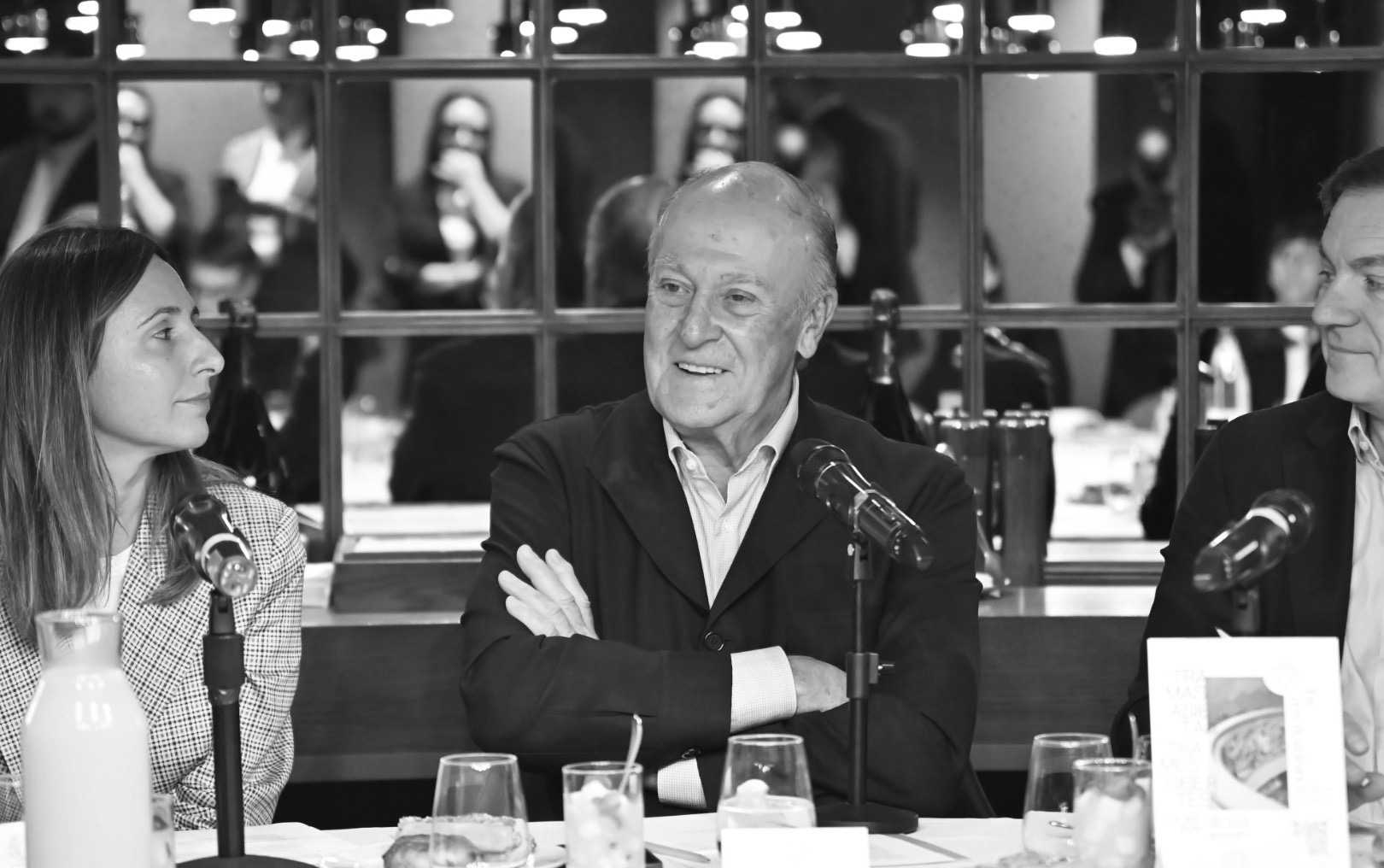
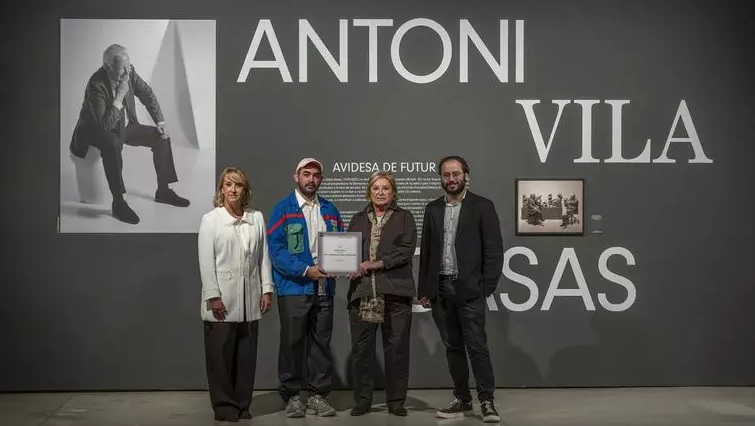
Mariella Franzoni, Enrique Lacalle, Carlos Duran.
Propositional section: open plots
The first edition used the concept of Origin (2020), a necessary reflection on artistic creativity. Another proposal was also made in the 2024 edition, introducing post-war art alongside 'Professionalization and New Markets'. But, above all, it has been recently, with the artistic direction of Mariella Franzoni, that a more curatorial and discursive vision has been brought to the project. Under her artistic direction, By Invitation has opened up to internationalization and the critical reading of contemporary collecting, putting it in relation to historical galleries, emerging spaces and new generation artists. We already saw this in last year's edition (2025), in which the central theme was Lines of Time , focused on the intergenerational dialogue between modern, post-war and contemporary art. And in this edition it has been no less: it proposes a reflection on another interesting motto, Trames obertes, which explores art as a space of social relationship under the allegory of textile threads, connections and open weaves as a system of interrelation. The exhibition is divided into three sections with singular names: Palacete, Vertigo and Espuela, which host 24 projects. By Invitation has its own methods and does not aspire to reproduce the great models of art fairs.
Franzoni explains that they maintain a contained scale, determined by the architecture of the 19th century palace where it is located. Therefore, they limit themselves to hosting the projects that the space allows. This contained scale forces them to be very selective. This, rather than being a disadvantage, is a characteristic that works in their favor and allows them to offer curatorial support very close to the galleries, something impossible at other fairs. This is a sign of identity for “By Invitation”. We will see that this suitability between collecting and architecture is the reason for interesting debates on the questions that arise from the relationship between the space that contains the architecture and the works on display.
Architecture and collections
That is why I highlight as a relevant point of this year's proposal the link with Barcelona as the world capital of architecture, which is discussed in the Talks section. A dialogue between art, collecting and architecture. The question is to think about how to build, for example, a museum that can house an art collection and whether there are shared sensibilities between collectors and architects. There will be key speakers such as Mikel Chillida, of Chillida Leku, and Stefano Pelumbo, director of Peretti Collection. The conversation between the architect Josep Miàs and the director of the new Coromina Museum, in Banyoles, will also be very relevant. Architects who are collectors have also been invited, such as the founders of SISTEMA ESTUDI, in Madrid, to talk about this double presence of collecting and architecture.
Female parity
This year, 49% of the participating artists are women, so parity is almost achieved. There is also work to compensate for the historical absence of women in the art market. The curator says that there is still a deficit of 40% and that this is a challenge, although she considers that, in the secondary program, this compensation is practically impossible due to the very history of art, which has been exclusionary until now.
Private collections returning to the art market
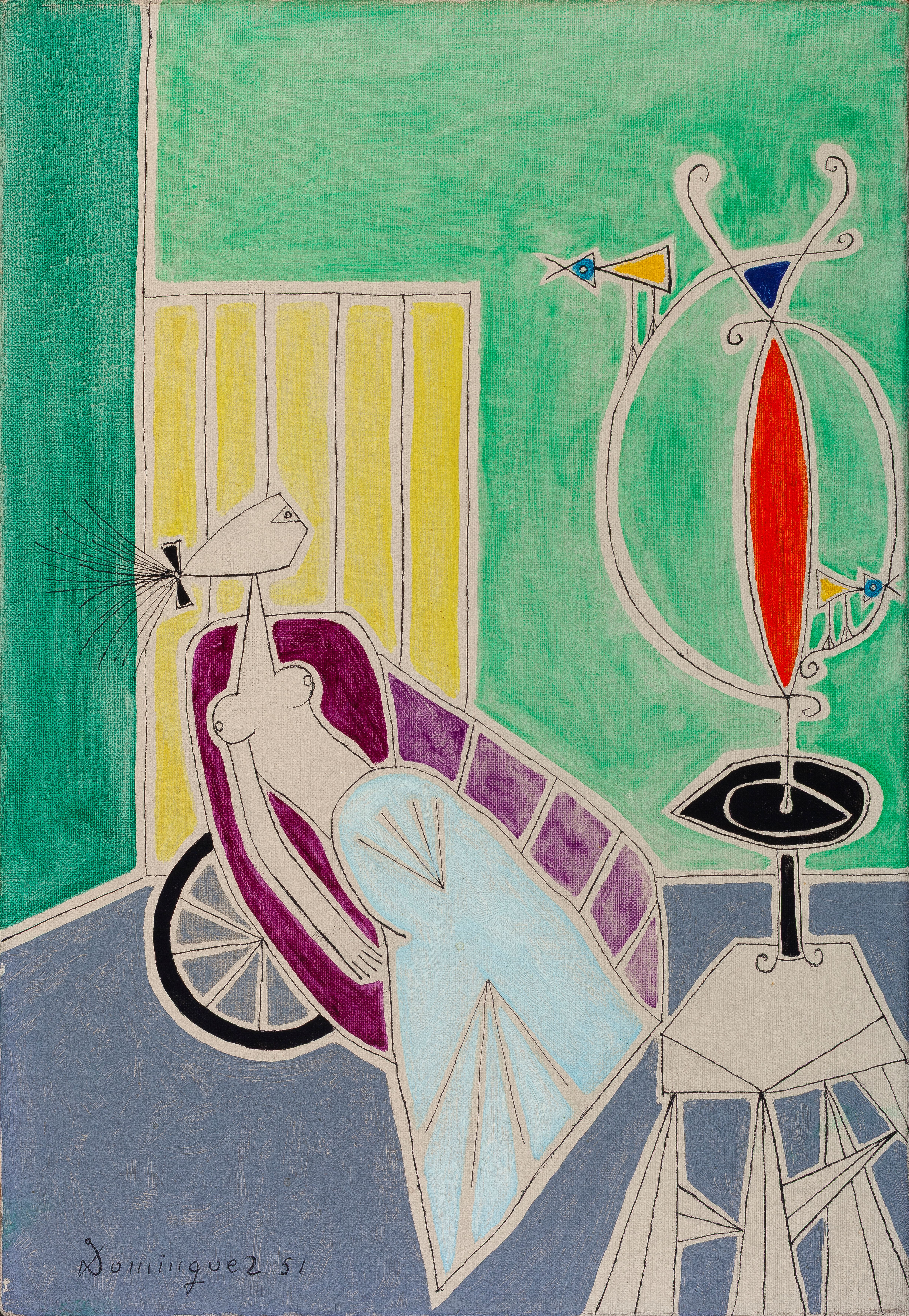
In the various sections we will find the interesting phenomenon of works from large private collections returning to the market, such as those by Óscar Domínguez, Antoni Tàpies, Antonio Saura, Manolo Millares or those from large family legacies, such as that of Joan Hernández Pijuan.
Artists in the salon or gatherings
In the so-called salon sessions or gatherings there are meetings with mid-career or established artists, such as Ignasi Aballí, Antoni Muntadas, Sergio Prego, Aureli Ruiz and Alán Carrasco, or with new generations, such as Lena Laguna Diel. They are unpublished projects, bodies of work and specific projects.
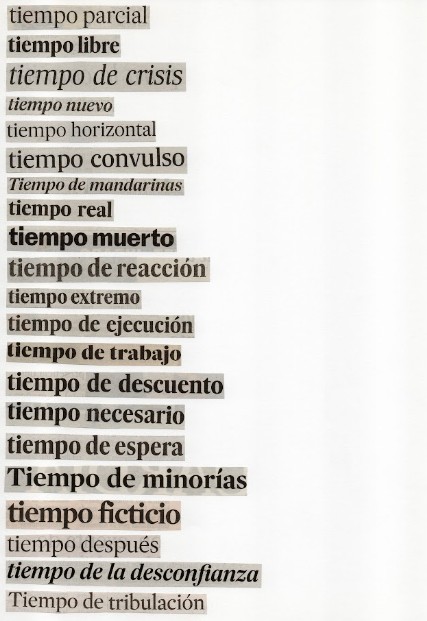
Ignasi Aballí. Listado (tiempos) I. 2025. Digital print on paper 150 x 100 cm. Courtesy PalmaDotze.
Textile art and artistic crafts
Carlos Durán reflects on the need to contrast direct and manual work with the imposition of AI's dematerialization. He praises material work and insists on the presence of artistic crafts in this edition of the fair.
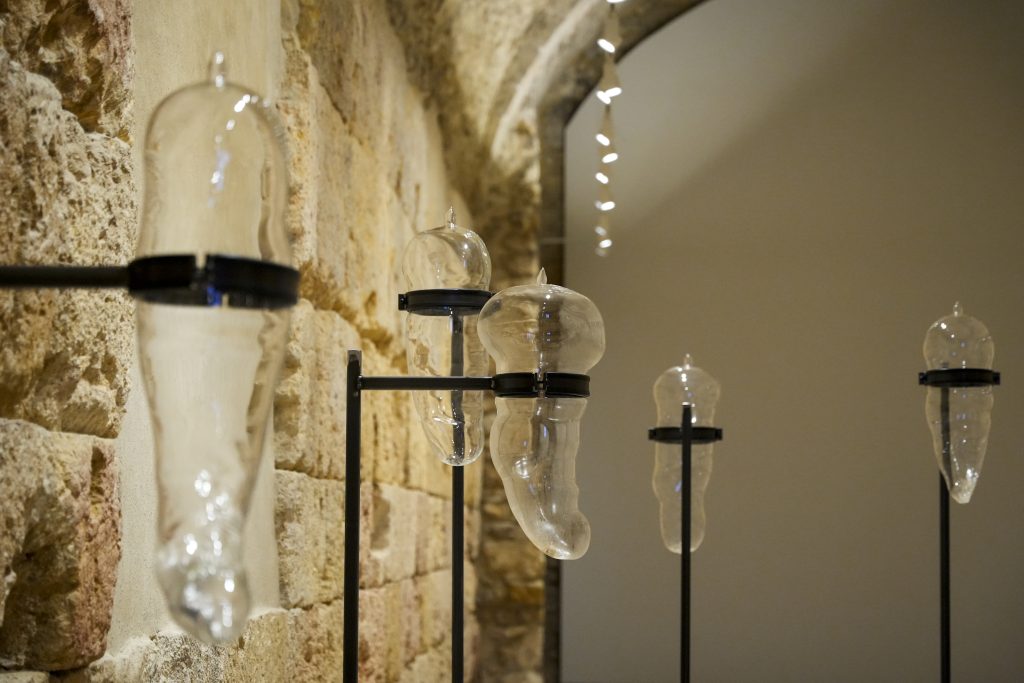
As a sample, Senda proposes the Italian multimedia artist Andrea Mastrovito, who presents a new site-specific work for the seventh edition. The Italian artist, author of the “Agnus Dei” of the Sagrada Família, has created a series of altarpieces as a master of marquetry.
In this resurgence of manual work, “Trames obertes” opens its space to the relationship with textiles based on the guest project of Agnès Essonti, a Spanish-Cameroonian artist who occupies the air space of the main hall of the salon with a textile installation. The socially committed nature of this artist's work, even denunciation, is a courageous commitment of this year's edition.
The textile presence also includes important names from the contemporary scene, coinciding with Aurelia Muñoz's exhibition at MACBA during these same dates.
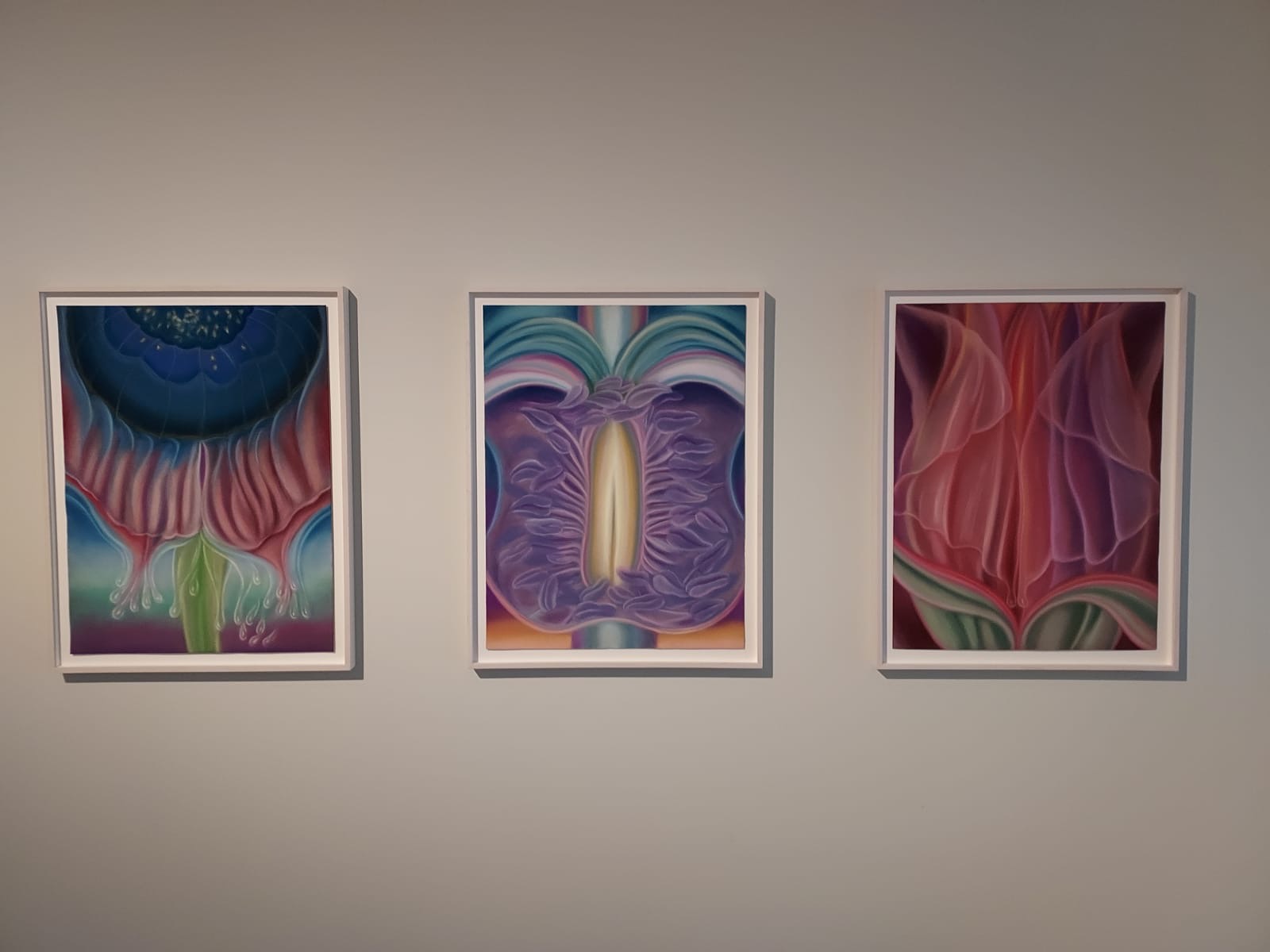
Also presented are new bodies of painting produced for the call by Elena Garrigolas, Jose Bonell, the Mexican Chavis Mármol and the Iranian Hiva Alizadeh, with work influenced by the tradition of Persian carpets.
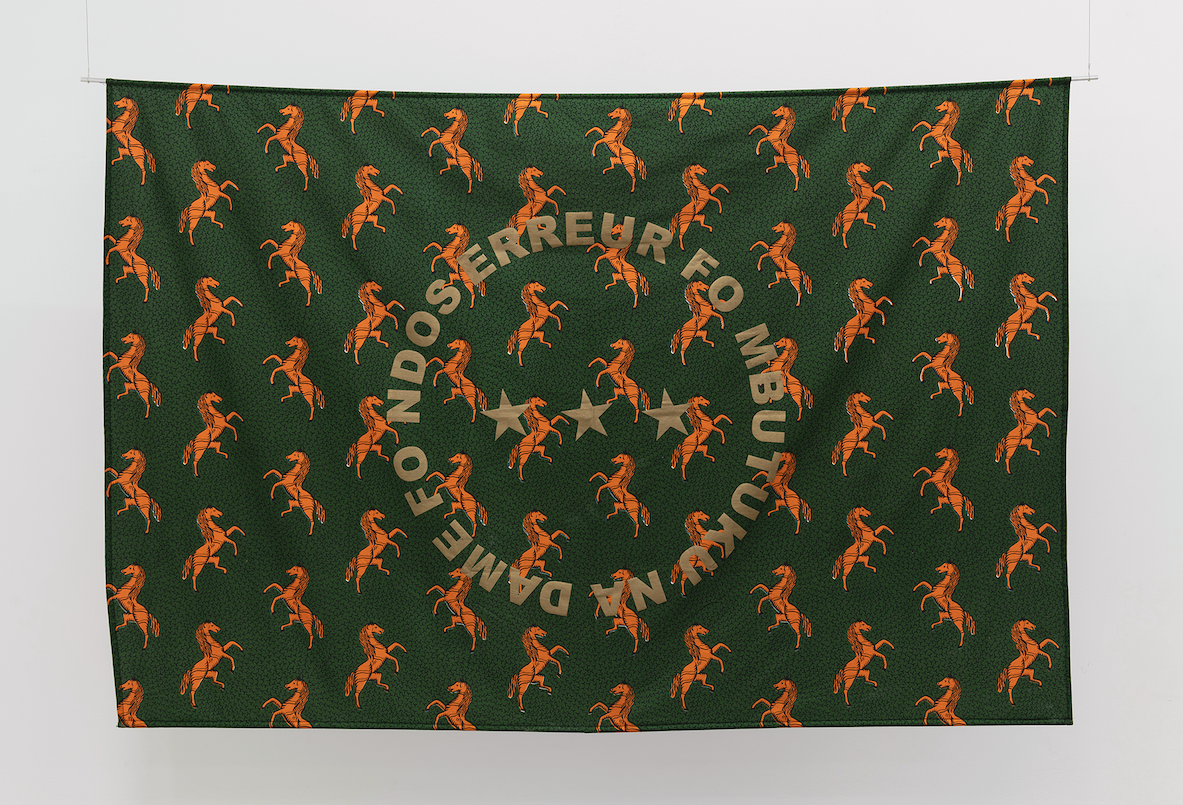
Proyecto Invitado, Agnes Essonti Luque, Erreur fo mbutuku na dame fo ndos, 2023 Serigraphy on cotton fabric made by the Syndicato de Vendedores Ambulantes Top Manta 120 × 180 cm, Artist represented.

You may be
interested
...