Exhibitions
Mares of the Apocalypse overflow the boundaries of art and dissent
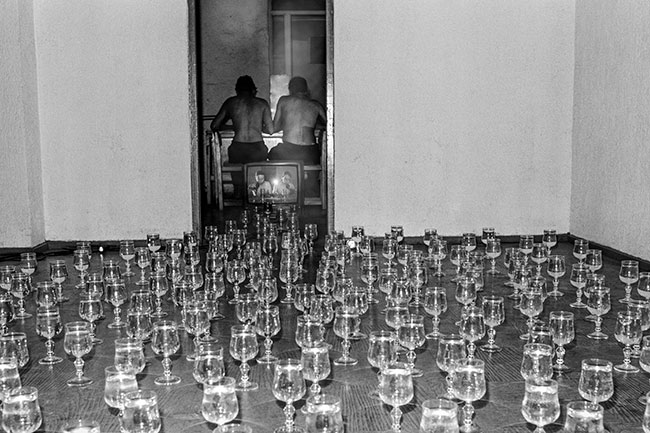
The body as a tool of insurrection, provocation as an artistic strategy, and dissent as a form of resistance. Between 1987 and 1993, Yeguas del Apocalipsis, the duo comprised of Francisco Casas (Santiago, Chile, 1959) and Pedro Lemebel (Santiago, Chile, 1952–2015), developed an artistic practice in Chile that challenged both the political order of the dictatorship and the democratic transition, as well as the social, sexual, and cultural conventions of their time. Their work now returns to the center of debate with Desbocadas. Retrospectiva (Unbridled. Retrospective ), an exhibition on view until April 4, 2027, at the Museo Universitario del Chopo.
Organized by the National Museum of Fine Arts of Chile and curated by Gerardo Mosquera, the exhibition brings together existing works and documentation of ephemeral actions that marked the collective's trajectory. The exhibition also reconstructs some interventions for which no visual records survive, based on testimonies and memories, in order to recover a practice that, due to its countercultural and spontaneous nature, frequently escaped traditional mechanisms of art documentation and conservation.
Writers turned artists, Casas and Lemebel burst into public spaces, staging actions and performances that employed cross-dressing, nudity, and the provocative occupation of space. Their interventions challenged established art protocols and questioned power structures from a marginal position, linked to a radical left and a sexual dissidence that reclaimed its peripheral status. Their practice did not seek institutional acceptance, but rather to alter the rules of the game and expose the contradictions of a society riddled with political repression and exclusion.
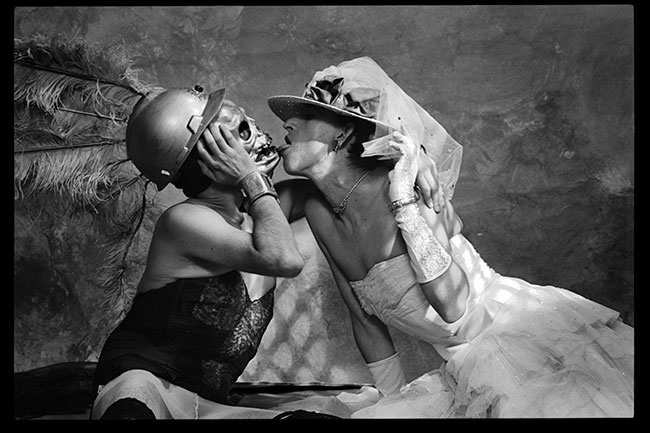
Mares of the Apocalypse, What AIDS Took Away, November 1989. Photograph by Mario Vivado. Courtesy of the artists.
The strength of Yeguas del Apocalipsis lay in their ability to invert established orders. That which the dominant discourse relegated to the margins— queer , non-normative, considered improper or scandalous—became a tool of challenge. Their bodies functioned as spaces of political confrontation and as images capable of destabilizing hegemonic narratives. Provocation was not an end in itself, but a way of intervening in reality and opening up possibilities for emancipation.
Their activism addressed issues that went beyond denouncing the Chilean dictatorship. The collective's actions also highlighted international political violence, including the massacre in China, homophobia, and various forms of repression. They also supported families of the disappeared and people affected by HIV/AIDS, as well as critiquing gay rights movements when they limited their demands to a struggle focused exclusively on themselves. This perspective broadened the scope of dissent and established connections between different forms of exclusion.
Unbridled. A Retrospective allows us to understand the intersectional dimension of a practice that challenged dominant structures from both the right and certain sectors of the left. Casas and Lemebel defied the prejudices of their time without adopting a victim mentality: their actions affirmed difference and transformed marginality into a site of political expression and artistic creation.
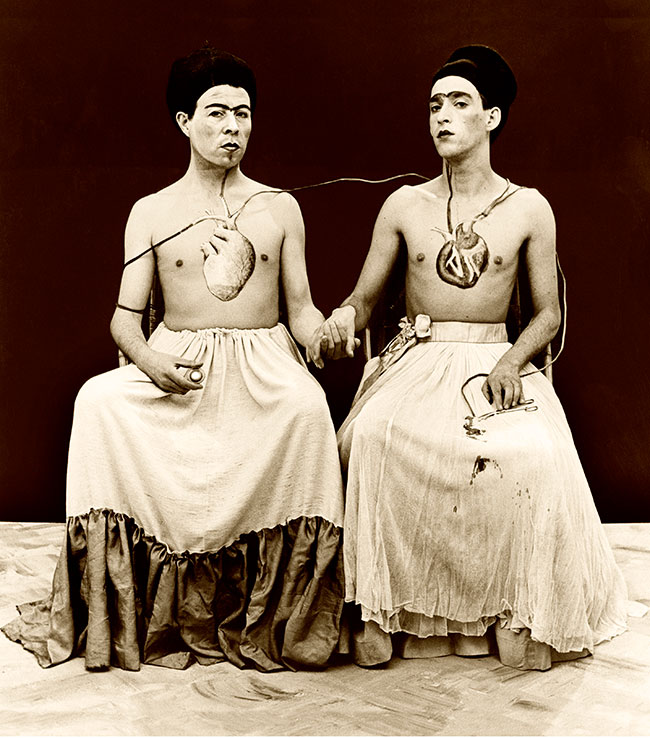
Mares of the Apocalypse, The Two Fridas, 1989 - 2014. Photo-record by Pedro Marinello. Courtesy: D21 Art Projects.
The recovery of these experiences also highlights the difficulties faced by the memory of ephemeral and countercultural practices. Many interventions went undocumented due to institutional disinterest, the collective's desire for independence, and the spontaneous nature of their actions. The exhibition incorporates these absences as part of its narrative, reconstructing events from memories and showing how art history is also composed of fragments, testimonies, and experiences that were left out of official archives.
The influence of Yeguas del Apocalipsis extends far beyond the Chilean context in which it emerged. Its radicalism, the power of its visual imagery, and its questioning of gender norms and cultural hierarchies anticipated debates that continue to permeate contemporary social, artistic, and sexual politics. Its legacy demonstrates that art can act as a practice of freedom capable of confronting power structures, altering codes of representation, and reclaiming alternative forms of existence.


You may be
interested
...