Exhibitions
Modern Barcelona. From Gaudí to Picasso
An exhibition in Munich and Potsdam vindicates Catalan modernism as one of the great cultural laboratories of modern Europe, through 160 works that portray the artistic, architectural and social transformation of Barcelona between 1880 and 1914.
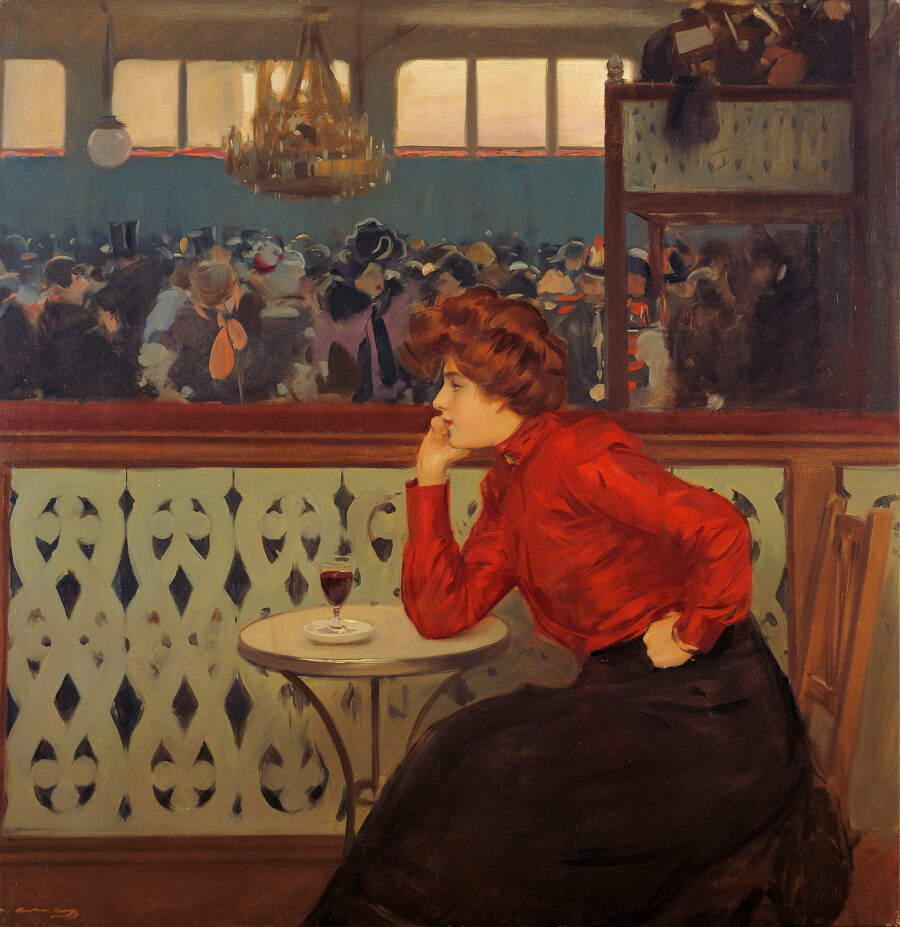
Starting in October, Germany will host an exhibition dedicated to Catalan modernism, which will be inaugurated at the Kunsthalle in Munich and will later be presented at the Barberini Museum in Potsdam. Entitled Barcelona Moderna. From Gaudí to Picasso , the exhibition will be the first dedicated to this historical and cultural period in our country in Germanic lands. The project is curated by Franziska Stöhr, Nerina Santoris and Carlos Alonso Pérez-Fajardo.
The exhibition aims to offer a new perspective on this period, marked by modernism, a cultural movement that developed simultaneously in all artistic languages: architecture, painting, design, music and literature. All of this is framed within a historical and social context defined by industrialization and profound social transformations. In these circumstances, Barcelona became one of the main cultural centers of modern Europe during the period between 1880 and 1914.
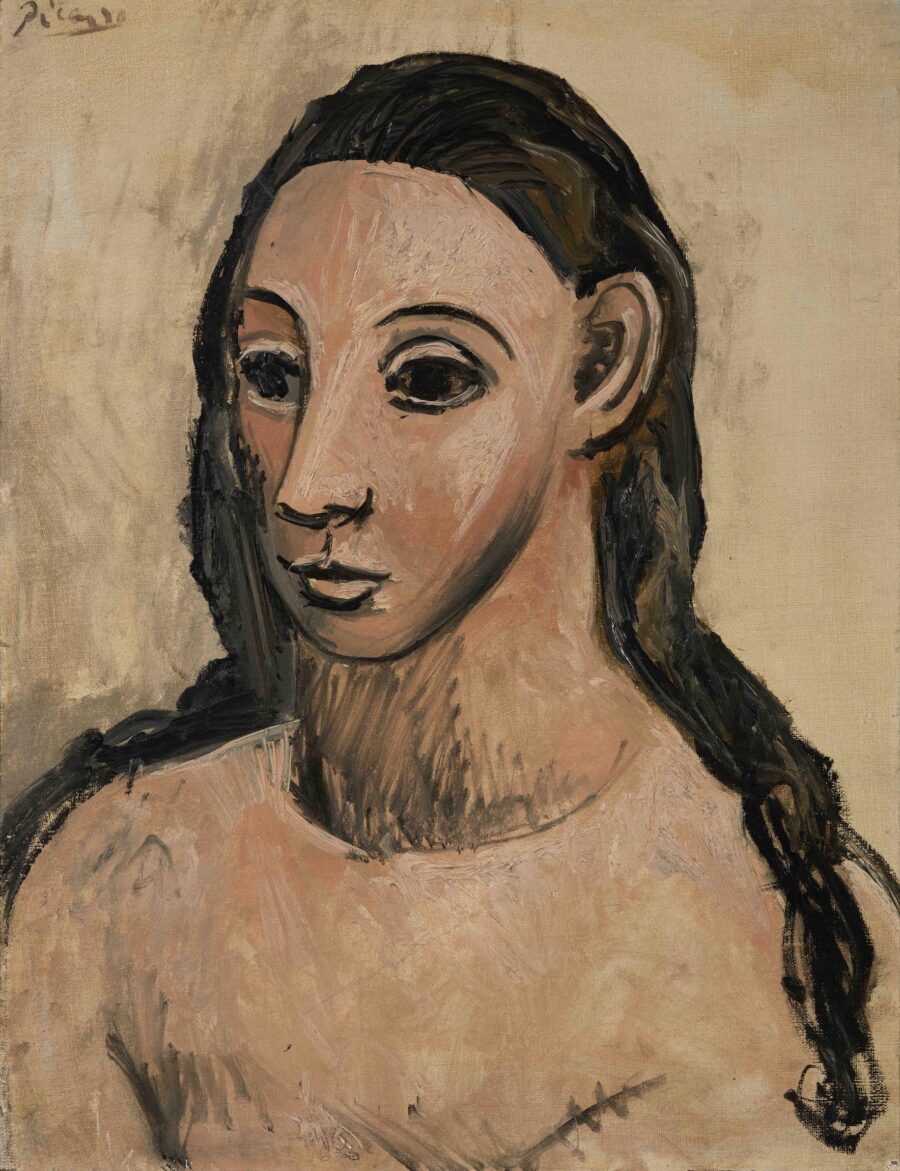
Pablo Picasso, Head of a Young Woman, MNCRAS, ©Succession Picasso.
The crisis that Spain was experiencing following the loss of its last colonies in 1898 would give greater relevance to a Catalan national outburst that, through the aesthetic language of modernism, would oscillate between the poles of tradition and modernity.
The protagonist is Barcelona in 1900, converted into the main industrial center of the Iberian Peninsula, which during this period evolves to become a modern metropolis. This process intensifies, above all, after the demolition of the walls that constrained it and with the expansion of the new Eixample neighborhood, with its wide streets and avenues. In this scenario, a new concept of residential building stands out, promoted by leading architects such as Gaudí, Domènech i Montaner and Puig i Cadafalch, among others.
Barcelona Moderna reinterprets this period through one hundred and sixty works, including paintings, drawings, sculptures, furniture and architectural models. The pieces come from the MNAC, a special collaborator of the project, as well as loans from the Cercle del Liceu, the Carmen Thyssen Collection, the Casacuberta Marsans Collection, the Museo Nacional Centro de Arte Reina Sofía, the Museo de Bellas Artes de Asturias, in Oviedo, the ”la Caixa” Collection and the Cau Ferrat Museum in Sitges.
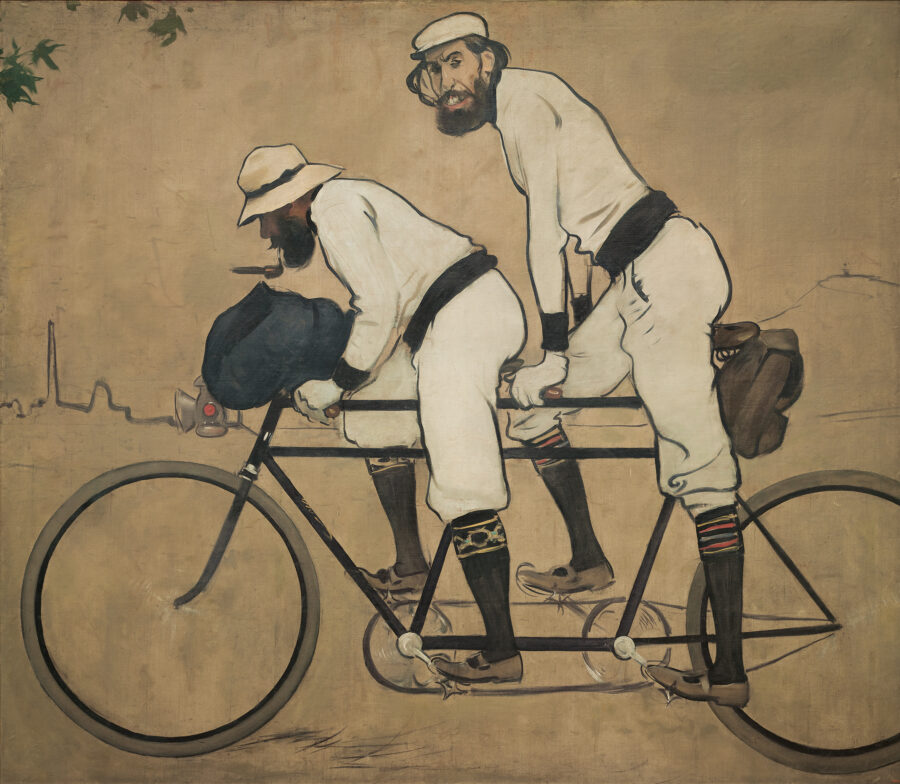
Ramon Casas, Ramon Casas and Pere Romeu on a Tandem, 1897, @MNAC, Barcelona, 2026.
Among the authors represented we find internationally recognized figures, such as Antoni Gaudí and Pablo Picasso, but the exhibition also wants to contribute to discovering other lesser-known names in Europe, such as the architects Domènech i Montaner and Puig i Cadafalch, or the painters Santiago Rusiñol, Ramon Casas, Hermen Anglada-Camarasa, Isidre Nonell and Joaquim Mir.
The exhibition discourse begins with the urban development of Barcelona and the concept of the total work of art applied to architecture and design. This tour mentions emblematic spaces from the modernist era, such as the iconic Pere Romeu brewery, Els Quatre Gats, the exclusive Cercle del Liceu or the historic Sala Parés.
The exhibition, however, does not stop addressing the social tensions that were experienced at that time, reflected in works by Casas and Nonell. Another outstanding chapter is the stays in Paris of painters such as Rusiñol and Casas, who were able to capture the bohemia of the French capital. The exhibition also dedicates a space to the Cau Ferrat in Sitges, the main meeting point and diffusion center of modernism, as well as to the search for places of retreat, such as Mallorca of the time, portrayed through the brushes of Rusiñol and Mir. The intense chromaticism of Anglada-Camarasa is also present, along with the early stages of Picasso's artistic career.
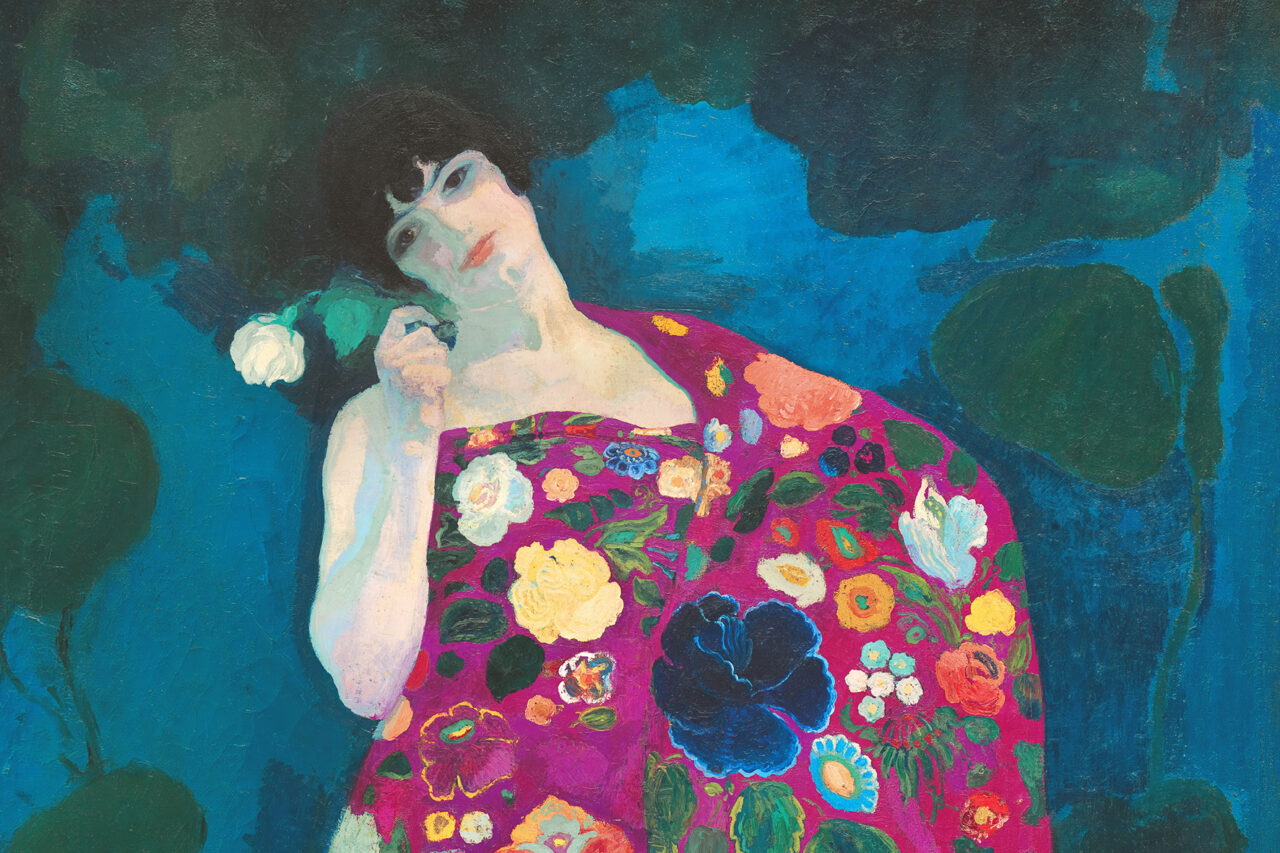
Hermen Anglada Camarasa, Woman from Granada, 1914, @MNAC.
Barcelona Moderna aims to explain the city of the turn of the century as a great European cultural laboratory, in which concepts such as identity and cultural roots converge, together with a determined desire to open up to Europe. The exhibition thus proposes a look at the past that allows us to reformulate the modernist legacy with the tools of the present and project it towards the future.
Kunsthalle München (23 October 2026 to 21 February 2027)
Museum Barberini Potsdam (20 March to 20 June 2027)


You may be
interested
...